
 简体中文
简体中文  English
  日本語
日本語  Tiếng Việt
  한국어
한국어 
154 月2024
行业评论/最新新闻和报告
评论: 没有评论.
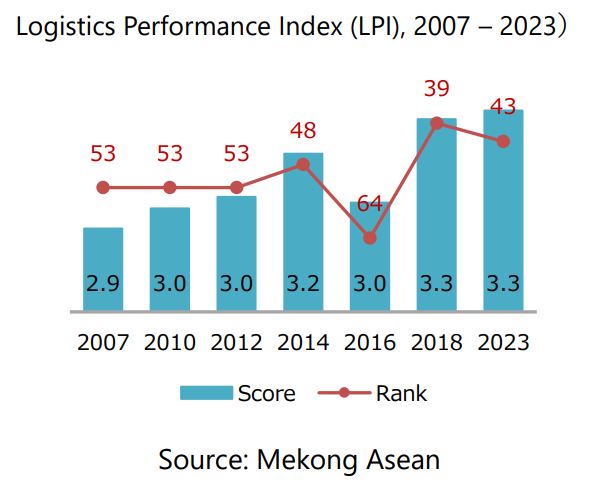
越南物流行业近年来实现了增长与改善。根据世界银行于2023年4月发布的报告,越南在物流绩效指数(LPI)139个国家中排名第43位,位列东盟前五,仅次于新加坡、马来西亚、泰国,与菲律宾并列。与2016年(第64位)相比,越南上升了21个位次;但与2018年(在160个国家中排名第39位)相比,越南下降了4个位次[1]. 。尽管排名有所下滑,但LPI得分已升至3.3分,高于2018年的3.27分[2]. 。这可能表明越南物流服务质量有所提升,但其他国家也在加大对该领域的投入.
 根据越南物流企业协会的数据,越南的物流成本仍然较高。2014年,该比例为20.9%;2018年至2022年,这一数字已降至每年约占GDP的16-18%。然而,这一水平仍远高于全球10.6%的平均水平[3]. 。成本下降困难主要源于基础设施存在诸多限制、协同与联通不足、运输方式之间融合较弱,以及海运能力偏低。港口规划仍不充分,缺乏枢纽港和大型区域及国际物流中心[4]. 公路运输仍是主要运输方式(2021年前9个月占货物运输总量的74.7%),其次是内河运输(19.84%)和海运(5.10%)。铁路和航空运输量仍然非常有限,分别仅占货物运输总量的0.34%和0.02%[5].
除基础设施方面的困难外,服务提供商的能力还体现在物流服务质量指数、时效性和货物跟踪能力上[6]. 2019年,越南企业占88%,合资企业占10%,外资企业占2%。然而,FDI企业的市场份额占70-80%。大多数越南物流企业提供基础服务,且通常为外商投资企业进行分包或充当代理商。物流行业在人才数量和质量方面均存在短缺。对于国内企业而言,93-95%的员工未接受物流专业培训,主要在小型供应链环节工作,例如配送、仓储和货物装卸[7].
《国家数字化转型计划到2025年,面向2030年》(2020年6月3日总理第749/QD-TTg号决定)明确提出了8个数字化转型优先领域,其中包括物流行业[8]. 尽管大多数服务领域中多达50 – 60%的企业正在应用多种不同类型的技术[9], 但根据VLA 2018年的调查,越南的科学技术应用水平仍然不高,大多数企业采用的是单一解决方案。目前,物流企业使用的信息技术应用中,约有40%属于基础应用,例如国际货运代理管理、仓储管理、运输管理和数据交换。此外,企业在技术和人力资源发展方面还面临资金困难,目前仅有6.7%的企业对员工的专业能力感到满意[10].
规范物流活动的法律体系尚不完善。尽管该行业的法律框架已在多项文件中建立,但相关具体政策及其实施细则尚未得到充分落实。有关物流主体的规定分散在许多法律文件中,因此在实际应用时会带来困难,甚至出现重叠[11]. 。物流行业仍面临若干困难,需要克服这些问题,以提升物流部门的竞争力,并支持经济发展。.