
越南冷藏市场:战略投资机会

越南冷链物流行业正在经历重大转型,以实现高度合规和快速增长。

1610 月2025

B&Company

最新消息及报道 / 越南简报

评论: 没有评论.

B&Company是自2008年以来第一家专注于越南市场研究和投资咨询的日本公司。.

在本节 “越南快讯 ”中,B&Company 的年轻研究人员将提供越南工业趋势、消费趋势和社会运动的及时信息。.

本文使用英语撰写,其它语言版本使用自动翻译。请参考英文版以获得准确内容。尽管我们努力确保原始信息的准确性,但请分别检查每条信息。对信息的解释与未来展望是每位研究者的个人观点。.

Vietnam’s cold chain logistics sector is undergoing a significant transformation, transitioning from a nascent, capacity-constrained market to one that is sophisticated, highly compliant, and positioned for rapid growth. This evolution is driven by the country’s burgeoning agricultural exports, especially in seafood, fruits, and vegetables, along with the rising demand for temperature-sensitive pharmaceutical products. The combination of these factors creates a unique and high-yield investment opportunity, particularly for international investors, including those from markets with advanced logistics expertise, such as Japan.

市场概况

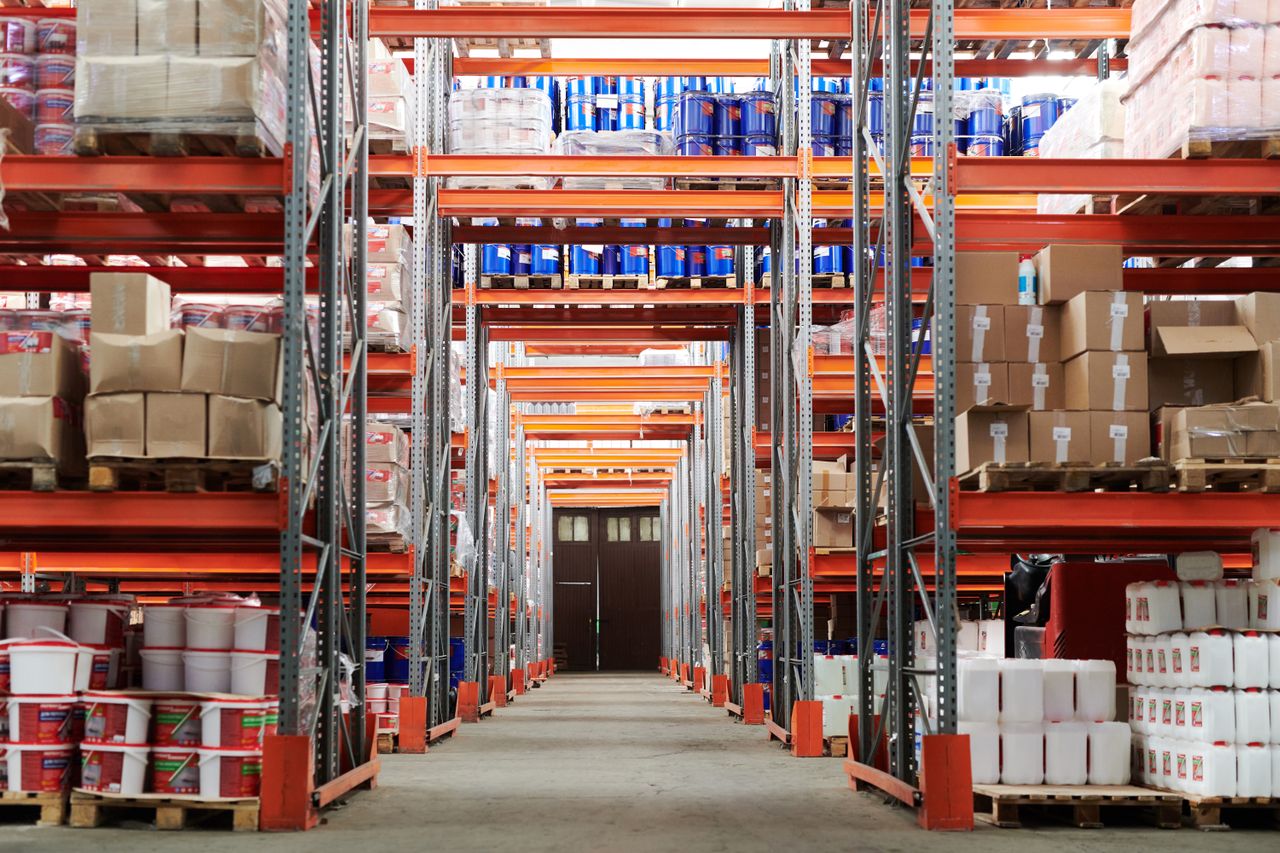
According to FiinGroup, from 2020 to 2023, the total designed cold storage capacity increased by approximately 44.8%. The 2025 update (with data as of December 2024) records around 1.3 million pallets, 117 cold storage facilities, 1,499 refrigerated trucks, and 47 cold transport providers; the capacity is projected to exceed 1.7 million pallets by 2028[1], with about 13 new projects planned for 2024–2028.

Vietnam’s cold chain logistics market is experiencing rapid expansion due to two key drivers: booming agricultural exports and a surge in domestic consumption of fresh and chilled products. In 2024, Vietnam set a record for agricultural exports, including high-value perishables such as seafood, fruits, and vegetables, which require meticulous temperature control.

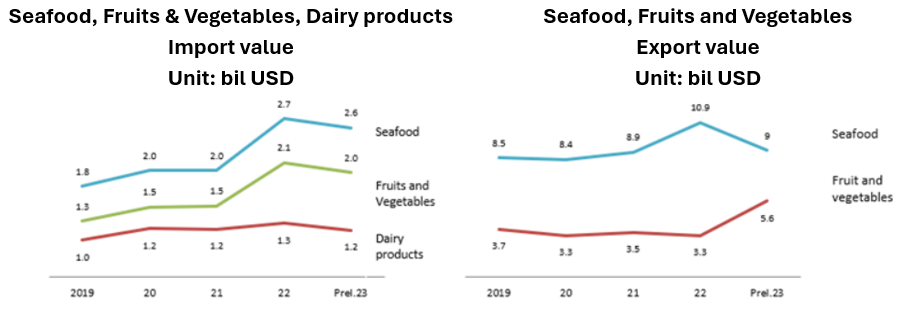
– Seafood imports grew significantly from $1.8 billion in 2019 to $2.7 billion in 2022, with a slight dip projected for 2023. Meanwhile, fruit and vegetable imports steadily increased, while dairy imports remained stable.

– On the export side, seafood saw a rise from $8.5 billion in 2019 to $10.9 billion in 2022, with a minor decline expected in 2023. Exports of fruits and vegetables also showed growth, while dairy exports stayed low and steady.

Seafood Fruits Vegetables Dairy products Vietnam

来源: GSO, General Statistic Yearbook (2023)

The pharmaceutical sector is also a key area of growth, projected to increase from $6 billion in 2023 to $8.7 billion by 2028 in terms of total sales value of pharmaceutical products[2], driven by an aging population[3] and a rising demand for temperature-sensitive pharmaceutical products[4]. The increasing need for cold chain compliance[5], particularly in the Ethical (ETC) channel, is fueling further infrastructure requirements.

This combination of expanding agricultural exports, rising domestic consumption, and growing pharmaceutical needs highlights the crucial role of cold chain logistics in Vietnam’s economy and its promising growth prospects in the coming years.

主要球员

Vietnam’s cold chain logistics sector is experiencing significant growth, driven by expanding agricultural exports, increasing domestic demand for perishable goods, and a rising need for pharmaceutical cold storage. The market remains fragmented, with several key players contributing to its development.

Table 1. Leading Cold Storage Companies in Vietnam

姓名 国家 运营年份 Capacity (‘000 pallets) 地区
North Center South
Lineage    Logistics 美国 2023 81 河内 x 胡志明市
运输公司 越南 2010 77 x 岘港 HCMC, Tay Ninh
Hung Vuong 越南 2003 72 x x 胡志明市
AJ Total 韩国 2021 60 兴安 x Tay Ninh, Dong Nai
Meito 日本 2014 56 x x HCMC, Tay Ninh
Harano TNS 韩国 2023 51 Bac Ninh, Hai Phong x x
Gemadept 越南 2016 50 x x 芹苴
ALS 越南 2017 45 Ha Noi, Bac Ninh x x
ABA 酷运 越南 2016 40 河内 x 胡志明市
Phan Duy Corporation 越南 2009 30 x x 西宁

来源:B&Company

Vietnam’s cold-storage sector saw several standout moves in 2024–2025, underscoring rising demand from food, retail, and 3PL players.

– Korea’s LOTTE Global Logistics broke ground on a ~US$34 million cold-chain hub in Nhơn Trạch Industrial Park, Đồng Nai, on March 19, 2025, spanning ~5.5 ha and slated to start operations in May 2026.

– Japan’s Daiwa House Logistics Trust completed the acquisition of the built-to-suit “D Project Tan Duc 2” in Long An on July 5, 2024, for roughly US$19.9–20 million, backed by a 20-year long-term lease with a Japanese 3PL tenant.

– Nichirei TBA Logistics Vietnam inaugurated its Long Hậu (Long An) cold store on June 27, 2024, offering ~20,000 pallet positions across 10 rooms with a temperature range from −25 °C to 22 °C.

Together, these greenfield and M&A moves highlight deepening Japanese and Korean participation, the emergence of Long An and Dong Nai as logistics hot spots, and growing preference for built-to-suit assets anchored by long leases.

Cold Chain Infrastructure Challenges

Vietnam’s cold-chain is expanding fast, but exposing structural gaps that investors and operators must solve to win.

– Market Scarcity and Premium Pricing: Vietnam’s cold chain remains supply-constrained: capacity topped ~1 million pallet positions in 2023 and is forecast to exceed ~1.7 million by 2028, yet demand still outpaces supply. Unlike Thailand, where 40–50% of agricultural exports move through cold chains, Vietnam’s coverage is only ~20–25%, leaving high-value perishables (seafood, fruit) underserved and investment-ready. Scarcity has supported premium rates—about US$1.27 per pallet/day in 2024 versus US$0.94 in Indonesia—but a projected ~70% capacity build-out by 2028 will intensify competition, pushing operators to differentiate with value-added services (real-time monitoring, cross-docking, integrated processing).

– Improving Cold Storage for Agriculture and Seafood: Post-harvest losses remain the cold chain’s biggest pain point: poor handling and temperature control can waste ~25% of fruit and veg (up to 35–45% in worst cases) and cut seafood value by ~20%. The fix is investment in modern pre-cooling, storage, and first-mile control—where even a 10% loss reduction delivers outsized financial returns. To unlock premium exports, operators must pair infrastructure with compliance (HACCP, VietGAP) and end-to-end traceability (e.g., Agridential), which are now essential for US/EU/Japan buyers.

– Cold Storage Challenges in the Pharmaceutical Sector: Vietnam’s pharma cold chain demands specialized, certified infrastructure: strict temperature control for biologics and vaccines, validated systems, and full compliance with MoH’s GSP/GDP rules (Circular 36/2018/TT-BYT, Circular 05/2024/TT-BYT). Only certified facilities can handle these products, raising entry barriers. Logistics remain challenging—maintaining lane integrity and last-mile control in uneven infrastructure—while rising demand for temperature-sensitive drugs (aging population) heightens the need for modernization and investment to protect product integrity.

Strategic Investment Opportunities in Vietnam’s Cold Chain Sector

Vietnam’s cold chain logistics market is entering a high-growth phase, underpinned by strong demand from agriculture, seafood, and pharmaceuticals.

– Service: growth is moving beyond storage for agriculture and seafood to higher-value offerings: pharmaceutical logistics that meet Good Storage Practice and Good Distribution Practice, e-commerce fulfillment with controlled temperatures for picking and packing, and refrigerated transport that links pre-cooling at farms and factories to ports and intermodal depots.

– Region: the South (Binh Duong, Dong Nai, Long An, Ba Ria–Vung Tau, Can Tho) remains the main volume base thanks to deep-sea ports and border with Mekong Delta; the North (Hai Phong, Bac Ninh, Hung Yen) supports export manufacturing and pharmaceutical flows; and the Central corridor is rising, with Da Nang, Quang Nam, Thua Thien Hue, Khanh Hoa, and Binh Dinh offering shorter routes between North and South and new export gateways.

– Operating models: the fastest path is to partner with capable Vietnamese logistics companies to secure land, permits, and customers. Additionally, the facilities should be designed to adopt high technology, such as automated racking to maximize space, and warehouse and transport management systems linked to temperature and humidity sensors. This approach reduces operating costs, raises throughput, and meets the documentation and traceability standards required by buyers in the United States, the European Union, and Japan.

结论

Vietnam’s cold chain sector represents a high-yield investment opportunity, underpinned by a scarcity of capacity, growing demand, and increasing compliance standards. Investors who focus on specialized, integrated solutions that combine compliance, technology, and energy efficiency will secure long-term returns. With its growing agricultural and pharmaceutical industries, Vietnam is poised to become a regional hub for cold chain logistics, offering a premium pricing model and significant growth potential through the end of the decade. Strategic investments in this sector can provide robust returns, especially for those who move quickly to capture early-stage opportunities in this dynamic market.


[1] https://fiingroup.vn/NewsInsights/Detail/11065024

[2] https://www.trade.gov/market-intelligence/vietnam-pharmaceutical-industry-updates

[3] https://www.trade.gov/country-commercial-guides/vietnam-healthcare

[4] https://www.kenresearch.com/vietnam-cold-chain-for-pharmaceuticals-market

[5] https://english.luatvietnam.vn/circular-no-36-2018-tt-byt-dated-november-22-2018-of-the-ministry-of-health-on-good-storage-practices-for-medicinal-products-and-medicinal-materials-169783-doc1.html


*如果您希望引用本文中的任何信息,请善意地引用来源,并附上原文链接,以尊重版权。.

B&Company

自2008年以来,我们是首家专注于越南市场调研的日本公司。我们提供广泛的服务,包括行业报告、行业访谈、消费者调查和商业配对。此外,我们近期还建立了一个包含超过90万家越南企业的数据库,可用于寻找合作伙伴和分析市场。.

如有任何疑问,请随时与我们联系。.

info@b-company.jp + (84) 28 3910 3913

相关文章
订阅新闻通讯