

 Tiếng Việt
  English
  日本語
日本語  简体中文
简体中文  한국어
한국어 So với năm 2024, số lượng cửa hàng cà phê chuỗi tại Việt Nam năm 2025 có tăng nhẹ do các chuỗi hàng đầu mở thêm địa điểm mới.
23/12/2025
Tin tức & Báo cáo mới nhất / Vietnam Briefing
Bình luận: Không có bình luận.
Thị trường quán cà phê tại Việt Nam đang trở thành một trong những phân khúc năng động nhất của ngành F&B, được thúc đẩy bởi tốc độ mở rộng chuỗi nhanh chóng, hình thức đặt hàng kỹ thuật số và mức độ trung thành cao đối với các thương hiệu nội địa. So với năm 2024, số lượng cửa hàng của các chuỗi cà phê trong năm 2025 tăng nhẹ khi các chuỗi dẫn đầu như Highlands Coffee, Phuc Long mở thêm cửa hàng tại Thành phố Hồ Chí Minh, Hà Nội và các tỉnh, thành phố khác. Sự thay đổi trong thói quen tiêu dùng, tần suất ghé quán cà phê cao hơn và các xu hướng mới trên thị trường đang tái định hình cạnh tranh, đồng thời tạo ra những cơ hội gia nhập mới cho các nhà đầu tư nước ngoài.
Tổng quan thị trường
Ngành Thực phẩm và Đồ uống (F&B) nội địa tại Việt Nam có sự hiện diện nổi bật của các quán cà phê, một phân khúc tăng trưởng nhanh và tương đối cao cấp. Năm 2025, từ các quán cà phê nhỏ trong hẻm đến các chuỗi cà phê cao cấp, Việt Nam có hơn 500.000 quán cà phê[1], cao hơn nhiều so với khoảng 317.299 cửa hàng cà phê và trà trên toàn quốc vào cuối năm 2023[2].
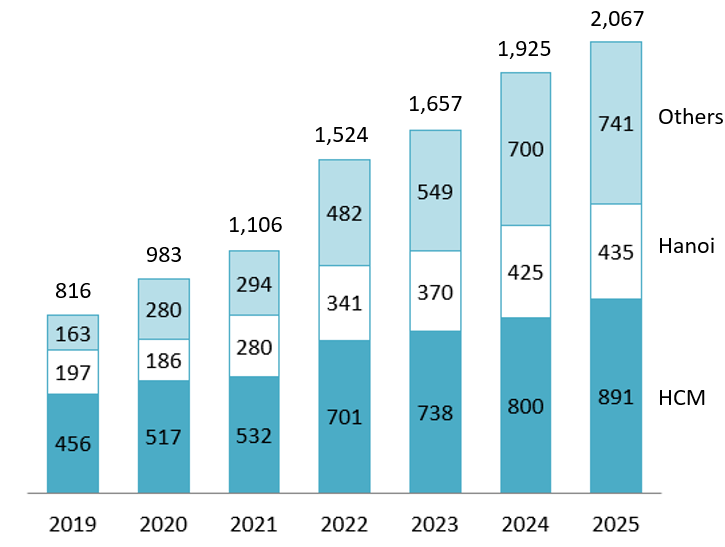
Mạng lưới chuỗi cà phê tại Việt Nam đã mở rộng mạnh mẽ trong giai đoạn 2019–2025. Tổng số cửa hàng chuỗi đã tăng hơn gấp đôi, từ 816 cửa hàng năm 2019 lên 2.067 cửa hàng năm 2025. Thành phố Hồ Chí Minh vẫn là trung tâm lớn nhất, tăng từ 456 lên 891 cửa hàng, nhưng tăng trưởng không còn chỉ tập trung tại đây. Mạng lưới tại Hà Nội cũng mở rộng từ 197 lên 435 cửa hàng, trong khi thay đổi đáng kể nhất đến từ các tỉnh, thành phố khác, nơi số lượng cửa hàng chuỗi tăng vọt từ 163 lên 741, khiến nhóm này lớn hơn Hà Nội vào năm 2025.
Number of coffee chain stores in Ho Chi Minh, Ha Noi, and others
Đơn vị: cửa hàng
Nguồn: Hỏi & Đáp
Người chơi chính
Các thương hiệu nội địa chiếm ưu thế áp đảo trên thị trường quán cà phê, không chỉ về số lượng cửa hàng mà còn đáng kể về doanh thu, trong đó Highlands Coffee và Phuc Long là những thương hiệu dẫn đầu về doanh thu. Mặc dù thị trường được phân khúc khá rõ ràng, các thương hiệu nước ngoài như Starbucks vẫn tập trung ở phân khúc cao cấp, trong khi các thương hiệu trong nước như Trung Nguyen giữ vai trò trụ cột trong phân khúc truyền thống và văn hóa. Các chuỗi Việt Nam trẻ trung, hợp xu hướng như Katinat đã cho thấy tốc độ tăng trưởng nhanh, thu hẹp khoảng cách với các thương hiệu lâu năm không chỉ thông qua việc mở rộng mạng lưới vật lý mà còn nhờ khả năng linh hoạt về sản phẩm. Những thương hiệu đang lên này đang định hình lại ngành bằng cách vượt ra ngoài cà phê truyền thống; họ chủ động thúc đẩy lưu lượng khách bằng cách đưa các loại đồ uống mới lạ, dẫn dắt bởi xu hướng, như trà trái cây, đồ uống kết hợp matcha và các ý tưởng theo mùa vào thực đơn để đáp ứng thị hiếu biến động của nhóm nhân khẩu Gen Z.
Về sự hiện diện trên thị trường, năm 2025, Milano được ước tính đã đạt 2000 cửa hàng, còn Highlands Coffee đạt khoảng 855 cửa hàng. Các chuỗi lớn khác cũng là những đối thủ đáng kể: Phuc Long đã phát triển lên khoảng 237 cửa hàng, Katinat lên khoảng 93 cửa hàng và Starbucks lên 127[3].
Danh sách một số chuỗi cửa hàng cà phê chính tại Việt Nam
| Không. | Thương hiệu cà phê | Năm thành lập | Thành phố đầu tiên | Quốc gia xuất xứ | Số lượng cửa hàng cà phê năm 2025 |
| 1 | Milano | 1996 | TP.HCM | Vietnam | 2000 |
| 2 | Cao nguyên | 1999 | TP.HCM | Vietnam | 855 |
| 3 | Trung Nguyên | 1996 | TP.HCM | Vietnam | 464 |
| 4 | Viva Star Coffee | 2013 | TP.HCM | Vietnam | 329 |
| 5 | Phúc Long | 2000 | TP.HCM | Vietnam | 237 |
| 6 | Starbucks | 2013 | TP.HCM | Hoa Kỳ | 127 |
| 7 | Guta Café | 2016 | TP.HCM | Vietnam | 96 |
| 8 | The Coffee House | 2014 | TP.HCM | Vietnam | 93 |
| 9 | Katinat | 2016 | TP.HCM | Vietnam | 93 |
| 10 | Đam mê | 2006 | TP.HCM | Vietnam | 88 |
Nguồn: Hỏi & Đáp
Xu hướng thị trường
Các chuỗi cà phê dẫn đầu đang mở rộng một cách chiến lược bằng cách vượt ra ngoài các khu trung tâm kinh doanh (như Quận 1 và khu vực Landmark 81) để tiến vào các quận ngoại thành và thành phố hạng 2, tận dụng thu nhập ngày càng tăng và sự phát triển của các dự án bán lẻ[4]. Đồng thời, các thương hiệu này đang thử nghiệm nhiều mô hình khác nhau. Bên cạnh các cửa hàng truyền thống phục vụ khách ngồi tại chỗ, những mô hình như cửa hàng drive-thru của Highlands Coffee cho thấy các chuỗi đang thích ứng với giao thông chủ yếu bằng xe máy tại Việt Nam và thói quen kết hợp việc dừng mua cà phê vào hành trình đi lại hằng ngày. Mô hình này củng cố khả năng tiếp cận khách hàng và phản ánh sự chuyển dịch rộng hơn của thị trường F&B theo hướng đề cao tốc độ và sự tiện lợi.
Song song với việc mở rộng mạng lưới, các thương hiệu quán cà phê lớn đang tái định hình thực đơn và định vị của mình. Nhiều chuỗi đang chuyển dịch khỏi trọng tâm thuần túy là cà phê và hiện hoạt động nhiều hơn như các thương hiệu đồ uống đa dạng. Trà, trà trái cây và matcha đã trở thành những động lực tăng trưởng chính, với một tỷ trọng đáng kể doanh thu đến từ các sản phẩm không phải cà phê. Sự chuyển đổi này đặc biệt rõ nét trong chiến lược của Phuc Long và Katinat, khi các thương hiệu này chủ động sử dụng những loại đồ uống nhiều màu sắc, sáng tạo để thu hút Gen Z. Gen Z ngày nay thể hiện sự ưa chuộng đối với cà phê lạnh và các ý tưởng kết hợp sáng tạo, chẳng hạn như kết hợp matcha với nước dừa, hơn là các loại đồ uống nóng truyền thống. Theo Brands Vietnam (2025), nhóm nhân khẩu này đặc biệt bị thu hút bởi những thương hiệu được nhìn nhận là “hợp xu hướng”, “thân thiện” và “trẻ trung”.” [5]
Số hóa là yếu tố thiết yếu, khi các chuỗi lớn triển khai ứng dụng di động, chương trình khách hàng thân thiết và tích hợp chặt chẽ với các nền tảng giao hàng (ShopeeFood, GrabFood). Highlands, Katinat và Starbucks tích cực thúc đẩy hình thức đặt hàng qua ứng dụng và các quyền lợi dành cho thành viên nhằm gia tăng lượt ghé thăm lặp lại và hỗ trợ hoạt động marketing dựa trên dữ liệu. Xu hướng này đi kèm với việc thiết kế cửa hàng như những “không gian thứ ba” định hướng trải nghiệm, phục vụ nhu cầu làm việc và giao lưu. Các mô hình như cửa hàng mang phong cách “biệt thự” của Katinat khuyến khích khách hàng ở lại lâu hơn, gia tăng giá trị giao dịch và ghé thăm thường xuyên hơn, qua đó củng cố vai trò của quán cà phê như những điểm đến thường nhật thay vì chỉ là lựa chọn thưởng thức không thường xuyên.
Năm 2024, khảo sát gần 3.000 nhà hàng, quán ăn và quán cà phê cùng 4.000 người tiêu dùng trên cả nước cho thấy 30.4% số người tham gia khảo sát đến quán cà phê một hoặc hai lần mỗi tuần, tăng 7,8 điểm phần trăm[6]. Xu hướng này đặc biệt được thúc đẩy bởi nhóm thu nhập trung bình trong năm 2025: một báo cáo cho thấy người tiêu dùng có thu nhập từ 5–10 triệu đồng/tháng có tần suất đến quán cao nhất (1–3 lần/tuần), tiếp theo sát là nhóm thu nhập từ 10–20 triệu đồng/tháng. Khách hàng thuộc các nhóm thu nhập này chủ yếu là nhân viên văn phòng, người làm việc tự do và sinh viên. Đáng chú ý, 40% khách hàng lựa chọn quán cà phê để làm việc, bên cạnh các mục đích khác như thư giãn, thử đồ uống mới hoặc bắt đầu ngày mới[7].
Cuối cùng, mức độ gắn kết với thương hiệu được khuếch đại thông qua mạng xã hội và hàng hóa thương hiệu. Các chiến dịch lan truyền xoay quanh cốc phiên bản giới hạn, ý tưởng theo mùa và hàng hóa độc quyền hiện là những công cụ marketing cốt lõi của các thương hiệu như Katinat, Starbucks và Highlands, qua đó tạo hiệu ứng sôi động trên môi trường trực tuyến và thúc đẩy lượng khách đến cửa hàng. Chẳng hạn, Starbucks đã ra mắt phiên bản Việt Nam của cốc sứ, Phúc Long đồng hành cùng lễ diễu binh ngày 30 tháng 4, còn Highlands triển khai chiến dịch “Tự hào tinh hoa cà phê Việt”.[8]
Ý nghĩa đối với các nhà đầu tư nước ngoài
Thị trường quán cà phê Việt Nam mang lại nhiều cơ hội hấp dẫn, được củng cố bởi nhu cầu bền vững; tần suất ghé quán cao của người tiêu dùng đô thị giúp thị trường duy trì sự ổn định ngay cả trong bối cảnh kinh tế biến động. Mặc dù cạnh tranh hiện nay rất gay gắt, thị trường vẫn còn nhiều khoảng trống cho các định vị khác biệt, đặc biệt trong những phân khúc chuyên biệt như cà phê thế hệ thứ ba/cà phê đơn nguồn gốc, thực đơn chú trọng sức khỏe và sản phẩm có nguồn gốc thực vật, cũng như các mô hình đề cao sự tiện lợi như cửa hàng drive-thru. Bên cạnh đó, thị trường có sức hấp dẫn cao đối với hoạt động mở rộng quốc tế nhờ môi trường pháp lý thuận lợi cho nhượng quyền, trong khi nhiều nhà đầu tư trong nước đang tích cực tìm kiếm cơ hội hợp tác để trở thành bên nhận nhượng quyền tổng thể cho các thương hiệu quán cà phê quốc tế uy tín.
Tuy nhiên, những thách thức chính của ngành cà phê Việt Nam xoay quanh cạnh tranh gay gắt về giá và mặt bằng, khi các vị trí đắc địa tại Hà Nội và Thành phố Hồ Chí Minh đã bị các thương hiệu nội địa hàng đầu chiếm lĩnh, kéo theo chi phí thuê cao và áp lực lớn lên giá đồ uống. Điều này buộc các thương hiệu mới gia nhập phải trả mức phí cao cho các cửa hàng chủ lực hoặc đổi mới bằng những mô hình quy mô nhỏ hơn như kiosk và drive-thru. Bên cạnh đó, các doanh nghiệp phải vượt qua trở ngại từ thị hiếu địa phương đã ăn sâu, khi người tiêu dùng Việt Nam đặc biệt ưa chuộng cà phê phong cách robusta đậm vị, sữa đặc và các loại đồ uống ngọt từ trà. Những thương hiệu theo đuổi hương vị thuần “phương Tây” sẽ vẫn chỉ chiếm phân khúc ngách, trừ khi có thể nội địa hóa thực đơn thành công để phù hợp với các sở thích phổ biến này.
* Nếu bạn muốn trích dẫn bất kỳ thông tin nào từ bài viết này, xin vui lòng ghi rõ nguồn cùng với liên kết đến bài viết gốc để tôn trọng bản quyền.
| B&Company
Công ty Nhật Bản đầu tiên chuyên về nghiên cứu thị trường tại Việt Nam từ năm 2008. Chúng tôi cung cấp một loạt các dịch vụ bao gồm báo cáo ngành, phỏng vấn ngành, khảo sát người tiêu dùng, kết nối kinh doanh. Ngoài ra, chúng tôi đã phát triển một cơ sở dữ liệu với hơn 900.000 công ty tại Việt Nam, có thể được sử dụng để tìm kiếm đối tác và phân tích thị trường. Xin vui lòng liên hệ với chúng tôi nếu bạn có bất kỳ câu hỏi nào. info@b-company.jp + (84) 28 3910 3913 |
[1] https://vietnamnews.vn/economy/1692991/viet-nam-s-coffee-shops-boom-amid-business-closures.html
[2] https://vietnamnews.vn/economy/1656282/fierce-battle-for-billion-dollar-market-share-between-coffee-chains-in-viet-nam.html
[3] https://cafef.vn/cuoc-chien-chuoi-ca-phe-phuc-long-tang-79-cua-hang-katinat-duoi-sat-nut-rieng-the-coffee-house-ngam-ngui-dong-cua-1-3-188250516080502639.chn
[4] https://vir.com.vn/beverage-chains-take-on-new-models-122342.html
[5] https://www.brandsvietnam.com/congdong/topic/346424-ipos-vn-va-nestle-professionalcong-bo-bao-cao-thi-truong-kinh-doanh-am-thuc-tai-viet-nam-nam-2024
[6] https://e.vnexpress.net/news/business/economy/vietnamese-consumers-eat-out-visit-cafes-more-often-4727722.html
[7] https://mibrand.vn/wp-content/cache/all/tin-tuc/mibrand-40-khach-hang-lua-chon-quan-ca-phe-cho-muc-dich-lam-viec/index.html
[8] https://younetmedia.com/en/introducing-the-h1-2025-coffee-shop-social-media-report-announcing-the-top-10-most-prominent-brands/
Bài viết liên quan








Đăng nhập / Đăng ký
ĐĂNG KÝ NHẬN BẢN TIN