

 日本語
日本語  English
  Tiếng Việt
  简体中文
简体中文  한국어
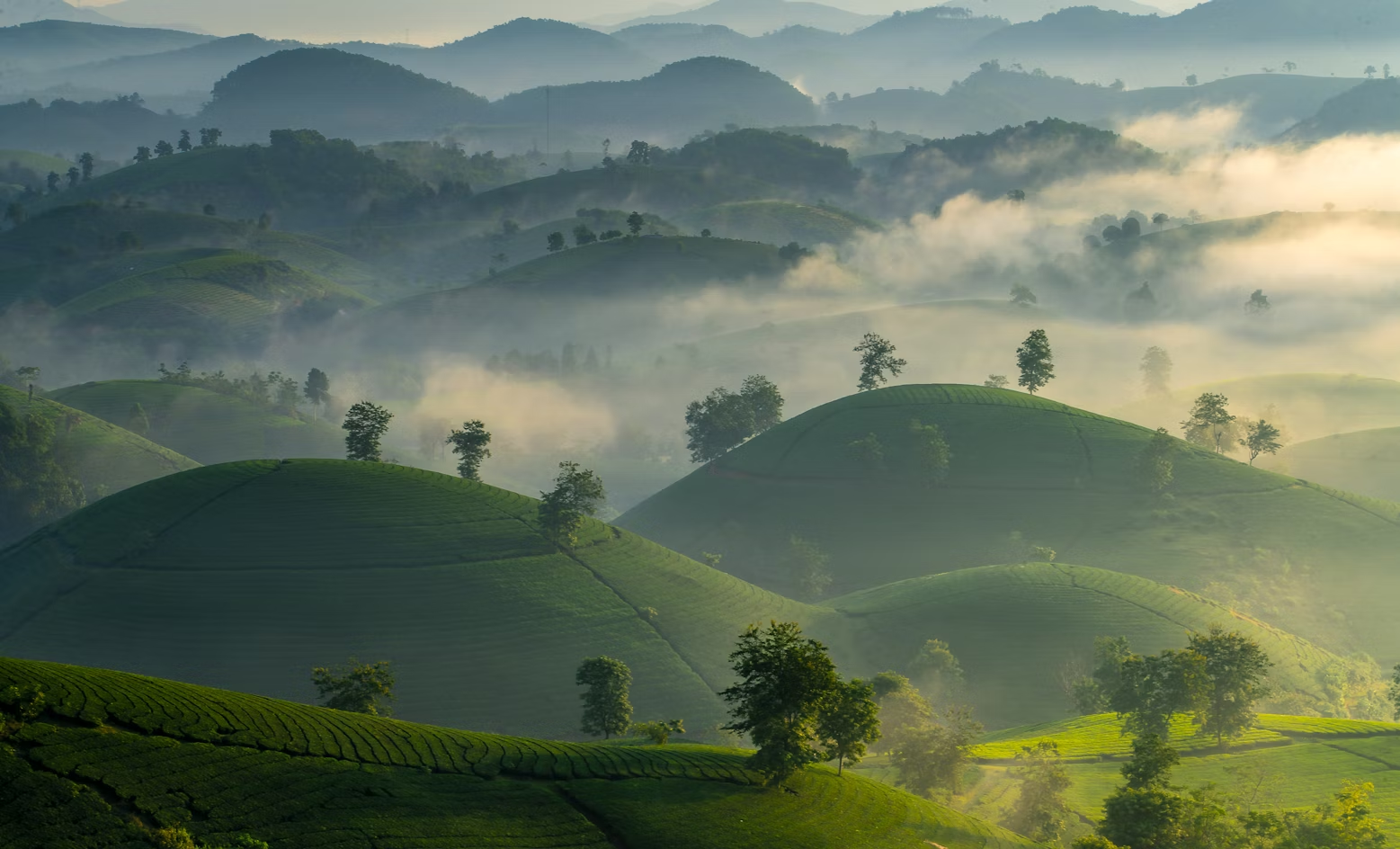
한국어 ベトナムは茶栽培の豊かな歴史を持ち、多様な気候と肥沃な土壌の恩恵を受けており、緑茶、紅茶、ウーロン茶、特選茶などさまざまな種類の茶を生産しています。
2025年3月28日
最新ニュース&レポート / ベトナム速報
コメント: コメントはまだありません.
豊かな茶栽培の歴史を持つベトナムは、多様な気候と肥沃な土壌に恵まれ、緑茶、紅茶、ウーロン茶、スペシャリティティーなど、さまざまな種類の茶を生産できる。世界有数の茶生産国の一つである同国は、中国、インド、スリランカなどの主要輸出国との競争に直面しながらも、世界市場で確固たる存在感を確立している。国内消費の拡大と輸出の可能性は有望な成長機会を示している一方、品質管理とブランディングに関する課題は依然として残っている。.
ベトナム茶産業の生産状況
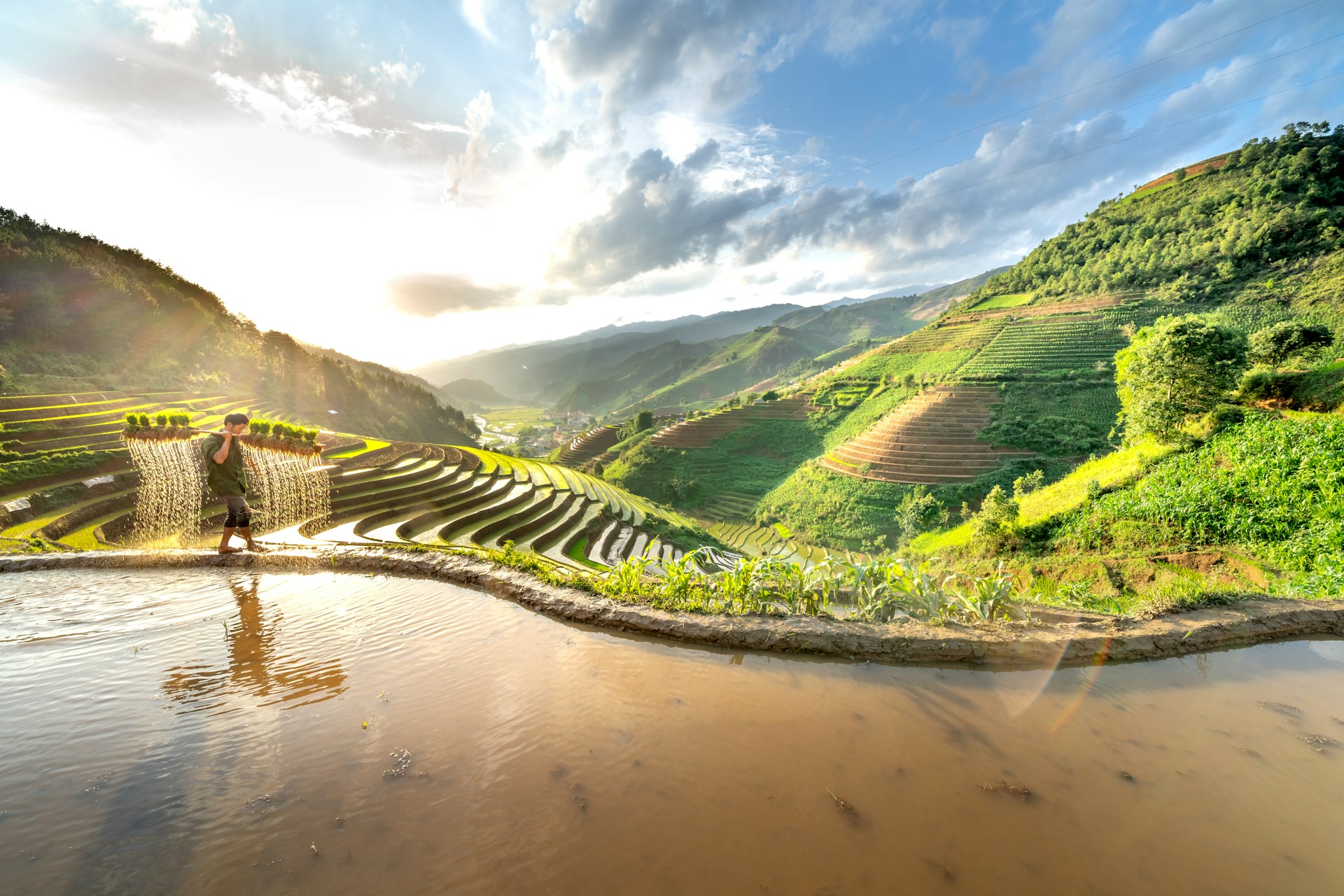
茶産業は小規模農家と大企業の両方で構成されており、それぞれが茶の生産、加工、流通の役割を果たしています。ベトナム茶協会によると、2024年には同国の茶栽培面積は合計12万8000ヘクタールに達し、乾燥茶は23万トン、完成茶は18万5000トンが生産される予定です([1]). ベトナムの「茶の都」と呼ばれることの多いタイグエン省は、高品質な緑茶で知られている。その他の主要な茶産地としては、ウーロン茶やスペシャリティティーで知られるラムドン省や、さまざまな紅茶と緑茶を生産するフート省がある ([2]).
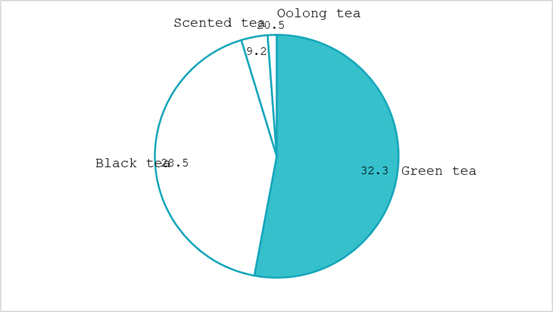
ベトナムの茶産業は、さまざまな市場の嗜好に対応する多様な製品を提供している。緑茶はベトナムで最も広く生産・消費されている茶であり、爽やかでやや苦みのある味わいが評価されている。紅茶は主に輸出され、世界各地の茶のブレンドに利用されることが多い。主にラムドン省で栽培されるウーロン茶は、国内市場と国際市場の双方で人気を集めている。香り付き茶などのスペシャリティティーやその他の高付加価値品種は、独自の風味を求める消費者の間で支持を伸ばしている。.
地域別に人気のベトナム茶
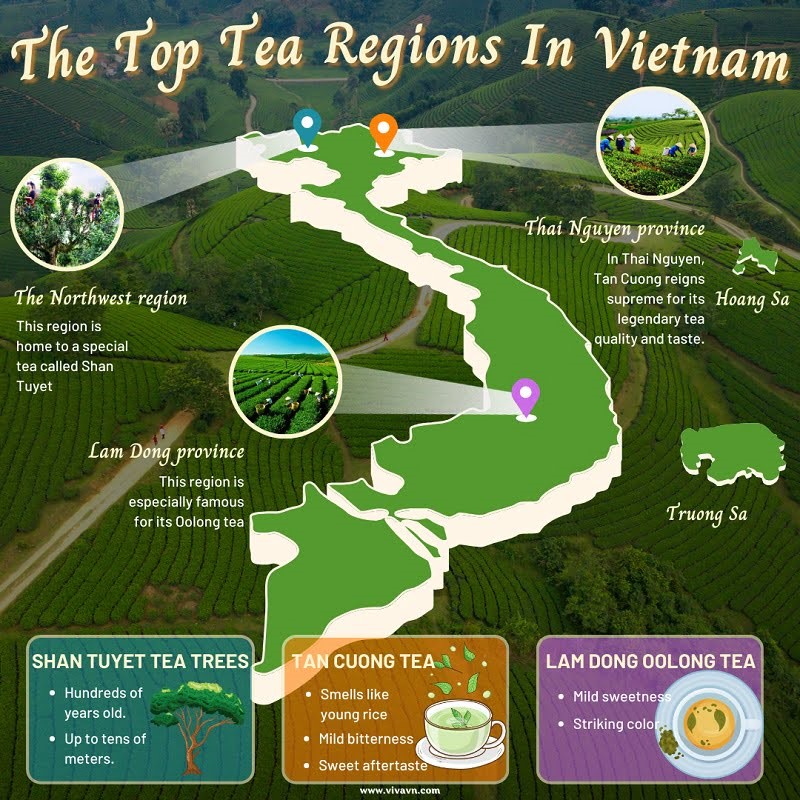
出典: Vinavn
国内消費の増加傾向
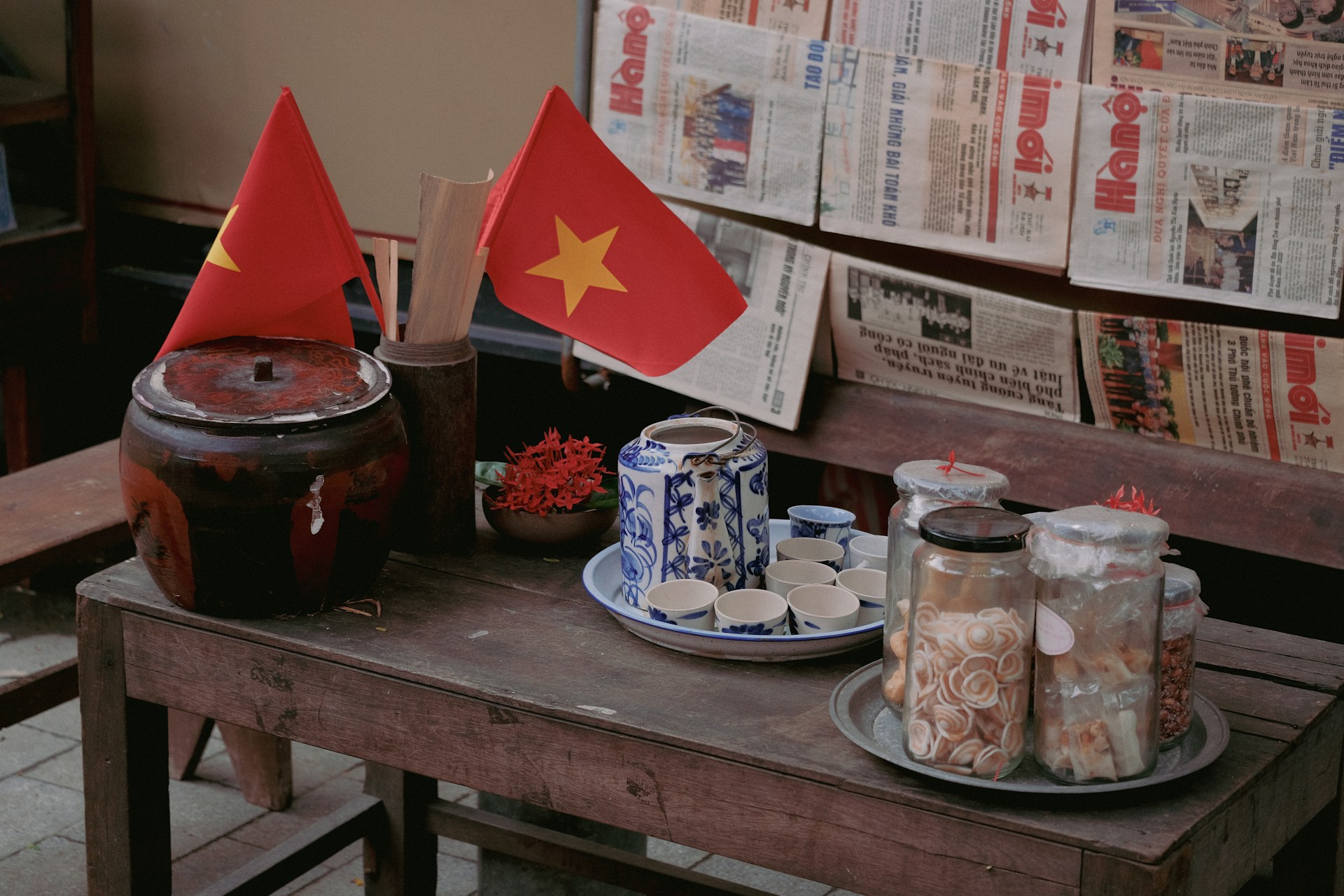
ベトナムのお茶の消費量は着実に増加しており、この国の深く根付いたお茶文化を反映しています。平均して、ベトナムの消費者は年間0.47kgのお茶を飲んでいます([3])国内総消費量は2029年までに139,070トンに達すると予測されている。これは11年連続の成長となり、記録を更新し、輸出機会とともに強力な国内市場を浮き彫りにしている。([4]).
伝統的なお茶の消費に加えて、バブルティーは特に若い消費者の間でますます人気が高まっています。伝統的なお茶の消費を超えて、バブルティーは特に若い消費者の間で人気が急上昇しています。2023年3月現在、ホーチミン市だけで192のバブルティーショップがあり、多様なお茶ベースの飲み物の需要が高まっていることを示しています。[5])。この拡大するセグメントにより、ベトナムの国内市場における茶産業はさらに強化されました。
国内の茶の消費量は同国の茶の輸出量の3分の1に過ぎないが、国内で販売される茶は高品質であるため、より高い収益を生み出している。ベトナムの消費者は高品質の製品に高いお金を払う用意があり、生茶の輸出に比べて業界の収益を押し上げている([6]2025年には、ベトナムの紅茶の小売価格は、品質と種類に応じて1キログラムあたり199,339ドンから761,200ドンの範囲になります。[7]).
ベトナム茶の輸出可能性
関連記事














ログイン / 新規登録
アカウントなしで続ける
ログイン / 新規登録
ニュースレターを購読する