

 English
  日本語
日本語  Tiếng Việt
  简体中文
简体中文  한국어
한국어 With a rich history of tea cultivation, Vietnam benefits from a diverse climate and fertile soil, allowing for the production of various tea types, including green, black, oolong, and specialty teas.

28Mar2025
Latest News & Report / Vietnam Briefing
Comments: No Comments.
With a rich history of tea cultivation, Vietnam benefits from a diverse climate and fertile soil, allowing for the production of various tea types, including green, black, oolong, and specialty teas. As one of the world’s leading tea producers, the country has established a strong presence in the global market despite competition from major exporters like China, India, and Sri Lanka. Increasing domestic consumption and export potential indicate promising growth opportunities, though challenges related to quality control and branding remain.
Production Situation of the Vietnam Tea Industry
The tea industry comprises both small-scale farmers and large corporations, each playing a role in tea production, processing, and distribution. According to the Vietnam Tea Association, in 2024, the country’s total tea cultivation area reached 128,000 hectares, with 230,000 tons of dried tea and 185,000 tons of finished tea produced ([1]). Thai Nguyen province, often dubbed the “tea capital of Vietnam,” is renowned for its high-quality green tea. Other significant tea-growing regions include Lam Dong, known for oolong and specialty teas, and Phu Tho, which produces various black and green teas ([2]).
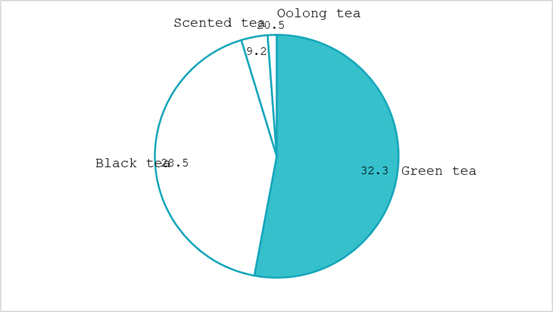
Vietnam’s tea industry offers a diverse range of products catering to various market preferences. Green tea is the most widely produced and consumed tea in Vietnam, appreciated for its fresh and slightly bitter taste. Black tea is primarily exported and is often utilized in global tea blends. Oolong tea, mainly cultivated in Lam Dong province, enjoys popularity in both domestic and international markets. Specialty teas, including scented teas and other high-value varieties, are gaining traction among consumers seeking unique flavors.
Popular Vietnamese Tea by region
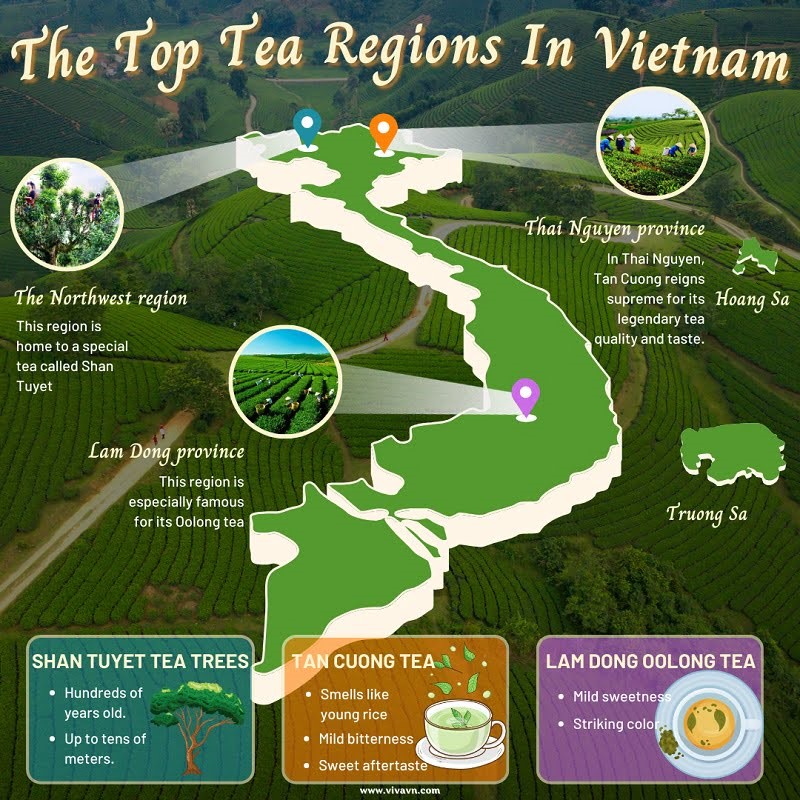
Source: Vinavn
Domestic Consumption Rising Trends
Tea consumption in Vietnam is steadily increasing, reflecting the country’s deep-rooted tea culture. On average, Vietnamese consumers drink 0.47 kg of tea per year ([3])and total domestic consumption is projected to reach 139.07 thousand tons by 2029. This marks the eleventh consecutive year of growth, setting a record and highlighting a strong domestic market alongside export opportunities. ([4]).
In addition to traditional tea consumption, bubble tea has become increasingly popular, particularly among younger consumers. Beyond traditional tea consumption, bubble tea has surged in popularity, particularly among younger consumers. As of March 2023, Ho Chi Minh City alone had 192 bubble tea shops, illustrating the rising demand for diverse tea-based beverages. ([5]). This expanding segment has further strengthened Vietnam’s tea industry in the domestic market.
Although domestic tea consumption accounts for only one-third of the country’s total tea exports, it generates higher revenue due to the premium quality of locally sold tea. Vietnamese consumers are willing to pay more for high-quality products, boosting industry revenues compared to raw tea exports ([6]). In 2025, the retail price of black tea in Vietnam ranges from 199,339 VND to 761,200 VND per kilogram, depending on quality and type. ([7]).
Export Potential of Vietnamese Tea
Related article

























Log in / Register
Continue without an account
Log in / Register
SUBSCRIBE NEWSLETTER