

 English
  日本語
日本語  Tiếng Việt
  简体中文
简体中文  한국어
한국어 In Hanoi’s dynamic retail scene, the "Shop in the Alley" model has emerged as a strategic approach, especially for small businesses.

17Nov2025
Latest News & Report / Vietnam Briefing
Comments: No Comments.
In Hanoi’s dynamic retail scene, the “Shop in the Alley” model has emerged as a strategic approach where small businesses operate in narrow alleys instead of premium street-front locations or malls. This model offers cost advantages, builds loyal customer communities, and leverages modern online marketing despite limited physical space. It reflects shifting consumer preferences and evolving retail landscapes shaped by rising rents and e-commerce.
Market Overview
In the retail real estate market in Hanoi, street-front shops have been the traditional choice for businesses due to their high visibility and accessibility. However, these options often go along with a premium rental price. Specifically, in Cầu Giấy Street – a major thoroughfare in Hanoi, street-front houses with an area of 55 to 80 square meters are rented at prices ranging from 60 to 80 million VND (about USD 2,400–3,200) per month. Similarly, a 90-square-meter street-front house on Kim Mã Street, a central commercial road, is currently rented at 120 million VND (about USD 4,800) per month[1].
Modern retail formats such as shopping malls continue to expand. For instance, in the first quarter of 2025, Hanoi added about 18,000 m² of retail space with the opening of the AEON Mall Xuan Thuy in Cau Giay district[2]. Hanoi malls’ location is competitive with the occupancy rate of 86% and the average ground floor rents rising to VND1.3 million per sqm per month[3].
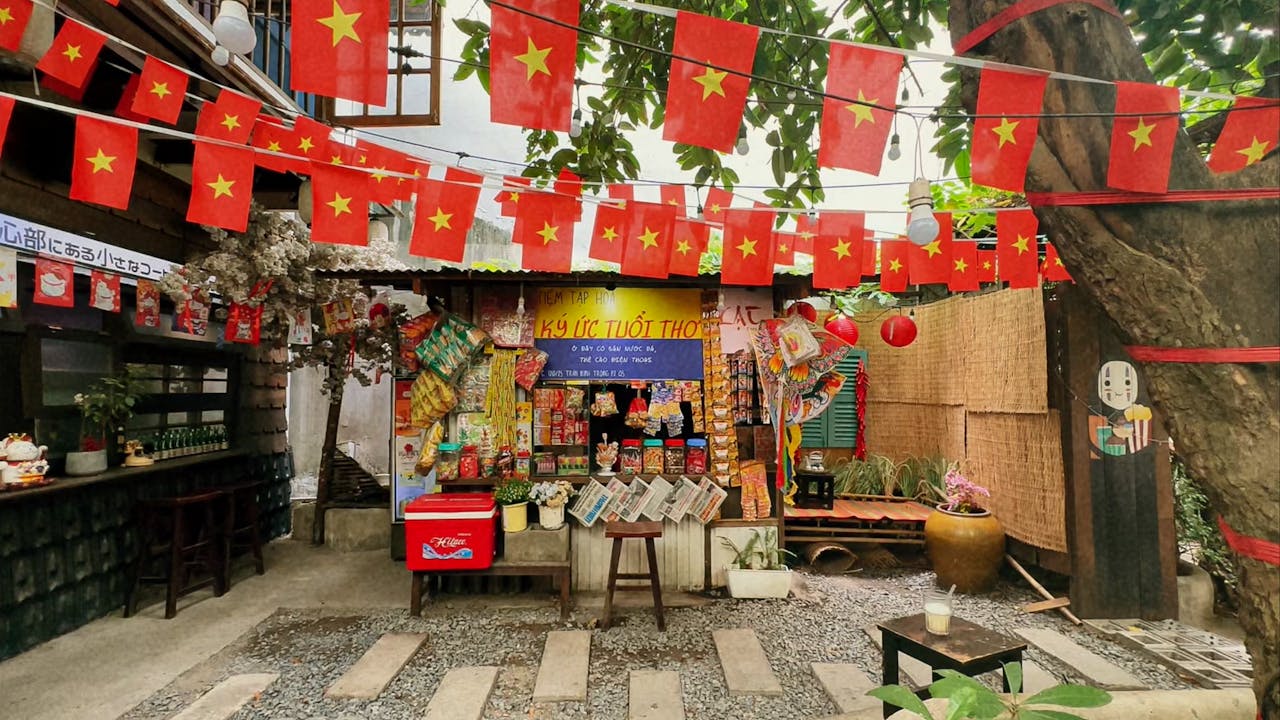
Rather than opting for high-visibility street-front or mall locations, a growing number of smaller independent retailers choose narrower lanes and alleys. These compact lanes traditionally are home to long-established family-run eateries, coffee shops, and tailor stores. Now they are attracting a new wave of small businesses and creative start-ups. Shop owners deliberately choose these tucked-away spaces to avoid the soaring rents of main streets while still benefiting from changing customer behaviour and online platforms. Properties in Hanoi’s alleys under 30 m² have become increasingly sought-after for their affordability and strategic potential, reflecting a growing shift in how urban retailers view visibility, cost, and customer engagement[4]. Up to 45% newly opened F&B shops operate in small alleys, which helps them save 50% to 70% cost for space[5].
A plant store opened in an alley of Hanoi
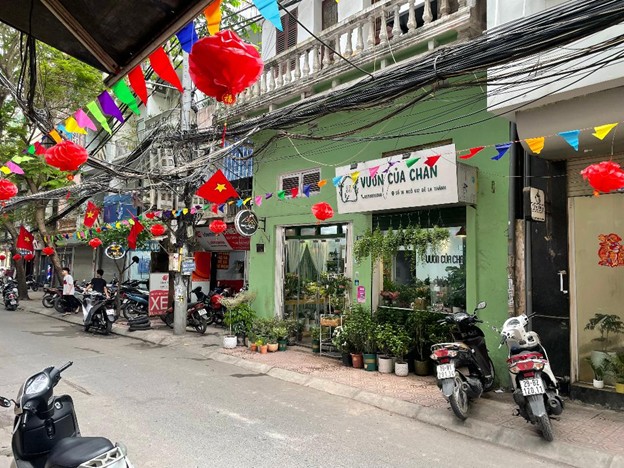
Source: The Saigon Times
Drivers for “Shop in the Alley” model
Increasing rental price of street-front premises
The rising cost of street-front retail space is a major impetus for businesses to seek cost-effective alternatives. Premium locations demand high rent payments, which many small and independent retailers cannot sustain without sacrificing other investments. Rental prices in central areas and prime locations tend to increase annually, further intensifying financial pressure on small operators. Compared to the Central Business District area in Hanoi, the rent for Nthe on-central area is equivalent to one-fifth, which is a huge saving for small and medium enterprises[6].
Hanoi’s Retail Rent from Q1/2023 to Q2/2025
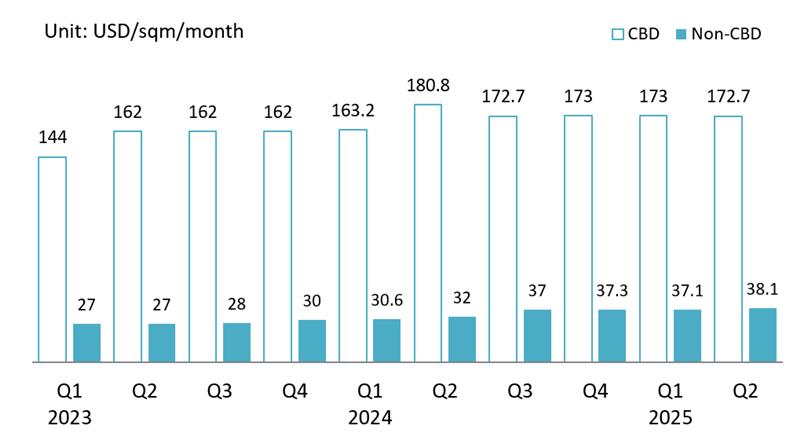
Source: CBRE Vietnam
The rise of e-commerce
With the impressive growth of e-commerce, a physical store’s visibility is less critical than before, as it is not the sole place to reach customers and showcase products. For some businesses, physical spaces only serve as warehouses, transit points for goods, or service centers[7]. An effective online presence and delivery network can generate strong sales even from remote or hidden locations. Notably, as the motorbike is Vietnamese dominant vehicle of transportation, couriers can easily access narrow streets and alleys to pick up and deliver goods efficiently. This flexibility has reduced the dependency on main streets, allowing businesses in alleys to thrive as hybrid models combining online visibility and offline experience.
Changing Consumer Behaviors
Vietnam’s young, digitally connected consumers are driving a cultural shift in retail experiences. Rather than convenience or prestige, they tend towards authenticity, novelty, and social media appeal. Many young customers claim that they choose which shops to visit through TikTok reviews, which most of the time lead them to alley located shops[8]. Unlike previous beliefs that high-quality shops must be located on central, high-traffic streets, today’s consumers focus more on product quality, distinctive brand stories, and unique value propositions.
Consumers are also more adapted to the growth of e-commerce, especially after the Covid 19. Many now prefer online or hybrid shopping experiences. The report of GWI shows that in 2025, 64% of respondents indicated that they plan to increase their online shopping activities, while about 40% reported greater use of in-store pickup services after ordering online[9]. This highlights opportunities for a hybrid model where alley shops can take advantage of.
The trend of Vietnamese consumer behaviour in 2025
Unit: %

Source: GWI
The Cost-Effectiveness of “Shop in the Alley” model
Rental expenses represent the largest cost component in most retail business models. Spaces inside an alley can cost 30%–70% less than street-front rents, directly reducing the financial burden on startups and independent operators, enabling them to operate with smaller initial capital investments and lower breakeven thresholds. In addition, alley properties are typically more compact and easier to manage, resulting in lower expenses for utilities, maintenance, and staffing. These efficiencies make the model particularly appealing to small-scale entrepreneurs, creative studios, and niche food and beverage outlets.
Cost savings on rent allow businesses to reallocate financial resources toward higher-value activities that enhance competitiveness. Shop owners can invest in product quality, interior design, brand storytelling, and digital marketing. For example, an alley café can afford premium ingredients, distinctive décor, or better-trained staff, which directly influence customer satisfaction and loyalty.
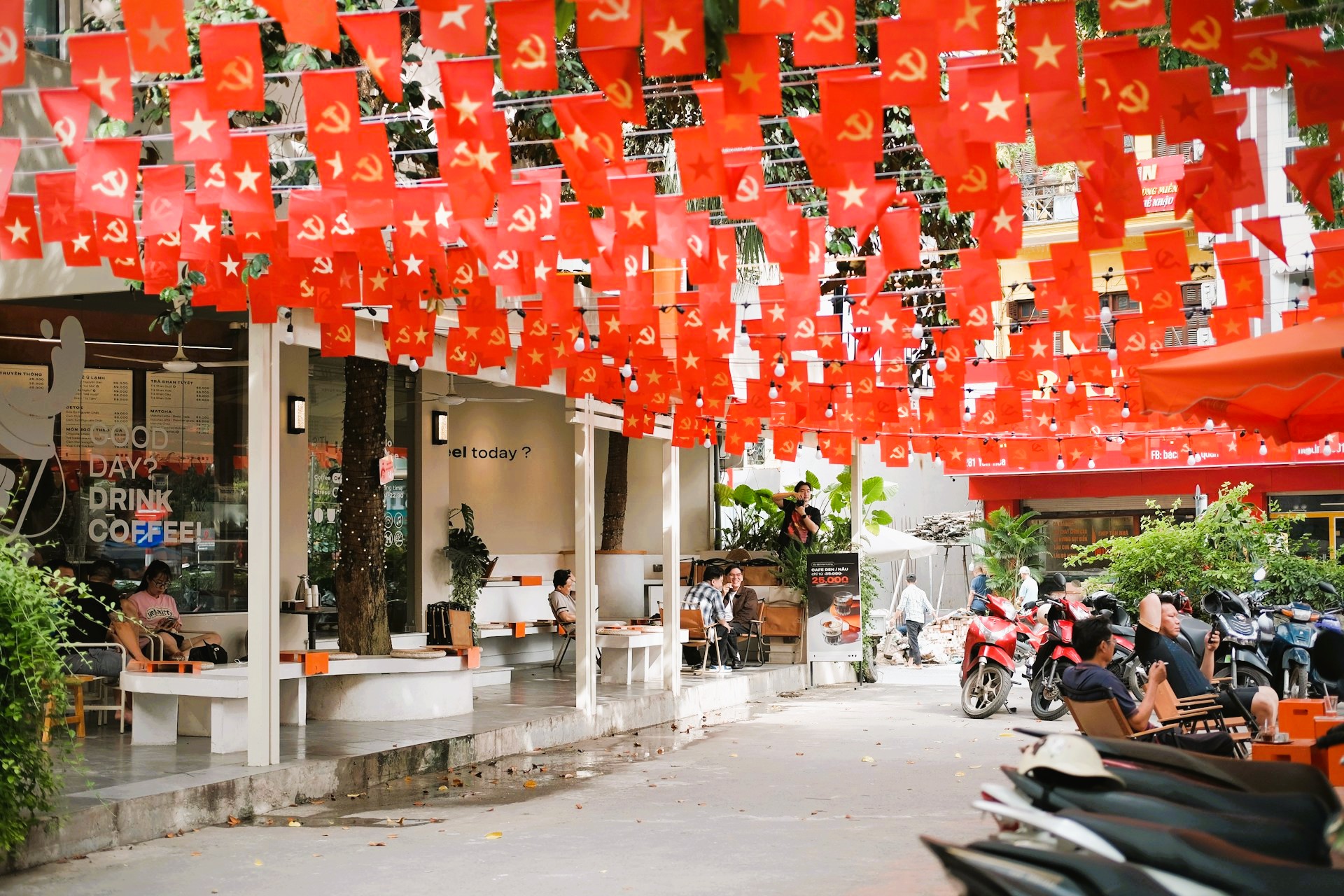
A coffee shop in the alley of Hanoi

Source: Cafe Cuối Ngõ (Cafe at the End of the Alley)
The cost-effectiveness of the alley model is amplified by Vietnam’s rapidly expanding e-commerce and social media ecosystem. In the case of a clothes store, most revenue now comes from e-commerce platforms such as Shopee, Lazada, and TikTok Shop. The physical store mainly serves as a showroom or experience point, where customers visit only when they wish to try on products or verify quality before purchasing[10]. As a result, marketing budgets can be more targeted, and performance-based, yielding higher returns on investment.
Operating from an alley location also enhances risk control. The lower fixed costs and shorter lease terms typical of these spaces make it easier for businesses to adapt or relocate in response to market changes. Shop owners can experiment with new concepts or seasonal pop-ups with minimal sunk costs, improving agility in a dynamic consumer environment.
Implications and recommendations for attracting customers
While the “Shop in the Alley” model offers strong cost advantages and creative potential, it also faces several notable challenges. Alley shops are often hidden from main traffic flows, making them dependent on digital discovery and word-of-mouth. Moreover, accessibility constraints such as narrow walkways, limited parking, or poor signage can deter potential customers. Notably, intensifying competition is becoming evident as more shops adopt the same concept, leading to market saturation within popular alley clusters.
To thrive under these conditions, shop owners must move beyond cost savings and be more strategic to enhance customer attraction:
Strengthen Digital Discoverability: Businesses should maintain listings on Google Maps and leverage social media platforms. Regular posts, short videos, and customer-generated content can significantly expand reach.
Design Memorable In-Store Experiences: Since customers must make a conscious effort to find alley shops, the physical experience should feel unique and rewarding. Shop owners should aesthetic interiors, friendly service, and sensory details (lighting, scent, music) that make each visit memorable and encourage word-of-mouth sharing.
Build Community and Local Collaboration: Alley shops thrive on connection and character. Owners can collaborate with neighboring businesses, local artists, or community groups to host small events, weekend markets, or art exhibitions.
Integrate Online and Offline Channels: Online platforms such as Shopee, Lazada, or TikTok Shop offer reach and sales scalability. Integrating delivery, online booking, or click-and-collect services helps bridge convenience with experience.
Enhance Accessibility and Signage: Even within the constraints of narrow lanes, simple improvements such as directional signage can guide customers more effectively. Collaborating with landlords or nearby tenants to improve shared access areas like parking lots can encourage return visits.
The “Shop in the Alley” model represents more than a cost-saving strategy; it is a strategic evolution in Vietnam’s retail landscape. Success depends on how well businesses convert affordability into opportunity in the heart of Hanoi’s hidden lanes.
* If you wish to quote any information from this article, please kindly cite the source along with the link to the original article to respect copyright.
| B&Company
The first Japanese company specializing in market research in Vietnam since 2008. We provide a wide range of services including industry reports, industry interviews, consumer surveys, business matching. Additionally, we have recently developed a database of over 900,000 companies in Vietnam, which can be used to search for partners and analyze the market. Please do not hesitate to contact us if you have any queries. info@b-company.jp + (84) 28 3910 3913 |
[1] Hanoi Times, Hanoi street-front house rental market is sluggish due to high prices (https://kinhtedothi.vn/mat-bang-cho-thue-nha-pho-ha-noi-e-am-vi-gia-cao.700136.html)
[2] Hanoi Times, Rising demand and new supply boost Hanoi retail real estate (https://hanoitimes.vn/rising-demand-and-new-supply-boost-hanoi-retail-real-estate.670583.html)
[3] The Investor, Vietnam’s retail space market rebounds after massive crackdowns on counterfeit goods (https://theinvestor.vn/vietnams-retail-space-market-rebounds-after-massive-crackdowns-on-counterfeit-goods-d16447.html)
[4] Lao Dong News, Real estate in alleys under 30m2 is sought after (https://news.laodong.vn/bat-dong-san/nha-dat-trong-ngo-duoi-30m2-duoc-san-don-1504904.ldo)
[5] CafeF, F&B premises trends: “Prime” premises are no longer an advantage, F&B business booms with “alley shops” (https://cafef.vn/xu-huong-mat-bang-fb-mat-bang-dac-dia-khong-con-la-loi-the-bung-no-kinh-doanh-fb-quan-trong-hem-188250605081618147.chn)
[6] CBRE, Hanoi Figure Q2 – 2025 (https://mktgdocs.cbre.com/2299/695f738b-16d6-46a7-96b5-a7a486706ea5-1685007262/CBRE_Vietnam_Hanoi_Figures_Q2_.pdf)
[7] VTV, The trend of doing business in small alleys (https://vtv.vn/kinh-te/xu-huong-kinh-doanh-trong-ngo-nho-20240425221605034.htm)
[8] The Saigon Times, Hanoi: The trend of renting shops in alleys for business becoming pronounced (https://thesaigontimes.vn/ha-noi-xu-huong-thue-cua-hang-trong-ngo-de-kinh-doanh-ngay-cang-dam-net/)
[9] Brands Vietnam, 5 Contradictory Consumer Behaviors Marketers Need to Know in 2025 (https://www.brandsvietnam.com/congdong/topic/344889-5-hanh-vi-nguoi-tieu-dung-trai-nguoc-marketer-can-biet-trong-nam-2025)
[10] Lao Dong News, Business premises in Hanoi alley are popular (https://laodong.vn/bat-dong-san/mat-bang-kinh-doanh-trong-ngo-hem-ha-noi-dat-khach-1185197.ldo)
Related article





























Log in / Register
SUBSCRIBE NEWSLETTER