

 English
  日本語
日本語  Tiếng Việt
  简体中文
简体中文  한국어
한국어 By the end of 2025, Vietnam social commerce market reached USD 5.0 billion, growing 25.4% year-on-year, with a CAGR of 37.7%.

20Apr2026
Highlight content / Highlight Content JP / Highlight content vi / Industry Reviews / Latest News & Report
Comments: No Comments.
Vietnam’s retail ecosystem is undergoing a major transformation as social interaction, entertainment, and commerce increasingly converge. Social commerce—shopping integrated into social media platforms—has evolved from a niche trend into a key driver of the country’s retail economy. By the end of 2025, Vietnam’s social commerce market reached USD 5.0 billion, growing 25.4% year-on-year, following rapid expansion between 2021 and 2024 with a CAGR of 37.7%. The market is expected to double to around USD 10.21 billion by 2030, reflecting its long-term integration into consumer shopping habits [1].
This shift is reshaping the consumer journey. Traditional e-commerce relied on intent-based searches, where consumers actively looked for specific products. In contrast, social commerce is driven by algorithm-based discovery within entertainment feeds on platforms such as TikTok, Facebook, and Zalo[2]. This “content-to-cart” model significantly shortens the purchasing process, enabling users to move from viewing content to placing an order in just a few clicks[3]. The trend is largely fueled by Gen Z and Millennials, who prioritize authenticity, engagement, and personalized experiences in their purchasing decisions [7].
Social commerce – a rapidly growing online shopping method
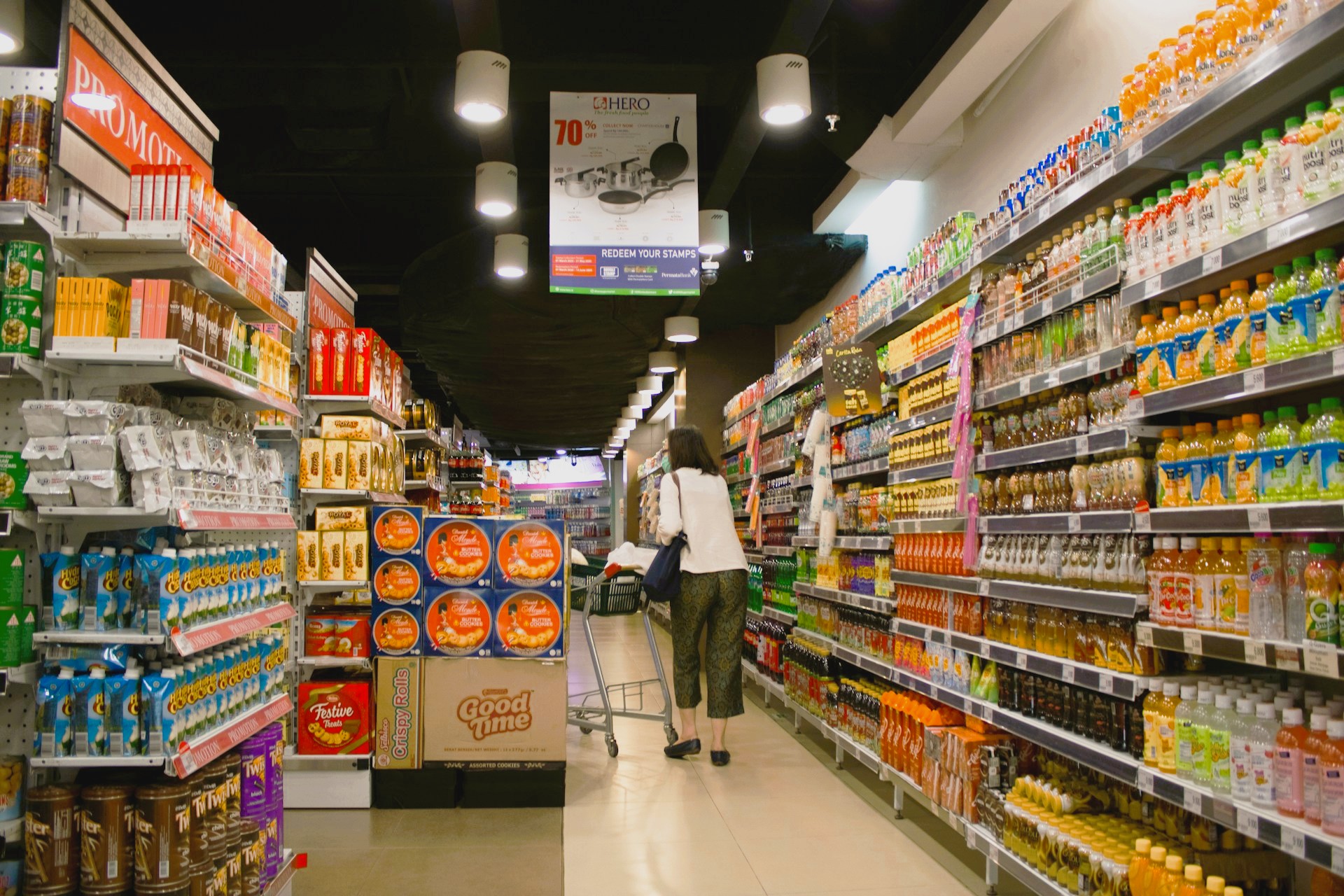
Vietnam’s social commerce growth is not an isolated event but the result of a “leapfrog” effect in retail infrastructure. Unlike Western markets that transitioned gradually from traditional brick-and-mortar to organized big-box retail and then to e-commerce, Vietnam is bypassing several of these stages. The rapid proliferation of mobile internet and smartphones has allowed consumers to move directly from traditional wet markets and unorganized grocery stores to sophisticated, mobile-first social shopping environments [2].
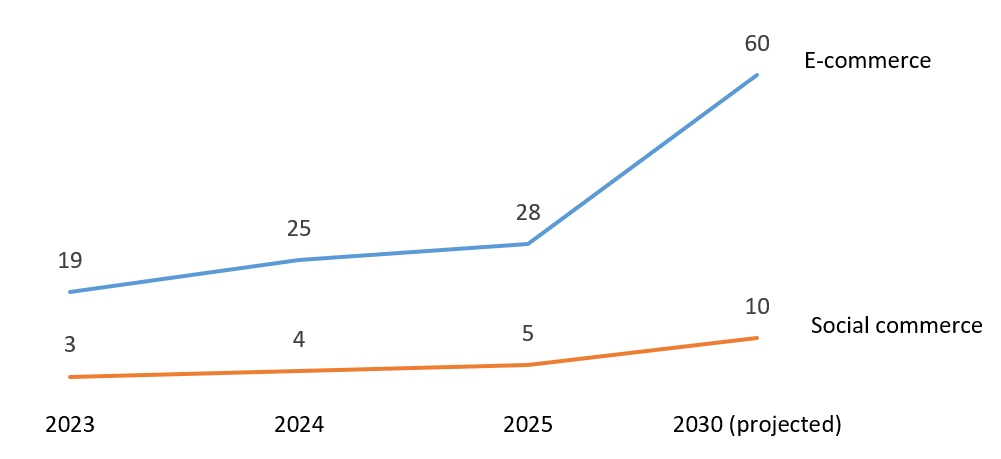
Figure 1: The growth dynamics of the social commerce sector and e-commerce market in Vietnam (2023-2030)
Unit: US billion
Source: B&Company’s synthesis
As shown in Figure 1, Vietnam’s e-commerce market reached USD 28 billion in 2025. Of which, Social commerce accounted for 17.8% of the total market value, marking a 25.4% increase from 2023 [1].
This growth is largely driven by Vietnam’s young and tech-savvy population. As of January 2025, the country has 76.2 million social media users, representing 75.2% of the total population [4]. Smartphone usage is nearly universal among online shoppers, with 92% using mobile devices to make purchases [3]. Generation Z, which represents about 35% of the market, plays a major role in shaping consumption trends. Their shopping behavior is often driven by hedonic motivation, where the enjoyment of discovering products is as important as their practical value. This group is 51% more likely to be influenced by viral social media trends and 55% more likely to rely on micro-influencer reviews before purchasing. Meanwhile, Millennials remain highly active and tend to spend more per order, with average order values around US$125. However, they place greater importance on clear return policies and flexible logistics when making purchase decisions [2].
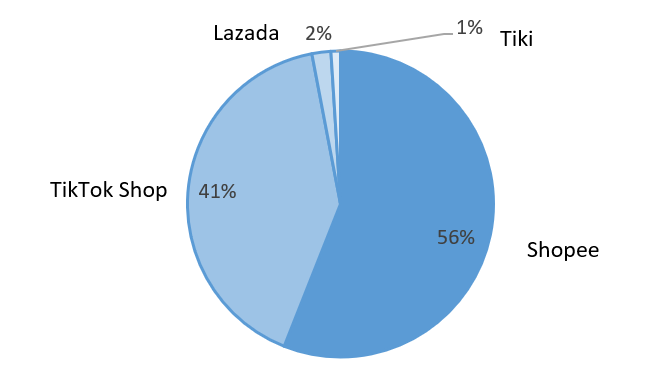
Figure 2: Market share of e-commerce platforms by transaction value in Vietnam (Q3/2025)
Unit: %
Source: The Vietnam Tech & Venture Capital Outlook 2025 by VinVentures
Regarding the competitive structure, according to the Vietnam Tech & Venture Capital Outlook 2025 by VinVentures, Vietnam’s digital retail market has rapidly consolidated. What was previously a fragmented market is now dominated by a duopoly between Shopee and TikTok Shop, which together account for 97% of the market share among the top four platforms [2]. Notably, China-backed TikTok Shop is quickly narrowing the gap with market leader Shopee [5].
Vietnam’s retail landscape: the shift toward digital platforms
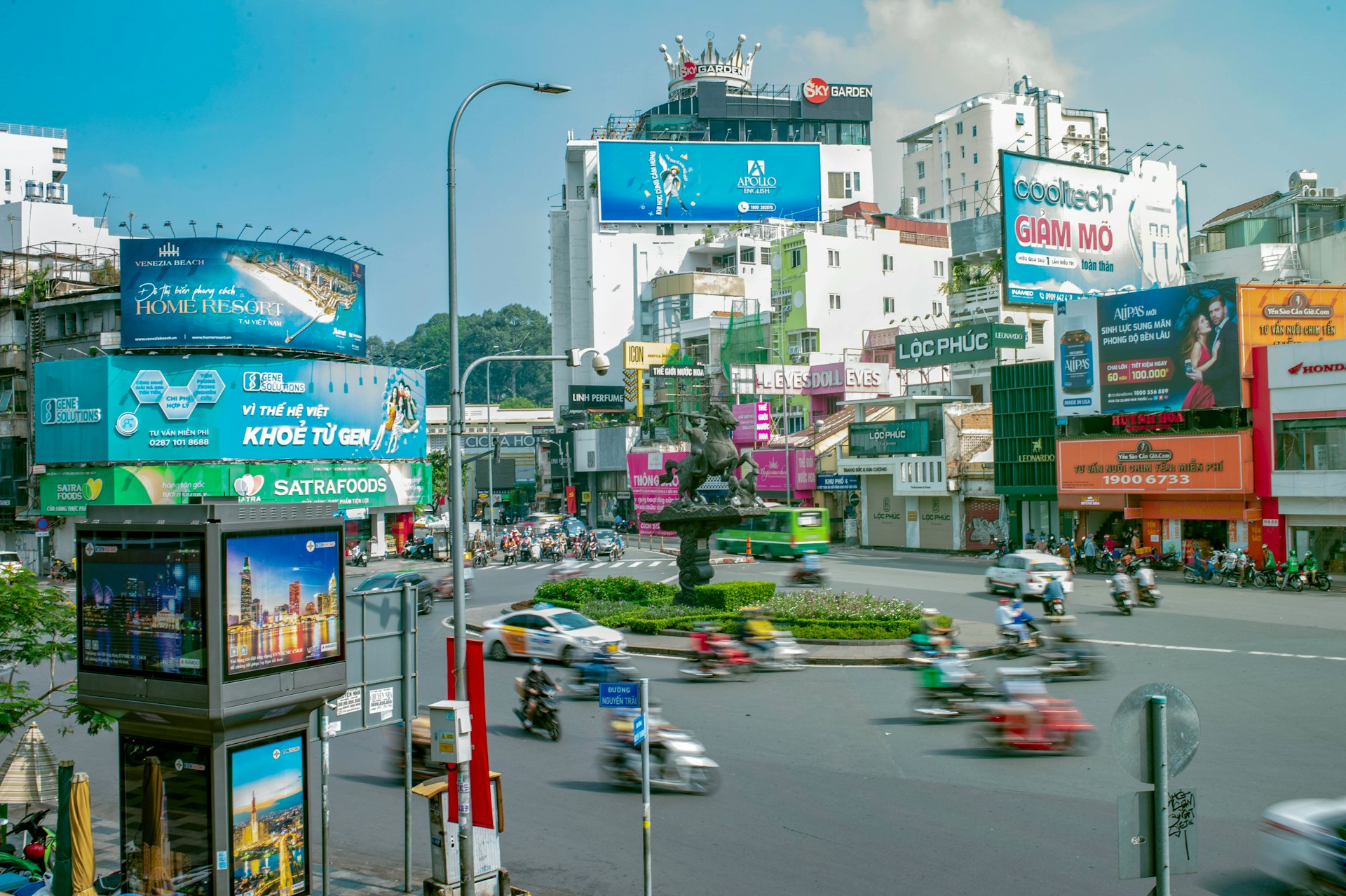
Vietnam’s retail market is undergoing a significant transformation, shifting from traditional formats to a digital ecosystem where social commerce serves as a key growth driver.
Table 1: The change of shopping model
| Characteristics | Old Model (Search-Intent) | New Model (Shoppertainment) |
| Motivation | Purchase due to existing need (Proactive) | Purchase because it’s interesting/fun (Passive/Emotional) |
| Length of time for making decision | Long (Price comparison, reading reviews from many places) | Very short (Closing the deal immediately during Livestream) |
| Main channel | Google, Website, Search Bar, E-commerce platforms | TikTok, Facebook Reels, YouTube Shorts |
| Trust factors | Large brands, TV commercials | Key Opinion Consumer (KOC), Key Opinion Seller (KOS), Real-world experience (Information Gain) |
B&Company’s synthesis
The era of “information gain”
Today’s consumers are highly sensitive to staged content or generic advertising. Successful content no longer simply claims that a product is good; instead, it must provide real value and authentic insights—for example, sharing honest experiences after using a product for a period of time, including both advantages and shortcomings that brands may not highlight. Applying the E-E-A-T principle (Experience, Expertise, Authoritativeness, Trustworthiness) from SEO to short-form video content has therefore become essential for building credibility and long-term customer loyalty [8].
The Polarization of Sellers
The decline in the number of sellers (Shopee −32%, Lazada −24.7%) suggests that the era when anyone could sell online by simply listing products is ending [10]. The market is becoming increasingly professionalized, where only sellers with strong operational capabilities—such as efficient logistics, reliable after-sales service, and the ability to create engaging content—can remain competitive. In addition, the new tax regulation_ Decree No. 117/2025/NĐ‑CP, effective July 1, 2025, is expected to act as a final filter, removing informal and non-transparent sellers and shifting the market toward more structured businesses and registered households [9].
AI Is No Longer Optional
With around 80% of marketers already using AI, those who do not adopt it risk falling significantly behind [8]. AI now plays a critical role in marketing by enabling large-scale personalization—recommending products or content before customers even actively search for them—and by accelerating content production. A single concept or script can be quickly transformed into multiple videos or visual assets tailored to different customer segments.
Conclusion
Vietnam’s social commerce market is witnessing rapid growth, with projections indicating it will reach USD 10.21 billion by 2030, driven by the convergence of entertainment, social interaction, and online shopping. The market’s dynamism is largely fueled by a tech-savvy, younger population, particularly Generation Z and Millennials, who favor personalized, authentic shopping experiences. E-commerce platforms like Shopee and TikTok Shop dominate the landscape, while social commerce is set to reshape consumer behavior through shorter purchasing cycles and a content-to-cart model. This transformation presents significant opportunities for businesses to capitalize on the evolving digital retail environment, particularly by enhancing operational efficiency, engaging content creation, and leveraging AI for personalized marketing. With a shift towards a more professionalized market and the implementation of regulatory measures like Decree No. 117/2025/NĐ-CP, businesses that can adapt to these changes will find growth opportunities in this burgeoning sector.
Read more
Social Commerce’s Growth and Business Opportunities in Vietnam
Vietnam’s new E-commerce Law 122/2025/QH15: Key provisions and implications
* If you wish to quote any information from this article, please kindly cite the source along with the link to the original article to respect copyright.
| B&Company
The first Japanese company specializing in market research in Vietnam since 2008. We provide a wide range of services including industry reports, industry interviews, consumer surveys, business matching. Additionally, we have recently developed a database of over 900,000 companies in Vietnam, which can be used to search for partners and analyze the market. Please do not hesitate to contact us if you have any queries. info@b-company.jp + (84) 28 3910 3913 |
Reference:
2. https://www.flynde.com/blog/livestreaming-vietnam
3. https://opollo.onpoint.vn/blog/social-commerce-on-the-rise-in-vietnam-2025-outlook/
Related article





























Log in / Register
SUBSCRIBE NEWSLETTER