

 English
  日本語
日本語  Tiếng Việt
  简体中文
简体中文  한국어
한국어 Explore manufacturing in Vietnam, from key industries and factory locations to production costs, supplier selection and market entry considerations.

01Oct2026
Announcement / Highlight content / Highlight Content JP / Highlight content vi / Latest News & Report
Comments: No Comments.
For the full writing, please refer here  BCompany_Vietnam Manufacturing Pillar_EN
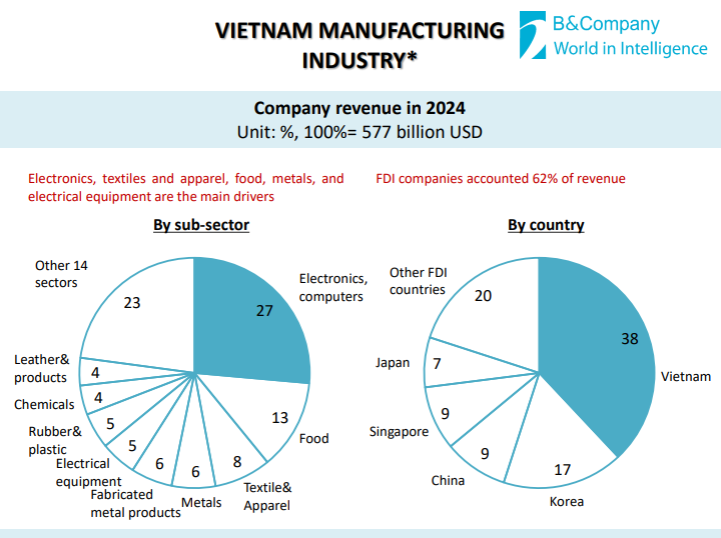
Vietnam manufacturing offers several routes for foreign businesses: establishing production, sourcing from existing factories, and supplying equipment or services to industrial customers. The right approach depends on the product, required quality, customer location, and ability to manage suppliers. This guide brings together B&Company’s industry research to help companies assess the main manufacturing sectors, compare locations, and plan market entry.
The sector’s expansion provides a strong starting point. Vietnam’s National Statistics Office estimated manufacturing value added grew by 9.97% in 2025, its fastest annual growth during 2019–2025[1].
Why companies consider manufacturing in Vietnam
Vietnam combines an established export manufacturing base with opportunities to serve domestic consumers and industrial customers. Companies can use local production to diversify supply chains, manufacture closer to customers or develop a regional sourcing network. These objectives lead to different location and supplier requirements.
Japanese manufacturers already form part of this industrial base. In JETRO’s FY2025 survey, 51.1% of responding Japanese manufacturers in Vietnam planned to expand over the following one to two years. The finding indicates continued investment interest, while leaving room for substantial differences between industries and regions[2].
Trends in Japanese companies’ business development in Vietnam
Unit: %. Figures in parentheses indicate the number of respondents
| Category | Expand | Maintain current operations | Downsize/ relocate to a third country or withdraw |
| Vietnam overall (905) | 57 | 38 | 5 |
| Manufacturing total (409) | 51 | 43 | 6 |
| Food products (31) | 87 | 10 | 3 |
| Chemicals and Pharmaceuticals (26) | 69 | 31 | 0 |
| Electrical and electronic equipment (25) | 60 | 40 | 0 |
| Precision and medical equipment (17) | 59 | 35 | 6 |
| Textiles and apparel (28) | 57 | 32 | 11 |
| Transportation equipment (6) | 50 | 33 | 17 |
| Electrical and electronic components (38) | 50 | 47 | 3 |
| Iron, nonferrous metals and metal products (74) | 49 | 47 | 4 |
| General machinery (27) | 44 | 44 | 11 |
| Paper, wood products and printing (20) | 40 | 55 | 5 |
| Plastic products (33) | 39 | 55 | 6 |
| Rubber, ceramics, stone and clay products (20) | 35 | 60 | 5 |
| Transportation equipment parts (36) | 31 | 53 | 17 |
| Other manufacturing (28) | 50 | 39 | 11 |
| Northern Vietnam (205) | 39 | 52 | 9 |
| Central Vietnam (24) | 42 | 58 | 0 |
| Southern Vietnam (180) | 66 | 30 | 4 |
Source: JETRO
For a component producer, access to an assembler’s procurement network may be decisive. A food manufacturer will place greater weight on raw materials, distribution and consumer demand. An equipment supplier needs to establish who controls purchasing decisions and whether local maintenance can be delivered economically. B&Company’s analysis of Japanese investment in Vietnam’s manufacturing sector provides further context on these business models and industry connections[3].
Main manufacturing industries in Vietnam
An initial market assessment should identify the production stage a company intends to enter. A country can have extensive final assembly without a complete domestic supply chain for its materials, components and machinery.
Electronics and semiconductors
Electronics manufacturing creates opportunities for component suppliers, precision tooling, inspection systems and production support. Within semiconductors, assembly, packaging and testing need to be assessed separately from chip design and wafer fabrication. Each activity has different requirements for capital, skills, utilities and customer qualification.
For prospective suppliers, the practical starting point is a specific process and customer requirement. Cleanroom equipment, materials and engineering services should be assessed against the installed production base and qualification procedures of individual customers. B&Company’s review of Vietnam’s semiconductor value chain and opportunities for Japanese companies explores these distinctions. Refer here for more details
Vietnam value chain of semiconductor
| Value Chain Stage | Vietnam Position | Key Players | Assessment |
| Upstream | IC Design | Renesas, Marvell, Synopsys, FPT Semiconductor | Growing |
| Midstream | Wafer Fabrication | N/A | Weak |
| Downstream | OSAT | Intel, Amkor, Hana Micron | Strong |
Source: B&Company
Machinery and supporting industries
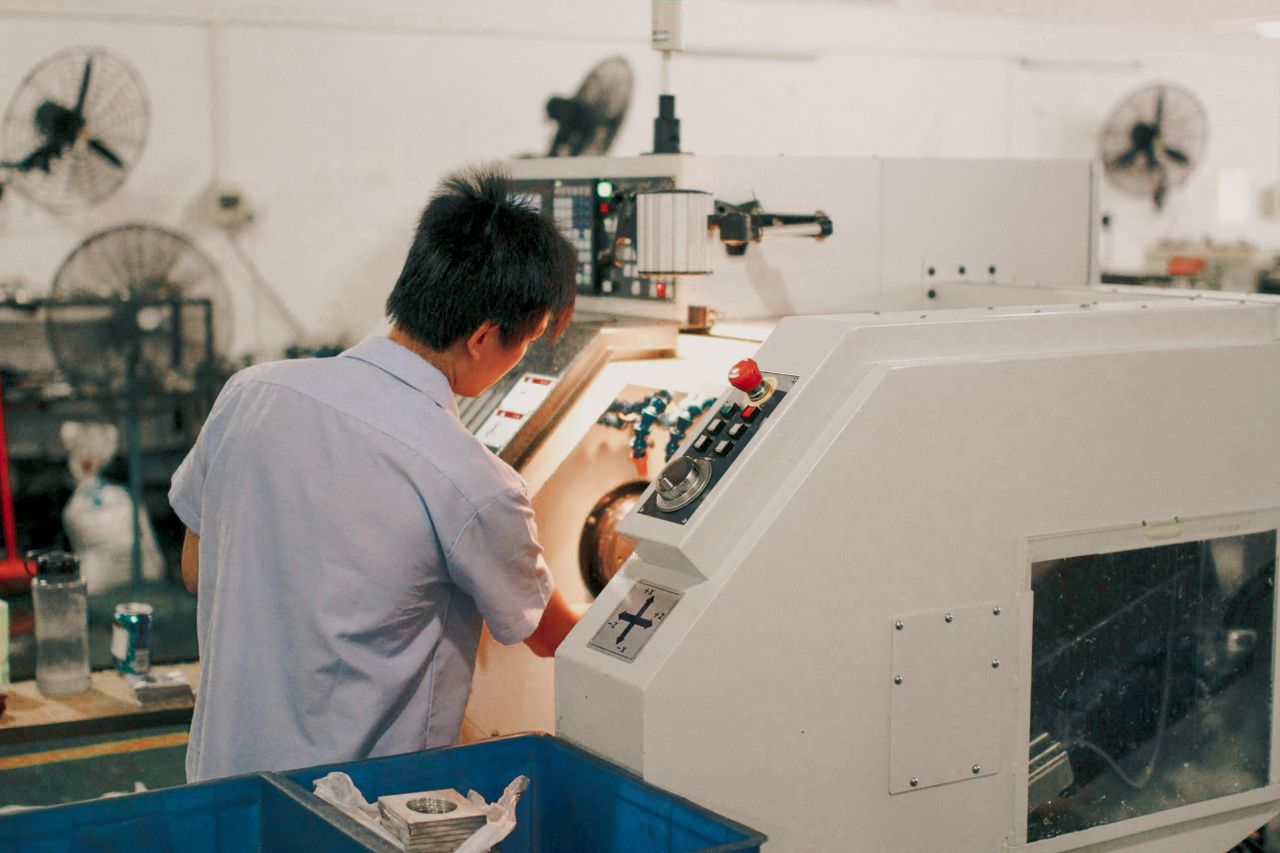
Supporting industries supply the parts, materials and processing services used by other manufacturers. Activities include machining, mould making, metalworking and industrial components. Their commercial value depends on repeatability, engineering capability and delivery performance.
A supplier with modern machines still needs to demonstrate process control and consistent output. Foreign companies assessing this segment should examine achievable tolerances, measuring equipment, material certification and production records. B&Company’s research on precision manufacturing and supporting industries in Vietnam considers where technical cooperation and supplier development can address capability gaps. Refer here for more details.
Examples of precision manufacturing companies in Vietnam
| No. | Company | Head office | Origin | Main precision manufacturing focus |
| 1 | Misumi Vietnam | Northern | Japan | Precision mechanical components for factory automation, press dies, plastic moulds, high-tech machines, and measuring equipment |
| 2 | Aizaki Vietnam | Southern | Japan | 5-axis CNC milling, CNC turning, grinding, wire EDM, tight-tolerance metal components |
| 3 | Takako Vietnam | Southern | Japan | Hydraulic piston pumps, motors, and related precision components |
| 4 | Yamaguchi Vietnam | Northern | Japan | CNC precision machining, aluminium die-casting, jig design and manufacturing, surface treatment, heat treatment, and industrial measuring/testing equipment trading |
| 5 | Yamazen Vietnam | Southern | Japan | CNC machine tools, machining centres, grinding machines, cutting tools, measuring tools, automation equipment, and technical support for precision machining |
Source: B&Company’s synthesis
Automotive manufacturing and components
Automotive suppliers need to assess the requirements of particular assemblers and vehicle programmes. A component that fits one customer’s production system may need different tooling, testing or documentation for another. The sourcing review should therefore establish technical specifications, expected volumes and the customer’s approval process before estimating accessible demand.
For a view of the foreign-invested production base, B&Company’s analysis of automotive manufacturers in Vietnam compares enterprise numbers and revenues by investor origin. This provides a starting point for identifying customer groups, followed by company-level research. Refer here for more details.
Revenue of FDI manufacturers of automotive in Vietnam
Unit: %
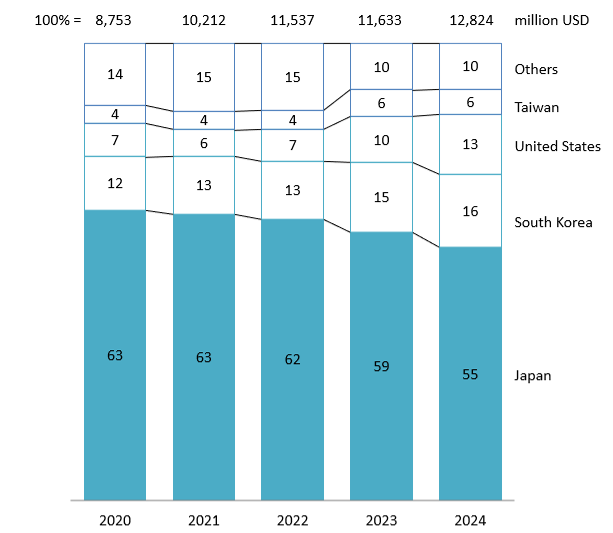
Source: B&Company enterprise database
Textiles and apparel
Vietnam has an established apparel production base, but sourcing arrangements differ considerably. Some factories work with materials supplied by buyers; others take responsibility for sourcing inputs and delivering finished garments. These differences affect working capital, lead times and the buyer’s exposure to imported fabrics or accessories.
Assessment should cover the complete order, including material sourcing, sample approval, production capacity and inspection. Our analysis of apparel manufacturing in Vietnam examines supply chain dependence, labour pressures and sustainability considerations. Refer here for more details.
Vietnam textile and garment export value (2016-2025)
Unit: USD Billion
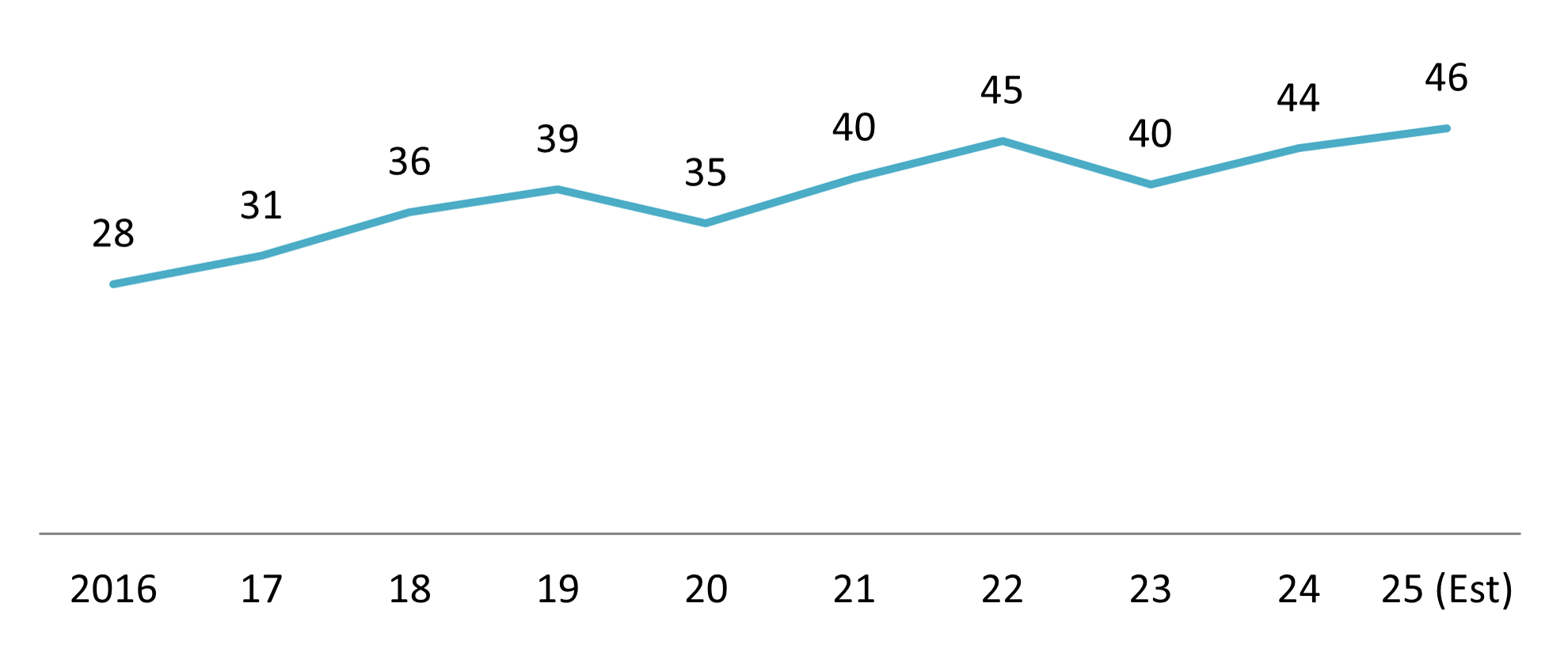
Source: Vietnam National Statistics Office
Food processing
Food production connects manufacturing with agricultural supply, domestic consumption and regional exports. Potential entry routes include contract production, ingredient supply, processing equipment and investment in local capacity.
The feasibility assessment should start with raw material consistency, food safety requirements, shelf life and distribution conditions. A suitable factory must also fit the intended sales market and production volume. B&Company’s article on Vietnam as a food production base for Japanese companies reviews the sector and examples of Japanese participation. Refer here for more details.
Overall growth of food processing sector
Unit: %
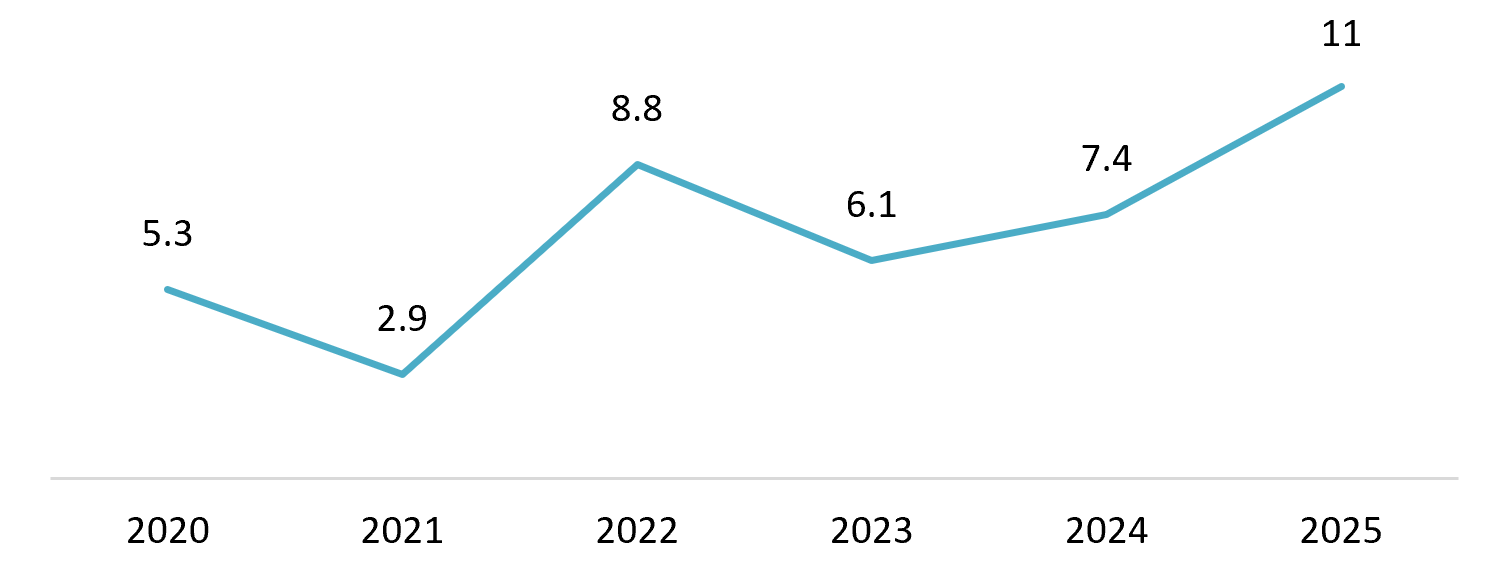
Source: Vietnam National Statistics Office
Plastics, packaging and wood products
Plastics and packaging serve manufacturers across consumer goods, electronics, construction and food. For buyers, material specifications, tooling ownership and production consistency deserve close attention. Our review of Vietnam’s plastics industry discusses the market and environmental considerations. Refer here for more details.
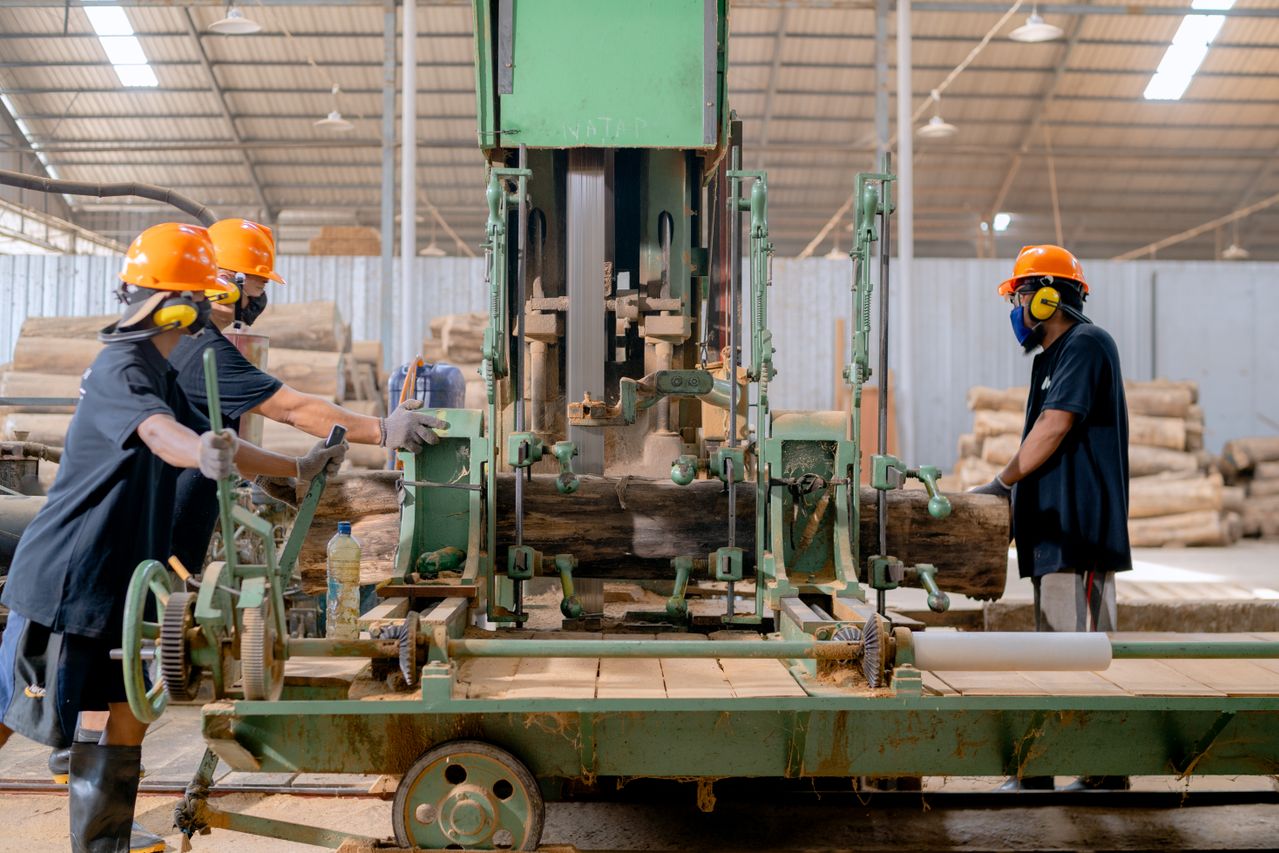
Wood processing and furniture involve a different set of checks: timber sourcing, drying, finishing, dimensional stability and shipment protection. B&Company’s analysis of Vietnam’s timber value chain explains the relationship between raw materials, processing and finished products. Refer here for more details.
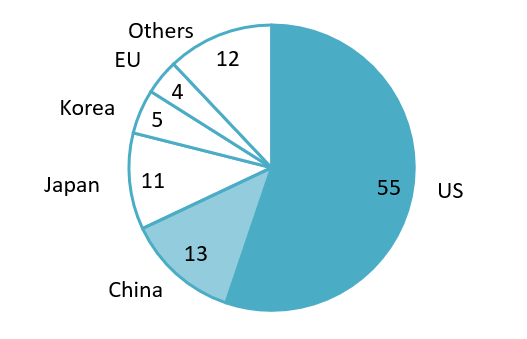
Vietnam’s timber and wood products export value (2024)
100% = 16.3 billion USD
Source: VIFOREST
Choosing a manufacturing location in Vietnam
Location selection should begin with customers, production requirements and inbound materials. Regional comparisons are useful for building a shortlist; the final decision needs evidence from individual sites.
Northern Vietnam’s Hanoi, Bac Ninh and Hai Phong industrial corridor is relevant to companies assessing electronics, machinery and associated suppliers. Southern Vietnam, including Ho Chi Minh City and Dong Nai, offers an established industrial base connected with the southern consumer market. Central locations also merit examination when customer proximity, a particular industrial zone or a project’s logistics requirements support the choice.
The following checks help turn a regional shortlist into a site comparison.
| Decision factor | Evidence to obtain |
| Customers and suppliers | Actual travel times, shipment routes and delivery frequency |
| Labour and management | Recruitment catchment, competing employers, skills and retention costs |
| Utilities | Available power capacity, connection schedule, water and wastewater arrangements |
| Premises | Usable space, floor loading, expansion options, fit-out requirements and permitted activities |
| Logistics | Port or airport route, handling charges, congestion and contingency options |
| Project timing | Handover conditions, required approvals and a realistic commissioning schedule |
Companies should also distinguish industrial land leases from ready-built factory rentals. Land quotations may cover a lease term, while factory rentals are often quoted by area per month; the figures cannot be compared directly. B&Company’s overview of industrial real estate in Vietnam provides background on premises, developers and market conditions. Refer here for more details.
Assessing manufacturing costs in Vietnam
A useful cost comparison measures the expense of delivering an accepted product to the customer. Monthly wages and factory rent are inputs to that calculation, alongside productivity, materials, quality losses and logistics.
The costing model should include recruitment and training, employment costs, utilities, imported inputs, tooling, maintenance, freight, inventory financing and the cost of rejected output. For new facilities, add fit-out, commissioning and the period before production reaches its intended efficiency. Use current quotations for the shortlisted locations and suppliers.
For example, a lower component price can be offset by longer lead times, additional inspection or a higher rejection rate. A factory with a higher rental rate may be commercially preferable if it shortens deliveries and reduces disruption. Compare suppliers using the same specification, order volume, quality requirements and delivery terms, then test how the result changes under lower utilisation or higher freight costs.
Finding and qualifying manufacturing partners
Vietnam’s supplier base includes both Vietnamese-owned and foreign-invested manufacturers. Buyers should distinguish local procurement from procurement specifically from Vietnamese-owned companies. JETRO’s FY2025 findings put local procurement by surveyed Japanese manufacturers in Vietnam at 38.1%, while 49.4% of respondents to the relevant Vietnam question planned to expand local procurement. The same report identifies continuing gaps in available materials and supplier quality or technical capability.
Start the search with a technical sourcing brief. Define the material, drawing revision, tolerances, certifications, annual volume, initial order size and delivery requirements. Identify which processes must remain in-house and which may be subcontracted.
Screen candidates for equipment, relevant production experience and available capacity. During factory visits, examine inspection records, traceability, subcontractor controls and how the company handles nonconforming products. A sample should demonstrate a process that can be repeated at the intended production rate.
Cumulative FDI Amount and Number of Projects by Major Countries (2024)
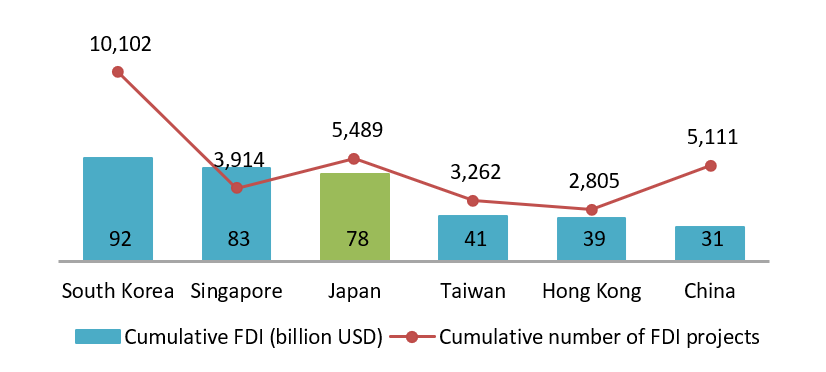
Source: Ministry of Planning and Investment (MPI) of Vietnam
Qualification should then move to a pilot order with agreed acceptance criteria. Record responsibilities for tooling, defects, replacement, delivery changes and documentation before increasing volumes. B&Company’s guide to finding reliable business partners in Vietnam explains the broader screening process. Our mechanical processing partner search case illustrates how candidate interviews and factory visits support evaluation. Refer here for more details.
Common questions about manufacturing in Vietnam
What products can companies source from Vietnam?
The manufacturing base includes electronics, machinery and components, apparel, processed food, plastics, packaging and wood products. Suitability depends on the required process, materials, production scale and quality system. Begin with a product specification and validate individual suppliers against it.
Is northern or southern Vietnam the better location?
The answer depends on the customer and supplier network, labour requirements and shipping route. Compare individual industrial parks and factories using the same operating assumptions. A regional preference should be tested against actual recruitment, utility and logistics conditions.
Can foreign companies begin without building a factory?
Companies can explore sourcing or contract production with existing manufacturers. The appropriate commercial and legal arrangements depend on how goods are purchased, produced and sold. A pilot order can provide evidence on quality and delivery before the buyer considers a larger commitment.
How should a company choose a manufacturing supplier?
Use technical screening, factory assessment and a pilot order. Confirm capacity, traceability, quality controls and responsibility for subcontracted processes. Agree measurable acceptance criteria and monitor delivery performance before expanding the relationship.
How B&Company can support your manufacturing plans
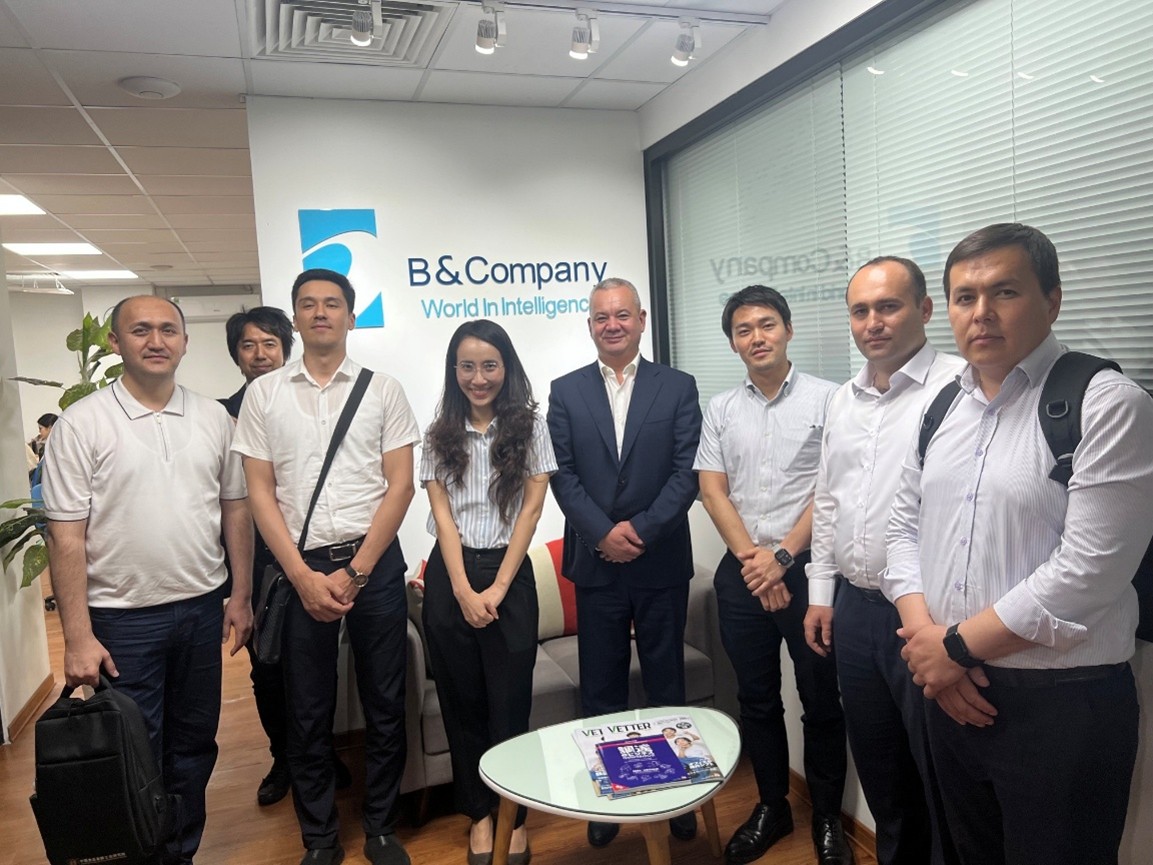
B&Company provides market research and business matching services to help companies assess opportunities and identify suitable partners in Vietnam. A manufacturing project can combine industry research, candidate screening, interviews, and coordinated factory visits around the client’s requirements.
To discuss a project, share your product or process, target customers, expected volume, and preferred timing with B&Company. These details provide the basis for defining the research scope and partner selection criteria.
Read more
Common mistakes in Vietnam Market research: 5 points to avoid
How foreign investors can find reliable local business partners in Vietnam
* If you wish to quote any information from this article, please kindly cite the source along with the link to the original article to respect copyright.
| B&Company
The first Japanese company specializing in market research in Vietnam since 2008. We provide a wide range of services including industry reports, industry interviews, consumer surveys, business matching. Additionally, we have recently developed a database of over 1,000,000 companies in Vietnam, which can be used to search for partners and analyze the market. Please do not hesitate to contact us if you have any queries. info@b-company.jp + (84) 24 3978 5165 |
[1] https://www.nso.gov.vn/en/data-and-statistics/2026/01/press-release-social-economic-situation-in-the-fourth-quarter-and-2025/
[2] https://www.jetro.go.jp/biz/areareports/2026/21fcf2689cf256b0.html
[3] https://b-company.jp/mapping-japanese-investment-in-vietnam-manufacturing-sector/
Related article
















滋賀県ベトナムビジネス・サポートデスク-12.jpg)







Log in / Register
SUBSCRIBE NEWSLETTER