

 English
 日本語
 Tiếng Việt
 简体中文
 한국어
The retail market in Vietnam has entered a new growth phase driven by stable consumer demand, urbanization, and rapid digitalization.
28Oct2026
Latest News & Report
Comments: No Comments.
The retail market has entered a new growth phase driven by stable consumer demand, urbanization, and rapid digitalization. Modern trade formats such as convenience stores, minimarts, supermarkets, and drugstores are expanding beyond major cities. Meanwhile, traditional channels retain significant influence in everyday shopping. E-commerce (EC) and social commerce are changing how consumers select products, make payments, and receive goods, making omnichannel the standard strategy.
Basic Statistics
| Indicators | Unit | 2020 | 2021 | 2022 | 2023 | 2024 |
| Retail Company Revenue | Billion dollars | 41 | 46 | 57 | 59 | N/A |
| Number of Retail Companies | Thousand stores | 58.3 | 58.1 | 55.2 | 69.2 | N/A |
| Number of convenience stores/mini supermarkets | Thousand stores | 5.2 | 5.2 | 6.7 | 6.7 | 7.4 |
| Number of Electronics Retailers | Thousand stores | 1.2 | 1.9 | 2.5 | 2.8 | 2.7 |
| Number of Modern pharmacy chains | Thousand stores | 0.7 | 1.1 | 2.0 | 2.7 | 3.2 |
| Number of Supermarkets | Thousand stores | 1.1 | 1.2 | 1.2 | 1.3 | 1.3 |
| Retail FDI | Billion USD | 1.8 | 1.4 | 1.1 | 1.3 | 1.4 |
Sources: B&Company Enterprise Database, National Statistics Office, Q&Me
Regulations
The regulatory environment is gradually liberalizing. Since 2009, 100% foreign ownership has been possible following WTO commitments.
However, while opening the first store is relatively unrestricted, expanding retail locations requires passing an Economic Necessity Test (ENT). Under current regulations (particularly Decree 09/2018/ND-CP), foreign investors must undergo ENT review for stores beyond the first, creating a significant disadvantage compared to domestic firms. Exceptions apply for stores under 500 m2 located within commercial centers, provided they are not convenience stores or mini supermarkets.
The ENT was scheduled to be abolished for investments from the 10 CPTPP member countries starting January 2024. However, due to delays in legal implementation, the ENT remains required at present. Nevertheless, the Ministry of Industry and Trade (MOIT) draft decree from August 2025, scheduled to take effect on January 1, 2026, is expected to finally abolish the ENT for CPTPP member countries (including Japan).
Market Overview
The retail market is supported by a growing middle class. It expanded at an average annual rate of approximately 10% from 2010 to 2024, with the value added by Wholesale and Retail Trade (including repair of motor vehicles and motorcycles) accounting for about 10% of GDP in 2024.
According to B&Company’s database, total corporate sales in the retail industry grew at an annual rate of about 10% between 2017 and 2023, reaching 59 billion USD in 2023. However, a significant portion, such as individual shops, is not counted in corporate sales, and the total retail market size is estimated to be several times larger.
Retail Enterprise Sales in Vietnam
Unit: billion USD
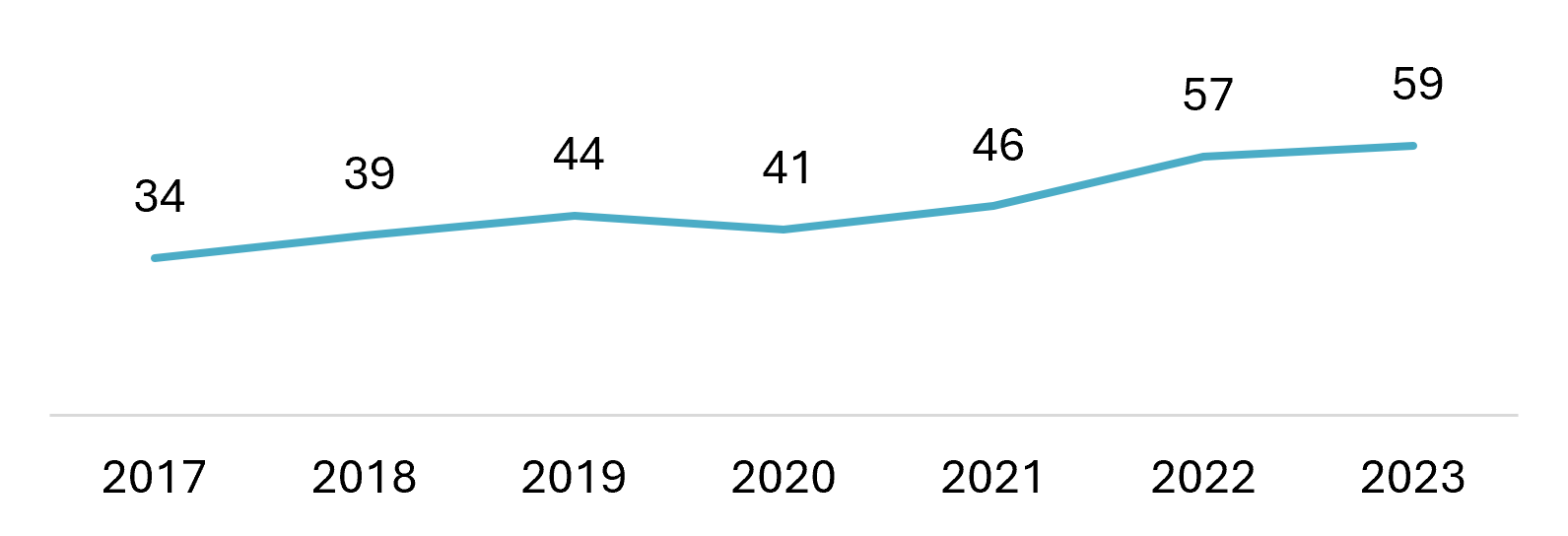
Source: B&Company Enterprise Database
Traditional retail channels remain central to daily life but are gradually ceding ground to modern formats. In 2024, an estimated 61% of retail sales originated from traditional markets and small, independently owned mom-and-pop shops, down from 73% in 2020.
Meanwhile, the share of modern retail (supermarkets, hypermarkets, convenience store chains, etc.) increased from 22% in 2020 to 29% in 2024. During this period, the number of modern retail outlets more than doubled, reaching approximately 16,300 stores. Convenience stores and minimarts account for nearly half of all modern outlets.
Additionally, EC has risen to about 10% (from 5% in 2020). Consumers are gradually shifting from traditional wet markets to modern retail and online shopping, seeking quality, convenience, and variety[1].
The timing of transition to modern chain store formats varies significantly by sector. Electronics retailers have led this field for over a decade, with many retail brands rapidly expanding their store networks. This timing corresponded with the penetration of appliances, digital cameras, smartphones, and similar products. However, as a result, saturation may now have been reached in the two major cities. Between 2023 and 2024, major chains like Dien May Xanh and Nguyen Kim closed dozens of stores due to declining customer numbers. While growth continues in rural areas, store expansion has largely completed its cycle even in major provincial cities. Meanwhile, pharmacy chains are in the midst of rapid growth. Major pharmacy chains like FPT Long Chau expanded their store count by 20% in 2024, reaching over 3,200 stores, responding to rising health demands. Companies like FPT and Mobile World, which operate multiple retail brands across diverse product categories, are shifting their focus based on changing consumer behavior, carefully testing new formats. Additionally, category chains are diversifying and expanding into various products, giving rise to modern chains specializing in furniture, apparel, children’s goods, books/stationery, pets, wine, and fixed-price formats.
Supermarkets
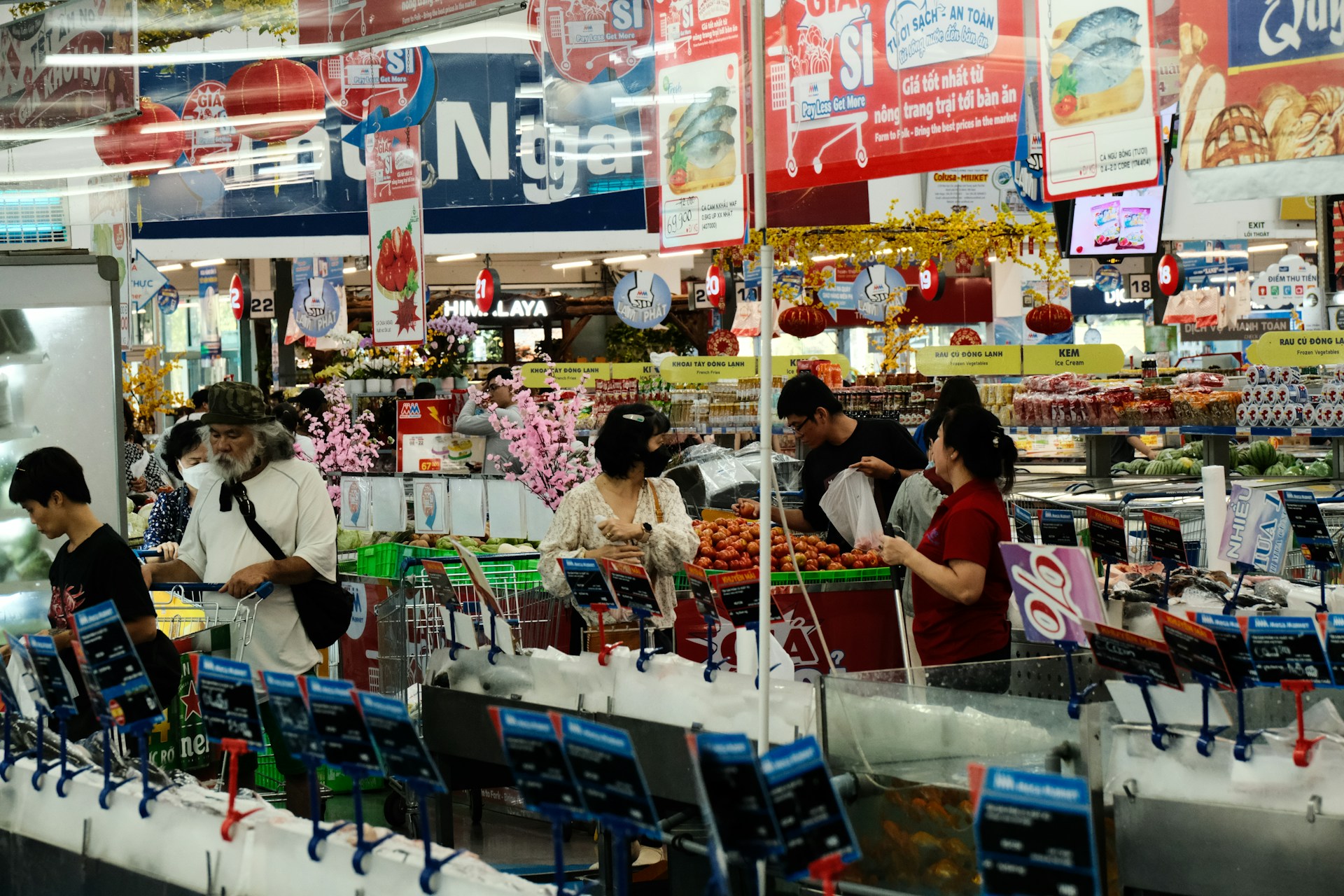
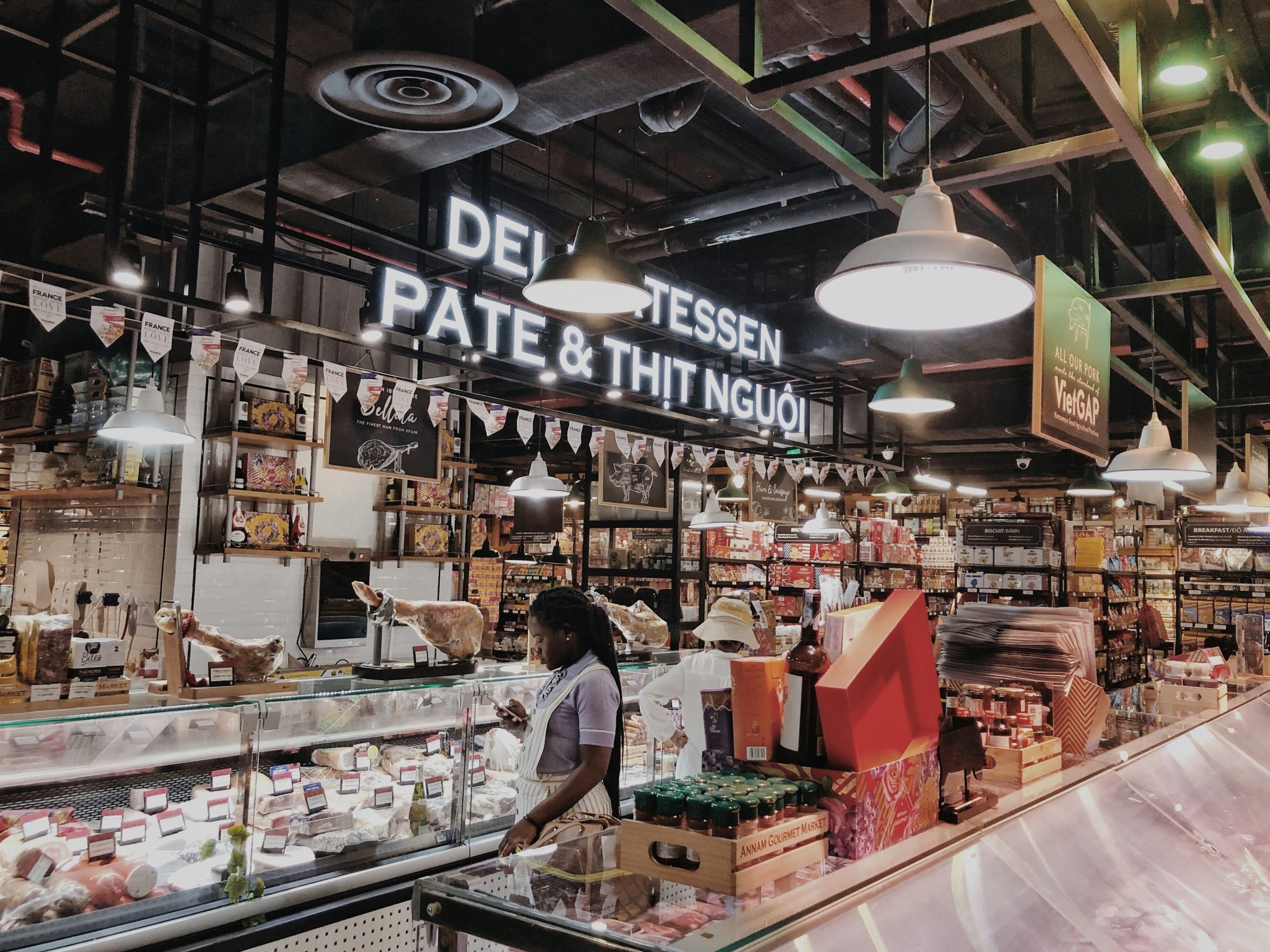
Supermarkets form the core of the modern retail sector. Domestic and international companies are actively expanding operations in major cities and provinces. Saigon Co.op’s Co.opmart (Vietnam’s first local supermarket chain, established in 1996) operates 128 stores nationwide[2]. Meanwhile, WinMart (formerly VinMart, now under Masan Group) and the Thai-owned hypermarkets Big C/GO! each operate over 100 stores, establishing a presence in most provinces. Foreign investors like Aeon and Lotte have also developed large supermarkets and shopping malls in Vietnam since the 2000s. Modern grocery retailers feature a wide range of products (including imports), clean and air-conditioned facilities, and high food safety standards, gaining support from the expanding middle class.
Supermarkets are growing rapidly in urban areas and gradually expanding into rural regions. Consumers increasingly prefer high-quality, reliable branded products. Expansion into rural areas remains an untapped opportunity. With the rural population accounting for about 60%, it is expected to provide long-term growth potential for supermarkets outside major cities[3].
Convenience Stores
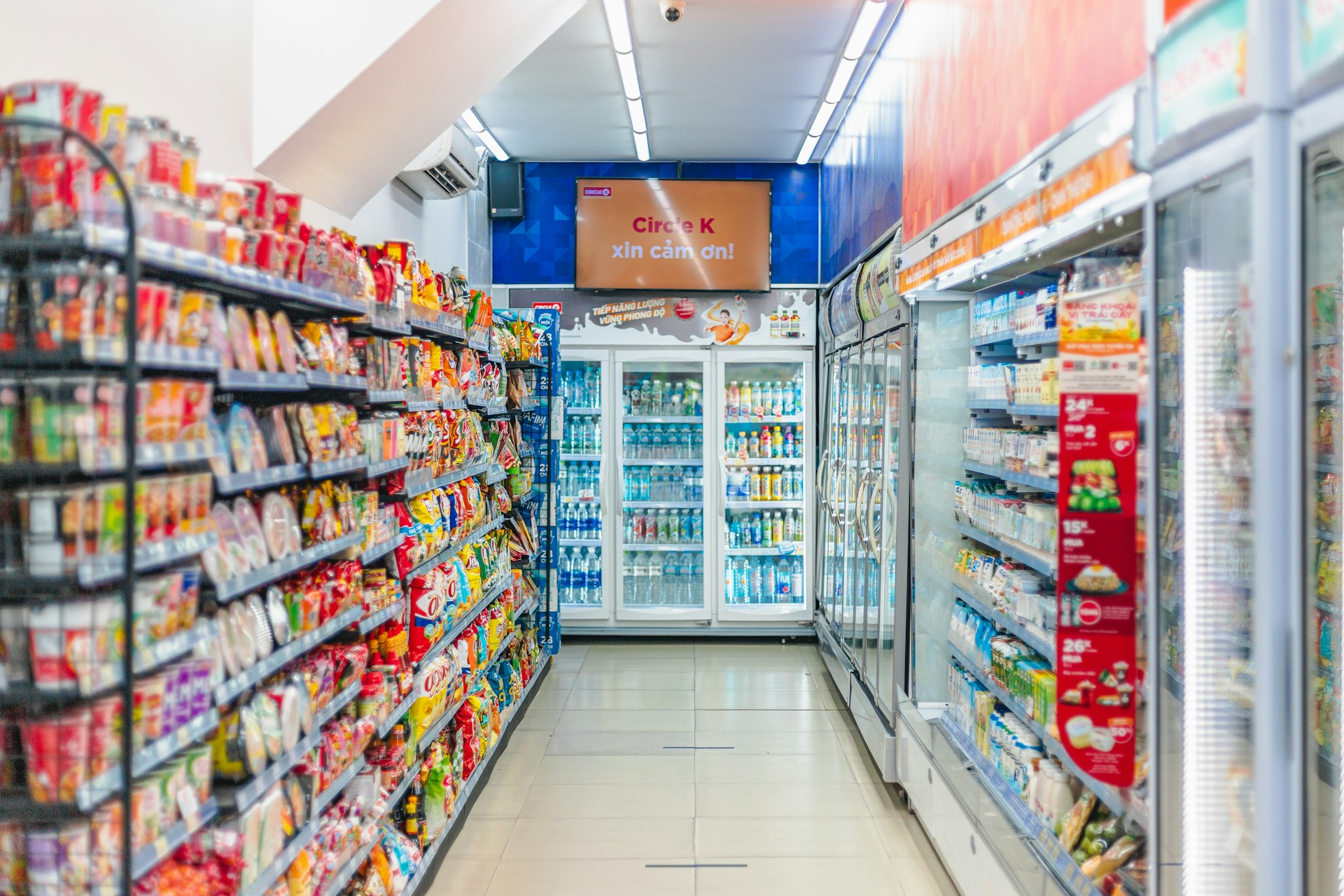
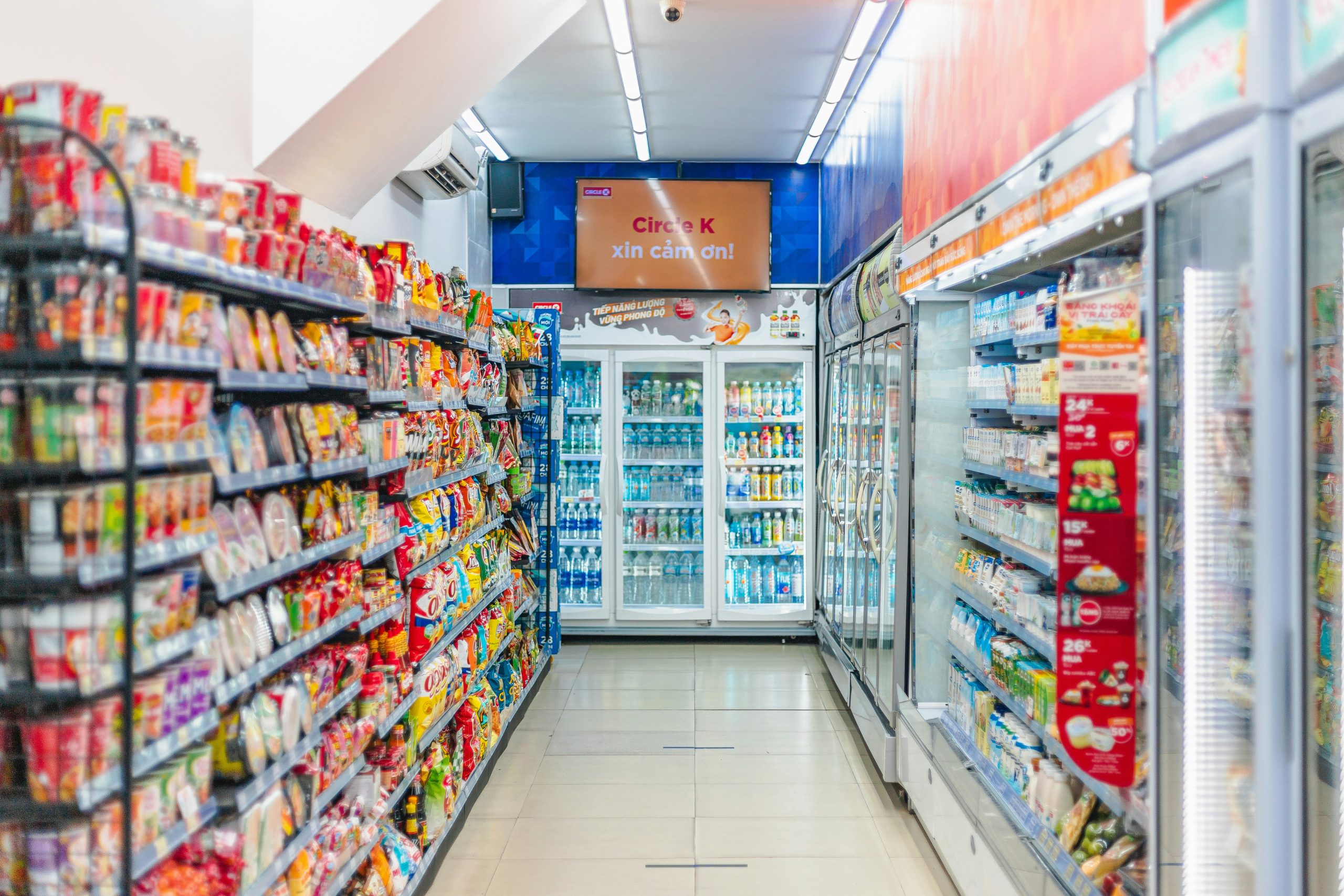
Convenience stores have experienced rapid growth over the past decade, beginning to reshape the urban retail landscape. These small, 24-hour stores stock takeout food, beverages, and daily necessities, catering to busy lifestyles. The number of convenience stores has surged, with foreign and domestic companies competing for market share. Circle K opened in 2008 as Vietnam’s first foreign-owned convenience store chain and now operates approximately 500 stores nationwide. GS25, 7-Eleven, Family Mart, and Ministop are concentrated in the south. Foreign chains have introduced modern retail concepts, superior store design, and extensive product ranges (including many imported and prepared items), gaining popularity among younger and urban consumers.
A 7-Eleven store in Vietnam
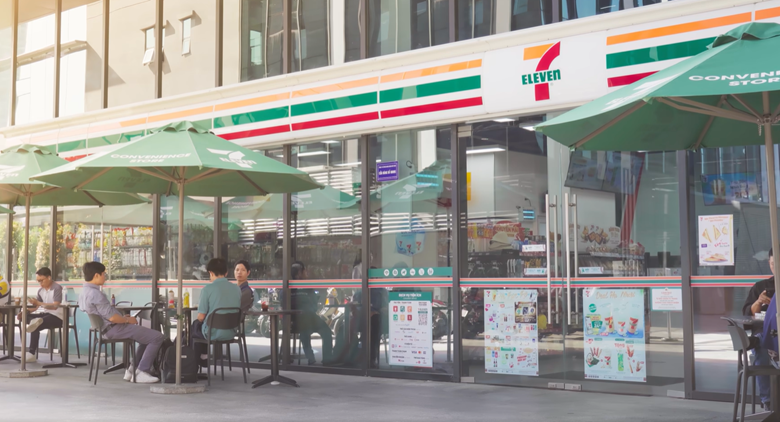
Source: 7-Eleven Vietnam
Growth drivers include urbanization (urbanization rate around 30%), demand for convenience, and the rapid increase in tech-savvy young consumers. Digitalization is advancing, with many chains offering cashless payments, online ordering, and delivery services to adapt to changing consumer habits. However, expansion is currently largely confined to major urban centers. Competition for limited demand is fierce, and chains are vulnerable to soaring real estate rental costs, making profitability a persistent challenge for some. Nevertheless, the sector is expected to maintain double-digit growth driven by the expanding middle class and rising demand for consumer convenience.
E-Commerce (EC)
EC has grown to a scale that is fundamentally reshaping the entire retail industry, especially in recent years. In 2024, the e-commerce market size is estimated at 22 billion USD, a 20% increase from 2023. It is projected to reach 63 billion USD by 2030. Vietnam is already Southeast Asia’s third-largest e-commerce market (behind Indonesia and Thailand), and overtaking Thailand is only a matter of time[4].
With 79 million internet users and widespread mobile connectivity, usage of platforms like Shopee, Lazada, Tiki, and the emerging social commerce platform TikTok Shop is surging. TikTok Shop’s sales grew by 151% in 2024, while Shopee saw a 66% increase. Market shares are shifting rapidly, with some former giants experiencing sharp declines, creating a clear winner-takes-all landscape[5] . The surge in online shopping is also supported by the expansion of digital payments (online payments reached 149 billion USD in 2024, an 18% increase) and policies promoting e-commerce development.
Challenges persist. National logistics infrastructure remains underdeveloped, causing delivery delays outside major cities. The proliferation of counterfeit and low-quality goods (including luxury knockoffs and fake cosmetics) is eroding consumer trust. Authorities have intensified crackdowns; China’s platform Temu faced a temporary suspension shortly after entering Vietnam in early 2025 for regulatory violations.
However, EC is expected to maintain rapid growth. It currently accounts for two-thirds of the digital economy market size and plays a crucial role in enabling retailers to access customers nationwide. E-commerce and modern retail omnichannel strategies are becoming fundamental requirements rather than mere differentiators.
Retail Infrastructure
Payment and loyalty programs are transforming the shopping experience. Cashless transactions are growing rapidly, supported by the proliferation of QR codes and e-wallets (MoMo, ZaloPay, VNPay) alongside banks’ digital transformation. This enables faster purchases online and in-store, along with data-driven loyalty programs.
To support EC and rapid delivery, logistics and distribution management systems (DMS) and are evolving. Vietnam’s DMS, covering over one million traditional retailers, ranks among the world’s largest. It continues to advance through competition between private and state-owned IT companies. Using this system, manufacturers can efficiently sell to the traditional retail market, which accounts for 70% of the market.
Additionally, retailers are investing in urban distribution centers, partnering with last-mile logistics providers like GHTK, Ninja Van, and Ahamove, and adopting advanced inventory management and demand forecasting tools. This improves inventory visibility and shortens delivery times. As consumers expect fast and reliable service, meeting these expectations creates a competitive advantage.
Major Companies
A mix of domestic companies and major international players.
| No | Company | Established | Headquarters | Country | Number of Stores | Overview |
| 1 | WinCommerce (WinMart/WinMart+) | 2014 | Ho Chi Minh City | Vietnam | 3,692 | Largest retailer. VinMart (Vingroup) changed its name following the 2019 acquisition of Masan Group |
| 2 | Bach Hoa Xanh | 2015 | Ho Chi Minh City | Vietnam | 1,864 | Fresh food retail company of IT retailer Mobile World |
| 3 | Saigon Co-op | 1989 | Ho Chi Minh City | Vietnam | 128 | Pioneering modern retail |
| 4 | Central Retail (GO!/Big C) | 1998 | Ho Chi Minh City | Thailand | 42 Shopping Malls | Big C acquired by Thailand’s Central Group in 2016 |
| 5 | MM Mega Market (Metro) | 2002 | Ho Chi Minh City | Thailand | 21 | Wholesale/warehouse-style stores (5,000–10,000 m²) catering to both businesses and general consumers |
| 6 | Lotte Mart | 2008 | Ho Chi Minh City | South Korea | 15 Shopping Mall | A large-scale complex (with Lotte Department Store and movie theaters) |
| 7 | AEON | 2014 | Hanoi | Japan | 7 Shopping Malls
21 Supermarkets (MaxValu) |
Opened in Ho Chi Minh City in 2014, expanding to regional cities. Constructing vast one-stop shopping complexes |
| 8 | Circle K | 2008 | Ho Chi Minh City | United States | 499 | First foreign-owned convenience store chain, open 24 hours a day, selling snacks, beverages, and daily necessities |
| 9 | GS25 | 2018 | Ho Chi Minh City | South Korea | 236 | A joint venture between Korea’s GS Retail and local SonKim. Targets younger demographics with Korean snacks and services |
| 10 | 7-Eleven | 2017 | Ho Chi Minh City | Japan | 130 | Focused on Ho Chi Minh City, recently began expansion into Hanoi. Offers a wide selection of ready-to-eat meals and snacks developed to suit local tastes |
Source: B&Company analysis
Convenience stores are led by major foreign chains (Circle K, FamilyMart, 7-Eleven, GS25), adapting to changing consumer lifestyles in urban areas. Among domestic players, VinCommerce previously operated VinMart+ (now under Masan), while smaller chains like B’s Mart (Thai-owned but locally operated) also exist.
M&A has become a rapid means of expansion. Masan’s 2019 acquisition of VinCommerce (VinMart) propelled the company to the top spot overnight. Central Group’s 2016 acquisition allowed it to instantly gain Big C’s nationwide store network and brand, built over many years.
Read more
Vietnam Retail amid regulatory tightening: Market cleansing for maturity, or a brake on growth?
Interview with B&Company: Retail situation in Vietnam and impact of resolution 68
Related article


















Log in / Register
SUBSCRIBE NEWSLETTER