
 日本語
日本語  English
  Tiếng Việt
  简体中文
简体中文  한국어
한국어 
2021年2月15日
業界レビュー
コメント: コメントはまだありません.
概要
1920年にフランスが外国産の乳牛をベトナムへ持ち込むまで、ここの地元の人々は牛乳の存在を知らなかった。1924年には、Longevity & Dutch Lady製品がサイゴン(後にホーチミン市へ改称)で初めて取引され、長年にわたる酪農業界の先駆けとなった。それ以来、ベトナムの酪農業界は劇的に発展してきた。Euromonitorによると、2019年のベトナム乳製品市場規模は52億米ドル超に達し、Vietnam Dairy Associationの報告でも、乳製品市場の売上高は2018年にすでに47億米ドルに達しており、2017年比で9%増、2010年から2018年の期間におけるCAGRは12.7%となった 2010年から2018年までの期間である。.
2020年はCOVID-19パンデミックにより、多くの業界、とりわけFMCGが苦戦を強いられた。雇用率の上昇と消費者信頼感指数の低下により、消費者は多くのカテゴリーで支出予算を削減した。しかし、乳製品業界の減少は小幅にとどまり、市場価値は4%のわずかな下落にとどまった(SSI Research)。最近のNielsenのデータによれば、2020年上半期においても、ベトナムのFMCG消費に占める牛乳消費の割合は12%で、2019年の統計から変わっていない。.
消費者の購買行動
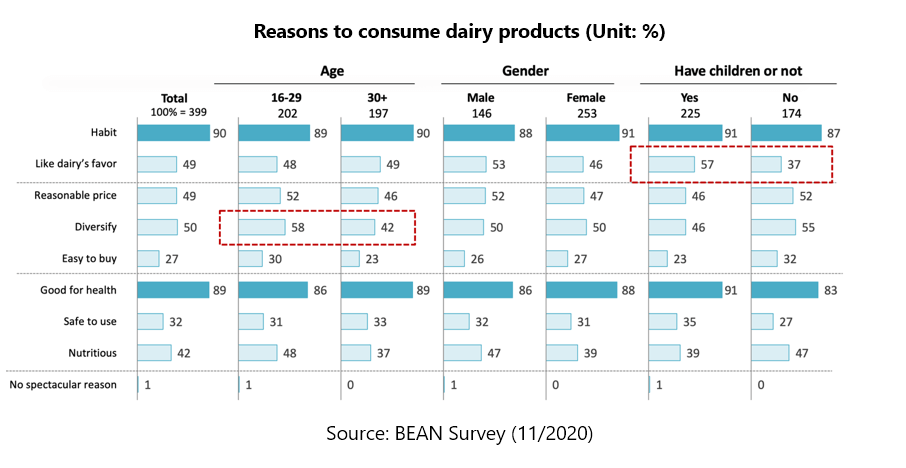
BEAN Survey(11/2020)が399人を対象に実施した「Dairy consumption behaviors」調査の結果は、ベトナムの日常生活における乳製品の重要な役割を裏づけている。回答者の100%が、この3か月間に牛乳およびその他の乳製品を利用したと回答した。特に、64%が毎日牛乳を飲み、55%が週に数回その他の乳製品を利用していた。パンデミックの最中である今、消費者は健康を高める製品を求め始めており、牛乳は免疫系に良い製品と考えられている。Ho Chi Minh Securities Corporationによると、COVID-19パンデミック中の乳製品需要は増加し、特にヨーグルトで顕著だった。習慣や利便性に加え、BEAN Surveyの回答者の87.5%は「健康に良い」から乳製品を選び、42%は「栄養がある」、32%は「安全だから」と回答した。.
外国企業にとっての市場ポテンシャル
2010年に工業貿易省が計画したとおり、国内企業が2020年までに生乳生産10億リットルを達成しても、国内需要の38%しか賄えず、輸出要因は言うまでもない。外国の乳製品ブランドはその機会をつかみ、現在市場には300以上の乳製品ブランドが存在する(MOIT: 2017)。日本からは、Morinagaが2010年に現地子会社を設立し、Meijiが2019年に進出した。一方、Wakodo(Asahi Group Foods)はNutifoodとの合弁パートナーシップを通じて市場に参入した。.
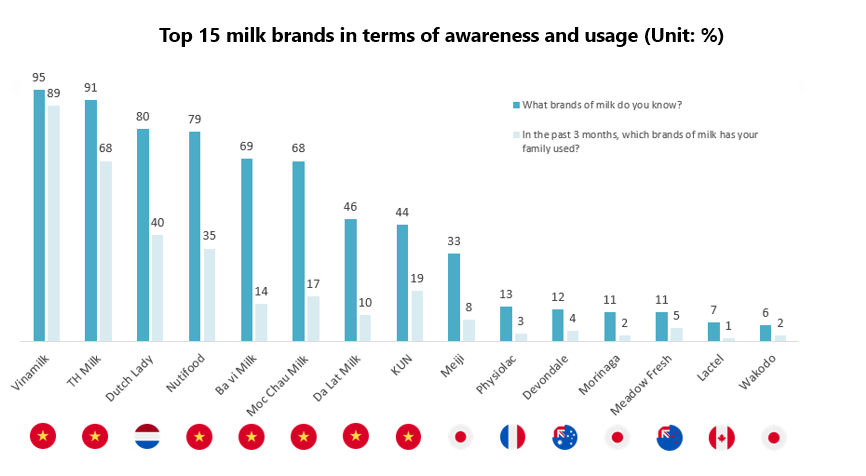
最長期のプレーヤーであるDutch Ladyは、認知度と利用率の両面で国内勢に追いつきつつある。2位のMeijiは、認知度は33%あるものの、過去3か月に製品を購入した顧客は8%にとどまる。ベトナム市場に参入するには、相当な販促施策が不可欠だと考える。実際、ブランドを選ぶ上位4理由にはすでに「プロモーション(78.4%)」と「流通網が広く、購入しやすい(76.2%)」が含まれている(BEAN Survey – Dairy consumption behaviors)。2019年の牛乳および乳製品の輸入額は10億4800万米ドルに達し、2018年比で8.7%増加した。.
まとめ
もちろん、製品品質は依然として最も重要である。現在、現地市場の牛乳の約70%は、ビタミンやミネラルの面で生乳より栄養価の低い再構成乳と認識されている。CPTPPの結果、日本、シンガポール、ニュージーランドの乳製品にはもはや輸入関税が課されず、牛乳価格の低下につながり、競争を一段と激しくする可能性がある。しかし、消費者が牛乳ブランドに求めるものは明確であり、選択理由には「添加物なし(89.5%)」と「品質(73.4%)」が挙がっている。低価格製品との差別化を明確にする必要があり、すでに一部の国内企業はオーガニック製品や高栄養製品を提供している。外国企業としては、これを勝ち筋にする以外にない。彼らが市場にどれだけ食い込めるか、注目したい。.
お読みください その他の業界レビュー記事 私たちからまたは リクエストする!
Ly Nguyen