한국어
한국어  English
  日本語
日本語  Tiếng Việt
  简体中文
简体中文 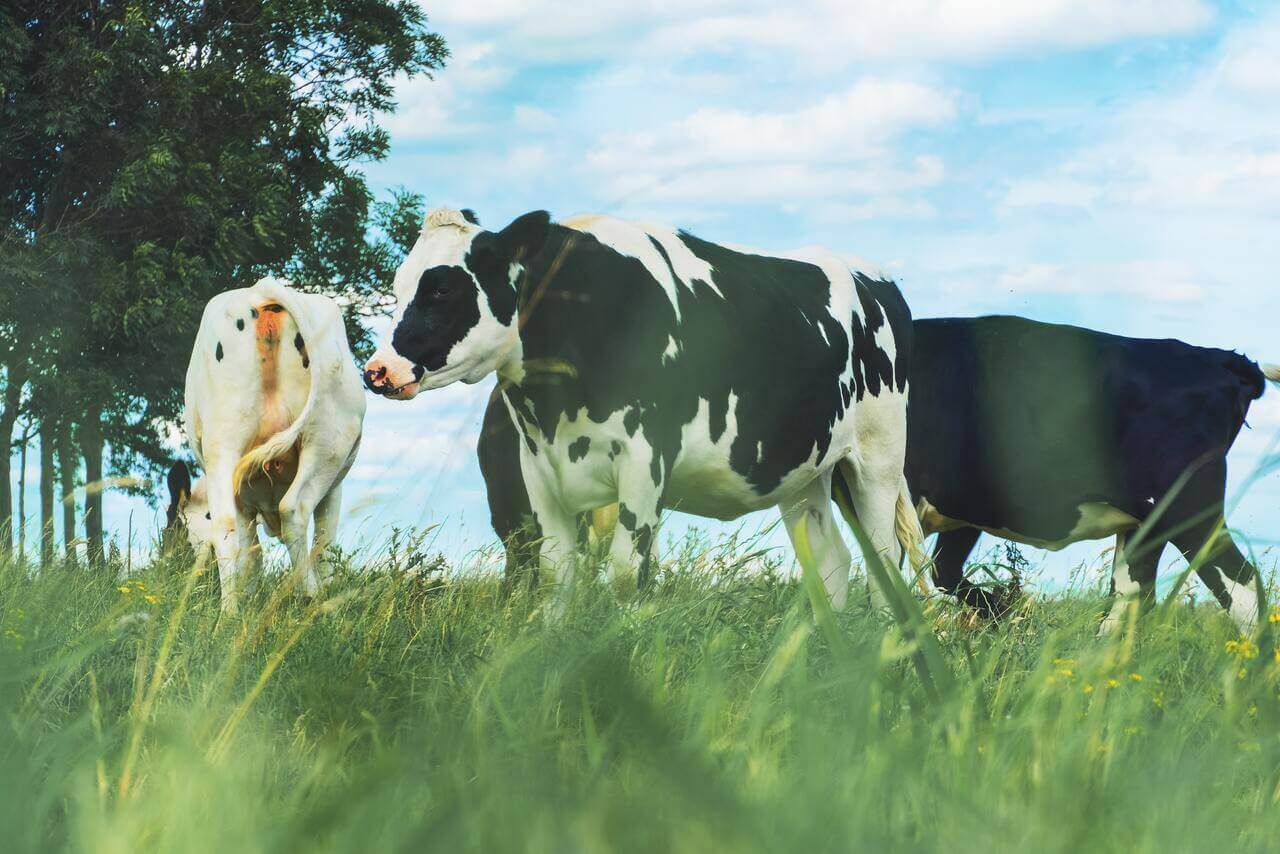
152월2021
업계 리뷰
댓글: 댓글 없음.
개요
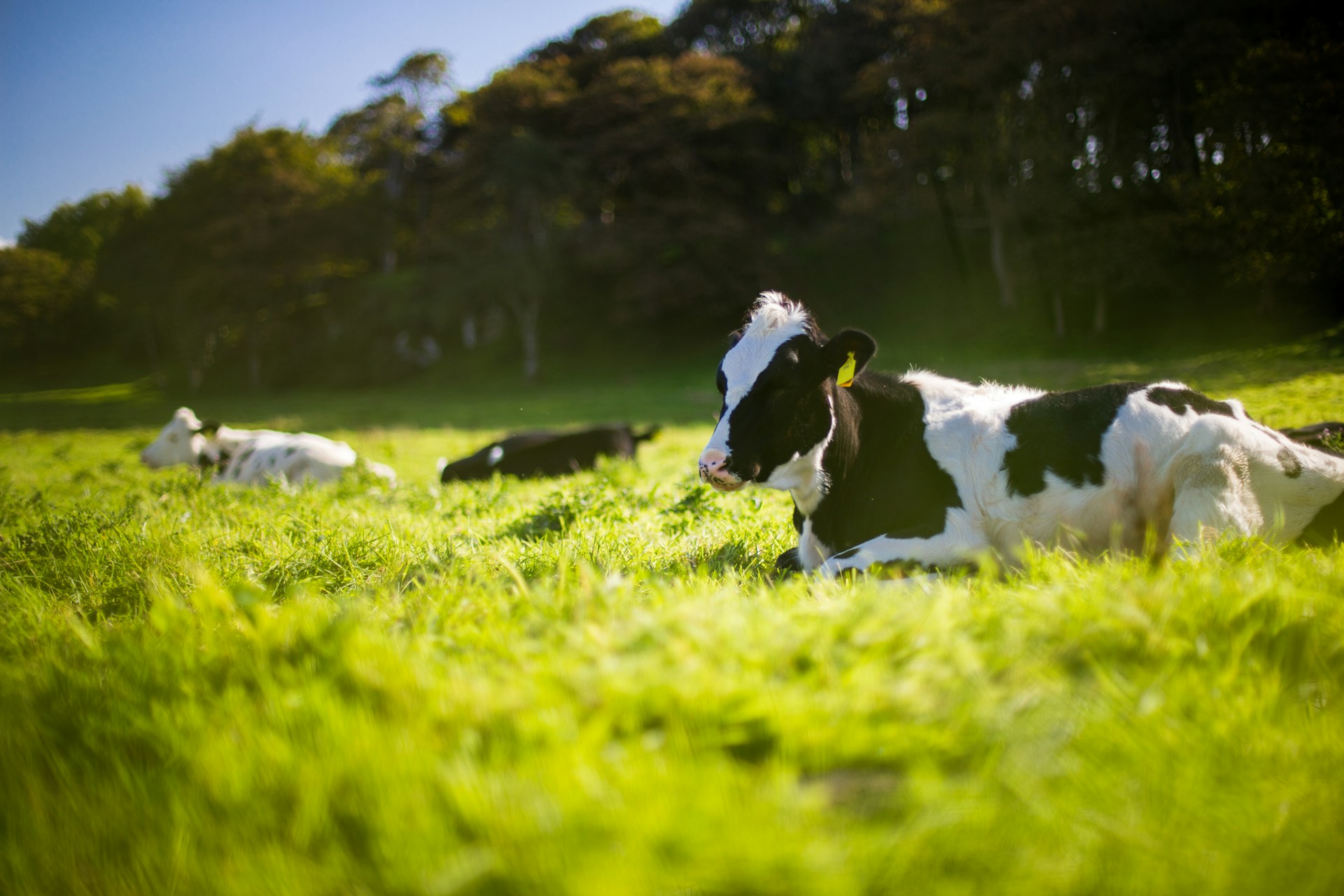
프랑스가 외국산 젖소를 베트남에 들여온 1920년이 되어서야 현지인들은 우유에 대해 알게 되었습니다. 1924년 Longevity & Dutch Lady 제품이 사이공(이후 호찌민시로 개칭)에서 처음 거래되었으며, 오랜 역사를 지닌 유제품 산업의 최초 사업자가 되었습니다. 이후 베트남 유제품 산업은 크게 발전했습니다. Euromonitor에 따르면 2019년 베트남 유제품 시장 규모는 52억 달러를 넘어섰으며, Vietnam Dairy Association의 보고서에서도 유제품 시장 매출이 2018년 이미 47억 달러에 도달해 2017년 대비 9% 증가했고, CAGR은 12.7%를 기록했다고 밝혔습니다. 2010~2018년 기간 동안.
COVID-19 팬데믹이 발생한 2020년에는 특히 FMCG를 비롯한 많은 산업이 어려움을 겪었습니다. 고용률 상승과 소비자신뢰지수 하락으로 인해 소비자들은 여러 품목에 대한 지출 예산을 줄였습니다. 그러나 유제품 산업은 시장 가치가 4% 소폭 감소하는 데 그쳐 타격이 크지 않았습니다(SSI Research). 최근 Nielsen의 데이터에 따르면 2020년 상반기 베트남의 우유 소비는 여전히 FMCG 소비의 12%를 차지했으며, 이는 2019년 통계와 변함이 없었습니다.
소비자의 구매 행동
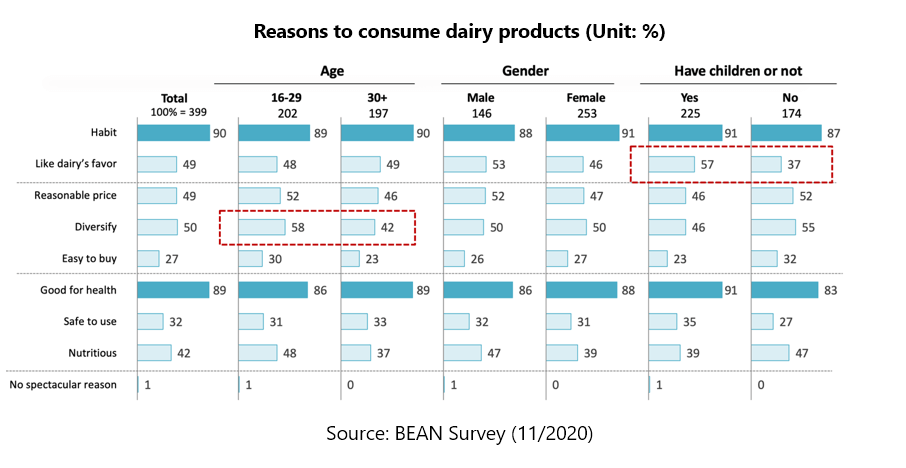
399명의 응답자를 대상으로 BEAN Survey가 실시한 “Dairy consumption behaviors” 설문조사(2020년 11월) 결과는 응답자의 100%가 지난 3개월 동안 우유 및 기타 유제품을 섭취했다고 답함으로써 베트남인의 일상생활에서 유제품이 필수적인 역할을 한다는 점을 입증했습니다. 특히 64%는 매일 우유를 섭취했으며, 55%는 주중에 가끔 기타 유제품을 섭취했습니다. 팬데믹이 한창인 가운데 소비자들은 건강 증진 제품을 찾기 시작했으며, 우유는 면역 체계에 유익한 제품으로 인식되어 왔습니다. Ho Chi Minh Securities Corporation에 따르면 COVID-19 팬데믹 기간 중 유제품 수요가 증가했으며, 특히 요구르트의 수요가 가장 크게 늘었습니다. 습관 및 편의성과 관련된 이유 외에도 BEAN Survey 응답자의 87.5%는 “건강에 좋기 때문”에 유제품을 선택했으며, 42%는 “영양가가 높기 때문”, 32%는 “안전하기 때문”에 섭취한다고 답했습니다.
외국 기업을 위한 시장 잠재력
산업통상부가 2010년에 계획한 바와 같이, 국내 기업들이 2020년까지 신선 우유 생산량 10억 리터를 달성하더라도 이는 수출 요인을 고려하지 않을 경우 국내 수요의 38%만 충족할 수 있을 뿐이다. 외국계 우유 브랜드들은 이러한 기회를 포착했으며, 현재 시장에는 300개 이상의 우유 브랜드가 존재한다(MOIT: 2017). 일본에서는 Morinaga가 2010년에 현지 법인을 설립했고 Meiji는 2019년에 진출했으며, Wakodo (Asahi Group Foods)는 Nutifood와의 합작 투자 파트너십을 통해 시장에 진입했다.
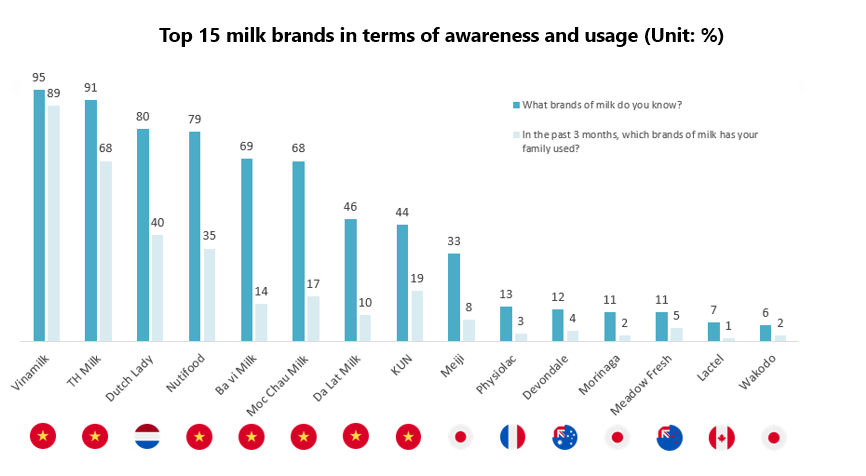
가장 오랜 기간 시장에서 활동해 온 Dutch Lady는 인지도와 사용률 측면에서 국내 브랜드를 따라잡고 있습니다. 2위인 Meiji는 인지도가 33%에 달했지만, 최근 3개월 동안 해당 제품을 구매한 고객은 8%에 불과했습니다. Vietnam 시장에 진입하기 위해서는 상당한 규모의 프로모션 프로그램이 필수적이라고 판단합니다. 실제로 브랜드를 선택하는 상위 4개 이유에는 이미 “프로모션 (78.4%)”과 “광범위한 유통망 및 구매 편의성 (76.2%)”이 포함되어 있습니다(BEAN Survey – Dairy consumption behaviors). 2019년 우유 및 유제품 수입액은 USD 1,048 billion으로, 2018년 대비 8.7% 증가했습니다.
결론
물론 제품의 품질은 여전히 가장 중요하다. 현재 현지 시장에서 판매되는 우유의 약 70%는 비타민과 미네랄 측면에서 신선 우유보다 영양가가 낮은 환원유로 인식되고 있다. CPTPP의 영향으로 일본, 싱가포르, 뉴질랜드산 유제품에는 더 이상 수입 관세가 부과되지 않으며, 이는 우유 가격 하락으로 이어져 경쟁을 더욱 치열하게 만들 수 있다. 그러나 소비자들이 우유 브랜드를 선택하는 이유는 분명하며, “무첨가물(89.5%)”과 “품질(73.4%)”을 꼽고 있다. 저가 제품과의 차별성을 명확히 하는 것이 필요하며, 일부 국내 기업들은 이미 유기농 및 고영양 제품을 출시했다. 외국계 기업들은 이를 경쟁 우위로 삼을 수밖에 없다. 이들이 시장에서 유의미한 성과를 거둘 수 있을지 지켜볼 만하다.
읽어주세요 다른 산업 리뷰 기사 우리에게서 또는 요청 하나!
Ly Nguyen