
越南素食:越南餐饮行业的消费趋势和市场机遇

Vegetarian Vietnamese food is moving to the mainstream as health-, sustainability- and ethics-conscious consumers reshape the F&B sector.

0512 月2025

B&Company

最新消息及报道 / 越南简报

评论: 没有评论.

B&Company 是自 2008 年起在越南成立的首家专门从事市场研究和投资咨询的日本公司。

在“越南简报”版块,B&Company的年轻研究员将及时提供有关越南产业趋势、消费趋势和社会动向的信息。

本文以英文撰写,其他语言版本使用自动翻译。请以英文版本为准,了解准确内容。虽然我们努力确保原文信息的准确性,但请单独检查每条信息。解读和未来展望均为每位研究者的个人观点。

Vegetarian Vietnamese food is moving from temple kitchens to the mainstream as health-, sustainability- and ethics-conscious consumers reshape Vietnam’s F&B sector. Survey suggests the vast majority of Vietnamese have eaten vegetarian dishes, with many doing so several times a week, especially in major cities[1]. Combined with the rapid growth of the vegan and vegetarian packaged food market, valued at around US$110 million in 2025 and forecast to more than double by 2034[2], this creates compelling opportunities for foreign investors across restaurants, packaged foods, and ingredient supply.

Vegetarian food sector in Vietnam

Vegetarian F&B sector in Vietnam

Market size and growth

The vegetarian food market in Vietnam is characterized by a unique duality: it is deeply rooted in traditional Buddhist culture while simultaneously being propelled by modern trends in health, wellness, and food safety. This convergence has created a robust and rapidly expanding sector.

The vegetarian and vegan food segment, though rapidly expanding, currently represents a niche within Vietnam’s massive F&B industry (estimated at nearly $28.1 billion in 2024)[3]. The vegan food market currently accounts for less than 1% of the total F&B revenue, with a value of nearly US$112 million in 2025[4]. Despite this small base, the segment exhibits strong growth momentum with a CAGR of 8% over the next decade4.

As of mid-2024, data from Foody (a leading restaurant listing platform) indicates that vegetarian restaurants operate in 51 of Vietnam’s 63 provinces. The penetration rate of vegetarian dining options is approaching 80% nationwide, suggesting that vegetarianism is no longer confined to major metropolitan hubs[5].

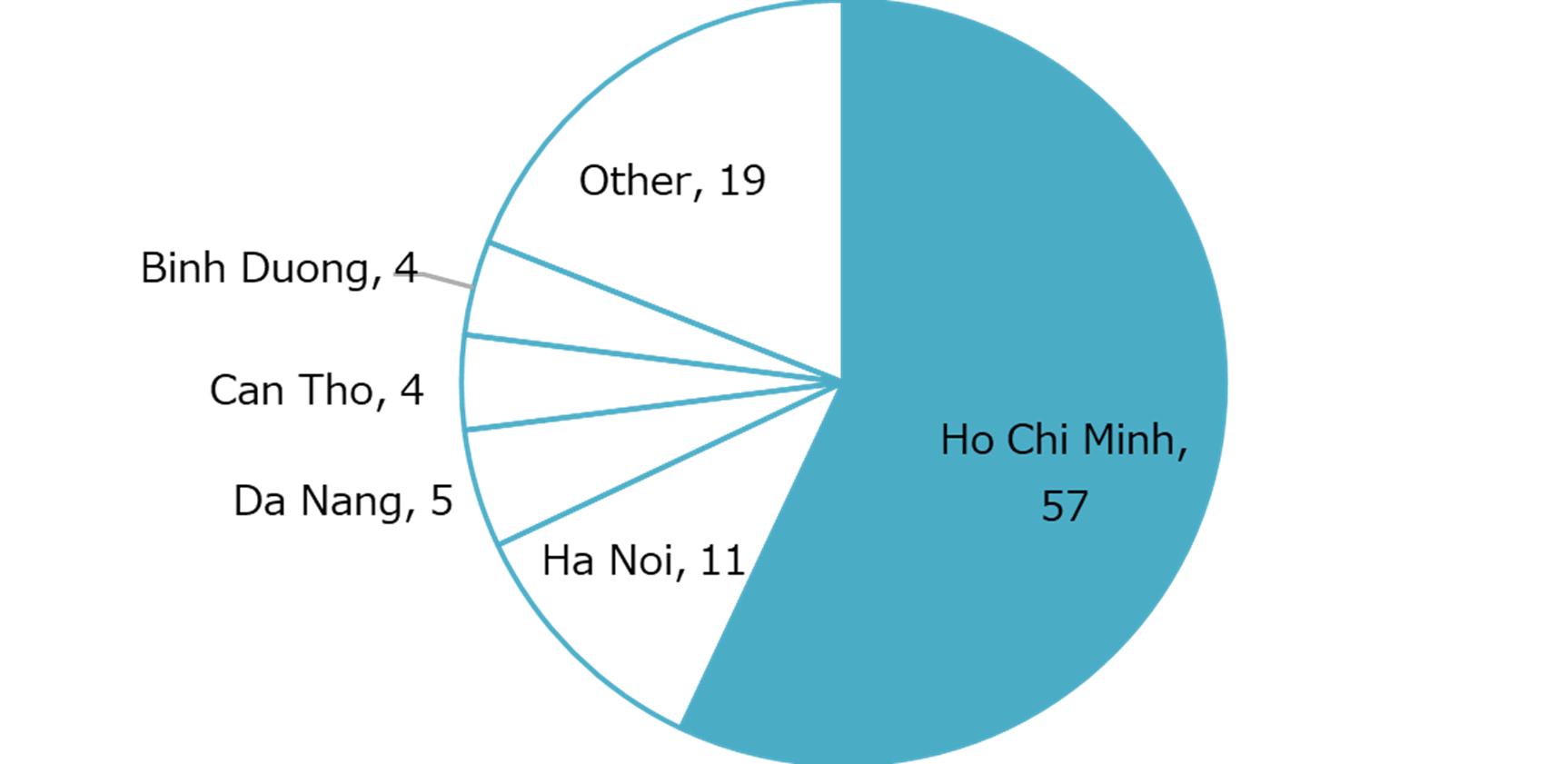
Ho Chi Minh city has earned the moniker “Vegetarian Capital,” having been ranked 9th in PETA’s “World’s Most Vegetarian-Friendly Cities” as early as 2016 [6]. The density and diversity of vegetarian options in HCMC far outstrip other regions, driven by a more cosmopolitan population and a higher concentration of Buddhists.

Ratio of vegetarian restaurants (%, 2024)

100% = 2,737 stores
Ratio of vegetarian restaurants (%, 2024)

来源:Foody

The market displays a dual structure. The Restaurant and Foodservice segment is marked by a rapid expansion of vegetarian and vegan establishments, ranging from upscale experiential dining (e.g., Hum Vegetarian, Ưu Đàm Chay) to affordable buffet chains (e.g., Veggie Castle) that popularize vegetarianism as an everyday option. Simultaneously, the Packaged and FMCG segment is anchored by mass-market local manufacturers (e.g., Binh Tay Food, Bich Chi Food) specializing in vegetarian instant noodles and rice products, alongside emerging brands (e.g., Loving Vegan Food) targeting urban consumers with premium, health-positioned vegan snacks and alternatives.

Consumer behaviour towards vegetarian food

Vegetarian Vietnamese food has moved beyond niche religious consumption, now attracting a large segment of flexitarians. A Statista-based online survey of 2,757 people aged 16 and over reported that 45% of respondents had eaten plant-based food so several times a week, often for health, religion, or simply to “feel lighter”1.

While 14% of the population identifies as Buddhist[7], driving a massive surge in vegetarian consumption on the 1st and 15th days of the lunar month, the current market expansion is fueled by “flexitarians”. These are younger generations (Gen Z and Millennials) and urban professionals who adopt plant-based diets for personal benefits such as “body kindness,” weight management, and skin health, rather than strictly religious vows. This shift is crucial for investors, as it demands products that taste good and offer nutritional value, rather than just traditional “mock meats” designed for ritual offerings.

市场趋势

The primary driver of growth has shifted decisively from Buddhism to wellness, accelerated by post-pandemic awareness. This created the “flexitarian” demographic, who frequently eat vegetarian meals for health, weight management, or “detox.” Flexitarians notably prefer minimally processed, whole plant-based foods (salads, nut milks) over traditional mock meats.

Consumer willingness to pay for quality has fostered a “masstige” (mass-prestige) segment. While nearly 90% of consumers believe organic food is expensive, the majority are still willing to pay extra for safe products[8]. This leads to market bifurcation: low-quality, undifferentiated stalls struggle, while premium concepts, certified organic retailers, and high-quality local plant-based goods thrive on traceability and perceived safety.

The vegetarian F&B landscape is expanding rapidly beyond Hanoi and Ho Chi Minh City, with restaurants and chains actively opening branches in suburban and neighboring provinces. This reflects greater geographic accessibility and local demand growth. Furthermore, the segment benefits significantly from international tourism, as high-end vegetarian venues often feature in travel guides and cater to health-conscious foreign visitors seeking authentic yet clean Vietnamese dining experiences.

The channel mix is shifting away from traditional wet markets towards modern trade (convenience stores) and digital platforms for processed goods. Food delivery apps have become critical infrastructure, which reach favors “Ghost Kitchen” models and easily distribute packaged snacks, reducing reliance on prime retail space.

Consumers, particularly Gen Z, are increasingly drawn to brands with a compelling, holistic narrative. Products must be “guilt-free” in terms of environmental impact. Brands succeed by emphasizing eco-friendly packaging, transparent “farm-to-table” sourcing, and local cultural roots to build trust in a market sensitive to food safety concerns.

对外国投资者的影响

机会

The Vietnamese market presents three core avenues. Firstly, investors can co-develop Authentic-Meets-Global Products, partnering with local manufacturers to develop co-branded vegetarian instant noodles, sauces, and frozen meals that retain authentic local flavors but meet international quality standards. Secondly, Strategic Investment in Scalable Restaurant Formats is key; backing multi-unit expansion of proven concepts addresses both mass-market and affluent demand. Finally, supplying Next-Generation Plant-Based Ingredients and Technology is a clear headroom opportunity. Foreign suppliers can capitalize on local strengths in soy-based protein and Textured Vegetable Protein (TVP), moving the supply chain beyond basic tofu/tempeh towards advanced meat and dairy alternatives.

挑战

Foreign investors must navigate several challenges. Fragmented competition makes it difficult to build clear brand differentiation solely on “vegetarian” positioning. Besides, price sensitivity remains a major barrier; outside affluent segments, purely imported or premium products often struggle to compete on affordability against local, domestic vegetarian dishes. The lack of an official legal definition also presents a trust issue if not managed through rigorous certification. Western-style plant-based products (e.g., burger patties, sausages) have limited appeal compared to products adapted to local cuisine. Vietnamese consumers prefer textures and flavors that fit into traditional dishes like Banh Mi, Pho, or Hot Pot. Foreign brands that fail to adapt their flavor profiles and formats to the Vietnamese palate often fail to retain customers after the initial “curiosity trial” phase.


*如果您想引用本文中的任何信息,请注明来源以及原始文章的链接,以尊重版权。

B&Company

自 2008 年以来,日本第一家专门从事越南市场研究的公司。我们提供广泛的服务,包括行业报告、行业访谈、消费者调查、商业配对。此外,我们最近还开发了一个包含越南 900,000 多家公司的数据库,可用于搜索合作伙伴和分析市场。

如果您有任何疑问,请随时与我们联系。

信息@b-company.jp + (84) 28 3910 3913

[1] Statista. (2025, November 28). Frequency of plant-based food consumption in Vietnam 2024. https://www.statista.com/statistics/1073092/vietnam-frequency-of-plant-based-food-consumption/

[2] Vietnam Vegan Food Market Size, Share and Report 2034. (n.d.). https://www.imarcgroup.com/vietnam-vegan-food-market

[3] Vietnam Investment Review. (2025, September 16). Vietnam’s F&B market entering more mature phase. Vietnam Investment Review – VIR. https://vir.com.vn/vietnams-fb-market-entering-more-mature-phase-136639.html

[4] Vietnam Vegan Food Market Size, Share and Report 2034. (n.d.-b). https://www.imarcgroup.com/vietnam-vegan-food-market

[5] Company, B. (2025, August 19). Ho Chi Minh City becomes the capital of vegetarians. Plant-based trends quietly spreading – B-Company. B-Company. https://b-company.jp/ho-chi-minh-city-becomes-the-capital-of-vegetarians-plant-based-trends-quietly-spreading/

[6] Vietnam+. (2017, January 13). HCM City named in 10 most vegan-friendly cities in Asia. Vietnam+ (VietnamPlus). https://en.vietnamplus.vn/hcm-city-named-in-10-most-vegan-friendly-cities-in-asia-post105797.vnp

[7] Religion and religious policy in Vietnam, 2022

[8] VnExpress. (2025, May 19). Organic food is still in high demand despite its double price. vnexpress.net. https://vnexpress.net/thuc-pham-huu-co-gia-cao-gap-doi-van-dat-khach-4886901.html

相关文章
侧边栏:
订阅新闻通讯