

 简体中文
简体中文  English
  日本語
日本語  Tiếng Việt
  한국어
한국어 2025年,由于政策信号和消费者偏好的转变,越南健康饮品市场获得了明显的增长势头。
281 月2026
最新新闻与报告 / 越南简报
评论: 没有评论.
越南健康饮品市场在2025年明显升温,政策信号与消费者偏好的变化共同推动品牌重新思考“更健康”的定义。低糖和无糖选项正日益从加分项转变为明确的购买标准,而补水、电解质和发酵等功能性收益也正在跨品类走向主流。对此,越南本土主要企业已加快产品组合升级和新品推出。该市场为希望投资越南健康饮品领域的外国投资者带来了大量机遇,同时也伴随着挑战。.
越南饮料市场概览:不健康饮料品类的下滑
据EMR预测,2026年至2035年,越南饮料市场预计将以4.7%的复合年增长率增长,到2035年达到近257.1亿美元。其中,非酒精饮料的复合年增长率显著更高,达5.3%[1].
Predicted beverage market in Vietnam by revenue, 2025-2029
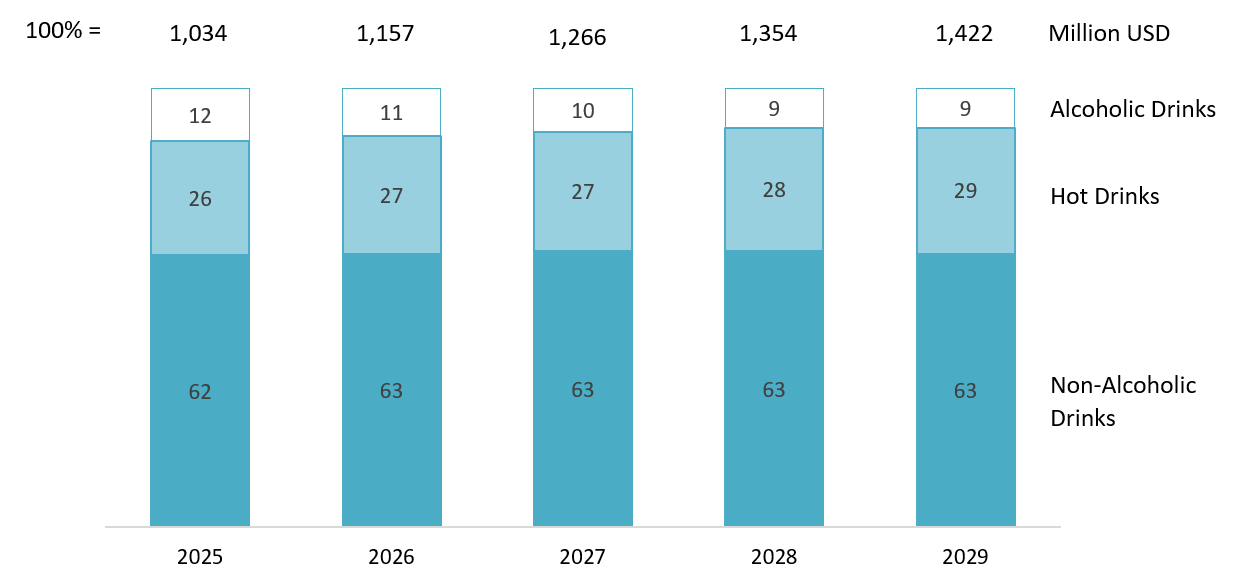
来源: 统计局
在2025—2029年预测期内,越南饮料市场的收入结构显示,酒精饮料的占比将逐步下降:预计其占比将从2025年的12%降至2028—2029年的9%。相比之下,非酒精饮料预计将在整个期间基本保持稳定,占比约为62—63%。.
被认为不太健康的饮料品类消费量下降,主要是政策措施与消费者行为变化共同推动的结果。在政策层面,国会于2025年6月14日举行的第九次会议上通过了《特别消费税法》。根据该法律,酒精含量为20% ABV或以上的烈酒以及啤酒,自2026年初起将按65%的税率征税;此后税率将逐年提高5个百分点,到2031年达到90%。在非酒精饮料领域,针对含糖软饮料的政策压力也在上升:含糖量超过每100毫升5克(根据越南标准定义)的饮料将被征税,税率将从2027年的8%分阶段实施,并于2028年提高至10%。值得注意的是,该措施针对含糖软饮料,不包括100%果汁、椰子水、牛奶/乳制饮料、矿泉水以及液体营养食品/补充剂等产品[2].
与此同时,Insight Asia对500多名消费者开展的调查显示,饮料中的高糖含量、人工成分以及健康方面的担忧,正促使消费者减少购买传统软饮料。因此,多达28%的消费者倾向于选择低糖或无糖饮料,并且如果能够感知到明确的健康益处,他们愿意支付溢价[3]. 。这些因素为更健康饮料产品的出现创造了有利条件,尤其是低糖或无糖系列、功能性饮料以及定位为有益健康的产品。.
2025年关键趋势
较不健康软饮消费的下降,推动了2025年越南饮料市场的若干新趋势,包括:
– 低糖和无糖产品线的崛起: 2025年,低糖/无糖选项已从可有可无的产品特性转变为明确的购买标准。InsightAsia的调查显示,低糖/无糖选项是影响购买决策的因素之一(46%),而高糖含量则是促使消费者减少购买软饮料的最大障碍(82%)。国会批准对含糖饮料征收特别消费税,也进一步推动品牌更早进行配方调整并扩大低糖/无糖产品组合。值得注意的是,InsightAsia报告称,RTD茶饮料领域的Tea+实现了强劲增长,这主要得益于低糖产品以及更加高端的定位——这表明“低糖”是切实的增长杠杆,而不仅仅是一种营销宣传[4]
– 功能性饮料的崛起: 2025年,补水电解质饮料、能量增强饮料以及添加维生素/矿物质的产品变得更加突出,这得益于真实需求和更快节奏的生活方式。功能性利益已成为关键购买驱动因素(52%),也是最具吸引力的产品趋势之一(78%)[5]. 。与此同时,市场仍不断出现新的功能性/发酵类新品——例如,Vinamilk于2025年8月5日推出Kombucha HAYĐẤY,推动了“更健康饮品”选项进一步走向大众化[6].
– 天然成分和本地风味日益受到青睐: 2025年,消费者不仅关注低糖,也更加重视产品的天然属性和具有本地共鸣的口味。天然成分是重要的购买驱动因素(42%),在RTD茶饮料中也是关键的次要驱动因素(68%)。此外,52%的消费者愿意尝试草本/植物浸泡饮品,同时对越南风味水果口味的兴趣日益浓厚,例如 荔枝 和金桔(calamansi)——这凸显出与越南口味偏好相契合的“天然”配方仍有很大空间[7]. 。例如,TH于2025年推出TH true TEA Natural Guava Tea和Natural Kumquat Tea,强调采用全天然成分和熟悉的水果风味[8].
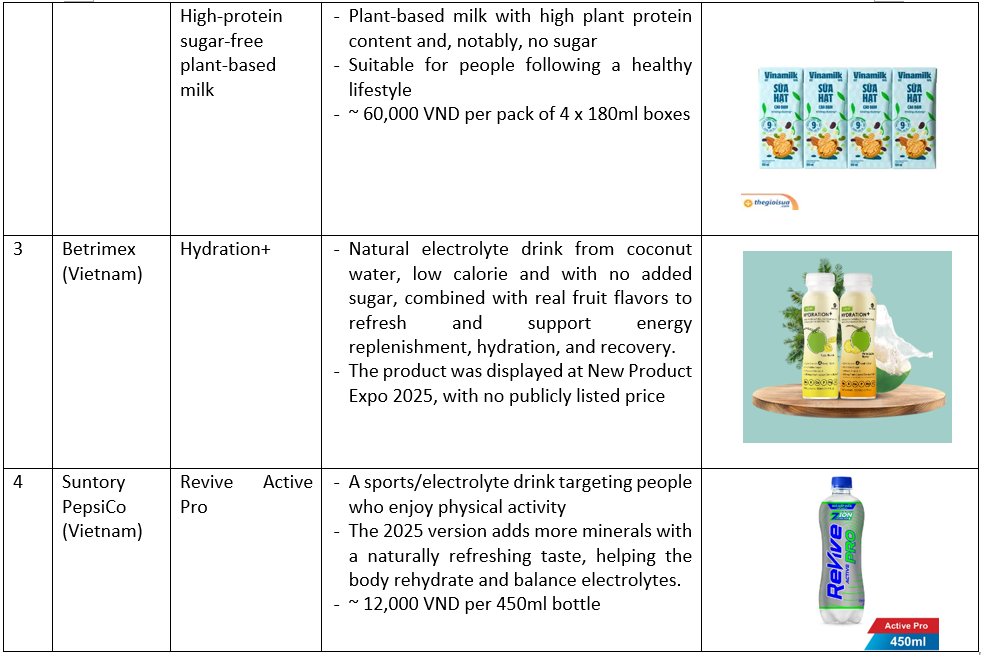
Some healthy drink products released in 2025
2025年,越南领先本土品牌如Vinamilk、TH true Milk、Betrimex和Revive掀起了一波新的“更适合你”的饮料上市潮——凸显出主要企业正快速调整产品组合,以契合该国日益增强的健康消费趋势。.
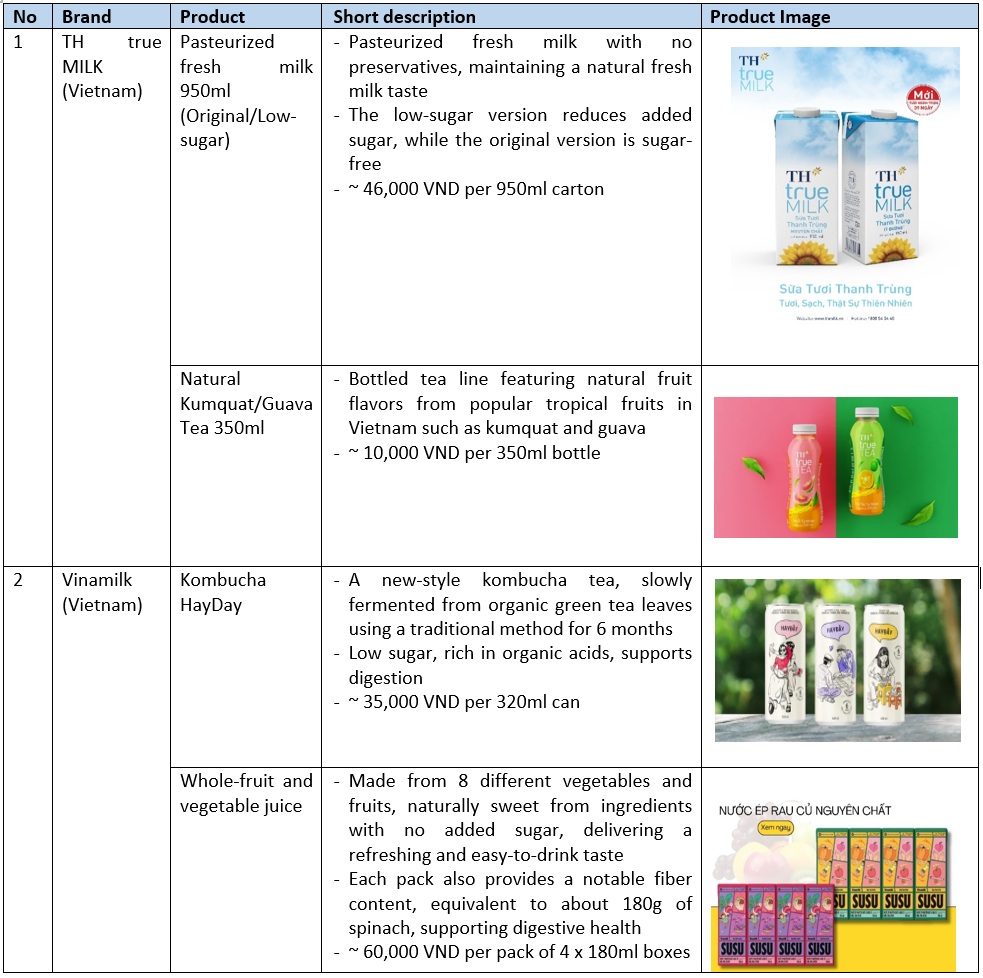
B&Company 的合成
2025年,越南主要饮料企业继续以务实、易于理解的方式,将产品组合转向更健康的选择,并提供符合日常需求的功能价值。在乳制品领域,品牌更聚焦于控糖和更清晰的营养定位,推出低糖或无糖产品,以及高蛋白和植物基产品。同时,市场也从乳制品延伸到其他健康导向品类,如康普茶以及果蔬汁。功能性饮料的存在感也更强,尤其是围绕补水和电解质补充打造的产品,常与水果风味或添加矿物质结合,以匹配积极忙碌的生活方式。总体而言,饮料中的“健康”概念正从单纯减糖转向更具体的功效诉求,为更高附加值的产品线创造了空间。.
对外国投资者的影响
越南更健康饮料细分市场的发展,既受监管推动,也来自真实的消费者需求。针对高糖饮料和酒精饮料的更严格政策压力,正推动配方调整,同时也加速低糖和无糖产品的增长潜力。从消费者端看,控糖正日益影响购买决策,这意味着此类产品正从小众走向主流消费。此外,使用金桔、荔枝、百香果、香茅、生姜以及草本成分等熟悉的越南风味和植物原料,打造更具本土相关性的产品线,也具有明显潜力,可强化天然形象,并在竞争激烈的市场中形成差异化。.
不过,这一机会也伴随显著门槛。企业需要谨慎管理合规要求,尤其是在糖含量的测量、标示和文件记录方面。从产品角度看,减糖往往会影响口感,而消费者仍然重视愉悦的饮用体验,因此配方调整通常需要多轮测试,并投入替代原料和加工技术。这些变化会抬高成本,对定价和营销预算形成压力,尤其是面向高端定位或需要消费者教育的产品。最后,竞争异常激烈,大型既有企业在研发、品牌和分销方面都占据强势优势,因此新进入者需要明确的差异化定位、聚焦的渠道策略以及强有力的执行力,才能实现规模化。.
对于希望进入越南健康饮料市场的外国投资者,以下是一些建议。.
– 第一的, 将低糖和无糖产品定位为核心增长支柱,同时认真投入配方试验,确保口感符合越南消费者偏好。.
– 第二, 通过金桔、荔枝、百香果、香茅、生姜和草本植物等本地风味与原料实现差异化,并配以简洁、易于理解的功效信息。.
– 第三, 从一开始就建立合规与透明度基础,从糖含量测量和披露到配料标示和营养信息,降低风险并增强消费者信任。.
– 第四,, 采用试点后扩张的方式,优先通过现代渠道和电商验证早期需求,同时与强大的本地分销商合作,加快全国覆盖。.
* 如果您希望引用本文中的任何信息,请同时注明来源并附上原文链接,以尊重版权。.
| B&Company
自2008年以来,第一家专注于越南市场研究的日本公司。我们提供广泛的服务,包括行业报告、行业访谈、消费者调查、商业匹配。此外,我们最近开发了一个包含超过900,000家越南公司的数据库,可用于寻找合作伙伴和分析市场。. 如果您有任何疑问,请随时与我们联系。. info@b-company.jp + (84) 28 3910 3913 |
[1] https://www.expertmarketresearch.com/reports/vietnam-beverage-market
[2] https://nld.com.vn/tang-thue-tieu-thu-dac-biet-voi-ruou-bia-len-70-tu-nam-2027-196250614085345948.htm
[3] https://insightasia.com/wp-content/uploads/2025/06/2504-Beverage-Market-0425.pdf
[4] https://insightasia.com/wp-content/uploads/2025/06/2504-Beverage-Market-0425.pdf
[5] https://insightasia.com/wp-content/uploads/2025/06/2504-Beverage-Market-0425.pdf
[6] https://www.brandsvietnam.com/congdong/topic/brand-updates-w32-2025-vinamilk-kombucha-giao-hang-nang
[7] https://insightasia.com/wp-content/uploads/2025/06/2504-Beverage-Market-0425.pdf
[8] https://tuoitre.vn/tap-doan-th-ra-mat-tra-oi-va-tra-tac-tu-nhien-th-true-tea-moi-20250617172956707.htm
相关文章








登录 / 注册
订阅新闻通讯