

 简体中文
简体中文  English
  日本語
日本語  Tiếng Việt
  한국어
한국어 日本食品生产商扩大了产能,日益将越南定位为战略性食品制造和出口基地。

137 月2026
最新新闻与报告 / 越南简报
评论: 没有评论.
抽象的
本报告分析越南食品加工业的现状,涵盖其市场增长、结构性挑战,以及推动日本制造商进入该市场的投资驱动因素。报告还介绍了已在水果和蔬菜、海产品以及碾米和面粉生产等行业关键增长领域开展业务的日本企业,并在最后总结新进入者应权衡的机遇与挑战。本报告旨在为评估越南作为亚洲市场生产基地的日本食品企业和投资者提供参考。.
市场概况
日本食品制造商最早于20世纪90年代初进入越南,以满足不断增长的国内市场需求。然而,自2010年代后期以来,在供应链多元化、“中国+1”战略以及越南作为区域制造业枢纽的作用不断扩大等因素推动下,投资显著加速。此后,众多日本食品生产商持续扩大生产能力,并日益将越南定位为同时服务于国内市场和更广泛东盟地区的战略性食品制造与出口基地。.
来源:NSO
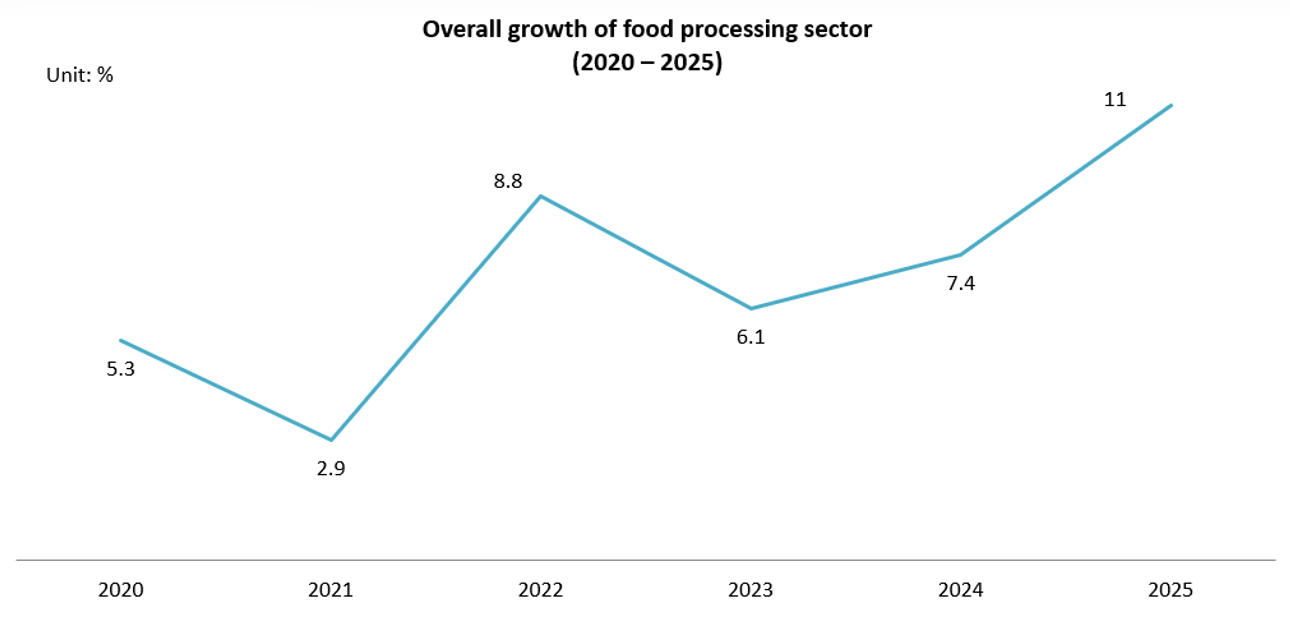
近年来,越南食品加工业取得了稳健发展。在新冠疫情造成的冲击之后,工业生产迅速复苏,增速从2021年的2.9%加速至2022年的8.8%,增幅近6个百分点。此后,该行业保持了稳定的增长势头,预计到2025年将恢复两位数增长,达到11%。这主要得益于越南拥有超过1亿消费者的国内市场、约1878万亿越南盾的食品及食品原料零售额,以及价值约858万亿越南盾的住宿和餐饮服务业。[1]. 。这些因素共同凸显了越南作为区域食品生产枢纽的日益增长的潜力,以及其作为长期投资目的地不断增强的吸引力。.
来源:NSO
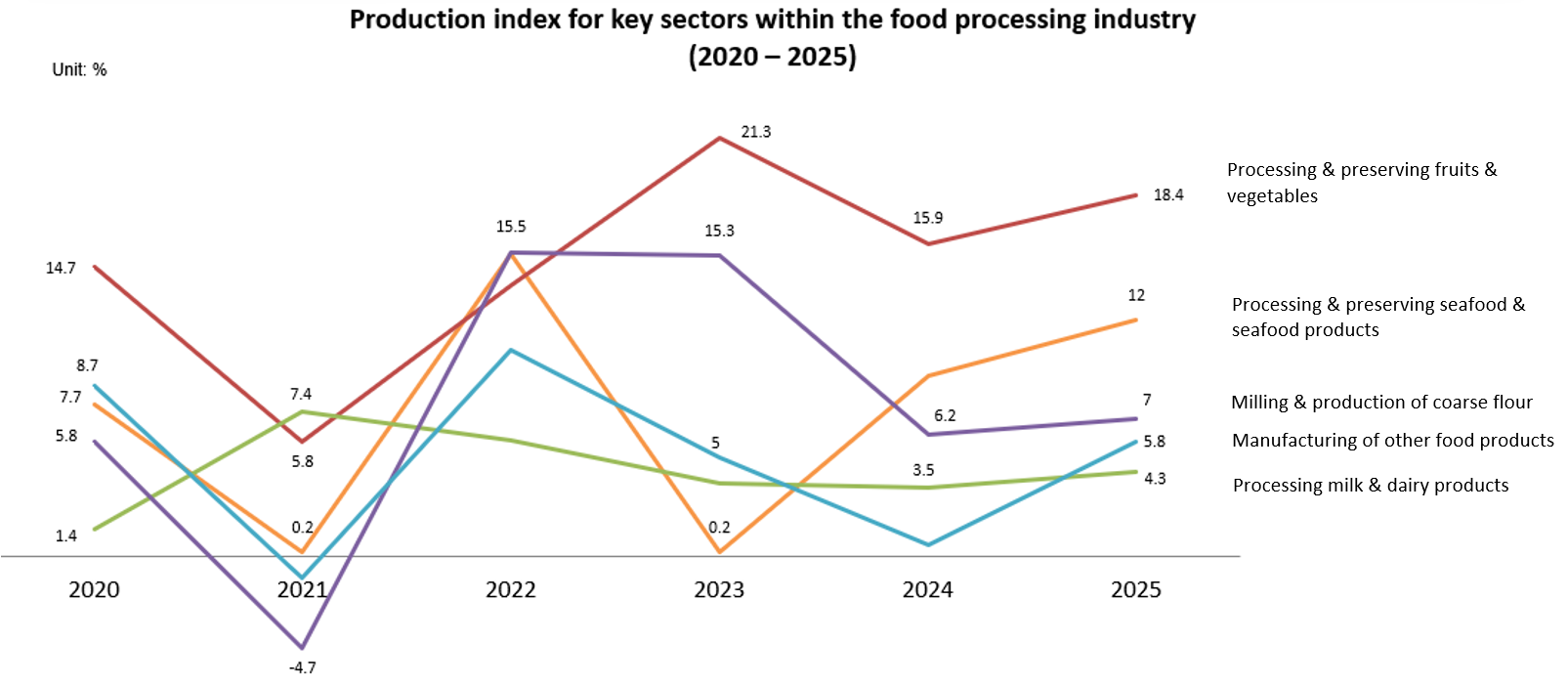
市场稳步增长,并集中于一些高潜力细分领域。其中,果蔬加工行业表现最为强劲。受疫情影响,该行业2021年市场份额下降至7.4%,随后在2022年飙升至13.8%,此后一直保持两位数增长,预计2025年将达到18.4%。这一增长得益于充足的原材料供应、不断增长的农产品出口、对增值加工投资的增加以及食品安全、可追溯性和冷链基础设施的改善,这些因素增强了越南为出口市场生产高附加值加工食品的能力。[2].
海产品加工业的增长势头位居第二;然而,在2020年至2023年间,其增长率有所波动,之后在2024年和2025年分别攀升至9.2%和12%,均进入两位数增长。该行业的增长得益于出口需求的改善、国内海产品供应的稳定以及为满足国际市场需求而加大对增值加工的投资。[3]. 疫情后,面粉和粗面粉的生产强劲反弹,随后恢复到较为温和的增长轨道,并在下游食品制造业和国内消费的持续需求支撑下,达到 7%(2025 年)。
然而,越南食品加工业仍面临若干结构性挑战。在水果和蔬菜加工以及海产品加工领域,增值产品在总产量中所占比例相对有限,许多企业仍依赖初级加工以及原料或半加工产品出口。此外,原材料质量、冷链基础设施和加工技术方面的差异,仍持续影响产品一致性及其在国际市场上的竞争力。这些差距凸显了进一步投资于先进加工技术、质量管理和一体化供应链的必要性
日本投资的驱动因素
越南对日本食品制造商的吸引力主要建立在三大支柱之上:区域供应链的战略调整、越南自身的农业和加工优势,以及有利的贸易与政策环境。.
“中国+1”供应链转移
自新冠疫情暴发以及地缘政治不确定性上升以来,许多日本制造商在亚洲各地实现生产多元化,以降低对单一国家的依赖。由于毗邻中国、制造业生态体系成熟、运营成本具有竞争力且政治环境稳定,越南已成为这一转移趋势的主要受益者之一。尤其是在制造业领域,JETRO已将食品饮料行业列为吸引日本对越投资的最重要制造业领域之一[5]. 。这反映出市场对越南的信心日益增强:越南不仅是具有成本竞争力的生产地点,也是能够同时服务国内和区域市场的长期制造基地。.
强大的农业资源与不断扩大的食品加工业
越南是全球领先的海产品、大米、热带水果、咖啡和腰果生产国及出口国之一,为制造商提供了可靠且多样化的原材料供应。这使食品加工企业能够将生产布局在原材料产地附近,从而提高供应稳定性并降低采购和物流成本。.
与此同时,越南食品加工业持续增强其生产能力。如前所述,水果和蔬菜加工、海产品加工以及碾磨等高增长子行业稳步扩张,反映出越南食品制造能力不断提升。然而,许多细分领域的增值加工仍不发达;因此,这为日本企业开发增值食品创造了重大机遇,尤其是在农产品和水产品领域。此外,日本企业还可发挥其在先进加工技术、质量管理、食品安全和产品开发方面的优势,以提升生产率、改善产品质量,并支持越南向更高附加值的食品制造转型[6].
贸易协定与支持性政府政策
越南广泛的自由贸易协定(FTA)网络巩固了其作为出口导向型制造业中心的地位。越南—日本经济伙伴关系协定(VJEPA)、CPTPP、EVFTA 和 RCEP 等长期协定,为进入亚太和欧洲主要经济体市场提供了优惠准入条件。对于食品制造商而言,这些协定降低了关税壁垒,促进加工食品出口,提升了越南制造产品的竞争力。.
在国内层面,越南还出台了相关政策,以推动高附加值食品加工。第25/CT-TTg号指令(2020年)[7] 通过推动深加工、现代加工技术,以及加强加工设施与原材料产区之间的联系,鼓励发展农林渔业加工产业。同时,第57/2018/NĐ-CP号法令[8] 为投资农业和农村地区的企业提供优惠政策,包括支持农产品加工设施、采后基础设施、冷藏设施和生产设备。此外,根据《2020年投资法》[9], ,农林业和水产养殖产品的种植与加工被列为符合投资优惠条件的行业。根据项目具体情况,投资者可享受优惠企业所得税税率、税收减免、机械设备进口关税豁免,以及土地相关优惠,尤其是在工业园区和经济区内。总体而言,这些国际协定和国内政策为日本企业在越南设立或扩大食品制造业务创造了有利环境,同时支持越南向高附加值食品生产转型。.
竞争格局
下表介绍了目前已在越南增长最快的三个食品加工细分领域开展业务的部分主要企业,展示其业务布局的深度以及各自的产品结构。.
| 增长细分领域 | 姓名 | 国籍/年份 | 主要产品 | 简介/成就 |
| 水果和蔬菜加工
(VSIC代码:1030) |
Nafoods Group | 越南(1995年) | 浓缩果汁、NFC果汁、IQF水果和蔬菜、干果 | 越南领先的水果加工企业之一,产品出口至70多个国家。运营现代化加工厂,专注于高附加值水果产品[10]. |
| Yasaka Fruit Processing Vietnam | 日本(2008年) | 加工鲜食热带水果 | 一家日资企业,专门采用热蒸汽处理(VHT)技术对热带水果进行采后处理和保鲜。该公司帮助越南水果满足出口至日本、澳大利亚和新西兰等高标准市场的植物检疫要求,强化水果价值链和出口能力[11]. | |
| Kagome Vietnam | 日本(2016年) | 番茄泥、番茄汁、番茄酱、加工番茄产品、加工蔬菜产品 | Kagome Co., Ltd.的子公司,该公司是日本领先的蔬菜食品企业之一。Kagome Vietnam通过与当地种植户开展合同种植,构建可持续的蔬菜价值链,并应用日本的种植技术、质量管理和食品加工技术,生产高品质的番茄及蔬菜产品,满足越南市场需求并拓展区域市场[12]. | |
| 水产品加工
(VSIC代码:1020) |
Umios Vietnam (前身为 Maruha Nichiro Vietnam) | 日本(2004年) | 冷冻水产品、加工水产品 | Umios Co., Ltd.的子公司,该公司是全球最大的水产品企业之一,通过在越南采购水产品并拓展加工合作关系,强化其全球供应链[13]. |
| Kyokuyo Vina Foods | 日本(2025年) | 冷冻虾、高附加值水产品 | Kyokuyo Co., Ltd.的子公司,该公司是日本领先的水产品企业之一。该工厂生产主要出口至日本的高附加值水产品,支持Kyokuyo的全球水产品供应链,并进一步巩固越南作为区域水产品加工基地的地位[14]. | |
| NIGICO | 日本(2000年) | 冷冻虾、裹粉虾、寿司虾(Nobashi Ebi)、天妇罗虾、高附加值水产品 | 由日本最大的水产品企业之一Nissui Corporation全资拥有。NIGICO位于金瓯,运营一体化水产品加工厂,拥有包括BRCGS、ASC CoC、MSC CoC、HALAL、BAP和SEDEX在内的国际认可认证,主要向日本、北美和欧洲供应高附加值水产品[15]. | |
| 谷物碾磨和粗粉生产
(VSIC代码:1610) |
CJ-SC Global Milling | 韩国 × 日本(2013年) | 小麦粉、预拌粉 | CJ CheilJedang Corporation、Sumitomo Corporation和Chiba Flour Milling Ltd.的合资企业。越南最大的现代化面粉厂之一,为工业食品制造商提供产品[16]. |
| Showa Sangyo International Vietnam | 日本(2025年) | 预拌粉、天妇罗裹浆粉、唐扬粉 | Showa Sangyo Co., Ltd.的子公司。在越南投资US$21 million建设其首个生产基地。该工厂于2026年开始运营,并定位为Showa Sangyo面向东盟的核心预拌粉生产基地,为越南市场及区域出口市场提供供应[17]. | |
| Vietnam Nisshin Technomic | 日本(2018年) | 预拌粉、裹粉、裹浆粉、烘焙预拌粉 | Nisshin Seifun Group旗下的生产子公司,生产增值型面粉产品。通过FSSC 22000和HALAL认证,为越南及区域市场的食品制造商提供支持[18]. |
B&Company的综合分析
日本企业已布局三大增长领域,包括果蔬加工、水产品加工以及制粉和面粉生产。其在越南的布局既包括Umios和NIGICO等长期运营的制造商,也包括Showa Sangyo等近期投资者,表明日本企业持续看好越南作为制造基地。然而,这些投资在越南市场的分布并不均衡,因为水产品加工吸引了最强的日本制造商阵容,而只有少数日本企业活跃于果蔬加工领域
此外,这些企业主要将越南作为面向出口市场的生产基地,而非仅服务于国内需求。Yasaka加工热带水果并供应国际市场,Kyokuyo主要向日本供应水产品,NIGICO出口至日本、北美和欧洲,而Showa Sangyo则将其越南工厂定位为东盟生产枢纽。因此,这凸显了越南在区域及全球食品供应链中的作用日益增强。.
对投资者的影响
机会
最明确的机遇在于子行业快速增长与增值产能有限之间的缺口。果蔬加工是该行业增长最快的领域,但日本企业的布局仍仅限于Yasaka和Kagome两家公司,而市场仍由Nafoods等本土企业主导——这为新的日本企业进入者提供了可观的发展空间。相比之下,水产加工领域已经拥有较强的日本企业布局(Umios、Kyokuyo、NIGICO),并展示了在引入技术和质量管理后,增值型产业生态能够多快建立起来,为果蔬加工提供了可复制的模式。制粉和粗粉领域也呈现出类似的机会窗口,Showa Sangyo等近期进入者以及其他日本企业和与日本有关联的企业,正将越南定位为不仅服务国内市场、还面向更广泛东盟市场的生产基地——这一模式可供其他日本加工企业借鉴。支撑这三个领域发展的基础包括越南的自由贸易协定网络(VJEPA、CPTPP、EVFTA、RCEP)以及国内激励政策框架(第25/CT-TTg号指令、第57/2018/NĐ-CP号法令、《2020年投资法》),这些因素共同降低了从越南出口加工食品的成本,并特别支持对加工设施、冷库和生产设备的投资。.
挑战
带来机遇的同一结构性缺口,也构成了进入市场的实际障碍。在果蔬加工和水产加工领域,增值型产品在总产出中的占比仍相对有限,许多企业仍在出口初级或半加工产品——这意味着新进入者面临的是整个行业加工水平不足,而不仅仅是某一家企业的能力短板。原材料质量、冷链基础设施和加工技术方面的差异,仍在影响产品的一致性,直接限制了企业在要求严苛的国际市场中的竞争力,而Kyokuyo、NIGICO、Yasaka和Showa Sangyo等大多数日资企业正将这些市场作为目标。具体到果蔬加工领域,挑战更多在于竞争而非纯粹的技术问题:Nafoods等本土企业已经建立了稳固地位,这意味着新的日本进入者将与经验丰富的本土企业展开竞争,而不是进入一个尚未开发的市场。.
可执行性启示
首先,任何新增投资都应围绕越南现有的激励框架进行设计——包括优惠企业所得税税率、机械设备进口关税豁免,以及《2020年投资法》针对农产品、林产品和水产品加工所提供的土地优惠。.
其次,新进入者可以考虑采用Kyokuyo、NIGICO和Showa Sangyo已验证的出口枢纽模式——在越南建设面向日本、东盟及全球市场的产能,而不仅仅服务于国内市场,从而充分利用越南的自由贸易协定网络。.
最后,企业应将投资重点投向行业自身已明确的增值和基础设施短板——冷链产能、加工技术和质量管理体系——因为这些正是日本企业已被市场认可能够引入的能力。.
阅读更多
* 如果您希望引用本文中的任何信息,请同时注明来源并附上原文链接,以尊重版权。.
| B&Company
自2008年以来,第一家专门从事越南市场研究的日本公司。我们提供广泛的服务,包括行业报告、行业访谈、消费者调查和商业配对。此外,我们最近开发了一个涵盖越南超过1,000,000家公司的数据库,可用于寻找合作伙伴和分析市场。. 如果您有任何疑问,请随时与我们联系。. info@b-company.jp + (84) 24 3978 5165 |
[1] https://dms.gov.vn/documents/d/guest/bc-ttnd-2025-tieng-viet-pdf
[2] https://tapchikinhtetaichinh.vn/cong-nghiep-che-bien-nong-san-but-pha-tao-nen-tang-cho-nong-nghiep-viet-nam-hien-dai-va-ben-vung-102932.html
[3] https://b-company.jp/vi/vietnams-seafood-processing-market-and-opportunities-for-foreign-investors/
[4] https://kinhte.congthuong.vn/thao-go-diem-nghen-dua-cong-nghe-thuc-pham-ra-thi-truong-hieu-qua-450776.html ; https://nghiencuu.tapchikinhtetaichinh.vn/phat-trien-chuoi-cung-ung-lanh-de-nang-cao-gia-tri-thuy-san-tai-dong-bang-song-cuu-long-149413.html
[5] https://vir.com.vn/japanese-players-take-domestic-demand-into-account-114160.html
[6] https://vasep.com.vn/san-pham-xuat-khau/tin-tong-hop/chinh-sach/nganh-thuy-san-viet-nam-truoc-thach-thuc-cua-mo-hinh-kinh-te-moi-bai-toan-gia-tri-gia-tang-va-con-duong-but-pha-34889.html
[7] https://chinhphu.vn/default.aspx?docid=200164&pageid=27160
[8] https://chinhphu.vn/default.aspx?docid=193514&pageid=27160
[9] https://vanban.chinhphu.vn/?pageid=27160&docid=200449&classid=1&typegroupid=3
[10] https://www.nafoods.com/introduction
[11] https://yasaka.vn/gioi-thieu.html
[12] https://sulforaphane.com.vn/pages/ve-kagome
[13] https://www.umios.com/en/
[14] https://vasep.com.vn/san-pham-xuat-khau/tin-tong-hop/san-xuat/cong-ty-che-bien-thuy-san-thuoc-top-3-nhat-ban-mo-nha-may-tai-viet-nam-32220.html
[15] https://www.nigico.vn/?_fsi=8xqS6NCh
[16] https://botmicjsc.wordpress.com/gioi-thieu-cj-sc/
[17] https://vir.com.vn/japanese-food-giant-chooses-vietnam-for-ready-mix-flour-production-151397.html
相关文章






















登录 / 注册
订阅新闻通讯