
 Tiếng Việt
  English
  日本語
日本語  简体中文
简体中文  한국어
한국어 
10/09/2024
Nội dung nổi bật / Đánh giá ngành / Tin tức & Báo cáo mới nhất
Bình luận: Không có bình luận.
Tổng quan về Ngành Nông nghiệp tại Việt Nam
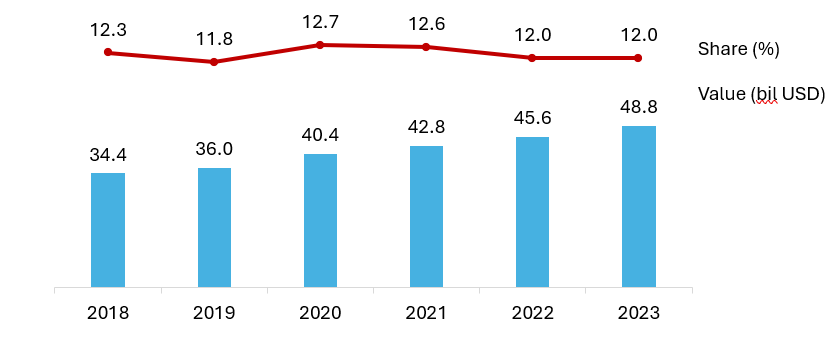
ngành nông nghiệp[1] ngành này là một trong những trụ cột chính của nền kinh tế Việt Nam. Mặc dù vẫn còn một số hạn chế và đóng góp vào GDP có xu hướng giảm nhẹ do Việt Nam chuyển dịch từ nông nghiệp sang công nghiệp và dịch vụ, ngành này vẫn tiếp tục tăng trưởng, với CAGR đạt 7.2% trong giai đoạn 2018-2023, đạt 48,8 tỷ USD và chiếm 12% GDP vào năm 2023.
Hình 1. Đóng góp của nông nghiệp vào GDP Việt Nam
Nguồn: GSO (2024)
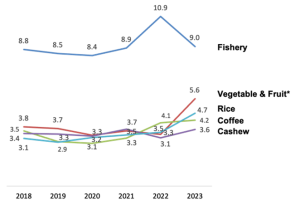
Ngoài ra, vai trò quan trọng của lĩnh vực này còn được thể hiện qua tình hình xuất khẩu các sản phẩm nông nghiệp của Việt Nam. Hiện Việt Nam đứng thứ 2 tại Đông Nam Á và thứ 15 trên toàn cầu về xuất khẩu nông sản[2]. Năm 2023, các sản phẩm nông nghiệp của Việt Nam ghi nhận thặng dư thương mại hơn $12 tỷ[3], với các mặt hàng chủ lực như thủy sản, rau quả, cà phê, hạt điều, gạo, v.v.
Hình 2. Một số sản phẩm nông nghiệp xuất khẩu chủ lực
Đơn vị: Tỷ USD
Nguồn: GSO (2024)
Bên cạnh những điểm sáng, lĩnh vực nông nghiệp Việt Nam vẫn đang đối mặt với một số hạn chế nhất định. Trước hết, ngành nông nghiệp vẫn được quản lý theo phương thức sản xuất quy mô nhỏ, dẫn đến rủi ro cao và hiệu quả thấp, cũng như giá trị gia tăng và năng lực cạnh tranh của hàng hóa còn hạn chế. Hiện nay, xuất khẩu nông sản chủ yếu dựa trên năng lực cạnh tranh về giá ở phân khúc chất lượng thấp, thay vì lợi thế cạnh tranh về chất lượng. Điều này đòi hỏi những thay đổi trong sản xuất, đặc biệt trong bối cảnh các tiêu chuẩn về an toàn thực phẩm, truy xuất nguồn gốc và các rào cản kỹ thuật liên quan đến môi trường ngày càng cao (ví dụ: Nhật Bản, EU, v.v.) tại cả thị trường trong nước và nước ngoài[4].
Thứ hai, nông nghiệp Việt Nam đang đối mặt với những thách thức lớn từ biến đổi khí hậu. Dự báo nếu mực nước biển dâng 1 mét, năng suất canh tác lúa tại Đồng bằng sông Cửu Long có thể giảm 40.5%. Hơn nữa, phần lớn Đồng bằng sông Hồng và Đồng bằng sông Cửu Long có thể bị nhấn chìm do mực nước biển dâng vào năm 2070, ảnh hưởng đến lĩnh vực thủy sản[5].
Thứ ba, ngành nông nghiệp đang thiếu lao động chất lượng cao. Theo MARD năm 2021, 57%[6] lực lượng lao động vẫn là lao động phổ thông, làm việc dựa trên kinh nghiệm và tính mùa vụ, thiếu lao động có tay nghề cao. Xét về độ tuổi lao động, phần lớn vẫn là người cao tuổi, với số lao động từ 50 tuổi trở lên chiếm 42.8%[7] vào năm 2021. Điều này gây khó khăn cho công tác đào tạo, chuyển giao công nghệ, v.v.
Xu hướng Nông nghiệp Thông minh tại Việt Nam
Nông nghiệp thông minh có thể được xem là một trong những giải pháp tối ưu để giải quyết các thách thức nêu trên của ngành nông nghiệp Việt Nam. Hiện chưa có định nghĩa cụ thể chính thức, nhưng nông nghiệp thông minh có thể được hiểu rộng rãi là việc ứng dụng các công nghệ ICT như thiết bị chính xác, IoT, cảm biến, quản lý dữ liệu lớn, v.v. vào các quy trình nông nghiệp. Việc áp dụng nông nghiệp thông minh giúp các bên liên quan (1) gia tăng giá trị thông qua việc đưa ra các quyết định khai thác và quản lý hiệu quả hơn, (2) tăng cường kết nối giữa nhà sản xuất và thông tin, đồng thời quản lý sản xuất tốt hơn; và (3) nâng cao hiệu quả đầu tư và giảm tác động tiêu cực đến môi trường.