

 Tiếng Việt
  English
  日本語
日本語  简体中文
简体中文  한국어
한국어 Ngành may mặc là một ngành công nghiệp chủ chốt ở Việt Nam, từ lâu đã nằm trong top ba nước xuất khẩu quần áo hàng đầu thế giới, đạt khoảng 44 tỷ USD vào năm 2024.

27/07/2026
Tin tức & Báo cáo mới nhất / Vietnam Briefing
Bình luận: Không có bình luận.
Dệt may là một ngành công nghiệp lớn, từ lâu luôn nằm trong nhóm ba nước xuất khẩu hàng may mặc hàng đầu thế giới. Kim ngạch xuất khẩu năm 2024 đạt khoảng 44 tỷ USD, với các thị trường chính là Hoa Kỳ, EU, Nhật Bản và Hàn Quốc. Các nhà máy tập trung quanh các thành phố lớn ở miền Bắc, miền Nam và miền Trung. Tuy nhiên, quy trình sản xuất chủ yếu vẫn là CMT (Cut, Make, Trim), phụ thuộc nhiều vào nguyên liệu nhập khẩu như vải và bông. Để gia tăng giá trị gia tăng, các thách thức bao gồm sản xuất nguyên liệu trong nước, tuân thủ môi trường trong quy trình sản xuất và nâng cấp công nghệ. Quy tắc xuất xứ trong các hiệp định thương mại cũng nhiều khả năng sẽ trở thành động lực cho sự chuyển dịch này.
Thống kê cơ bản
| Các chỉ số | Đơn vị | 2020 | 2021 | 2022 | 2023 | 2024 |
| Xuất khẩu dệt may và quần áo | Tỷ USD | 35.2 | 39.0 | 44.0 | 40.3 | 44.0 |
| Doanh số bán lẻ hàng dệt may và quần áo | Tỷ USD | 8.4 | 7.2 | 8.3 | 9.4 | 10.2 |
| Số lượng công ty sản xuất nguyên liệu dệt may[1] | Hàng ngàn công ty | 5.2 | 5.0 | 4.8 | 5.8 | Không có |
| Số lượng công ty sản xuất sản phẩm dệt may cuối cùng[2] | Hàng ngàn công ty | 9.8 | 10.0 | 9.7 | 12.4 | Không có |
Nguồn: Tổng cục Thống kê, Cơ sở dữ liệu doanh nghiệp B&Company
Quy định
Chính phủ hoan nghênh đầu tư vào ngành dệt may. Ngành sản xuất dệt may cho phép sở hữu nước ngoài theo chương trình 100%. Ngành dệt may được xếp vào nhóm ngành đầu tư ưu tiên, đủ điều kiện nhận hỗ trợ và ưu đãi thuế nếu đáp ứng một số tiêu chí nhất định. Ví dụ, các dự án nhuộm vải quy mô lớn trong các khu công nghiệp có thể được giảm thuế thu nhập doanh nghiệp hoặc miễn thuế nhập khẩu thiết bị.
Quyết định số 1643/QĐ-TTg của Thủ tướng Chính phủ cuối năm 2022, “Chiến lược phát triển ngành dệt may 2030 – Tầm nhìn 2035”, thúc đẩy tăng trưởng bền vững và sản xuất giá trị gia tăng cao. Một mục tiêu là giảm sự phụ thuộc vào nguyên liệu nhập khẩu, hướng tới mục tiêu sản lượng vải và phụ kiện trong nước đạt 701.000 tấn vào năm 2030. Để đạt được điều này, cần đầu tư vào sản xuất dệt may, sợi chất lượng cao, nhuộm và hoàn thiện vải, đặc biệt là các ngành nghề sử dụng công nghệ thân thiện với môi trường.
Chính phủ cũng đang khuyến khích thành lập các khu công nghiệp dệt may được trang bị hệ thống xử lý nước thải hiện đại để thu hút các doanh nghiệp nhuộm và các ngành liên quan đến vải. Các quy định về môi trường đang trở nên nghiêm ngặt hơn đối với các quy trình gây ô nhiễm cao. Các nhà máy nhuộm và hoàn thiện mới thường phải được đánh giá tác động môi trường và phải đặt tại các khu vực có hệ thống xử lý nước thải tập trung. Chính quyền địa phương (như tỉnh Đồng Nai và tỉnh Nam Định) cũng đang hạn chế hoặc xem xét kỹ lưỡng các dự án dệt may có tiềm năng gây ô nhiễm. Điều này phù hợp với mục tiêu quốc gia hướng tới sản xuất sạch.
Tổng quan thị trường
Ngành công nghiệp dệt may toàn cầu rất mạnh và là động lực chính thúc đẩy tăng trưởng kinh tế đất nước. Hiện nay, Việt Nam là nước xuất khẩu dệt may lớn thứ ba thế giới, sau Trung Quốc và Bangladesh. Nằm ở vị trí giao nhau của các hành lang hàng hải và kinh tế quan trọng, Việt Nam có đường vận chuyển trực tiếp đến các tuyến đường biển quốc tế trọng điểm, cho phép vận chuyển hiệu quả và tiết kiệm chi phí đến các thị trường lớn như Bắc Mỹ, châu Âu, Đông Bắc Á và các nước ASEAN. Hơn nữa, vị trí địa lý gần Trung Quốc, nhà cung cấp nguyên liệu dệt may lớn nhất thế giới, tạo điều kiện thuận lợi cho sự hợp tác với các công ty ở cả thị trường sản xuất và tiêu dùng.
Xuất khẩu đã phục hồi đáng kể sau đại dịch COVID-19, đạt 40,3 tỷ USD vào năm 2023.[3], chiếm khoảng 12,51 tỷ USD trong tổng kim ngạch xuất khẩu của cả nước. Năm 2024, con số này tăng lên 44 tỷ USD bất chấp sự suy giảm nhu cầu toàn cầu.[4]. Trong 5 tháng đầu năm 2025, xuất khẩu đạt khoảng 18 tỷ USD, tăng 101.300 tỷ USD so với cùng kỳ năm 2024.[5]. Năm 2023, Việt Nam là nước xuất khẩu hàng may mặc lớn thứ hai sang thị trường Mỹ và là nhà cung cấp chính cho EU, Nhật Bản và Hàn Quốc.
Mỹ chiếm khoảng 381,3 tấn xuất khẩu, tiếp theo là Nhật Bản (10,11 tấn) và Hàn Quốc (8,21 tấn).[6].
Textile and Apparel Exports
Đơn vị: Tỷ USD
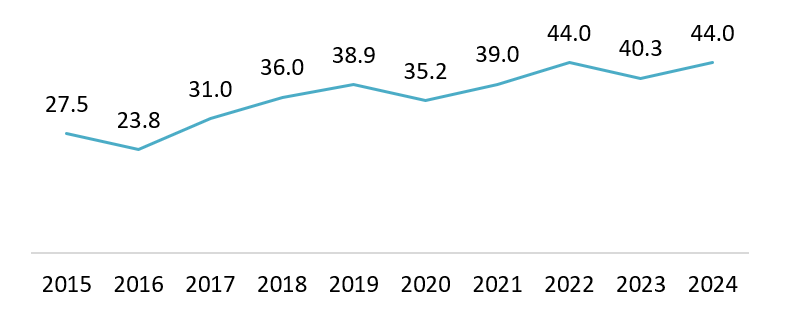
Nguồn: Tổng cục Thống kê
Textile and Apparel Export Destinations (2024)
100% = 441 tỷ USD
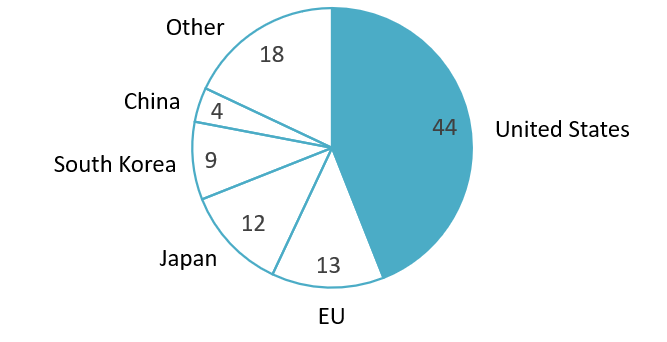
Nguồn: Tổng cục Hải quan Việt Nam
Sản xuất tập trung ở các khu vực cụ thể. Khu vực phía Nam (Thành phố Hồ Chí Minh, Đồng Nai, Bình Dương và các vùng lân cận) đã phát triển qua nhiều thập kỷ thành trung tâm sản xuất hàng may mặc lớn nhất, tận dụng cơ sở hạ tầng cảng biển tiên tiến như Cảng Sài Gòn và Cảng nước sâu Cái Mép, cùng với nguồn nhân lực tích lũy. Các cụm công nghiệp dệt may quan trọng cũng tồn tại ở khu vực phía Bắc (Nam Định, Hà Nội, Hải Dương, v.v.) và khu vực miền Trung (Thanh Hóa, v.v.), một số chuyên sản xuất sợi và vải. Ví dụ, tỉnh Nam Định có hơn 6.000 nhà máy dệt may (bao gồm cả các xưởng nhỏ ở nông thôn) tính đến năm 2025, đóng góp đáng kể vào việc làm địa phương.
Chuỗi cung ứng gồm ba giai đoạn: Thượng nguồn (sản xuất sợi/chỉ), trung nguồn (sản xuất vải/nhuộm) và hạ nguồn (sản xuất hàng may mặc). Ngành công nghiệp này vẫn phụ thuộc rất nhiều vào khâu may và gia công (CMT) ở hạ nguồn. Nguồn gốc từ đâu? Theo Hiệp hội Dệt may Việt Nam, trong số 3.800 nhà máy dệt, có khoảng 701.000 công nhân may, 231.000 công nhân kéo sợi/dệt và chỉ có 41.000 công nhân nhuộm/hoàn thiện.[7] Nguyên liệu thô như vải, sợi và bông được nhập khẩu, chiếm 401 tấn/3 tấn nguyên liệu đầu vào. Phần lớn bông (991 tấn/3 tấn) và vải được nhập khẩu từ Trung Quốc và Hàn Quốc. Năm 2024, nhập khẩu vải tăng 151 tấn/3 tấn so với năm trước, đạt khoảng 15 tỷ USD, trở thành mặt hàng nhập khẩu lớn thứ ba của Việt Nam. Trong khi Trung Quốc là nhà cung cấp chính, Hàn Quốc, Đài Loan, Nhật Bản và Thái Lan cũng là những nguồn cung quan trọng.[8]
Cạnh tranh
Trung Quốc vẫn là nước xuất khẩu dệt may lớn nhất thế giới, nhờ vào nguồn nhân lực dồi dào và kỹ thuật sản xuất tiên tiến. Thị phần của Việt Nam duy trì ổn định ở mức từ 51 tấn/3 tấn đến 5,21 tấn/3 tấn từ năm 2019 đến năm 2023, cho thấy khả năng phục hồi so với các nước xuất khẩu lớn khác. Bangladesh đã vượt qua Việt Nam vào năm 2021 và tiếp tục tăng trưởng, giữ vị trí thứ hai. Ấn Độ cũng trở thành một đối thủ đáng gờm vào năm 2023 với thị phần 4,71 tấn/3 tấn. Thổ Nhĩ Kỳ có sự tăng trưởng mạnh mẽ vào năm 2023, đạt thị phần 4,81 tấn/3 tấn, nhờ vào thế mạnh về tính bền vững và các giải pháp công nghệ cao trong ngành dệt may.
Trong khi đó, Việt Nam nổi tiếng với sự đa dạng và chất lượng sản phẩm. Không giống như một số đối thủ cạnh tranh chuyên về hàng may mặc cơ bản giá rẻ, Việt Nam sản xuất nhiều loại sản phẩm, từ áo phông cơ bản đến quần áo thể thao có giá trị gia tăng cao, vest, quần áo vải công nghệ cao, đồ bơi và vest may đo. Ngành này sử dụng khoảng 3 triệu người, được đánh giá cao về kỹ năng và năng suất. Mặc dù chi phí lao động đang có xu hướng tăng, nhưng vẫn duy trì tính cạnh tranh cao. Từ năm 2020 đến năm 2023, mức lương trung bình hàng tháng của ngành là khoảng 300 USD, đưa Việt Nam trở thành một cơ sở sản xuất có chi phí trung bình, chất lượng cao, nằm giữa Bangladesh (95 USD), (145 USD) và Trung Quốc (330 USD).[9].
Textile and Apparel Factories
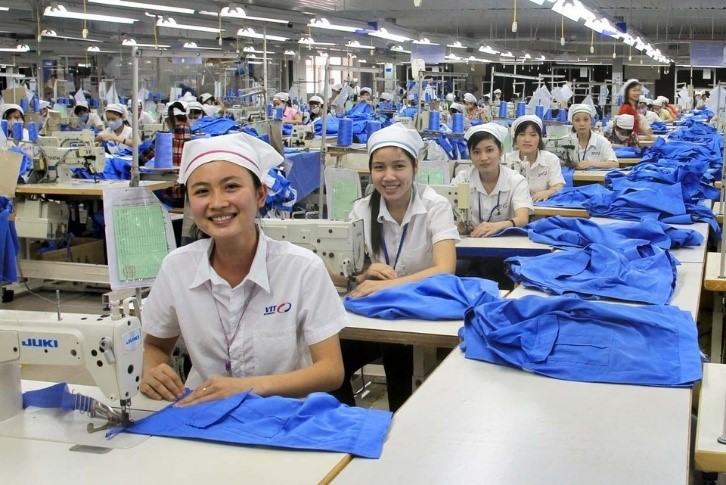
Nguồn: Dantri
Global Share of Textile Exporting Countries
Đơn vị: %
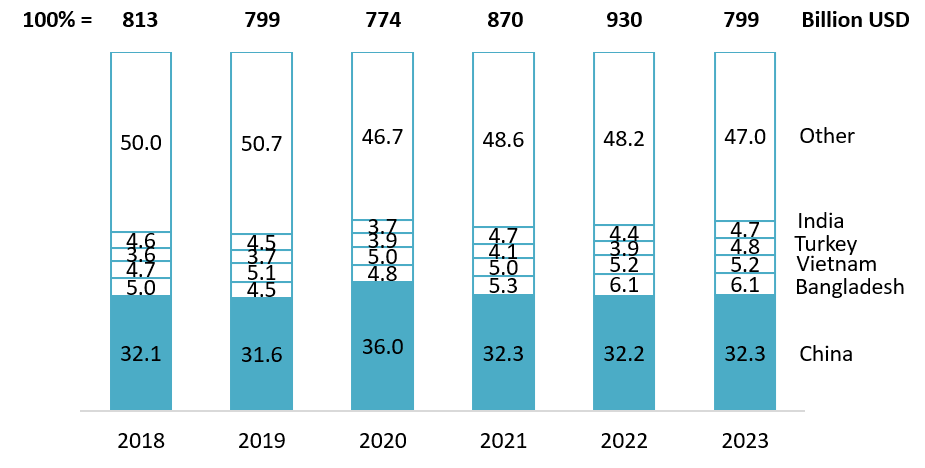
Nguồn: World Population Review
Các nhân vật chính
Theo số liệu doanh nghiệp của B&Company, tính đến năm 2023, ngành dệt may Việt Nam có khoảng 18.000 doanh nghiệp hoạt động. Cụ thể, có 621 doanh nghiệp siêu nhỏ (TP3T), 341 doanh nghiệp vừa và nhỏ (SMEs) và 41 doanh nghiệp lớn (TP3T).[10] Mặc dù phần lớn là doanh nghiệp nhỏ, nhưng các doanh nghiệp lớn cũng có sự hiện diện đáng kể.
Tổng số nhân viên tại các công ty này đạt khoảng 1,8 triệu người, trung bình gần 100 nhân viên mỗi công ty. Con số này cao gấp khoảng bảy lần so với mức trung bình của ngành là 15 nhân viên, cho thấy ngành dệt may có khả năng hấp thụ lao động cực kỳ cao. Hơn nữa, trong số 10 công ty hàng đầu theo doanh thu, mỗi công ty đều có khoảng 5.000 nhân viên trở lên.
Các nhà sản xuất lớn bao gồm sự kết hợp giữa các doanh nghiệp nhà nước, tư nhân và có vốn đầu tư nước ngoài. Trong số các công ty hàng đầu, các doanh nghiệp trong nước chiếm ưu thế trong lĩnh vực chế tạo và sản xuất/xuất khẩu, trong khi các công ty FDI nổi bật trong lĩnh vực vật liệu.
Danh sách một số nhân vật chính
| KHÔNG | Công ty | Năm thành lập | Quốc gia | Trụ sở chính | Tình trạng |
| 1 | Tập đoàn Dệt may Quốc gia Việt Nam (Vinatex) | 1995 | Việt Nam | Hà Nội | Tập đoàn dệt may lớn nhất Việt Nam, một tập đoàn doanh nghiệp quốc gia hoạt động trong các lĩnh vực sợi, vải và may mặc. |
| 2 | Công ty May mặc Việt Tiến (VGG) | 1977 | Việt Nam | Thành phố Hồ Chí Minh | Sản xuất trang phục lễ phục và gia công theo hợp đồng. Một công ty con của Vinatex. |
| 3 | Trang phục số 10 (Garco 10) | 1946 | Việt Nam | Hà Nội | Nhà xuất khẩu lâu đời các loại áo sơ mi, vest và đồng phục. Khởi nguồn là một nhà máy sản xuất đồng phục quân đội. |
| 4 | Công ty Đầu tư và Giao dịch TNG (TNG) | 1979 | Việt Nam | Thái Nguyên | Sản xuất quần áo cho các thương hiệu toàn cầu, cùng với các sản phẩm liên quan. |
| 5 | Công Công Dệt May | 1976 | Việt Nam | Thành phố Hồ Chí Minh | Tích hợp theo chiều dọc (Sợi – Vải – Nhuộm – May mặc) |
| 6 | Công ty may mặc Song Hong (MSH) | 1988 | Việt Nam | Nam Định | Xuất khẩu hàng may mặc, hàng dệt gia dụng và chăn ga gối đệm. |
| 7 | Công ty May mặc Đức Giang (DUGARCO) | 1990 | Việt Nam | Hà Nội | Xuất khẩu sang khách hàng toàn cầu |
| 8 | Nhà may Nha Be (NBC) | 1973 | Việt Nam | Thành phố Hồ Chí Minh | Nhà sản xuất miền Nam với dòng sản phẩm đa dạng và các địa điểm trên toàn quốc. |
| 9 | Texhong Hai Ha | 2006 | Trung Quốc | Quảng Ninh | Tập đoàn sợi bông toàn cầu |
| 10 | Hyosung | 2007 | Hàn Quốc | Đồng Nai | Nhà máy sản xuất spandex hàng đầu (cũng được sử dụng để sản xuất dây lốp xe). "Chuỗi giá trị sợi", ngành kinh doanh sợi sinh học. |
Nguồn: B&Company
Trong khi Vinatex, công ty dẫn đầu ngành, vận hành các nhà máy sản xuất sợi, vải và may mặc trên một khu vực rộng lớn, Thanh Công (TCM) cung cấp khả năng tích hợp từ kéo sợi đến may. Trong lĩnh vực may mặc, Viet Tien・Garment 10 (thương hiệu May 10) mạnh về trang phục công sở và thời trang, xếp hạng cao cùng với các thương hiệu như Viettien và San Sciaro (một thương hiệu của Viettien). TNG đại diện cho thế hệ tiếp theo với tư cách là nhà xuất khẩu thương hiệu toàn cầu: FOB (Free On Board)/ ODM (Original Design Manufacturing).
Xu hướng thị trường
Hiệp định thương mại tự do (FTA): Mạng lưới FTA rộng khắp là động lực tăng trưởng quan trọng. CPTPP và EVFTA đã giảm thuế quan đối với các thị trường chính, nâng cao khả năng cạnh tranh của Việt Nam.
Việt Nam gia nhập CPTPP vào tháng 1 năm 2019. Năm 2018, trước khi CPTPP có hiệu lực, tổng kim ngạch xuất khẩu dệt may đạt khoảng 36 tỷ USD, trong đó xuất khẩu sang các nước thành viên CPTPP chiếm khoảng 5,3 tỷ USD (khoảng 14,71 nghìn tỷ tấn). Ngược lại, xuất khẩu dệt may trong 8 tháng đầu năm 2024 đạt khoảng 32 tỷ USD, trong đó xuất khẩu sang các nước CPTPP chiếm khoảng 161 nghìn tỷ tấn (khoảng 5,1 tỷ USD).[11]. Điều này chứng tỏ đóng góp của CPTPP vào tăng trưởng xuất khẩu.
Mặt khác, các hiệp định thương mại tự do (FTA) áp đặt các yêu cầu về “nguồn gốc xuất xứ”, đòi hỏi sự phát triển của các ngành công nghiệp nguyên liệu thô. Trong những năm gần đây, đầu tư vào các nhà máy dệt may (đặc biệt là từ Trung Quốc và Đài Loan) đã tăng lên, nhằm đáp ứng các quy định về nguồn gốc xuất xứ và đảm bảo các ưu đãi thuế quan theo FTA.
Những thay đổi trong chuỗi cung ứng: Các yếu tố địa chính trị (ma sát thương mại Mỹ-Trung) và chi phí tăng cao ở Trung Quốc đã khiến hoạt động sản xuất và đầu tư may mặc chuyển từ Trung Quốc sang Việt Nam. Nhiều thương hiệu quốc tế đã mở rộng nguồn cung ứng tại Việt Nam.
Các thương hiệu toàn cầu như NIKE, Adidas, UNIQLO, H&M, ZARA, PUMA, Decathlon và Gap hợp tác với các nhà máy địa phương để sản xuất sản phẩm của họ, đưa Việt Nam trở thành trụ cột quan trọng hỗ trợ chuỗi cung ứng toàn cầu của các thương hiệu này.
Ví dụ về các thương hiệu sản xuất tại Việt Nam
| Thương hiệu | Hoạt động | Sản phẩm chính | Thị trường mục tiêu |
| NIKE | • Việt Nam chiếm 281.300 tấn trong tổng sản lượng của NIKE, trở thành thị trường lớn nhất. Ước tính khoảng một nửa số giày của Nike được sản xuất tại Việt Nam.
• Việt Nam là cơ sở sản xuất lớn nhất thế giới về cả giày dép và quần áo, với khoảng 500.000 người lao động làm việc tại 98 nhà cung cấp và khoảng 160 nhà máy, chủ yếu tập trung tại Thành phố Hồ Chí Minh. |
• Giày dép
• Trang phục • Phụ kiện & Dụng cụ thể thao |
· Bắc Mỹ
• Các nước châu Âu • Các nước châu Á |
| Adidas | • Trong thập kỷ qua, phần lớn hoạt động sản xuất đã chuyển từ Trung Quốc sang Việt Nam. Năm 2017, Việt Nam sản xuất 441.000 tấn giày Adidas và trở thành quốc gia cung ứng lớn nhất của hãng vào năm 2024.
• Hiện có khoảng 50 nhà máy đối tác, chủ yếu đặt tại Thành phố Hồ Chí Minh, Đồng Nai và Bình Dương. |
• Giày dép
• Trang phục • Phụ kiện & Dụng cụ thể thao |
· Bắc Mỹ
• Các nước châu Âu · Nhật Bản |
| UNIQLO | • Trong hơn 20 năm qua, UNIQLO đã nhập khẩu hàng hóa từ Việt Nam, phát triển quốc gia này thành cơ sở sản xuất lớn thứ hai của hãng tại châu Á sau Trung Quốc.
• 45 công ty Việt Nam và 240.000 công nhân tham gia sản xuất các sản phẩm của UNIQLO. Bên cạnh việc theo đuổi chi phí thấp, chúng tôi tập trung vào các mối quan hệ đối tác lâu dài để nâng cao năng suất, chất lượng và tính bền vững. |
• Trang phục
|
· Nhật Bản
· Trung Quốc • Các quốc gia Đông Nam Á |
Nguồn: Phân tích của B&Company
Tính bền vững và tuân thủ: Sự quan tâm đến sản xuất bền vững và có đạo đức đang ngày càng tăng. Chính phủ và các nhà sản xuất đang đáp ứng các tiêu chuẩn nghiêm ngặt về môi trường và lao động từ các thị trường xuất khẩu (ví dụ: Chiến lược Dệt may Bền vững của EU). Từ năm 2020 đến năm 2025, nhiều nhà máy kéo sợi và các nhà máy sản xuất của Việt Nam đã đầu tư vào các công nghệ thân thiện với môi trường (năng lượng mặt trời, nhuộm không dùng nước, xử lý nước thải, v.v.) và đạt được các chứng nhận như OEKO-TEX và GOTS. “Chiến lược Phát triển Ngành Dệt may 2030” của chính phủ cũng nhấn mạnh tính bền vững, hướng tới mục tiêu giảm 15-201 tấn nước và năng lượng tiêu thụ trên mỗi đơn vị sản phẩm trong toàn ngành.
Tuy nhiên, nhìn chung, việc triển khai các sáng kiến bền vững diễn ra chậm chạp, gây ra rủi ro cho thương mại toàn cầu.[12] . Bangladesh đang thúc đẩy chiến lược phát triển sản xuất dệt may, vải và nhuộm trong nước, giảm sự phụ thuộc vào nhập khẩu và tăng cường khả năng đáp ứng các hiệp định thương mại, đồng thời trở thành một đối thủ cạnh tranh mạnh mẽ nhờ chi phí lao động thấp và đầu tư vào phát triển bền vững. Để duy trì khả năng cạnh tranh, Việt Nam cần đẩy nhanh quá trình chuyển đổi sang sản xuất xanh hơn, giá trị gia tăng cao hơn và tăng cường năng lực công nghệ để giải quyết những thách thức ngày càng tăng về chi phí và tính bền vững. Để thu hẹp khoảng cách với Bangladesh, Việt Nam có thể tăng giá trị gia tăng bằng cách chú trọng hơn nữa vào các tiêu chuẩn và chứng nhận môi trường trong sản xuất và bằng cách từng bước tăng cường quản lý các nguyên liệu thô quan trọng, đặc biệt là vải. Điều này có thể đi kèm với việc phát triển các sản phẩm dệt may chất lượng cao và tăng cường toàn bộ chuỗi giá trị.
Nâng cao chuỗi giá trị: Việt Nam đang dần chuyển dịch từ các hợp đồng gia công cơ khí thuần túy sang các mô hình giá trị gia tăng cao hơn như OEM và ODM. Các công ty lớn đang đầu tư vào thiết kế, xây dựng thương hiệu và tự động hóa để gia tăng giá trị. Chính phủ cũng đang khuyến khích sự phát triển để tránh phụ thuộc vào lao động giá rẻ. Đến năm 2025, các công ty trong nước dự kiến sẽ tăng thị phần đơn đặt hàng FOB và ODM. Đồng thời, một số thương hiệu trong nước đang tìm cách củng cố vị thế của mình trên thị trường nội địa.
* Nếu bạn muốn trích dẫn bất kỳ thông tin nào từ bài viết này, xin vui lòng ghi rõ nguồn cùng với liên kết đến bài viết gốc để tôn trọng bản quyền.
| B&Company
Là công ty Nhật Bản đầu tiên chuyên về nghiên cứu thị trường tại Việt Nam từ năm 2008. Chúng tôi cung cấp nhiều dịch vụ đa dạng bao gồm báo cáo ngành, phỏng vấn ngành, khảo sát người tiêu dùng, kết nối kinh doanh. Ngoài ra, gần đây chúng tôi đã xây dựng cơ sở dữ liệu hơn 1.000.000 công ty tại Việt Nam, có thể được sử dụng để tìm kiếm đối tác và phân tích thị trường. Vui lòng liên hệ với chúng tôi nếu bạn có bất kỳ thắc mắc nào. info@b-company.jp + (84) 24 3978 5165 |
[1] Sản xuất nguyên liệu thô
[2] Sản xuất sản phẩm cuối cùng (Quần áo)
[4] B&Company (2024) <Truy cập>
[6] Tổng cục Hải quan Việt NamTruy cập>
[7] Thông tin tóm tắt về Việt Nam (2025)Truy cập>
[8] Vnbusiness (2024)Truy cập>
[9] Tin tức Việt Nam (2024)Truy cập>
[10] Doanh nghiệp siêu nhỏ: Doanh thu hàng năm dưới 3 tỷ VND; Doanh nghiệp vừa và nhỏ: Doanh thu hàng năm từ 3 tỷ VND đến dưới 200 tỷ VND; Doanh nghiệp lớn: Doanh thu hàng năm trên 200 tỷ VND
Bài viết liên quan




Đăng nhập / Đăng ký
ĐĂNG KÝ NHẬN BẢN TIN