

 Tiếng Việt
  English
  日本語
日本語  简体中文
简体中文  한국어
한국어 Bài viết này cung cấp phân tích toàn diện về thị trường thịt tươi sống của Việt Nam, bao gồm các đặc điểm chính, động lực và quỹ đạo tương lai.

24/06/2025
Nội dung nổi bật / Đánh giá ngành / Tin tức & Báo cáo mới nhất
Bình luận: Không có bình luận.
Ngành thịt tươi sống của Việt Nam đang trải qua một giai đoạn chuyển đổi mang tính then chốt, được thúc đẩy bởi sự thay đổi trong hành vi người tiêu dùng, việc ứng dụng công nghệ và mức độ cạnh tranh gia tăng với các sản phẩm nhập khẩu. Bài viết này cung cấp một phân tích toàn diện về thị trường thịt tươi sống của Việt Nam, khám phá các đặc điểm chính, các lực lượng định hình sự phát triển của thị trường và quỹ đạo tương lai của ngành.
Thị trường thịt heo vẫn vững mạnh, nhưng những thách thức vẫn còn
Năm 2024, sản lượng thịt của Việt Nam dự kiến đạt khoảng 4,9 triệu tấn, tăng 5% so với năm trước. Thịt lợn chiếm khoảng 63% tổng sản lượng, đạt hơn 3 triệu tấn (Hình 1). Tuy nhiên, dịch tả lợn châu Phi (ASF) đã phủ bóng lên đà tăng trưởng ổn định của thị trường. Do bùng phát ASF tại 44 tỉnh, khoảng 39.000 con lợn đã bị tiêu hủy, và chuỗi cung ứng bị gián đoạn [1]. Nhờ các biện pháp của Bộ Nông nghiệp và Phát triển Nông thôn cùng các cơ quan liên quan, tình trạng lây lan cuối cùng cũng đang được kiểm soát.
[Figure 1] Khối lượng bán thịt theo từng nhóm (nghìn tấn)
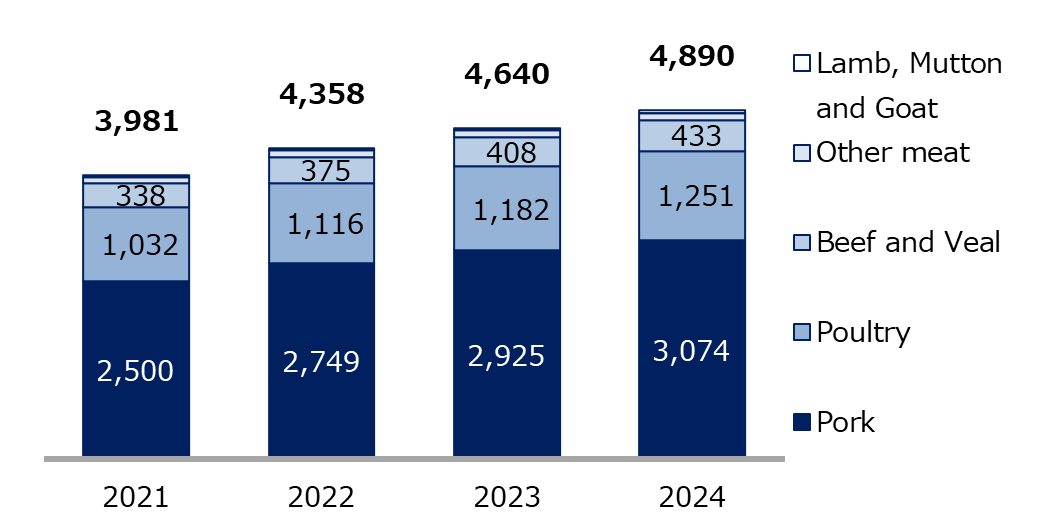
Nguồn: Euromonitor
Dù vậy, thị trường thịt heo vẫn rất lớn, với doanh số bán lẻ dự kiến đạt 183 nghìn tỷ VND (xấp xỉ hơn 1 nghìn tỷ yên) vào năm 2024, chiếm khoảng một nửa tổng thị trường (Hình 2). Việt Nam là nước tiêu thụ thịt heo lớn nhất Đông Nam Á, với mức tiêu thụ bình quân đầu người đạt 37 kg, tăng 3 kg so với năm trước [2].
[Figure 2] Doanh số bán lẻ theo nhóm thịt (nghìn tỷ VND)
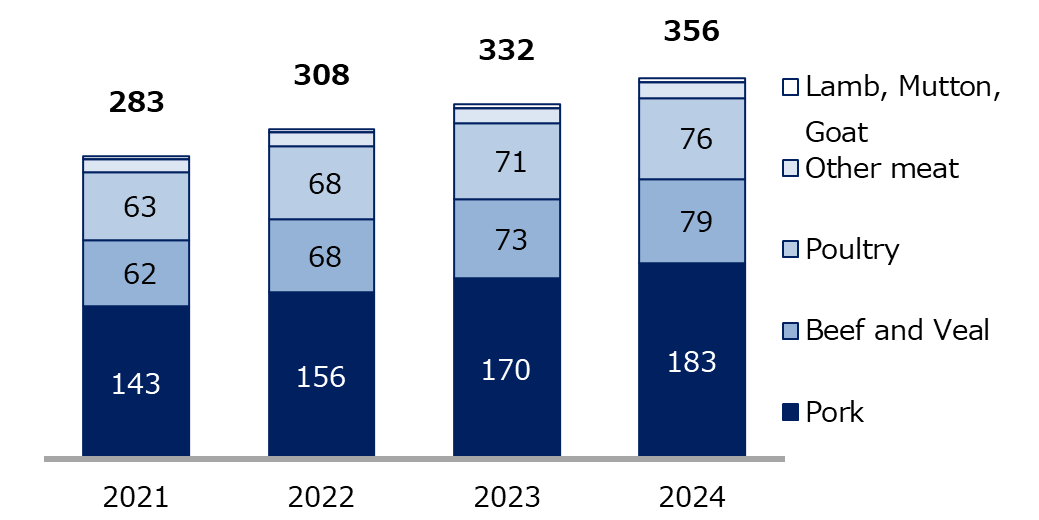
Nguồn: Euromonitor
90% sản phẩm vẫn chưa có thương hiệu—Một thị trường phân mảnh
Thị trường thịt của Việt Nam vẫn còn phân mảnh mặc dù có quy mô lớn. Hơn 90% sản phẩm thịt đang lưu thông là không có thương hiệu [3]. Người tiêu dùng ưa chuộng thịt tươi, còn ấm, “thịt nóng” và thường mua ở chợ truyền thống. Kênh thương mại truyền thống này chiếm khoảng 80% tổng thị trường, trong khi bán lẻ hiện đại chỉ chiếm 20% [4].

Bài viết liên quan






















Đăng nhập / Đăng ký
Tiếp tục mà không cần tài khoản
Đăng nhập / Đăng ký
ĐĂNG KÝ NHẬN BẢN TIN