

 English
  日本語
日本語  Tiếng Việt
  简体中文
简体中文  한국어
한국어 This article provides a comprehensive analysis of Vietnam's fresh meat market, including key characteristics, drivers, and future trajectory.

24Jun2025
Highlight content / Industry Reviews / Latest News & Report
Comments: No Comments.
Vietnam’s fresh meat sector is experiencing a critical phase of transformation, driven by shifts in consumer behavior, technological adoption, and increasing competition with imported products. This article provides a comprehensive analysis of Vietnam’s fresh meat market, exploring its key characteristics, the forces shaping its evolution, and its future trajectory.
Pork market remains strong, but challenges remain
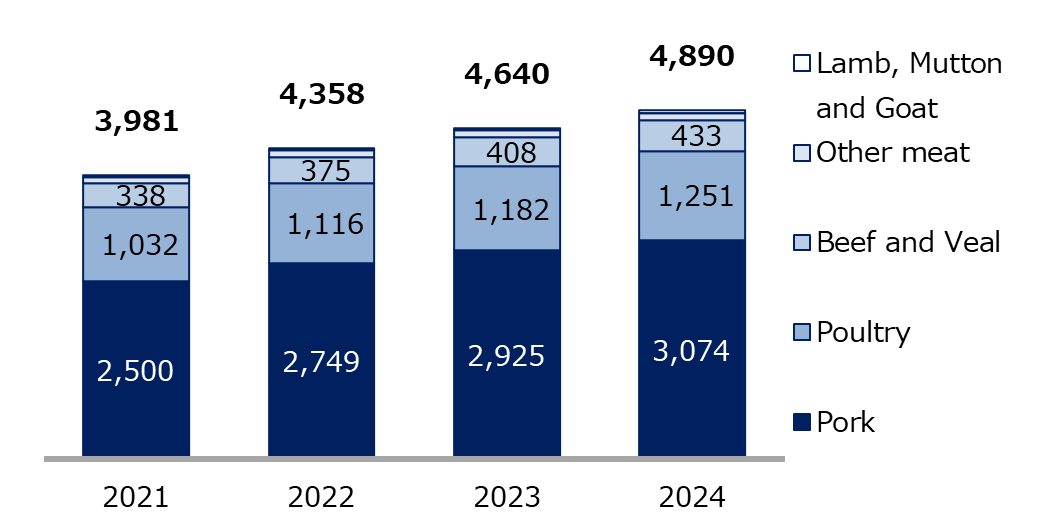
In 2024, Vietnam’s meat production is expected to reach approximately 4.9 million tons, a 5% increase from the previous year. Pork accounted for approximately 63% of the total, reaching more than 3 million tons (Figure 1). However, the spread of African swine fever (ASF) cast a shadow over the stable growth of the market. Due to the outbreak of ASF in 44 provinces, approximately 39,000 pigs were culled, and the supply chain was disrupted [1]. Thanks to measures taken by the Ministry of Agriculture and Rural Development and others, the spread of infection is finally being contained.
[Figure 1] Meat sales volume by category (thousand tons)
Source: Euromonitor
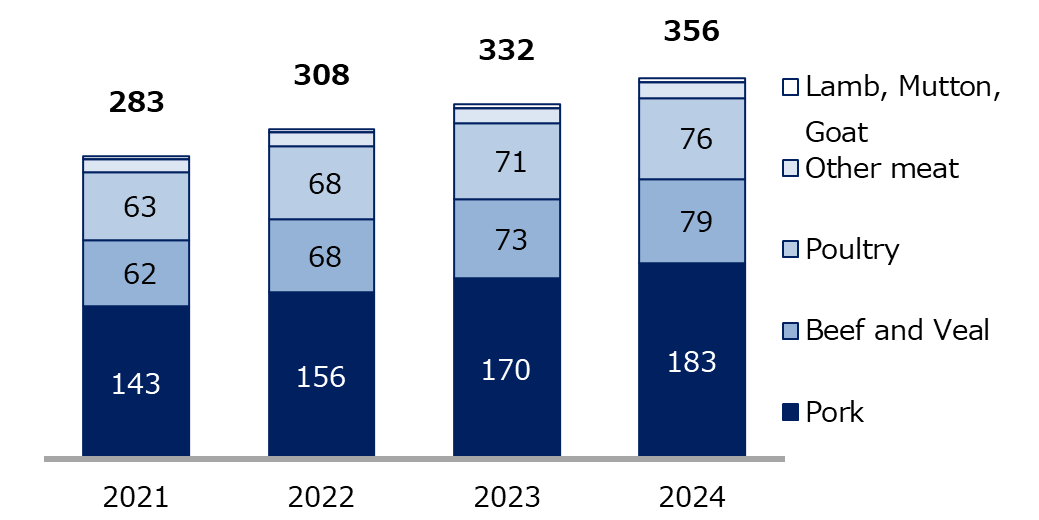
Nevertheless, the pork market remains large, with retail sales expected to reach VND183 trillion (approximately more than 1 trillion yen) in 2024, accounting for roughly half of the total (Figure 2). Vietnam is the largest pork consumer in Southeast Asia, with per capita consumption reaching 37 kg, up 3 kg from the previous year [2].
[Figure 2] Retail sales by meat category (VND trillion)
Source: Euromonitor
90% of Products Still Unbranded—A Fragmented Market
Vietnam’s meat market remains fragmented despite its size. More than 90% of meat products in circulation are unbranded [3]. Consumers prefer fresh, warm “hot meat” and generally buy from wet markets. This traditional trade channel accounts for around 80% of the total market, while modern retail accounts for only 20% [4].

Related article


































Log in / Register
Continue without an account
Log in / Register
SUBSCRIBE NEWSLETTER