

 한국어
한국어  English
  日本語
日本語  Tiếng Việt
  简体中文
简体中文 이 기사에서는 베트남 신선육 시장의 주요 특징, 성장 요인, 미래 방향을 포함한 포괄적인 분석을 제공합니다.

246월2025
하이라이트 콘텐츠 / 업계 리뷰 / 최신 뉴스 및 보고서
댓글: 댓글 없음.
베트남의 신선육 부문은 소비자 행동 변화, 기술 도입, 수입 제품과의 경쟁 심화에 힘입어 중대한 전환기를 맞고 있습니다. 본 기사에서는 베트남 신선육 시장의 핵심 특성, 그 진화를 형성하는 요인, 그리고 향후 궤적을 종합적으로 분석합니다.
돼지고기 시장은 견조하나, 과제도 남아 있다
In 2024, Vietnam’s meat production is expected to reach approximately 4.9 million tons, a 5% increase from the previous year. Pork accounted for approximately 63% of the total, reaching more than 3 million tons (Figure 1). However, the spread of African swine fever (ASF) cast a shadow over the stable growth of the market. Due to the outbreak of ASF in 44 provinces, approximately 39,000 pigs were culled, and the supply chain was disrupted [1]. 농업농촌개발부 등 관계 기관이 취한 조치 덕분에 감염 확산은 마침내 억제되고 있습니다.
[그림 1] 품목별 육류 판매량(천 톤)
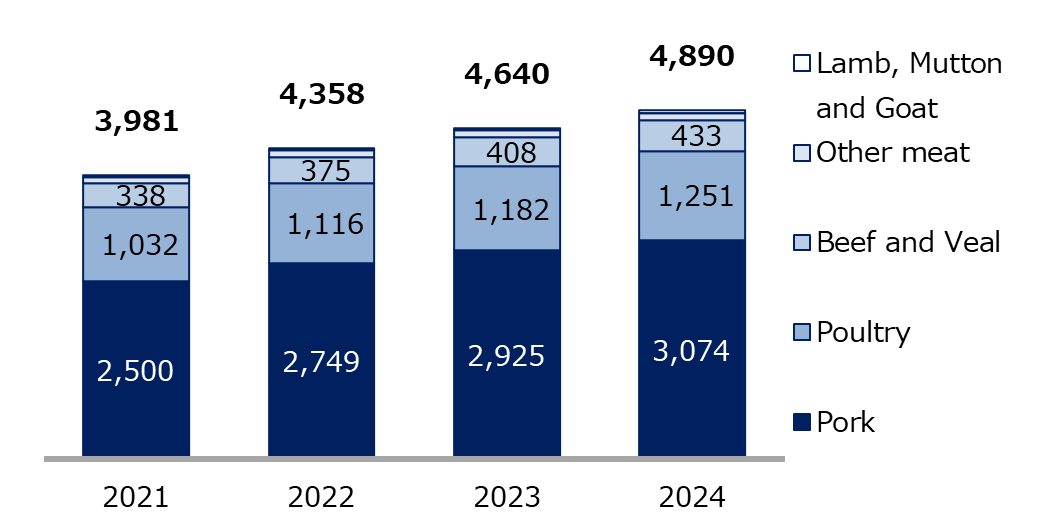
출처: Euromonitor
그럼에도 돼지고기 시장은 여전히 규모가 크며, 2024년 소매 매출은 1,830조 VND(약 10억 엔 이상)에 이를 것으로 예상되어 전체의 약 절반을 차지할 전망입니다(그림 2). 베트남은 동남아시아 최대 돼지고기 소비국으로, 1인당 소비량은 전년보다 3kg 증가한 37kg에 달합니다 [2].
[그림 2] 육류 품목별 소매 매출(VND 조)
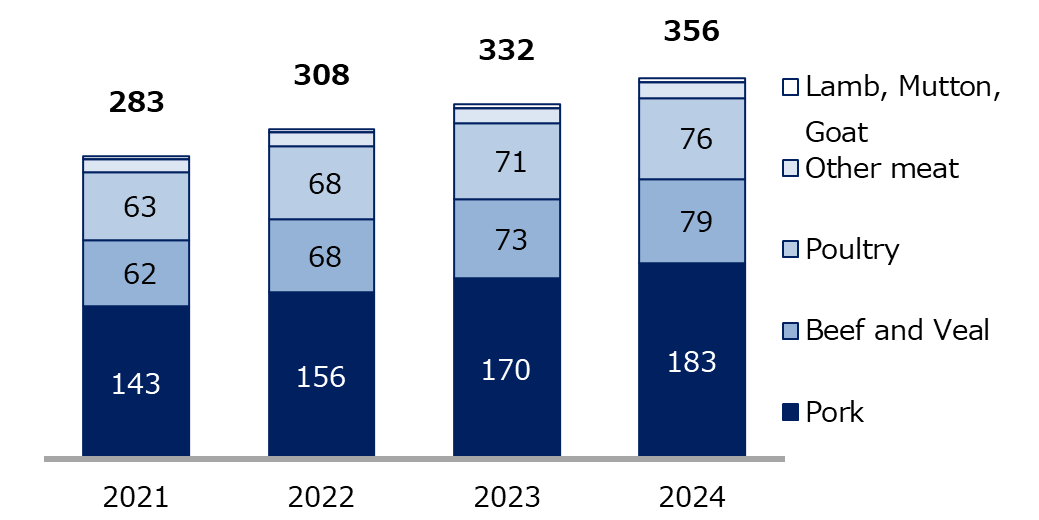
출처: Euromonitor
90% of Products Still Unbranded—분절된 시장
Vietnam’s meat market remains fragmented despite its size. More than 90% of meat products in circulation are unbranded [3]. Consumers prefer fresh, warm “hot meat” and generally buy from wet markets. This traditional trade channel accounts for around 80% of the total market, while modern retail accounts for only 20% [4].

관련기사


























로그인 / 회원가입
계정 없이 계속하기
로그인 / 회원가입
뉴스레터 구독