

 Tiếng Việt
  English
  日本語
日本語  简体中文
简体中文  한국어
한국어 Khi chuyển đổi số và tự động hóa tăng tốc trong nhiều ngành công nghiệp, nhu cầu về nhân sự kỹ thuật có khả năng thích ứng với môi trường số ngày càng tăng.

31/07/2026
Tin tức & Báo cáo mới nhất / Vietnam Briefing
Bình luận: Không có bình luận.
Chuyển đổi số (DX) đang tiến triển trên nhiều ngành, và thị trường lao động đang chứng kiến những thay đổi đáng kể. Không chỉ công việc thủ công đang giảm đi trong các văn phòng doanh nghiệp, mà cách mọi người lựa chọn kỹ năng chuyên môn và chuyên ngành học thuật cũng đã thay đổi. Các doanh nghiệp công và tư nhân đang buộc phải điều chỉnh chiến lược nhân sự để thích ứng với sự dịch chuyển lớn này.
Tình hình hiện tại của thị trường lao động
Lực lượng lao động đã giảm từ 55,8 triệu xuống còn 50,6 triệu người trong giai đoạn 2019-2021 do ảnh hưởng của đại dịch. Kể từ đó, lực lượng lao động đã phục hồi, đạt khoảng 53 triệu người vào năm 2024, tăng nhẹ so với năm trước. Trong những năm gần đây, tăng trưởng năng suất tổng thể chủ yếu không phải do sự gia tăng năng suất trên cả ba lĩnh vực (nông nghiệp, công nghiệp và dịch vụ), mà là do sự tái phân bổ lao động - sự dịch chuyển lao động từ nông nghiệp năng suất thấp sang công nghiệp và dịch vụ năng suất cao.[1]
Quy mô thị trường lao động
Đơn vị: 10 triệu người
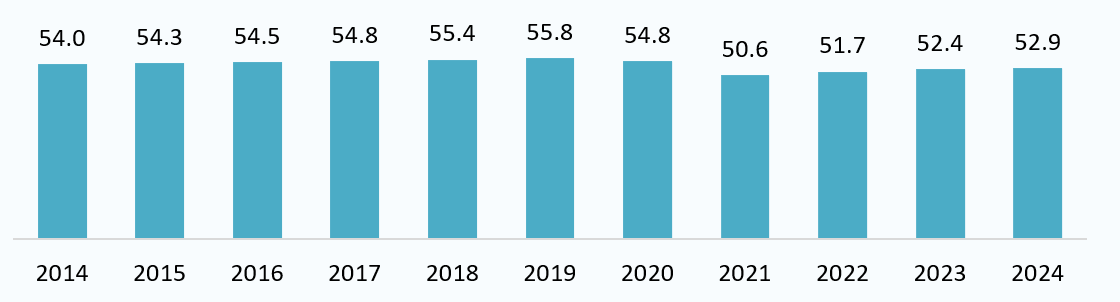
Nguồn: Cục Thống kê Quốc gia (trước đây là Tổng cục Thống kê)
Theo Tổ chức Lao động Quốc tế (ILO), thị trường lao động chủ yếu được chia thành ba nhóm: nông nghiệp, lâm nghiệp và thủy sản; công nghiệp và xây dựng; và dịch vụ. Sau đại dịch (2022–2024), trong khi việc làm trong nông nghiệp giảm nhẹ, số lượng lao động trong công nghiệp và xây dựng, cũng như trong dịch vụ, đang tăng lên. Đến cuối năm 2024, các khu vực này đã đạt mức cao mới, với 17,5 triệu người làm việc trong công nghiệp và xây dựng và 21 triệu người trong dịch vụ.
Thuê người làm
Đơn vị: triệu người
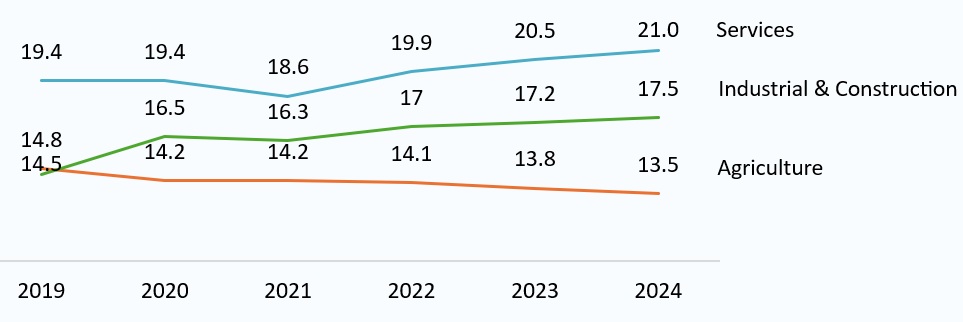
Nguồn: Văn phòng Thống kê Quốc gia
Xét theo nhóm tuổi, người lao động từ 25 đến 49 tuổi chiếm phần lớn lực lượng lao động. Nhóm tuổi này thể hiện khả năng thích ứng cao với chuyển đổi số và các công nghệ mới. Họ có thể nhanh chóng thích nghi với các lĩnh vực có nhu cầu liên tục thay đổi và việc ứng dụng công nghệ thông tin đang phát triển, chẳng hạn như ngành dịch vụ, tự động hóa sản xuất và thương mại điện tử. Trong khi đó, độ tuổi trung bình của lực lượng lao động đang tăng lên đều đặn. Xu hướng tăng lên về số lượng việc làm được ghi nhận ở nhóm tuổi từ 50 trở lên. Nhóm tuổi này tập trung vào các ngành nghề không yêu cầu kỹ năng số cao cấp, chẳng hạn như nông nghiệp, thủ công mỹ nghệ, sản xuất may mặc và bán lẻ truyền thống, nơi kinh nghiệm và sự ổn định của họ được đánh giá cao.
Số lượng người lao động theo nhóm tuổi
Đơn vị: triệu người
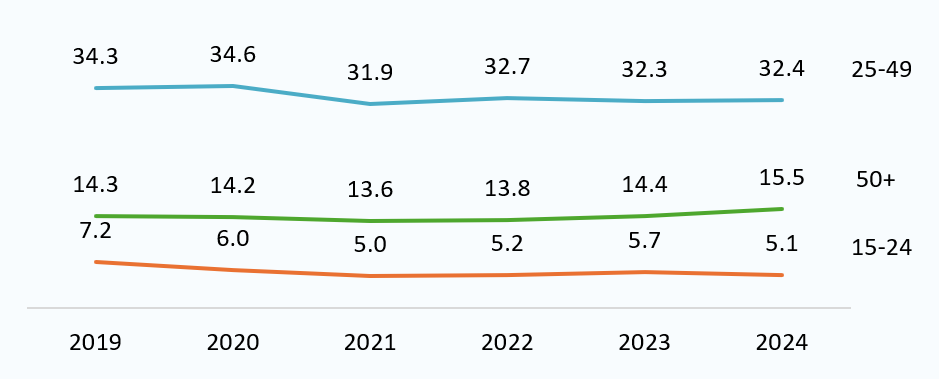
Nguồn: Văn phòng Thống kê Quốc gia
Chính sách điều chỉnh lực lượng lao động tương lai và chuyển đổi số
Chính phủ đã thực hiện các cải cách giáo dục để đáp ứng nhu cầu nhân lực trong tương lai thông qua các chương trình quốc gia tập trung vào giáo dục phát triển và giáo dục nghề nghiệp.
Ví dụ, “Chương trình Chuyển đổi số Quốc gia đến năm 2025 (Tầm nhìn đến năm 2030)” đã được công bố, nhấn mạnh tầm quan trọng của việc phát triển kỹ năng số trong tất cả các ngành và kêu gọi nỗ lực từ cả các tổ chức và cá nhân. Chương trình cũng đề cập đến chiến lược chính phủ điện tử và sự phát triển của nền kinh tế số và xã hội số. Các biện pháp để đạt được những mục tiêu này đã được nêu rõ. Chẳng hạn, chương trình kêu gọi đánh giá tình trạng thực hiện các sáng kiến chuyển đổi số từ các bộ ngành đến các doanh nghiệp địa phương, và tạo điều kiện tốt hơn cho các công ty CNTT thúc đẩy việc sử dụng các công nghệ tiên tiến.[2] .
Hơn nữa, trong khuôn khổ cải cách Giáo dục và Đào tạo nghề (TVET), Bộ Hợp tác Kinh tế và Phát triển Liên bang Đức và Tổng cục Giáo dục và Đào tạo nghề Việt Nam (DVET) đang phối hợp nâng cao chất lượng các trường dạy nghề. Chương trình này tập trung vào việc thích ứng TVET với thế giới ngày càng số hóa. Các hoạt động chính bao gồm các khóa đào tạo cho các trường cao đẳng nghề, cơ sở đào tạo kỹ thuật, tư vấn chính sách, xây dựng năng lực, hỗ trợ kỹ thuật cho TVET 4.0 và phát triển nền tảng tài nguyên giáo dục mở.[3]
Xu hướng tương lai của thị trường lao động tại DX
Nhu cầu ngày càng tăng đối với các kỹ năng số và bằng cấp giáo dục đại học dự kiến sẽ thúc đẩy sự tái cấu trúc các phương pháp phát triển nguồn nhân lực. Khi chuyển đổi số và tự động hóa tăng tốc trong các ngành công nghiệp, nhu cầu về nhân sự kỹ thuật có thể thích ứng với môi trường kỹ thuật số ngày càng tăng. Đồng thời, đặc biệt là trong các ngành sản xuất, xây dựng và dịch vụ, nguy cơ nhiều công việc trình độ thấp và lặp đi lặp lại sẽ bị thay thế bởi máy móc và phần mềm do các hệ thống quản lý doanh nghiệp tích hợp tự động hóa và trí tuệ nhân tạo đang ngày càng lớn.[4]
Ví dụ về các công ty định hướng chuyển đổi số
| KHÔNG | Tên công ty | Ngành công nghiệp | Các sáng kiến chính |
| 1 | Vinamilk | Sản phẩm sữa | • Kho thông minh với xe tự hành dẫn hướng bằng laser và xe tự hành dẫn hướng bằng đường ray
• Cần cẩu xếp dỡ tự động, dây chuyền xử lý nhiệt độ cực cao, hệ thống quản lý kho |
| 2 | Điện tử Samsung | Thiết bị điện tử | • Robot vận chuyển pallet tự hành được trang bị cảm biến an toàn và hệ thống thị giác máy tính phục vụ hậu cần nội bộ. |
| 3 | Coteccons | Sự thi công | • Các công cụ điện toán đám mây và trí tuệ nhân tạo của Microsoft
• Tích hợp lập kế hoạch 4D/5D với BIM (Mô hình thông tin xây dựng) |
| 4 | Dịch vụ hậu cần Lazada | Logistics thương mại điện tử | • Một trung tâm phân loại sử dụng trí tuệ nhân tạo rộng 20.000 mét vuông tại Bình Dương
• Ứng dụng học máy vào các hoạt động cốt lõi |
| 5 | Techcombank | Tài chính | • Đẩy nhanh việc cung cấp các sản phẩm kỹ thuật số và thúc đẩy việc thu hút khách hàng kỹ thuật số quy mô lớn thông qua ngân hàng kỹ thuật số trên nền tảng. |
Nguồn: Phân tích của B&Company
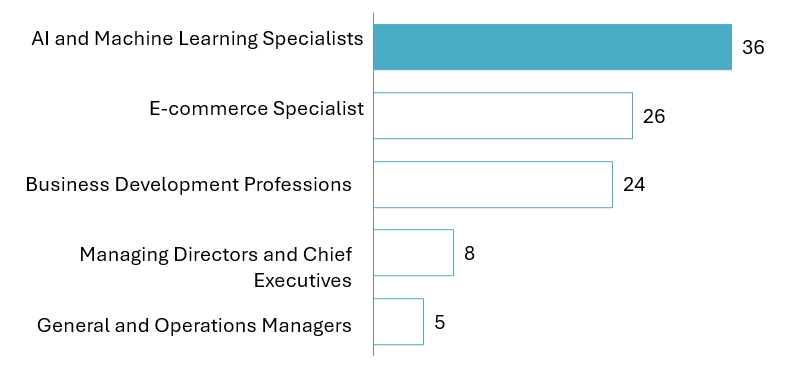
Báo cáo của Diễn đàn Kinh tế Thế giới, dựa trên khảo sát hơn 300 công ty, cho thấy sự gia tăng đáng kể các vị trí công nghệ cao như chuyên gia trí tuệ nhân tạo (AI) và máy học. Tiếp theo đó là các vị trí như chuyên gia thương mại điện tử và chuyên gia phát triển kinh doanh.
Growth Rate of Required Positions (2025)
Đơn vị: %
Nguồn: Diễn đàn Kinh tế Thế giới (2025)
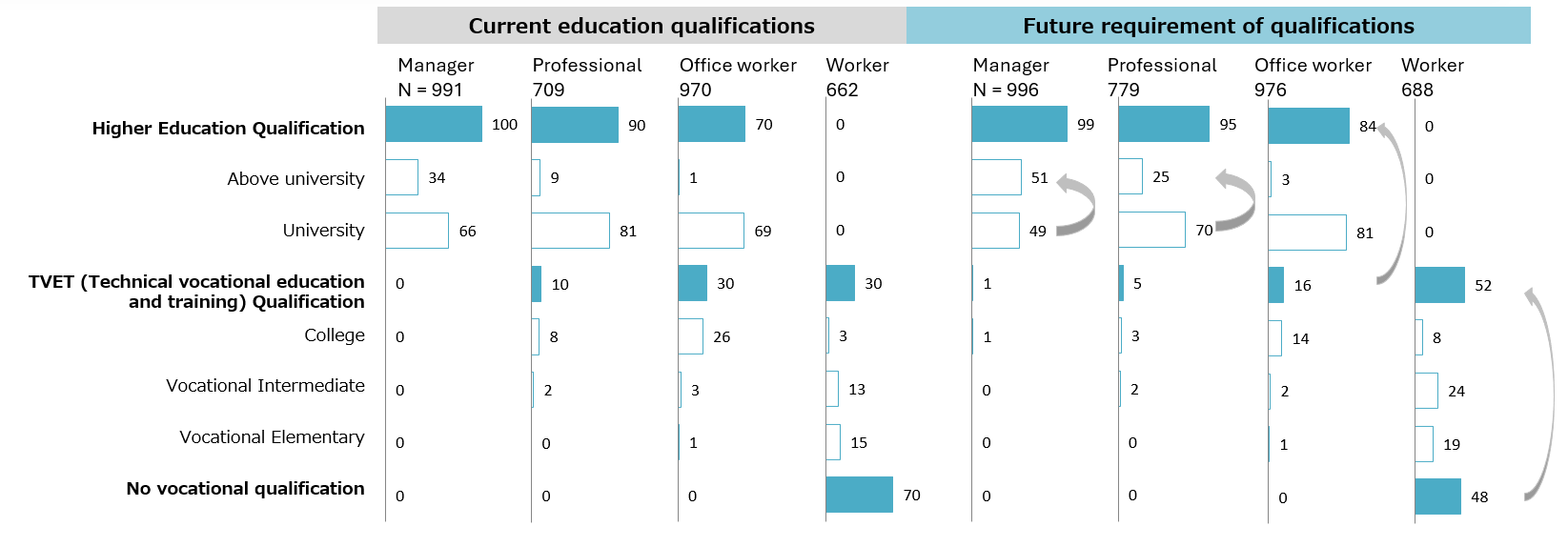
Theo Báo cáo Phát triển Nguồn Nhân lực Cao cấp của JICA và B&Company (2022), yêu cầu về trình độ chuyên môn đối với người lao động dự kiến sẽ trở nên khắt khe hơn trong tương lai. Tỷ lệ việc làm yêu cầu bằng đại học trở lên đang tăng lên, và nhu cầu tổng thể về giáo dục đại học cũng đang gia tăng. Đặc biệt, bằng cấp sau đại học ngày càng phổ biến và có thể trở thành tiêu chuẩn mới cho nhiều vị trí chuyên môn. Điều này cho thấy sự thay thế dần dần lợi thế truyền thống của những người có bằng cử nhân trên thị trường lao động.
Demanded Educational Background
Đơn vị: %
Nguồn: B&Company, JICA (2022)[5]
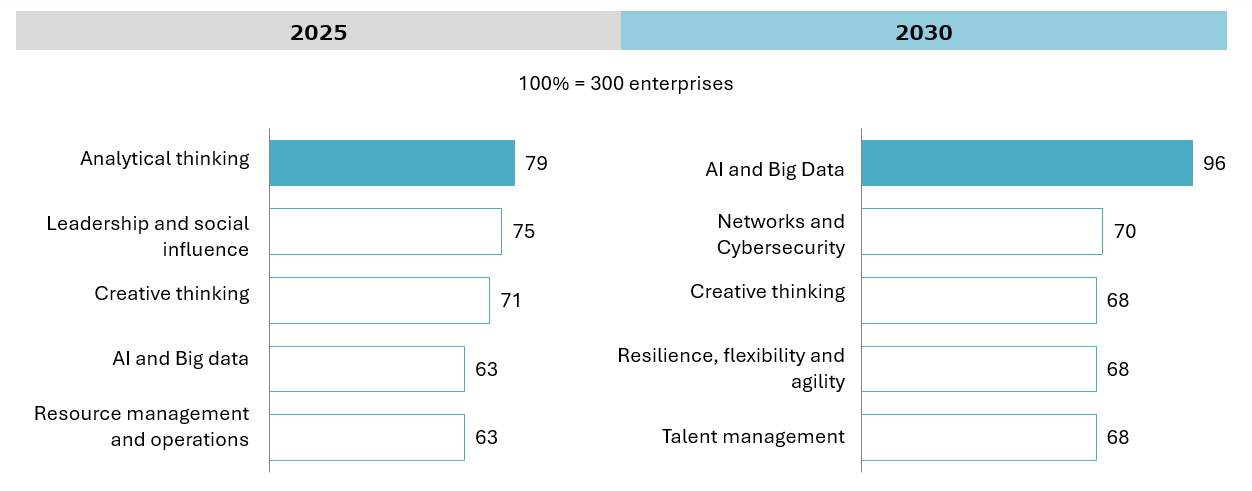
Do đó, các cuộc cải cách đang được tiến hành để điều chỉnh hệ thống giáo dục và phát triển nguồn nhân lực phù hợp với nhu cầu kỹ năng trong tương lai. Các kỹ năng then chốt đang chuyển dịch từ tư duy phân tích và khả năng lãnh đạo (năm 2025) sang các kỹ năng như chuyên môn về dữ liệu lớn và an ninh mạng (năm 2030), phản ánh nỗ lực thích ứng với sự tiến bộ không ngừng của công nghệ thông tin trong kỷ nguyên chuyển đổi số.
Các kỹ năng cốt lõi cần thiết cho nhân tài (2025 & 2030)
Đơn vị: %
Nguồn: B&Company, JICA (2022)[5]
Thách thức
Việc tiếp cận công nghệ và các quy định vẫn là những rào cản đáng kể.
Việc hạn chế tiếp cận công nghệ thông tin đặc biệt rõ rệt ở khu vực nông thôn và trong các doanh nghiệp vừa và nhỏ (SMEs). Khu vực nông thôn chỉ có 64% truy cập internet, thấp hơn khu vực thành thị (82%), hạn chế việc tận dụng tối đa các công cụ và nền tảng kỹ thuật số. Tương tự, quá trình chuyển đổi số (DX) của các SMEs trong nước diễn ra chậm; theo báo cáo của Ngân hàng Thế giới năm 2021, chỉ có khoảng 23% doanh nghiệp Việt Nam đã giới thiệu các sản phẩm hoặc thay đổi quy trình mang tính đổi mới.[6]. Các khuôn khổ pháp lý lỗi thời cũng tạo ra những rào cản đáng kể. Luật liên quan đến bảo mật dữ liệu, an ninh mạng và quyền lao động kỹ thuật số chưa theo kịp tốc độ chuyển đổi số nhanh chóng. Việc thiếu các quy định quản lý các lĩnh vực như làm việc trực tuyến và thực thi hợp đồng kỹ thuật số tạo ra sự không chắc chắn cho doanh nghiệp và người lao động, làm giảm sự sẵn lòng đón nhận đổi mới kỹ thuật số của họ.
Chuyển đổi số (DX) sẽ định hình lại thị trường lao động trong những năm tới. Khi các công ty áp dụng nhiều công nghệ tiên tiến hơn, nhu cầu về kỹ năng của người lao động, vị trí công việc và mô hình làm việc sẽ thay đổi. Để duy trì khả năng cạnh tranh quốc tế, Việt Nam cần tập trung phát triển lực lượng lao động có kỹ năng số linh hoạt hơn thông qua giáo dục nhất quán, nâng cao kỹ năng và các chiến lược phát triển nguồn nhân lực hướng tới tương lai.[7]
* Nếu bạn muốn trích dẫn bất kỳ thông tin nào từ bài viết này, xin vui lòng ghi rõ nguồn cùng với liên kết đến bài viết gốc để tôn trọng bản quyền.
| B&Company
Là công ty Nhật Bản đầu tiên chuyên về nghiên cứu thị trường tại Việt Nam từ năm 2008. Chúng tôi cung cấp nhiều dịch vụ đa dạng bao gồm báo cáo ngành, phỏng vấn ngành, khảo sát người tiêu dùng, kết nối kinh doanh. Ngoài ra, gần đây chúng tôi đã xây dựng cơ sở dữ liệu hơn 1.000.000 công ty tại Việt Nam, có thể được sử dụng để tìm kiếm đối tác và phân tích thị trường. Vui lòng liên hệ với chúng tôi nếu bạn có bất kỳ thắc mắc nào. info@b-company.jp + (84) 24 3978 5165 |
[1] B&Company (2025) <Truy cập>
[2] VietnamPlus (2024)Truy cập>
[3] Giáo dục nghề nghiệp và đào tạo nghề tại Việt Nam (2020 – 2024)Truy cập>
[5] Công ty B&Company, JICA (2022)Truy cập>
Bài viết liên quan






































Đăng nhập / Đăng ký
ĐĂNG KÝ NHẬN BẢN TIN