

 Tiếng Việt
  English
  日本語
日本語  简体中文
简体中文  한국어
한국어 Lưới điện Việt Nam đang phải đối mặt với nhu cầu tăng cao và nguồn cung thấp, nhưng số hóa và sự tham gia của khu vực tư nhân mang lại giải pháp.

05/09/2025
Tin tức & Báo cáo mới nhất / Vietnam Briefing
Bình luận: Không có bình luận.
Áp lực từ tăng trưởng phụ tải và mất cân đối cung – cầu trong truyền tải điện
Hệ thống điện Việt Nam đang chịu áp lực nghiêm trọng khi mức tiêu thụ điện tăng hơn 10% trong năm 2024, kéo theo yêu cầu tăng 11.3% trong kế hoạch cung ứng năm 2025. Tuy nhiên, một nghịch lý đáng kể vẫn tồn tại: trong khi tổng công suất lắp đặt đạt gần 85.000 MW, phụ tải đỉnh thực tế chỉ đạt 51.672 MW trong sáu tháng đầu năm 2025 [1]. Khoảng cách này không phản ánh biên dự phòng an toàn mà cho thấy nhiều nguồn điện có mức độ sẵn sàng thấp, không thể huy động hiệu quả khi cần, làm gia tăng nguy cơ thiếu điện cục bộ tại các trung tâm kinh tế lớn.
Công suất cao nhất của hệ thống truyền tải điện Việt Nam qua từng năm
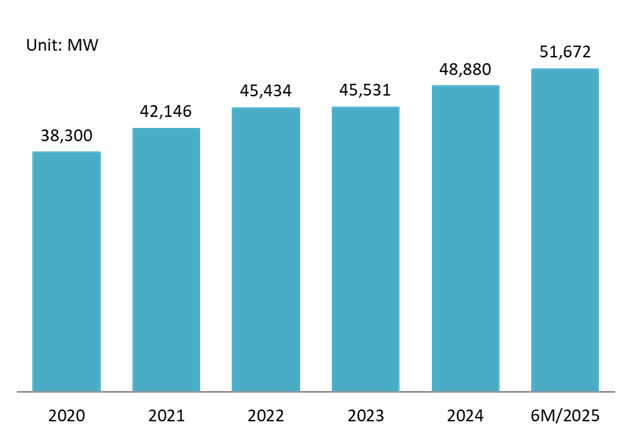
Nguồn: EVN
Trong khi nhu cầu tăng mạnh, phát triển hạ tầng truyền tải không theo kịp, tạo ra một “hiệu ứng nút thắt” đáng kể. Dữ liệu năm 2024 cho thấy ngành điện chỉ hoàn thành 64.5% số dự án lưới điện theo kế hoạch [2]. Nguyên nhân chính là những vướng mắc trong công tác quy hoạch và cơ chế chính sách, do Quy hoạch điện VIII (PDP8) chưa xác định rõ địa điểm dự án và diện tích đất cần thiết [3]. Điều này khiến chính quyền địa phương gặp khó khăn trong việc phê duyệt đầu tư và thực hiện giải phóng mặt bằng, từ đó làm chậm tiến độ các dự án trọng điểm.
Sự chênh lệch giữa tốc độ tăng trưởng phụ tải (hơn 10%) và tỷ lệ hoàn thành hạ tầng (khoảng 65%) đang khiến các đường dây và trạm biến áp truyền tải hiện hữu thường xuyên vận hành ở mức bằng hoặc gần ngưỡng quá tải. Tình trạng này không chỉ làm gia tăng tổn thất điện năng và rút ngắn tuổi thọ thiết bị mà còn trực tiếp làm tăng nguy cơ mất điện trên diện rộng, đe dọa an ninh năng lượng quốc gia.
Tiến độ số hóa lưới điện hiện nay tại Việt Nam
EVN (Vietnam Electricity) đã tiên phong trong chuyển đổi số với chiến lược có hệ thống, đặt mục tiêu trở thành doanh nghiệp số vào năm 2025 [4]. Lộ trình này được chia thành ba giai đoạn:
– Giai đoạn 1 (Số hóa): Tập trung tối đa hóa việc số hóa các hoạt động riêng lẻ trong từng phòng ban chức năng. Giai đoạn này phần lớn đã hoàn tất, tạo ra nhiều hệ thống Công nghệ thông tin (CNTT) chuyên biệt như ERP (Hoạch định nguồn lực doanh nghiệp), CMIS (Hệ thống quản lý thông tin khách hàng), PMIS (Hệ thống quản lý lưới điện), OMS (Hệ thống quản lý sự cố) và các hệ thống khác.
– Giai đoạn 2 (Tích hợp): Đây là giai đoạn hiện tại của EVN, tập trung tích hợp các hệ thống CNTT hiện đang phân mảnh nhằm nâng cao hiệu quả vận hành và tạo khả năng liên thông dữ liệu giữa các phòng ban.
– Giai đoạn 3 (Khai thác dữ liệu và công nghệ mới): Giai đoạn tương lai hướng đến việc tận dụng sức mạnh của Dữ liệu lớn và các công nghệ mới như AI, IoT và Cloud để tạo ra những mô hình kinh doanh và vận hành đột phá, chẳng hạn như bảo trì dự đoán hoặc dự báo cho các nguồn năng lượng tái tạo phân tán.
Những nỗ lực này đã mang lại các thành tựu đáng kể. Về vận hành, EVN đã tự động hóa 100% các trạm biến áp 110-220kV, chuyển đổi chúng thành các cơ sở không người trực [5]. Về dịch vụ, 100% dịch vụ điện được cung cấp trực tuyến, trong đó tỷ lệ thanh toán không dùng tiền mặt đạt 99.67% và tỷ lệ hợp đồng điện tử đạt 99.15% [6].
Thách thức lớn nhất hiện nay của EVN là rào cản nội bộ liên quan đến hệ thống và dữ liệu [7]. Tập đoàn đang đối mặt với tình trạng “ốc đảo dữ liệu”, trong đó các hệ thống thông tin cốt lõi như ERP, CMIS và PMIS được xây dựng riêng rẽ, hiện bị phân mảnh và không kết nối với nhau. Điều này cản trở việc xây dựng một góc nhìn toàn diện 360 độ về hoạt động của toàn bộ lưới điện.
Vai trò “nhà thầu chính” và đơn vị tích hợp hệ thống đang được đảm nhiệm bởi các công ty CNTT hàng đầu Việt Nam như FPT Information System (FPT IS) và Viettel Solutions [8,9]. Nhiệm vụ của họ là khảo sát, thiết kế và triển khai các giải pháp toàn diện để kết nối những hệ thống rời rạc này. Hỗ trợ họ là các tập đoàn công nghệ toàn cầu như Siemens, Schneider Electric, SAP và Oracle, cung cấp các công nghệ cốt lõi và giải pháp kỹ thuật nhằm giúp quá trình tích hợp diễn ra hiệu quả.
Những cơ hội
Việc cải tổ nền tảng dữ liệu này, kết hợp với những thách thức vận hành vốn có của lưới điện, đang mở ra một thị trường dịch vụ rộng lớn cho các đơn vị mới gia nhập – những tổ chức có lợi thế về tính linh hoạt và chuyên môn hóa.
Dịch vụ AI và phân tích dữ liệu chuyên biệt: Sau khi nền tảng dữ liệu được hợp nhất, EVN sẽ sở hữu một “mỏ vàng” dữ liệu và cần một “động cơ” để khai thác. Khoảng trống này mở ra cơ hội cho các công ty cung cấp dịch vụ “Analytics-as-a-Service”, xây dựng các mô hình AI tùy chỉnh để giải quyết những vấn đề vận hành chuyên biệt.
Cơ hội từ “Áp lực phụ tải”: Trở thành đơn vị tổng hợp Đáp ứng nhu cầu (DR). Để giải quyết vấn đề áp lực phụ tải, các giải pháp như Đáp ứng nhu cầu (DR) là tất yếu. Các doanh nghiệp mới gia nhập có thể trở thành đơn vị tổng hợp DR, đóng vai trò trung gian kết nối EVN với khách hàng công nghiệp, quản lý việc cắt giảm phụ tải và chia sẻ lợi ích kinh tế. Họ có thể áp dụng các công cụ tiên tiến như Định giá theo thời gian thực để tạo ra các tín hiệu thị trường mạnh mẽ.
Cơ hội từ “Hiệu ứng nút thắt”: Xây dựng Nhà máy điện ảo (VPP). Khi hạ tầng lưới điện bị quá tải do sự bùng nổ của năng lượng phân tán, cơ hội ở đây là phát triển một nền tảng Nhà máy điện ảo (VPP), sử dụng AI/IoT để tổng hợp hàng nghìn hệ thống điện mặt trời mái nhà, bộ lưu trữ pin và bộ sạc xe điện, điều khiển chúng như một nhà máy điện truyền thống duy nhất để bán các dịch vụ thiết yếu cho lưới điện.
Cơ hội từ “Số hóa dịch vụ thành công”: Lớp dịch vụ gia tăng giá trị cho khách hàng. EVN đã thu thập khối lượng dữ liệu khổng lồ từ các công tơ điện thông minh, nhưng mới chỉ sử dụng dữ liệu này cho việc lập hóa đơn. Khoảng trống này mở ra cơ hội phát triển các nền tảng Hệ thống quản lý năng lượng (EMS), cung cấp các ứng dụng giúp khách hàng phân tích dữ liệu tiêu thụ và nhận khuyến nghị tiết kiệm chi phí, tạo ra một lớp dịch vụ gia tăng giá trị trên nền tảng hạ tầng của chính ngành điện.
Kết luận
Hệ thống điện Việt Nam đang đối mặt với thách thức kép: đáp ứng nhu cầu phụ tải liên tục tăng, đồng thời bảo đảm sự ổn định trong bối cảnh năng lượng tái tạo biến đổi được tích hợp ở quy mô lớn. Rào cản cốt lõi hiện nay không phải là thiếu công nghệ, mà là tình trạng dữ liệu bị phân mảnh và cô lập trong các hệ thống riêng biệt. Tình trạng này làm suy giảm nghiêm trọng khả năng tổng hợp thông tin để đưa ra quyết định vận hành tối ưu trên toàn hệ thống, một thách thức càng trầm trọng hơn do thiếu nguồn nhân lực chất lượng cao có khả năng khai thác dữ liệu chuyên sâu. Vì vậy, giải pháp nền tảng và cấp thiết là xây dựng kiến trúc dữ liệu hợp nhất, đồng thời thiết lập một khuôn khổ quản trị dữ liệu nghiêm ngặt trên toàn ngành. Việc triển khai thành công chiến lược này sẽ là đòn bẩy thúc đẩy quá trình chuyển đổi sang lưới điện thông minh có khả năng dự báo và tự tối ưu hóa, qua đó chuyển đổi hệ thống điện từ một yếu tố rủi ro tiềm ẩn thành động lực chiến lược cho phát triển kinh tế bền vững.
[1] EVN, Kết quả hoạt động 6 tháng đầu năm 2025; mục tiêu và nhiệm vụ tháng 7/2025 <Truy cập>
[2] Finance and Investment News, Đề nghị nhanh chóng triển khai các dự án điện <Truy cập>
[3] Quyết định số 768/QĐ-TTg của Thủ tướng Chính phủ: Phê duyệt Điều chỉnh Quy hoạch phát triển điện lực quốc gia giai đoạn 2021 – 2030, tầm nhìn đến năm 2050 <Truy cập>
[4] EVN, Chuyển đổi số EVN – hành trình tất yếu <Truy cập>
[5] EVN, Khám phá các mô hình xây dựng, sản phẩm và thành tựu tiêu biểu mà EVN mang đến Triển lãm Thành tựu quốc gia <Truy cập>
[6] EVN, Chuyển đổi số EVN: Nâng cao hiệu quả vận hành, phục vụ khách hàng tốt hơn <Truy cập>
[7] EVN, Xu hướng – Thách thức – Giải pháp chuyển đổi số trong ngành Điện <Truy cập>
[8] EVN, EVNHCMC và FPT ký hợp đồng tư vấn xây dựng lộ trình chuyển đổi số <Truy cập>
[9] EVN, EVNSPC và Viettel ký thỏa thuận hợp tác thúc đẩy chuyển đổi số <Truy cập>
Bài viết liên quan


























Đăng nhập / Đăng ký
ĐĂNG KÝ NHẬN BẢN TIN