

 日本語
日本語  English
  Tiếng Việt
  简体中文
简体中文  한국어
한국어 ベトナムのフードデリバリー市場は2025年に転換点を迎え、サービスの質と効率をめぐる激しい戦いへと向かっている。

2026年1月13日
最新ニュース&レポート / ベトナム速報
コメント: コメントはまだありません.
Gojekの撤退を受けて市場構造が一段と集約化したことで、ベトナムのフードデリバリー市場は2025年に転換点を迎えた。現在はGrabFoodとShopeeFoodが市場のペースを牽引する一方、Xanh SM Ngonのような新規参入企業が、競争の軸を単純な値引きから業務運営のスピードと信頼性へと移行させている。需要が高まる中、レストランは手数料や広告費の上昇による圧力を強く受けているほか、ハノイとホーチミン市の間では利用パターンの違いも明確になっている。最終的に、市場は単純な拡大の段階を越え、サービス品質と効率をめぐるリスクの高い競争へと移行した。.
市場概況
StatistaとVECOMの推計によると、ベトナムのフードデリバリー市場の2025年の売上高は約30億米ドルに達し、2024年と比較しておよそ15%増加した。.[1] このセクターは、地域の文化や物流事情に応じて市場リーダーが変化する、明確な地域間の二極化によっても特徴づけられる。2025年4月の調査によると、ハノイではShopeeFoodが56%の市場シェアを占め、圧倒的な地位を維持している。一方、ホーチミン市ではGrabFoodが約50%の市場シェアで首位に立っており、大規模な配達員ネットワークと優れたアルゴリズムによって、より速いペースで動く南部の大都市の需要に対応している。BeFoodもホーチミン市で最も高い実績を示し、シェアはハノイの9%に対して11%だった[2].
Vietnam’s online food delivery market in April 2025
単位:回答者に占める割合(%)
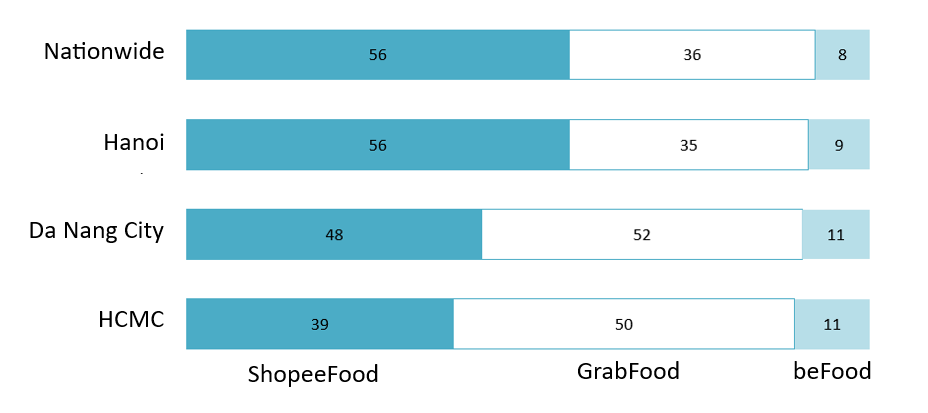
出所:NielsenIQ、Decision Lab
ShopeeFood Vietnamの担当者によると、2025年第3四半期の注文数は前年同期比で30%以上増加し、需要が最も高かったのはオフィスワーカーと学生だった。特にShopeeFoodは、16~24歳のZ世代から強い支持を得ている。Shopeeエコシステム全体との連携と積極的な値引きを活用し、タピオカティーやストリートフードなどの「軽食」利用時における第一選択肢となっている。これに対してGrabFoodは、35歳以上の年長のビジネスパーソンやファミリー層を得意とし、このセグメントではフルミールの注文を通じて、より高い平均注文金額(AOV)が生み出されている3. こうした利用者にとっては、価格への敏感さよりも、サービスの信頼性と配達スピードが優先される。.
市場動向
ベトナムのフードデリバリー市場は、より明確な集約化の段階に入っている。2024年9月のGojek撤退によって、一定規模を持つ競合企業の数が減少し、2025年の市場はより集中した構造へと向かった。大手企業が減少する中、競争は単に展開地域を拡大することではなく、規模を維持し、顧客の継続利用を強化できる企業はどこかによって、ますます定義されるようになっている。.
この構造変化にもかかわらず、フードデリバリーの成長は依然として販促施策に大きく依存しており、プラットフォームとレストランの双方にとって収益構造は一段と厳しくなっている。値引きや送料無料は注文量を促進するうえで引き続き中心的な役割を果たしており、利用者はわずかな手間でアプリを乗り換えられるため、プラットフォームはインセンティブを縮小することに慎重になっている。その結果、収益性への圧力が強まる中でも、販促施策は引き続き需要を左右する重要な手段となっている。.
加盟店側では、プラットフォーム関連コストが急速に膨らむ可能性がある。レストランは通常、約25%の手数料に加えて税金を負担し、認知度を維持するために売上高のさらに10~15%をアプリ内広告に支出している。競争の激しいカテゴリーでは、その割合が10~20%に達する場合もある。手数料、広告費、値引きプログラムへの参加費用が重なると、プラットフォームに関連する負担総額が売上高の約40~45%に達するケースもある。その結果、加盟店はより多くの注文を処理しても、手元に残る利益が大幅に少なくなる可能性がある。.
こうした圧力を受け、多くのレストランは運営戦略の見直しを迫られている。コスト上昇を相殺するためにメニュー価格を引き上げる店舗がある一方、収益性を守るため、飲料や軽食など利益率の高い商品を優先する店舗もある。同時に、より多くの加盟店が、アプリ内広告への依存を減らし、顧客との関係を一定程度自ら管理できるようにするため、顧客への直接販売チャネルの構築を試みている。.
一方、競争の焦点は単純な価格競争から、サービス品質と配達スピードへと移行している。ベトナムの主要都市を対象とした2025年第1四半期の調査によると、主に低価格を基準にアプリを選ぶ利用者は26%にとどまる。これに対し、顧客のほぼ半数(47%)は迅速な配達を重視し、41%は配達員のプロ意識と注文の正確性を重視している。このことは、都市部の利用者を獲得するには最安値であるだけではもはや不十分であり、信頼性とスピードが知覚価値をますます左右していることを示している。.
これを受け、各プラットフォームは、より高いサービス期待に応えるため、オペレーションを再構築している。例えば、Xanh SM Ngonは注文をまとめないことを約束し、1人の配達員が1件の注文を担当する方式によって、料理を温かい状態に保ち、配達ミスを最小限に抑えることで差別化を図っている。同様に、GrabFoodはAIを活用して需要を予測するとともに、新たな配達モデルを試験し、特に朝夕のピーク時間帯における平均配達時間を約20分まで短縮しようとしている。.
主な登場人物
2025年半ばまでに、ベトナムのフードデリバリー市場は、ShopeeFood、GrabFood、BeFoodという3大ブランドが中心となっていた。上位2社(ShopeeFoodとGrabFood)が市場の90%超を占めることで、市場は現在、非常に集中している。さらに、Xanh SM Ngonは2025年7月23日にホーチミン市でフードデリバリーサービスを正式に開始した。注文をまとめない方針を採用しており、最適な顧客体験の提供を目的とした主要な差別化要素となっている。.
ベトナムのフードデリバリーアプリ
| いいえ。. | ブランド | 国 | ベトナムでの展開 | 概要 |
| 1 | ShopeeFood | シンガポール | 2015 | 旧称「Now」のフードデリバリープラットフォームであるShopeeFoodは、ShopeeのEコマースエコシステムに直接統合されている。. |
| 2 | GrabFood | マレーシア | 2018 | Grabの多機能スーパーアプリ内のフードデリバリーサービスであり、配達員の最適な配車技術と、広範なレストランパートナーネットワークに注力している。. |
| 3 | BeFood | Vietnam | 2022 | ベトナムの配車アプリ「Be」におけるフードデリバリー部門であり、顧客にとって使いやすい体験と競争力のある価格設定を重視している。. |
| 4 | Xanh SM Ngon | Vietnam | 2025 | GSMがフードデリバリー分野に投入した新規事業者であり、100%電気自動車プラットフォーム上で運営している。. |
出典: B&Companyの編集
意味合い
ベトナムのフードデリバリー市場は引き続き成長余地を有しているが、機会の性質は変化している。市場が少数の大規模プラットフォームを中心に一段と集中するにつれ、競争はエコシステムの厚み(加盟店の供給力、物流能力、ユーザーの継続利用、サービスの一貫性)によって increasingly左右されるようになっている。新規参入企業や関連事業者にとって、これは必ずしも参入が容易になることを意味しない。むしろ、フルスケールのマーケットプレイスモデルを再現しようとするよりも、既存プラットフォームを補完する、またはバリューチェーン上の特定のボトルネックに対応するサービスの方が、成功する可能性が高いことを示唆している。.
このような状況においても、複数の有望な機会領域が残されている。メニュー管理、需要予測、顧客関係管理のための優れたツールなど、加盟店支援の取り組みは、プラットフォーム関連コストの上昇下でレストランがより効率的に運営することを支援できる。包装や食品品質の保持(温度維持や液漏れ防止など)も、消費者が配達の信頼性をより重視するにつれ、重要性を増す可能性がある。これと並行して、物流イノベーション(配車ルートの最適化、注文をまとめるルール、需要予測)は、より大規模な補助金に全面的に依存することなく、速度と正確性を高めるサービスプロバイダーに参入余地を生み出す可能性がある。.
同時に、市場はより財務制約の強い局面に入っている。プロモーションは依然として注文を生み出す主要因であり、プラットフォームは取扱量を維持することと、単位経済性を改善することの間でトレードオフに直面している。一方、レストランは、手数料、税金、露出を確保するためのアプリ内有料広告の必要性など、プラットフォーム関連コストの積み重なりを引き続き負担しており、割引キャンペーンへの参加によって負担がさらに増す場合も多い。この状況は、注文量の増加につながる一方で、加盟店の収益性を低下させる可能性がある。その結果、長期的にはプラットフォームチャネルへの過度な依存意向に影響を及ぼし、供給側での離脱リスクを高める可能性がある。.
* この記事からの情報を引用する場合は、著作権を尊重するために、元の記事へのリンクと共に出典を引用してください。.
| B&Company
2008年からベトナムで市場調査を専門とする初の日本企業です。業界レポート、業界インタビュー、消費者調査、ビジネスマッチングなど、幅広いサービスを提供しています。さらに、最近ではベトナム国内の90万社以上のデータベースを開発しており、パートナーを検索したり、市場を分析したりするために利用できます。. ご不明点がございましたら、お気軽にお問い合わせください。. info@b-company.jp + (84) 28 3910 3913 |
[1] https://thoibaonganhang.vn/mua-sam-va-dat-do-an-online-bung-no-thoi-quen-tieu-dung-so-nam-2025-173233.html
[2] https://dtinews.dantri.com.vn/vietnam-today/vietnams-food-delivery-market-booms-20250710142707966.htm
関連記事


























ログイン / 新規登録
ニュースレターを購読する