
 Tiếng Việt
  English
  日本語
日本語  简体中文
简体中文  한국어
한국어 
15/02/2021
Đánh giá ngành
Bình luận: Không có bình luận.
Tổng quan
Mãi đến năm 1920, khi người Pháp đưa các giống bò sữa ngoại nhập vào Việt Nam, người dân địa phương mới biết đến sữa bò. Năm 1924, các sản phẩm Longevity & Dutch Lady lần đầu được giao dịch tại Sài Gòn (sau này đổi tên thành Thành phố Hồ Chí Minh) và trở thành thương hiệu đầu tiên tham gia ngành sữa lâu đời này. Kể từ đó, ngành sữa Việt Nam đã phát triển mạnh mẽ. Theo Euromonitor, quy mô toàn ngành sữa Việt Nam năm 2019 đã đạt hơn 5,2 tỷ USD; một báo cáo của Hiệp hội Sữa Việt Nam cũng chỉ ra rằng doanh thu thị trường sữa đã đạt 4,7 tỷ USD vào năm 2018, tăng 9% so với năm 2017, với CAGR đạt 12,7% trong giai đoạn 2010–2018.
Năm 2020, với đại dịch COVID-19, đã chứng kiến sự chật vật của nhiều ngành, đặc biệt là ngành hàng tiêu dùng nhanh (FMCG). Tỷ lệ việc làm tăng và chỉ số niềm tin người tiêu dùng giảm đã khiến người tiêu dùng cắt giảm ngân sách chi tiêu cho nhiều ngành hàng. Tuy nhiên, ngành sữa chỉ chịu ảnh hưởng nhẹ, với giá trị thị trường giảm 4% (SSI Research). Theo dữ liệu gần đây của Nielsen, tiêu thụ sữa vẫn chiếm 12% tổng mức tiêu thụ FMCG tại Việt Nam trong nửa đầu năm 2020, không thay đổi so với số liệu năm 2019.
Hành vi mua hàng của người tiêu dùng
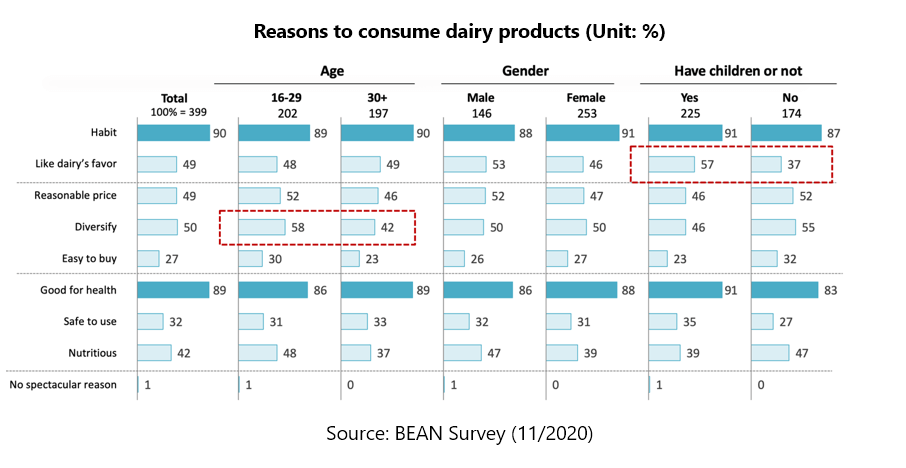
Kết quả khảo sát “Hành vi tiêu dùng sản phẩm sữa” do BEAN Survey thực hiện vào tháng 11/2020 với 399 người trả lời cho thấy vai trò thiết yếu của các sản phẩm sữa trong đời sống hằng ngày của người Việt Nam: 100% người trả lời cho biết đã sử dụng sữa và các sản phẩm từ sữa trong ba tháng qua. Đáng chú ý, 64% sử dụng sữa hằng ngày và 55% sử dụng các sản phẩm từ sữa khác vài lần mỗi tuần. Trong bối cảnh đại dịch đang diễn ra, người tiêu dùng bắt đầu tìm kiếm các sản phẩm giúp tăng cường sức khỏe, và sữa được tin là một sản phẩm tốt cho hệ miễn dịch. Theo Ho Chi Minh Securities Corporation, nhu cầu đối với các sản phẩm sữa đã tăng trong đại dịch COVID-19, trong đó sữa chua tăng mạnh nhất. Bên cạnh các lý do liên quan đến thói quen và tính tiện lợi, 87.5% người trả lời khảo sát của BEAN Survey chọn sử dụng các sản phẩm từ sữa vì “Tốt cho sức khỏe”, 42% tiêu dùng vì “Bổ dưỡng” và 32% vì “An toàn”.
Tiềm năng thị trường cho các doanh nghiệp nước ngoài
Theo kế hoạch của Bộ Công Thương năm 2010, ngay cả khi các doanh nghiệp trong nước đạt sản lượng 1 tỷ lít sữa tươi vào năm 2020, con số này cũng chỉ đáp ứng 38% nhu cầu trong nước, chưa tính đến yếu tố xuất khẩu. Các thương hiệu sữa nước ngoài đã nắm bắt cơ hội này và hiện có hơn 300 thương hiệu sữa trên thị trường (MOIT: 2017). Từ Nhật Bản, Morinaga thành lập công ty con tại địa phương vào năm 2010 và Meiji vào năm 2019, trong khi Wakodo (Asahi Group Foods) gia nhập thị trường thông qua quan hệ đối tác liên doanh với Nutifood.
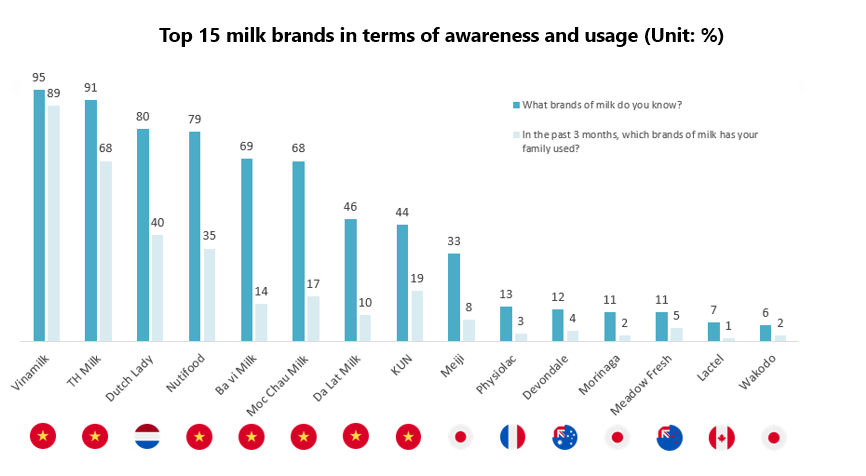
Là thương hiệu tham gia thị trường lâu năm nhất, Dutch Lady đang bắt kịp các thương hiệu trong nước về mức độ nhận biết và sử dụng. Đứng thứ hai là Meiji; mặc dù có mức độ nhận biết đạt 33%, chỉ 8% khách hàng đã mua sản phẩm của thương hiệu này trong ba tháng qua. Chúng tôi cho rằng để gia nhập thị trường Việt Nam, các chương trình khuyến mại đáng kể là yếu tố thiết yếu. Trên thực tế, 4 lý do hàng đầu để lựa chọn một thương hiệu đã bao gồm “Khuyến mại (78.4%)” và “Hệ thống phân phối rộng, dễ mua (76.2%)” (BEAN Survey – Hành vi tiêu dùng sản phẩm sữa). Năm 2019, giá trị nhập khẩu sữa và các sản phẩm từ sữa đạt 1,048 tỷ USD, tăng 8.7% so với năm 2018.
Kết luận
Tất nhiên, chất lượng sản phẩm vẫn là yếu tố quan trọng nhất. Hiện nay, khoảng 70% lượng sữa trên thị trường nội địa được nhận định là sữa hoàn nguyên, có giá trị dinh dưỡng thấp hơn sữa tươi về hàm lượng vitamin và khoáng chất. Do CPTPP, các sản phẩm sữa từ Nhật Bản, Singapore và New Zealand không còn chịu thuế nhập khẩu, điều này có thể dẫn đến việc giảm giá sữa và khiến cạnh tranh trở nên gay gắt hơn. Tuy nhiên, người tiêu dùng có những yêu cầu rõ ràng đối với một thương hiệu sữa, thể hiện qua các lý do lựa chọn “Không chất phụ gia (89.5%)” và “Chất lượng (73.4%)”. Do đó, cần tạo sự khác biệt rõ ràng so với các sản phẩm giá thấp; một số doanh nghiệp trong nước đã cung cấp các sản phẩm hữu cơ và có giá trị dinh dưỡng cao. Các doanh nghiệp nước ngoài không có lựa chọn nào khác ngoài việc biến đây thành lợi thế cạnh tranh then chốt. Sẽ rất đáng chú ý khi theo dõi liệu họ có thể tạo được dấu ấn trên thị trường hay không.
Xin hãy đọc các bài viết đánh giá ngành khác từ chúng tôi hoặc yêu cầu một!
Ly Nguyen