

 한국어
한국어  English
  日本語
日本語  Tiếng Việt
  简体中文
简体中文 2024년과 비교했을 때, 주요 체인점들이 신규 매장을 오픈함에 따라 2025년 베트남의 커피 체인점 수는 소폭 증가할 것으로 예상됩니다.
2312월2025
최신 뉴스 및 보고서 / 베트남 브리핑
댓글: 댓글 없음.
베트남의 커피숍 시장은 빠른 체인 확장, 디지털 주문, 현지 브랜드에 대한 높은 충성도를 바탕으로 F&B 부문에서 가장 역동적인 세그먼트 중 하나로 부상하고 있습니다. 2024년과 비교하면 2025년 커피 체인 매장 수는 소폭 증가했으며, Highlands Coffee와 Phuc Long과 같은 주요 체인이 호찌민, 하노이 및 기타 도시·성에 신규 매장을 개점했습니다. 변화하는 소비자 습관, 잦아진 커피숍 방문, 새로운 시장 트렌드는 경쟁 구도를 재편하고 외국인 투자자에게 새로운 진입 기회를 창출하고 있습니다.
시장 개요
베트남의 국내 식음료(F&B) 부문에서 커피숍은 빠르게 성장하는 비교적 프리미엄한 하위 세그먼트입니다. 2025년 베트남에는 골목의 소규모 카페부터 고급 커피 체인까지 500,000개가 넘는 커피숍이 운영되고 있습니다[1], 이는 2023년 말 전국의 약 317,299개 커피·차 전문점 수보다 훨씬 많은 수치입니다[2].
베트남의 커피 체인 네트워크는 2019년부터 2025년까지 크게 확대되었습니다. 전체 체인 매장 수는 2019년 816개에서 2025년 2,067개로 증가하며 두 배 이상 늘었습니다. 호찌민시는 매장 수가 456개에서 891개로 증가하며 여전히 최대 거점으로 자리하고 있지만, 성장은 더 이상 호찌민시에만 집중되지 않고 있습니다. 하노이의 네트워크도 197개에서 435개로 확대되었으며, 가장 극적인 변화는 기타 도시 및 성에서 나타났습니다. 이 지역의 체인 매장 수는 163개에서 741개로 급증해 2025년에는 하노이보다 큰 규모를 기록했습니다.
Number of coffee chain stores in Ho Chi Minh, Ha Noi, and others
단위: 매장
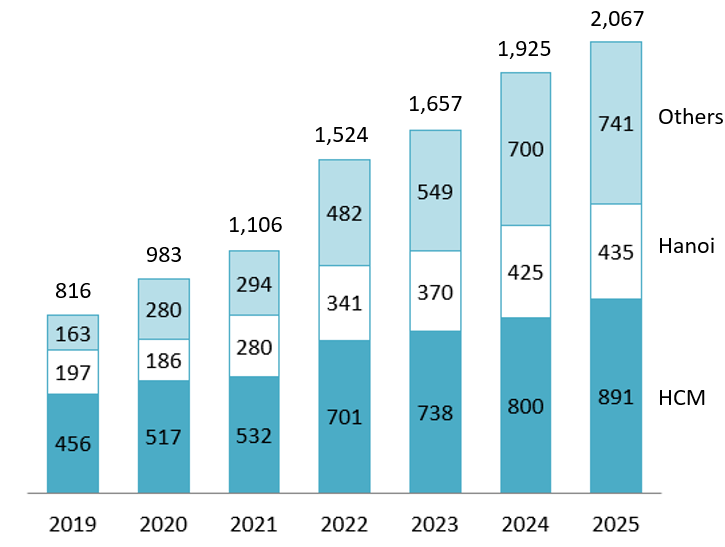
출처: Q&Me
주요 플레이어
현지 브랜드는 매장 수뿐 아니라 매출 측면에서도 커피숍 시장을 압도적으로 주도하고 있으며, Highlands Coffee와 Phuc Long이 매출 선두를 차지하고 있습니다. 시장은 뚜렷하게 세분화되어 있는 가운데, Starbucks와 같은 외국 브랜드는 프리미엄 틈새시장을 유지하는 반면 Trung Nguyen과 같은 토종 업체는 전통 및 문화적 세그먼트를 지탱하고 있습니다. Katinat과 같은 젊고 트렌디한 베트남 체인은 오랜 기간 시장을 주도해 온 기존 업체들과의 격차를 빠르게 좁혀 왔으며, 이는 단순한 물리적 확장뿐 아니라 제품 대응력에 힘입은 결과입니다. 이러한 신흥 강자들은 전통적인 커피를 넘어 과일차, 말차 퓨전 음료, 시즌 콘셉트 등 새롭고 트렌드를 반영한 음료를 메뉴에 적극 도입해 유동적인 Z세대의 선호에 대응하고 고객 유입을 이끌면서 업계를 재정의하고 있습니다.
물리적 매장 규모 측면에서 2025년 Milano는 약 2,000개 매장에 도달한 것으로 추정되며, Highlands Coffee는 약 855개 매장을 확보했습니다. 다른 주요 체인도 중요한 시장 참여자로 자리하고 있습니다. Phuc Long은 약 237개 매장, Katinat은 약 93개 매장, Starbucks는 127개 매장으로 확대되었습니다[3].
베트남의 주요 커피 체인 매장 일부 목록
| 아니요. | 커피 브랜드 | 설립 연도 | 최초 진출 도시 | 본국 | 2025년 커피 매장 수 |
| 1 | Milano | 1996 | 호치민시 | Vietnam | 2000 |
| 2 | 하이랜드 | 1999 | 호치민시 | Vietnam | 855 |
| 3 | 중 응우옌 | 1996 | 호치민시 | Vietnam | 464 |
| 4 | Viva Star Coffee | 2013 | 호치민시 | Vietnam | 329 |
| 5 | 푹롱 | 2000 | 호치민시 | Vietnam | 237 |
| 6 | 스타벅스 | 2013 | 호치민시 | 미국 | 127 |
| 7 | Guta Café | 2016 | 호치민시 | Vietnam | 96 |
| 8 | The Coffee House | 2014 | 호치민시 | Vietnam | 93 |
| 9 | Katinat | 2016 | 호치민시 | Vietnam | 93 |
| 10 | 파시오 | 2006 | 호치민시 | Vietnam | 88 |
출처: Q&Me
시장 동향
주요 커피 체인은 소득 증가와 새로운 소매 개발을 활용해 중심업무지구(예: 1군 및 Landmark 81 일대)를 넘어 교외 지역과 2선 도시로 진출하는 방식으로 전략적 확장을 추진하고 있습니다[4]. 동시에 이러한 브랜드는 다양한 매장 형태를 실험하고 있습니다. 전통적인 좌석형 매장을 넘어 Highlands Coffee의 드라이브스루 매장과 같은 콘셉트는 체인들이 오토바이 중심의 베트남 교통 환경과 일상적인 이동 중 커피를 구매하는 습관에 어떻게 적응하고 있는지를 보여줍니다. 이러한 형태는 도달 범위를 확대하고 F&B 부문에서 속도와 편의성 중심으로 시장이 광범위하게 전환되고 있음을 반영합니다.
네트워크 확장과 더불어 주요 커피숍 브랜드들은 메뉴와 포지셔닝을 재편하고 있습니다. 많은 체인이 순수한 커피 중심 전략에서 벗어나 종합 음료 브랜드에 가까운 형태로 운영되고 있습니다. 차, 과일차, 말차는 주요 성장 동력으로 부상했으며, 매출의 상당 부분이 비커피 제품에서 발생하고 있습니다. 이러한 변화는 특히 Phuc Long과 Katinat의 전략에서 뚜렷하게 나타나며, 이들은 Z세대를 유인하기 위해 색감이 풍부하고 혁신적인 음료를 적극 활용하고 있습니다. 오늘날 Z세대는 전통적인 따뜻한 음료보다 아이스커피와 말차에 코코넛 주스를 결합하는 등 혁신적인 퓨전 콘셉트를 선호하는 경향을 보입니다. Brands Vietnam(2025)에 따르면, 이 세대는 “트렌디하고”, “친근하며”, “젊은” 이미지로 인식되는 브랜드에 높은 매력을 느낍니다.” [5]
디지털화는 필수적이며, 주요 체인점들은 모바일 앱, 로열티 프로그램, 배달 플랫폼(ShopeeFood, GrabFood)과의 긴밀한 통합을 도입하고 있습니다. Highlands, Katinat, Starbucks는 재방문과 데이터 기반 마케팅을 위해 앱 기반 주문 및 멤버십 혜택을 적극적으로 홍보하고 있습니다. 이는 매장을 업무와 사교 활동을 위한 경험 중심의 “제3의 공간’으로 설계하는 전략과도 맞물립니다. Katinat의 ”빌라 같은“ 매장과 같은 콘셉트는 고객의 체류 시간을 늘리고, 거래 금액과 방문 빈도를 높여 커피숍이 가끔 찾는 공간이 아니라 일상적인 목적지로 기능하도록 합니다.
2024년 전국 약 3,000개 레스토랑, 음식점 및 커피숍과 4,000명의 소비자를 대상으로 실시한 조사에 따르면, 참여자의 30.4%가 일주일에 한두 번 커피숍을 방문했으며, 이는 7.8%포인트 증가한 수치입니다[6]. 이러한 추세는 2025년 중간 소득층이 주도하고 있습니다. 한 보고서에 따르면 월소득 VND 500만~1,000만인 소비자의 방문 빈도가 주 1~3회로 가장 높았으며, VND 1,000만~2,000만 구간이 그 뒤를 이었습니다. 이들 소득 계층의 고객은 주로 직장인, 프리랜서 및 학생으로 구성됩니다. 특히 고객의 40%는 업무 목적으로 커피숍을 선택하며, 휴식, 새로운 음료 시도 또는 하루를 시작하기 위한 방문 등 다른 목적도 함께 나타났습니다[7].
마지막으로 소셜 미디어와 굿즈를 통해 브랜드 참여도가 더욱 높아지고 있습니다. 한정판 컵, 시즌 콘셉트 및 독점 굿즈를 중심으로 한 바이럴 캠페인은 이제 Katinat, Starbucks, Highlands와 같은 브랜드의 핵심 마케팅 수단으로 자리 잡았으며, 온라인 화제를 효과적으로 만들고 매장 방문을 유도하고 있습니다. 예를 들어 Starbucks는 베트남 버전의 세라믹 머그를 출시했고, Phúc Long은 4월 30일 군사 퍼레이드에 동참했으며, Highlands는 “베트남 커피 정수에 대한 자부심” 캠페인을 전개했습니다.[8]
외국인 투자자에 대한 의미
베트남 커피숍 시장은 회복력 있는 수요를 기반으로 매력적인 기회를 제공합니다. 도시 소비자의 높은 방문 빈도는 경제 환경 변화 속에서도 시장의 안정성을 뒷받침하고 있습니다. 현재 경쟁이 치열하지만 차별화된 포지셔닝을 위한 미개척 영역은 여전히 충분하며, 특히 스페셜티·싱글 오리진 커피, 건강 중심 및 식물성 메뉴, 드라이브스루와 같은 높은 편의성의 운영 모델 등 전문화된 세그먼트에서 기회가 큽니다. 또한 프랜차이즈를 지원하는 우호적인 규제 환경과 함께, 평판이 높은 해외 커피숍 브랜드의 마스터 프랜차이즈 사업자가 되기 위해 현지 투자자들이 적극적으로 파트너십을 모색하고 있어 국제적 확장 측면에서도 시장 매력도가 높습니다.
그러나 베트남 커피 산업의 주요 과제는 치열한 가격 및 입지 경쟁과 관련되어 있습니다. 하노이와 호찌민시의 주요 입지는 이미 선도적인 현지 브랜드들이 장악하고 있어 임대료가 높고 음료 가격에 대한 압박도 강합니다. 이로 인해 신규 진입자는 플래그십 매장에 프리미엄을 지불하거나 키오스크 및 드라이브스루와 같은 소규모 형식을 활용해 혁신해야 합니다. 또한 기업들은 뿌리 깊게 자리 잡은 현지의 입맛을 극복해야 합니다. 베트남 소비자들은 풍미가 강한 로부스타 스타일 커피, 연유, 달고 차를 기반으로 한 음료를 선호하기 때문입니다. 순수한 “서구식” 맛 프로필을 시도하는 브랜드는 이러한 대중적 선호에 맞게 메뉴를 성공적으로 현지화하지 않는 한 틈새시장에 머물 가능성이 높습니다.
* 이 기사에서 어떤 정보를 인용하고자 하시면, 저작권을 존중하기 위해 원본 기사의 링크와 함께 출처를 꼭 기재해 주시기 바랍니다.
| B&Company
2008년부터 베트남에서 시장 조사에 전문화된 최초의 일본 회사입니다. 우리는 산업 보고서, 산업 인터뷰, 소비자 조사, 비즈니스 매칭 등 다양한 서비스를 제공합니다. 또한 최근에는 베트남에 있는 90만 개 이상의 회사가 포함된 데이터베이스를 개발하여 파트너를 검색하고 시장을 분석하는 데 사용할 수 있습니다. 문의 사항이 있으시면 언제든지 저희에게 연락해 주십시오. info@b-company.jp + (84) 28 3910 3913 |
[1] https://vietnamnews.vn/economy/1692991/viet-nam-s-coffee-shops-boom-amid-business-closures.html
[2] https://vietnamnews.vn/economy/1656282/fierce-battle-for-billion-dollar-market-share-between-coffee-chains-in-viet-nam.html
[3] https://cafef.vn/cuoc-chien-chuoi-ca-phe-phuc-long-tang-79-cua-hang-katinat-duoi-sat-nut-rieng-the-coffee-house-ngam-ngui-dong-cua-1-3-188250516080502639.chn
[4] https://vir.com.vn/beverage-chains-take-on-new-models-122342.html
[5] https://www.brandsvietnam.com/congdong/topic/346424-ipos-vn-va-nestle-professionalcong-bo-bao-cao-thi-truong-kinh-doanh-am-thuc-tai-viet-nam-nam-2024
[6] https://e.vnexpress.net/news/business/economy/vietnamese-consumers-eat-out-visit-cafes-more-often-4727722.html
[7] https://mibrand.vn/wp-content/cache/all/tin-tuc/mibrand-40-khach-hang-lua-chon-quan-ca-phe-cho-muc-dich-lam-viec/index.html
[8] https://younetmedia.com/en/introducing-the-h1-2025-coffee-shop-social-media-report-announcing-the-top-10-most-prominent-brands/
관련기사










로그인 / 회원가입
뉴스레터 구독