日本語
日本語  English
  Tiếng Việt
  简体中文
简体中文  한국어
한국어 
2020年11月15日
業界レビュー
コメント: コメントはまだありません.
Industry 4.0およびモノのインターネット(IoT)をめぐる最近の進展は、ベトナムのスマートホーム市場において支持と関心を集めている。技術革新のペースが劇的に加速した結果、世界各国の多くの先進国でスマートホームを所有する傾向が高まっている。経済および不動産開発の観点で最も急速に成長する都市トップ10(Jones Lang Lasalle(JLL)のCity Momentum Index 2020による)に、国内最大の2都市が含まれるベトナムでは、スマートホーム市場はまだ黎明期にあるものの、急速な都市化と国内におけるメガシティの発展を背景に、有望な投資機会を有している。.
スマートホーム市場の収益 はベトナムで 大幅に増加する と予想される
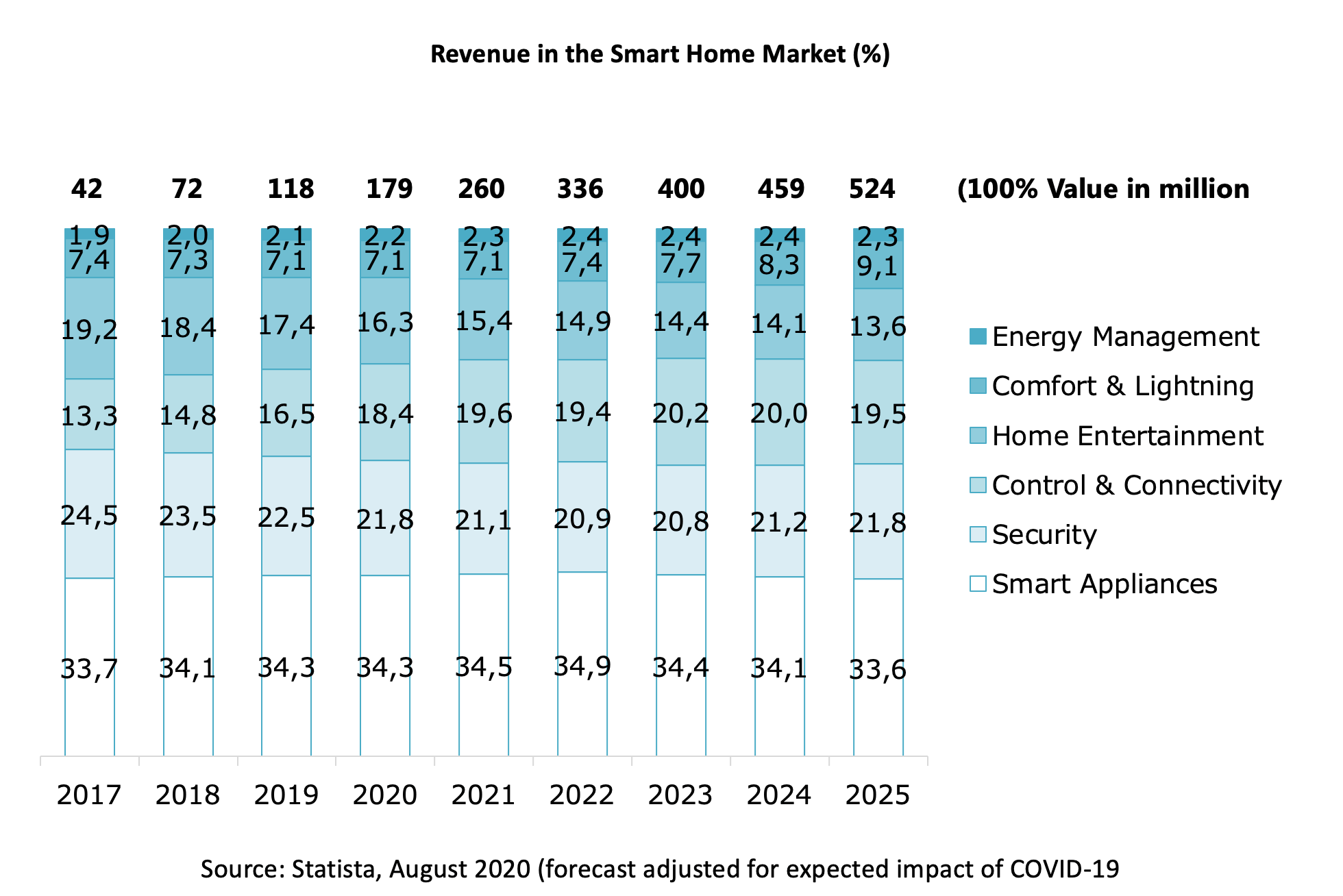
Statistaによると、2020年8月時点で、ベトナムのスマートホーム市場の収益は約1億7,900万米ドルに達しており、専門家はこの数字が2025年には5億2,400万米ドルに達し、CAGR(2020~2025年)は23.9%になると予測している。制御・接続、セキュリティ、スマート家電、エネルギー管理、快適性・照明、ホームエンターテインメントを含む 6つのセグメント におけるスマートホーム製品の総販売額のうち、収益への主な貢献はリストの最初の3分野であり、調査期間中の総販売額の70%超を占めている。特に、「制御・接続」は今後5年間で市場シェアが最も増加するセグメントになると予測され、規模ははるかに小さいものの、「快適性・照明」と「エネルギー管理」が続く見通しである。.
収益成長率の観点では、2018年に成長率が70%のピークに達した過去3年間の急激な拡大を経て、スマートホーム市場は今後5年間で14%の安定的な成長期に徐々に移行すると予想される。収益成長率の顕著な低下は、COVID-19の影響を受けて起こると予測されている。「快適性・照明」、「ホームエンターテインメント」、「セキュリティ」は、成長率の低下幅が最も小さい3つのセグメントである。.
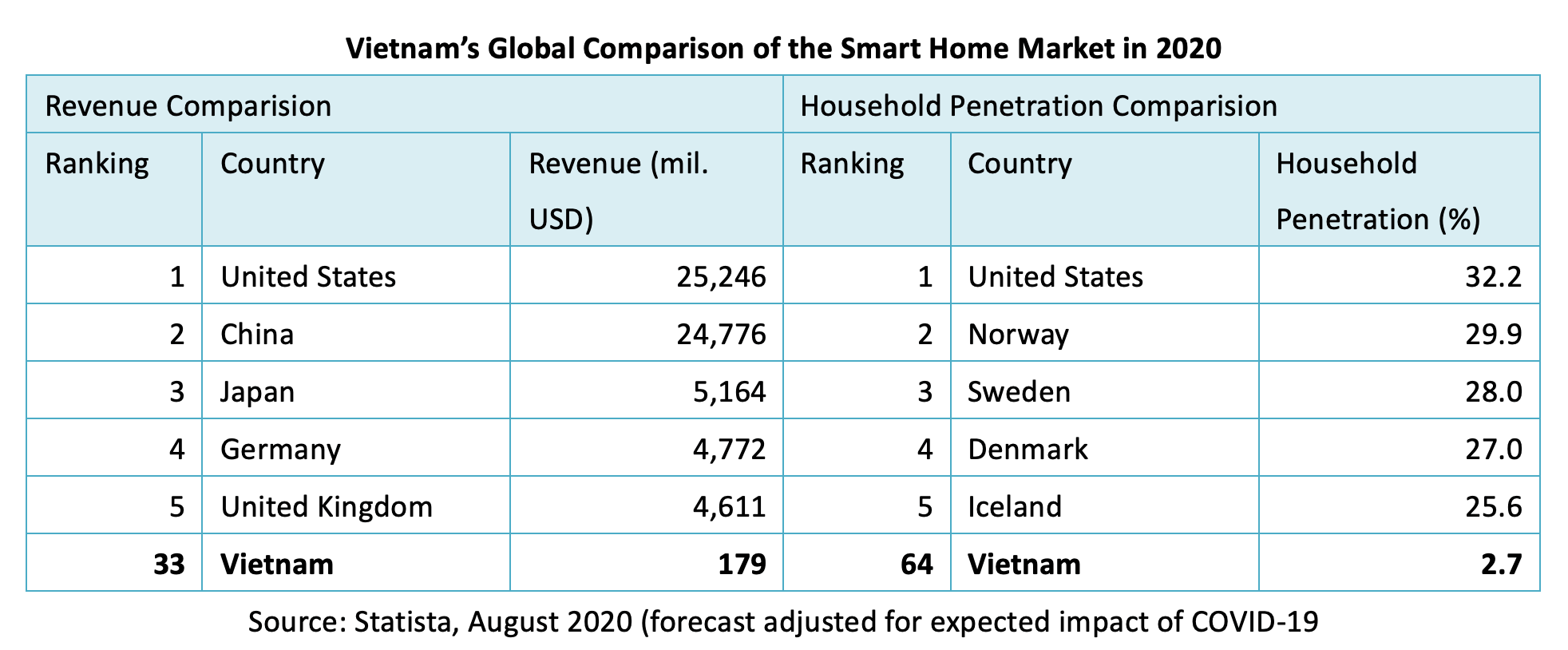
世界的な観点では、ベトナムのスマートホーム市場は他国と比較して依然としてかなり未成熟である。Statistaの統計によると、2020年8月時点で、ベトナムは収益で33位、世帯普及率で64位に位置している。Vietnam Investment(VIR)のインタビューによると、ベトナムはスマートホーム市場の発展に向けた「道を切り開く」段階にあり、顧客がスマートホームのアプリケーションに慣れていく時期にある。そのため、投資家と顧客は主に、空調、照明、電力を管理するシステムなどの基本的なソリューションを選択している。安定した需要が形成された後に初めて、より高度で専門的なソリューションを既存のものと統合できるようになる可能性がある。.
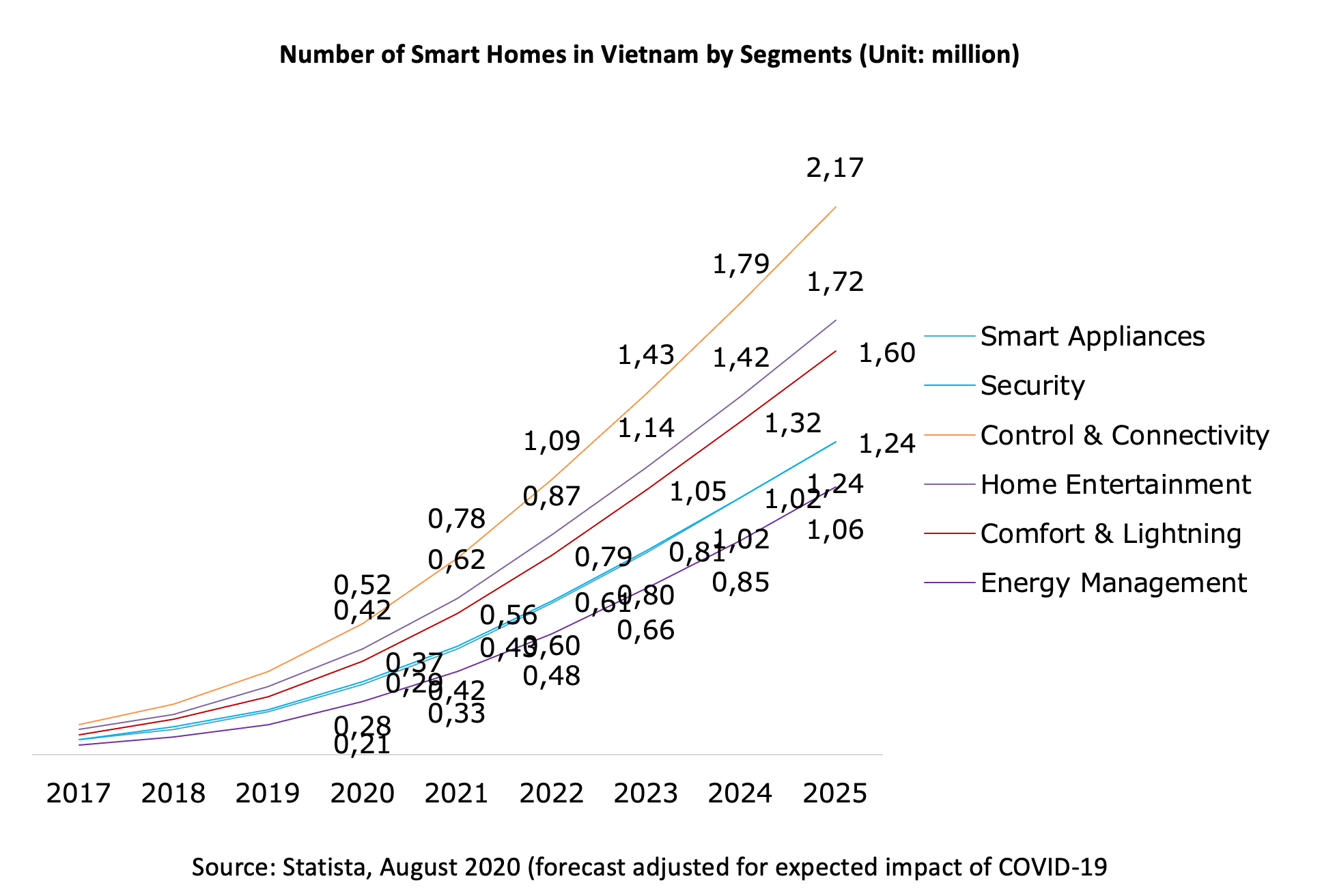
新たな都市開発プロジェクトの住宅開発業者がスマートホーム導入の先駆者に
Statistaによると、2020年のベトナムにおけるスマートホームの総数は約 60万戸 である。この数は、ベトナムの2,680万戸超の総世帯数(General Statistic Office、2019年)と比較すると、相対的に少ない。さらに、JLL Vietnamが指摘しているように、スマートホームの大半は、ベトナムで最も都市化が進んだ2都市であるハノイとホーチミン市に主に位置する、新築または建設中のプロジェクトの住宅部門で開発されている。ただし、スマート技術を導入すると物件価格が上昇するため、ターゲット市場は高級セグメントに限定される可能性が高い。これが、ベトナムのスマートホーム市場への浸透が初期段階で遅れていた理由の一つである。とはいえ、多くの開発業者がプロジェクトにスマートホームのコンセプトを積極的に取り入れ、プロモーションや無料体験プログラムの一環としてスマート技術を追加提供するようになっているため、市場成長の可能性は依然として高い。.
特に、スマートホームの6つの主要アプリケーションセグメントに注目すると、上述のとおり収益面で最大ではないものの、「制御と接続性」、「ホームエンターテインメント」、「快適性・照明」がベトナムのスマートホームにおける主要なアプリケーションとなっている。スマートホームのコンセプトにおいては、「制御と接続」を可能にする機能に加え、エンターテインメントと快適性が、日常生活に最も大きな付加価値をもたらす焦点であると推察できる。さらに、他の機器と接続できる統合型デバイスは、使いやすさと機能の多様性から、単独型デバイスを上回ると考えられる(AmazonのAlexa Echo Dot、HikvisionのSmart Camera、YaleのKeyはLumi Vietnamのスマートホームシステムに統合できる)。スマート家電を備えた世帯の大半は、最新の電気設備を備えた高級マンションになると見込まれる。.
プレーヤーの概況
スマートホームの発展が不可欠なトレンドとなる中、多くの国際的なテクノロジー大手がベトナムに現地法人を設立している。市場の成長に伴い、多様なユーザーの需要に対応するため、さまざまなセグメントで異なるブランドが投入されている。スマートホーム市場は、海外ブランドであるSiemens(ドイツ)、Schneider(フランス)、Smartg4(米国)、Gamma(ドイツ)、Fibari(ポーランド)と、BKAV Smarthome、FPT、Lumi、Acisなどの知名度の高い国内ブランドの2グループに分けられる。国内のスマートホーム製品は、その多くが新たに開発されたばかりで、十分にテストされていないことから、品質に対する懸念が大きい。一方で、国内企業の製品は、使いやすい機能と手頃な価格が高く評価されているようだ。さらに、Vietnam Investment Reviewの分析によると、海外のスマートホームソリューションにとっての障壁は、ベトナムのインフラや建設セクターの発展状況に十分適合していないことである。.