
 한국어
한국어  English
  日本語
日本語  Tiếng Việt
  简体中文
简体中文 
1511월2020
업계 리뷰
댓글: 댓글 없음.
Industry 4.0 및 사물인터넷(IoT)을 둘러싼 최근의 발전은 베트남 스마트홈 시장에서 관심과 호응을 얻고 있습니다. 기술 혁신의 속도가 급격히 빨라지면서 전 세계 많은 선진국에서 스마트홈을 보유하려는 추세가 확대되고 있습니다. 베트남의 양대 대도시가 경제 및 부동산 개발 측면에서 가장 빠르게 성장하는 도시 상위 10곳에 포함되어 있는 가운데(Jones Lang Lasalle – JLL의 City Momentum Index 2020 기준), 베트남 스마트홈 시장은 아직 초기 단계에 있지만 급속한 도시화와 메가시티의 성장에 힘입어 유망한 투자 기회를 보유하고 있습니다.
베트남 스마트홈 시장 매출은 크게 증가할 것으로 예상됩니다
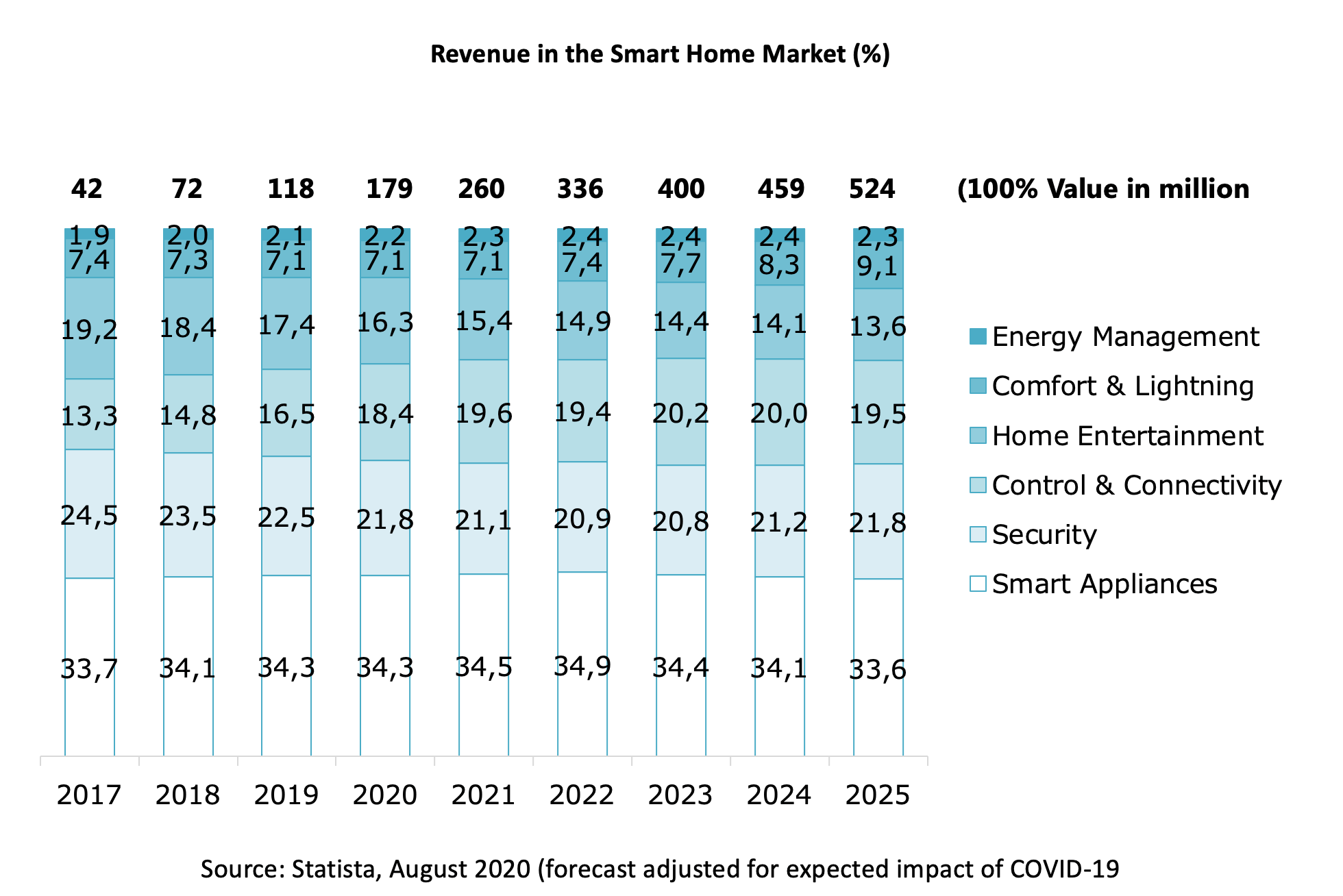
Statista에 따르면 2020년 8월 기준 베트남 스마트홈 시장의 매출은 약 1억 7,900만 달러에 달했으며, 전문가들은 이 수치가 2025년에는 5억 2,400만 달러에 도달하고 CAGR(2020~2025)이 23.9%에 이를 것으로 전망합니다. 제어 및 연결, 보안, 스마트 가전, 에너지 관리, 편의 및 조명, 홈 엔터테인먼트 등 총 6개 부문에서 발생하는 스마트홈 제품 판매액 가운데, 매출의 주요 기여 부문은 목록의 첫 세 부문으로, 조사 기간 동안 전체 판매액의 70% 이상을 차지했습니다. 특히 “제어 및 연결’은 향후 5년간 시장점유율이 가장 크게 증가할 부문으로 전망되며, 그 뒤를 ”편의 및 조명’과 “에너지 관리’가 이을 것으로 예상됩니다. 다만 이 두 부문은 현재 규모가 훨씬 작습니다.
매출 성장률 측면에서는 지난 3년간 급격한 성장세를 보였으며 2018년 성장률이 70%로 정점을 기록한 이후, 스마트홈 시장은 향후 5년 동안 14% 수준에서 점차 안정적인 성장기에 진입할 것으로 예상됩니다. 매출 성장률의 현저한 하락은 COVID-19의 영향에 따른 것으로 전망됩니다. “편의 및 조명”, “홈 엔터테인먼트”, “보안’은 성장률 하락폭이 가장 작은 세 부문입니다.
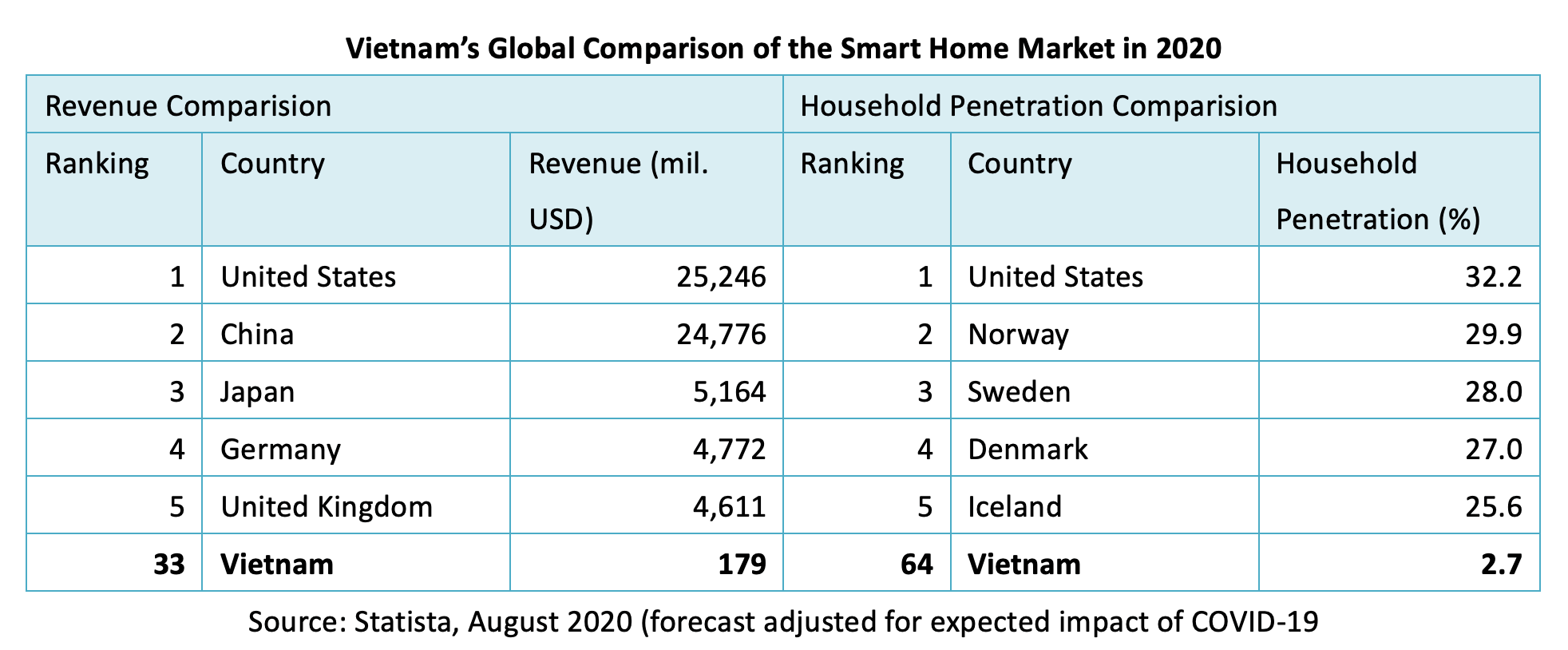
글로벌 시장과 비교하면 베트남 스마트홈 시장은 여전히 상당히 초기 단계에 있습니다. Statista 통계에 따르면 2020년 8월 기준 베트남은 매출 규모에서 33위, 가구 보급률에서 64위를 기록했습니다. Vietnam Investment(VIR)의 인터뷰에 따르면 베트남은 아직 스마트홈 시장 발전을 위한 “기반을 마련하는” 단계에 있으며, 이는 고객들이 스마트홈 애플리케이션에 익숙해지는 시기입니다. 이에 따라 투자자와 고객은 주로 냉방, 조명 및 전기를 관리하는 시스템과 같은 기본 솔루션을 선택하고 있습니다. 안정적인 수요가 형성된 이후에야 보다 고도화되고 전문화된 솔루션이 기존 시스템과 통합될 수 있을 것으로 보입니다.
신규 도시 개발사업의 주거 개발업체, 스마트홈 설치의 선도적 역할 수행 전망
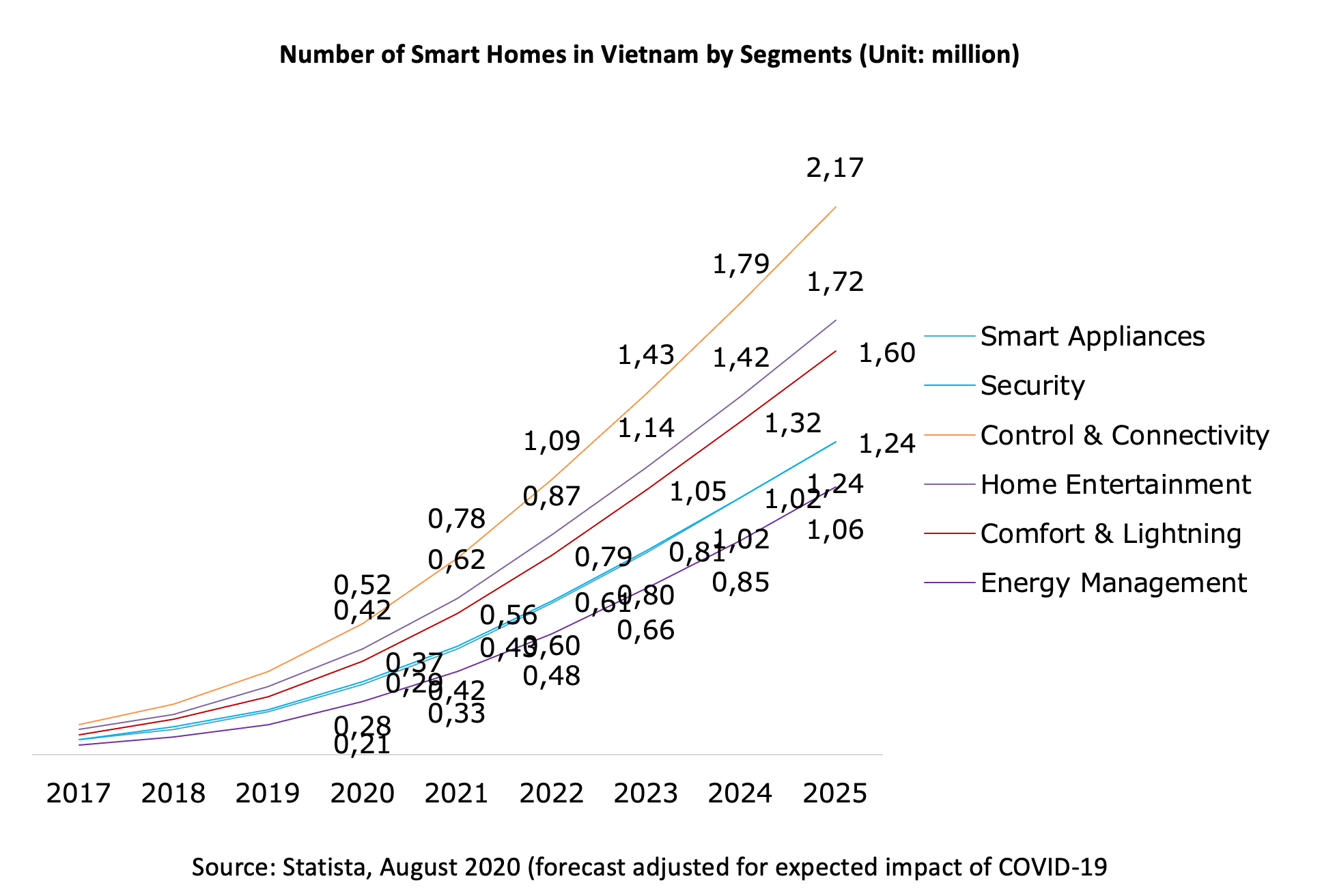
Statista에 따르면 2020년 베트남의 스마트홈 총 가구 수는 약 60만 가구입니다. 이는 베트남 전체 가구 수 2,680만 가구 이상(General Statistic Office, 2019)에 비해 상대적으로 적은 수치입니다. 또한 JLL Vietnam에 따르면 대부분의 스마트홈은 베트남에서 도시화 수준이 가장 높은 두 도시인 하노이와 호찌민시에 주로 위치한 신규 건설 또는 건설 중인 프로젝트의 주거 부문에서 개발되고 있습니다. 그러나 스마트 기술을 설치하면 부동산 가격이 상승하므로 목표 시장이 고급 주거 부문으로 제한될 가능성이 높습니다. 이는 베트남 스마트홈 시장이 초기 단계에서 느린 침투율을 보였던 이유 중 하나이기도 합니다. 그럼에도 불구하고 많은 개발업체가 프로젝트에 스마트홈 개념을 통합하고 프로모션 또는 무료 체험 프로그램의 추가 혜택으로 스마트 기술을 제공하는 데 더욱 적극적으로 나서고 있어 시장 성장 잠재력은 여전히 높습니다.
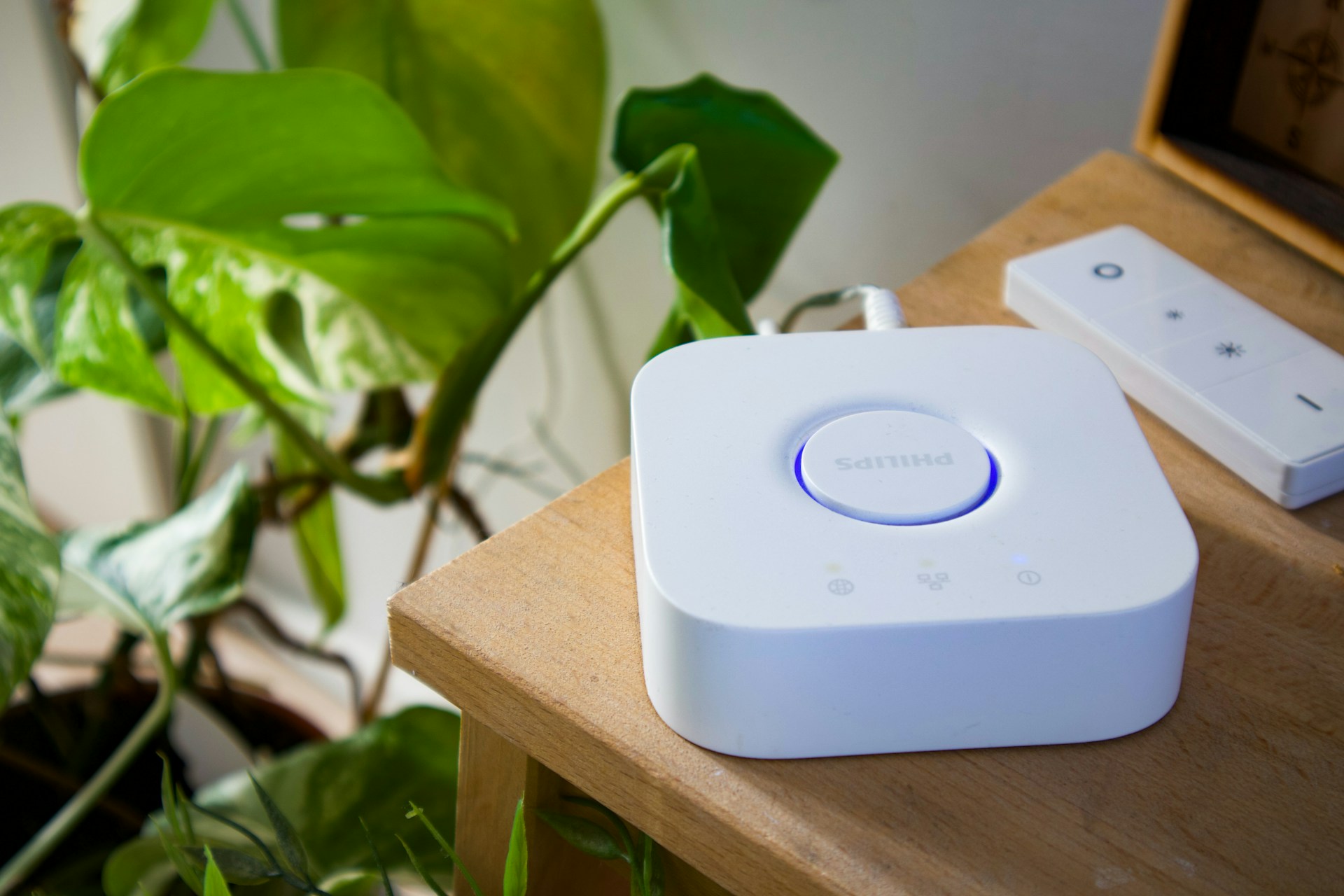
특히 스마트 홈 애플리케이션의 6개 주요 세그먼트를 살펴보면, 앞서 언급한 바와 같이 매출 기준으로 가장 높은 비중을 차지하지는 않지만 “제어 및 연결성”, “홈 엔터테인먼트”, “편의성 및 조명”이 베트남 스마트 홈의 주요 애플리케이션이다. 이를 통해 “제어 및 연결” 기능뿐만 아니라 엔터테인먼트와 편의성 요소가 일상생활에 가장 큰 부가가치를 제공할 것으로 기대되는 스마트 홈 개념의 핵심이라는 점을 도출할 수 있다. 또한 다른 기기와 연결할 수 있는 통합형 기기는 사용성과 기능적 다양성으로 인해 단독형 기기를 대체하며 시장을 주도할 것이다(Amazon의 Alexa Echo Dot, Hikvision의 Smart Camera, Yale의 Key는 Lumi Vietnam의 스마트 홈 시스템에 통합될 수 있다). 스마트 가전이 구비된 가구의 대부분은 현대적인 전기 시스템을 갖춘 고급 아파트일 것이다.
시장 참여자 현황
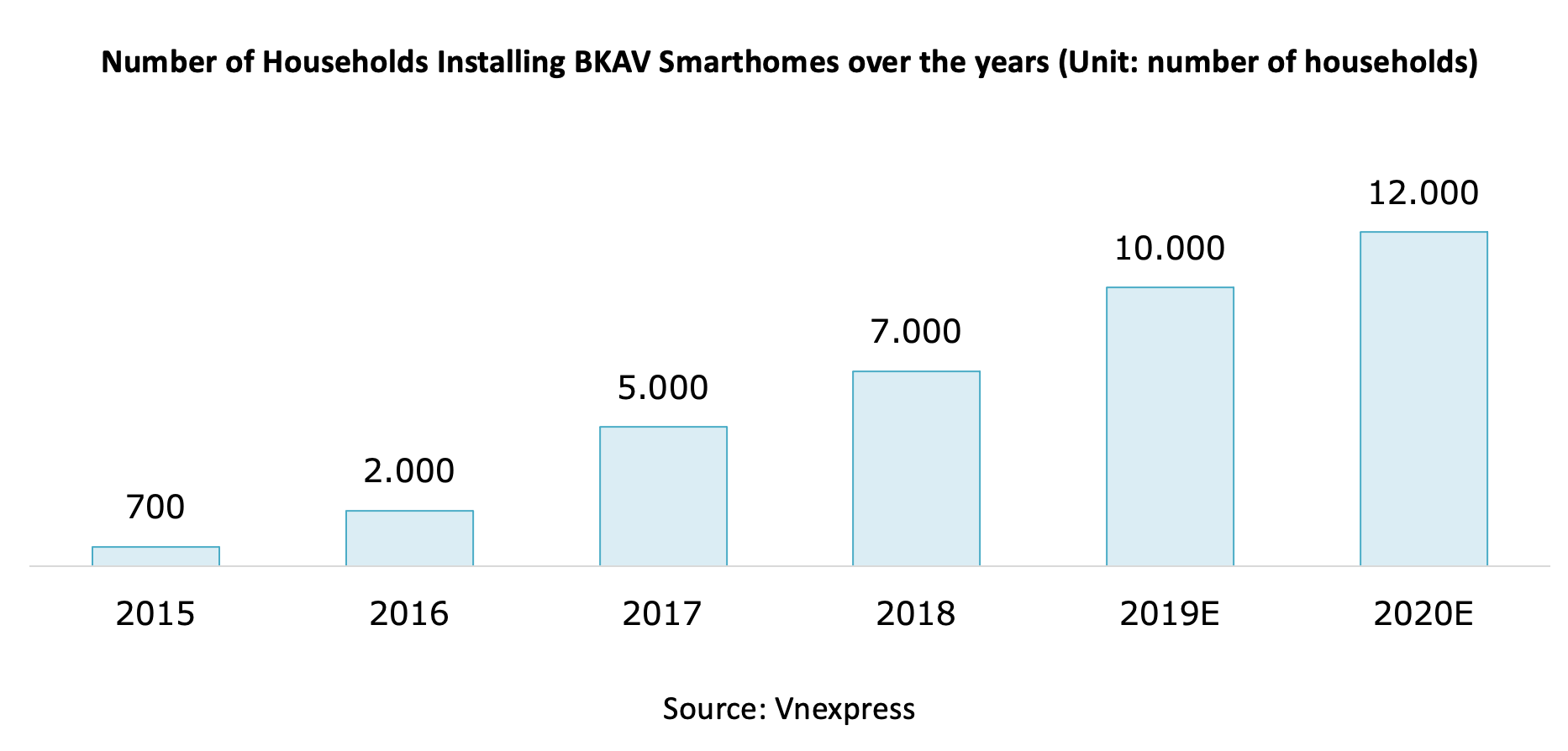
스마트 홈의 발전이 필수적인 추세로 자리 잡으면서, 다수의 글로벌 기술 대기업이 베트남에 계열사를 설립했다. 시장 성장과 함께 다양한 사용자의 수요를 충족하기 위해 여러 세그먼트에서 다양한 브랜드가 출시되고 있다. 스마트 홈 시장은 Siemens(독일), Schneider(프랑스), Smartg4(미국), Gamma(독일), Fibari(폴란드)와 같은 외국 브랜드와 BKAV Smarthome, FPT, Lumi, Acis 등 잘 알려진 국내 브랜드의 두 그룹으로 나뉜다. 국내 스마트 홈 제품은 대부분 최근에 개발되어 충분한 검증이 이루어지지 않았기 때문에 품질에 대한 우려가 크지만, 국내 업체의 제품은 사용자 친화적인 기능과 합리적인 가격으로 높은 평가를 받고 있는 것으로 보인다. 또한 Vietnam Investment Review의 분석에 따르면, 외국 스마트 홈 솔루션의 장애 요인은 베트남의 인프라 및 건설 부문 발전 수준과 실제로 호환되지 않는다는 점이다.