

 Tiếng Việt
  English
  日本語
日本語  简体中文
简体中文  한국어
한국어 Ngành thương mại hiện đại của Việt Nam đã phát triển nhanh chóng trong những năm gần đây, nhờ thu nhập của người tiêu dùng tăng và hành vi mua sắm thay đổi.
11/02/2025
Tin tức & Báo cáo mới nhất / Vietnam Briefing
Bình luận: Không có bình luận.
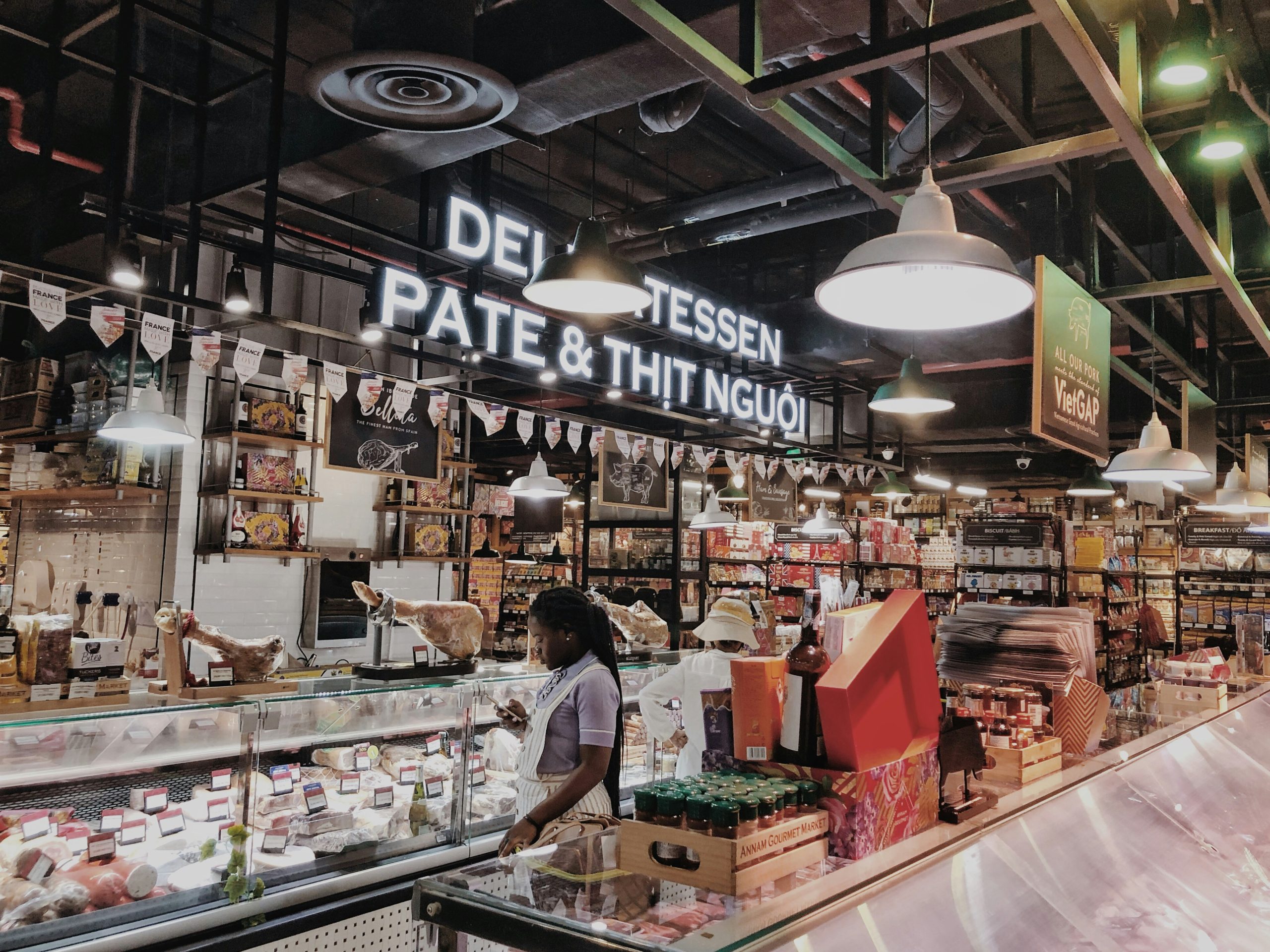
Phân khúc thương mại hiện đại của Việt Nam đã mở rộng nhanh chóng trong những năm gần đây, được thúc đẩy bởi thu nhập người tiêu dùng gia tăng và hành vi mua sắm thay đổi. Người tiêu dùng đang dần chuyển từ thương mại truyền thống sang thương mại hiện đại, cùng với nhu cầu ngày càng tăng đối với các sản phẩm lành mạnh và an toàn. Bên cạnh đó, tiềm năng chưa được khai thác tại các khu vực ngoại ô và nông thôn mở ra một cơ hội giá trị cho các nhà đầu tư muốn gia nhập phân khúc thương mại hiện đại.
Doanh thu thương mại hiện đại của Việt Nam đạt 57 tỷ USD vào năm 2024
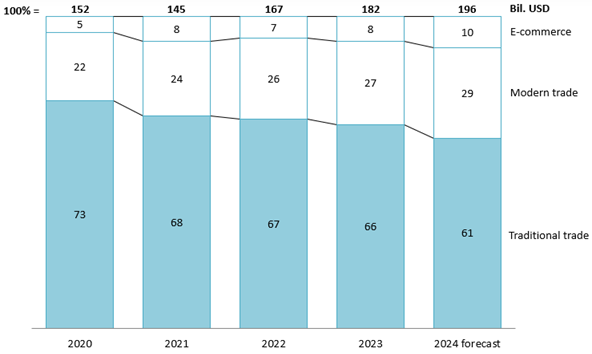
Thương mại hiện đại tại Việt Nam đã tăng trưởng với CAGR 5% trong giai đoạn 2020–2024, đạt 57 tỷ USD. Trong vòng nửa thập kỷ, Việt Nam đã từng bước chuyển dịch từ mô hình thị trường truyền thống sang thương mại điện tử và các mô hình bán lẻ hiện đại. So với năm 2020, tỷ trọng của các chợ truyền thống trong tổng doanh thu bán lẻ đã giảm từ 73% xuống 61%. Ngược lại, thương mại hiện đại tăng từ 22% lên 29%, trong khi thương mại điện tử tăng từ 5% lên 10%[1].
Vietnam’s retail market revenue from 2020 to 2024 by type
Nguồn: Cimigo
Xu hướng gia tăng của các cửa hàng thương mại hiện đại [2]
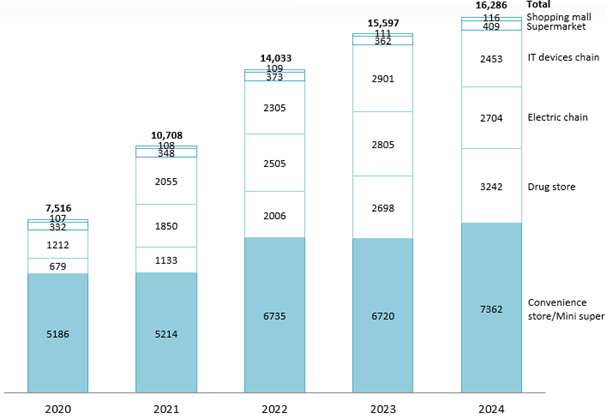
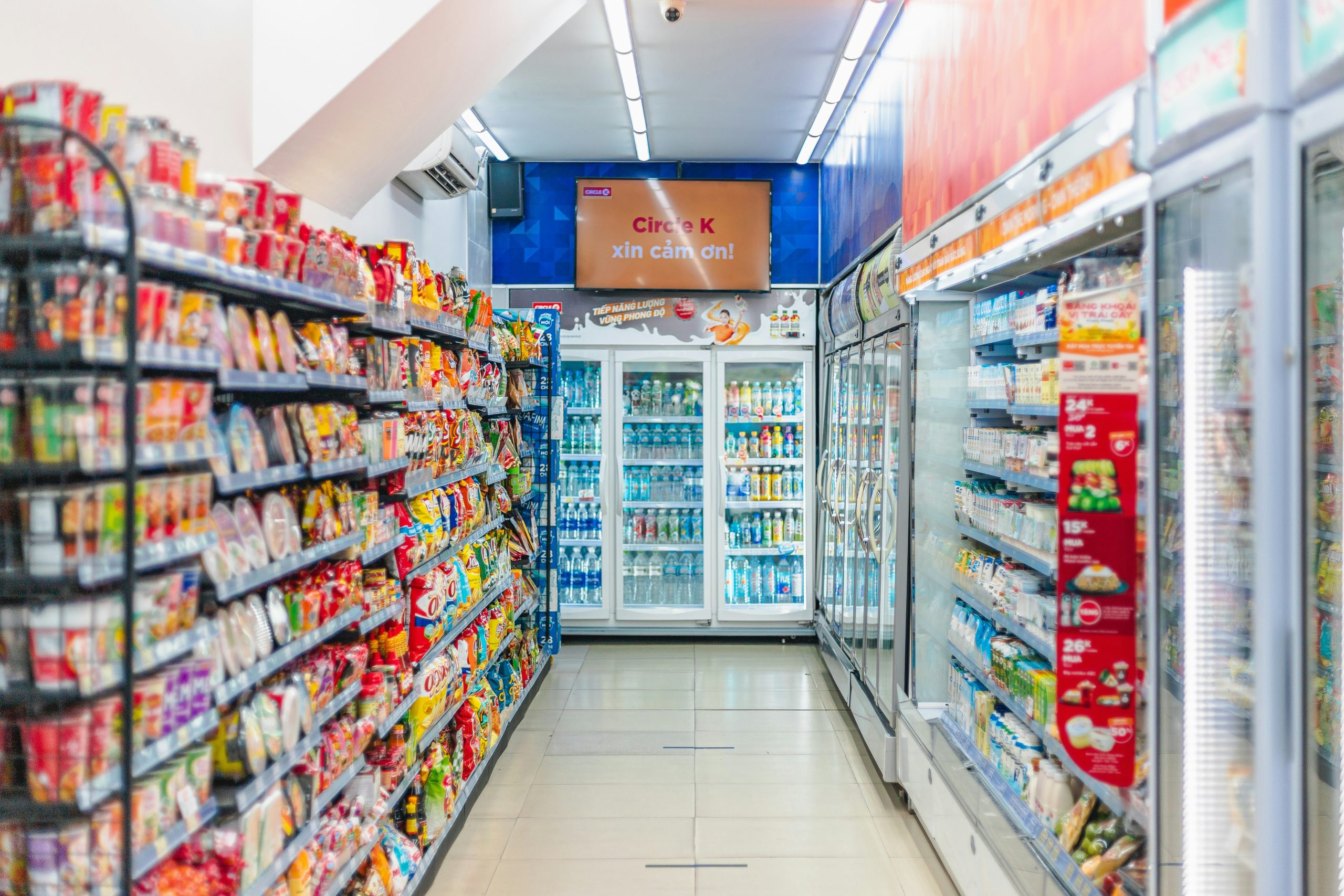
Trong giai đoạn 2020–2024, số lượng cửa hàng thương mại hiện đại tại Việt Nam đã tăng mạnh, với mức tăng hơn 200%—hơn gấp đôi so với năm 2020—đạt 16.286 cửa hàng vào cuối năm 2024. Cửa hàng tiện lợi và siêu thị mini tiếp tục chiếm ưu thế trong mạng lưới cửa hàng, chiếm hơn 45% tổng số cửa hàng. Theo sau là các nhà thuốc, chuỗi điện máy và chuỗi thiết bị CNTT, mỗi nhóm chiếm khoảng 20%. Do chi phí đầu tư và vận hành cao, số lượng trung tâm thương mại và siêu thị vẫn còn hạn chế, chỉ chiếm 3% tổng thị trường[3].
Number of modern trade stores from 2020 to 2024
Nguồn: Nghiên cứu Q&Me
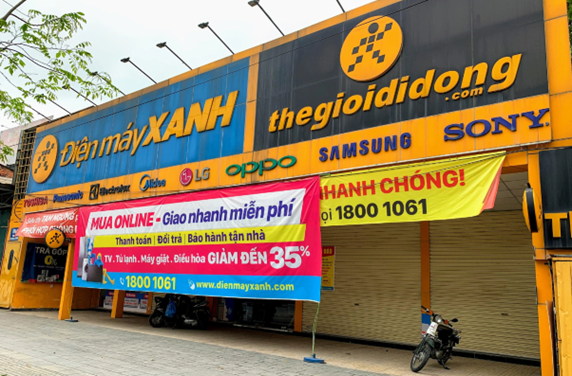
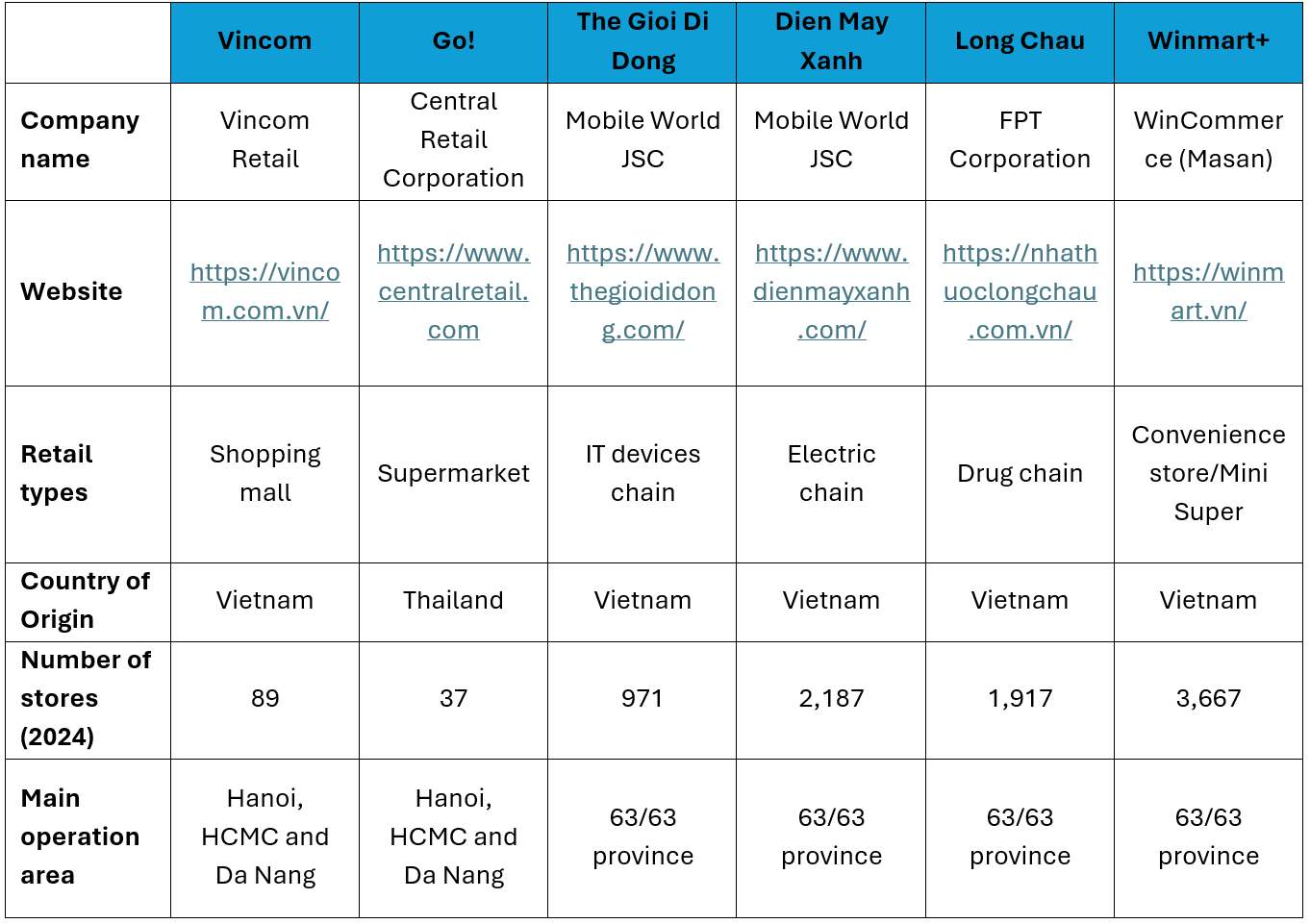
Các cửa hàng thương mại hiện đại tại Việt Nam chủ yếu tập trung ở những thành phố lớn như Hà Nội và Thành phố Hồ Chí Minh, với tổng tỷ trọng khoảng 30% tổng số cửa hàng. Tuy nhiên, xu hướng mở rộng ra các khu vực lân cận đang ngày càng rõ nét. Chẳng hạn, Co.op Food đã mở 21 cửa hàng mới tại khu vực phía Nam, trong khi Winmart+ mở rộng thêm gần 195 cửa hàng trên toàn quốc. Ngành siêu thị cũng đã tăng trưởng nhanh chóng, nhờ sự mở rộng của Winmart và Big C/Go!. Hiện cả hai thương hiệu đều có mặt tại hầu hết các tỉnh thành trên cả nước, với mỗi thương hiệu vận hành hơn 100 cửa hàng
Bài viết liên quan


























Đăng nhập / Đăng ký
Tiếp tục mà không cần tài khoản
Đăng nhập / Đăng ký
ĐĂNG KÝ NHẬN BẢN TIN