

 한국어
한국어  English
  日本語
日本語  Tiếng Việt
  简体中文
简体中文 아세안 국가들 중에서 베트남은 제조업 부문을 중심으로 2024년 수출입 총액에서 모두 2위를 차지했습니다.
1812월2025
최신 뉴스 및 보고서 / 베트남 브리핑
댓글: 댓글 없음.
베트남은 제조업을 핵심 동력으로 삼아 아세안의 주요 무역 허브로 빠르게 부상하고 있습니다. 이러한 성장세는 경쟁력 있는 인건비, 거시경제 안정성, 광범위한 FTA 네트워크, 지정학적 변화에 의해 더욱 강화되고 있습니다. 그러나 베트남은 숙련 인력 부족, 수입 중간재 의존, 기후 취약성 등 지속적인 구조적 과제에 직면해 있습니다. 향후 장기적인 경쟁력은 생산성 향상, 고숙련 인력 확보, 기술 도입, 기후 회복력 있는 인프라 구축에 달려 있습니다.
제조업 관점에서 본 아세안 무역 허브로서의 베트남 현황
아세안 국가 중 베트남은 2024년 수출입액 모두에서 싱가포르에 이어 2위를 기록하며, 말레이시아, 태국, 인도네시아와 같은 전통적인 제조업 기반 국가를 앞질렀습니다. 싱가포르의 무역 경쟁력이 주로 서비스, 물류 및 재수출에 의해 뒷받침되는 반면, 베트남의 무역 실적은 주로 제조상품에 기반하고 있어 생산 거점으로서의 역할이 확대되고 있음을 보여줍니다[1].
2024년 무역 실적이 가장 높은 아세안 6개국
단위: 백만 달러
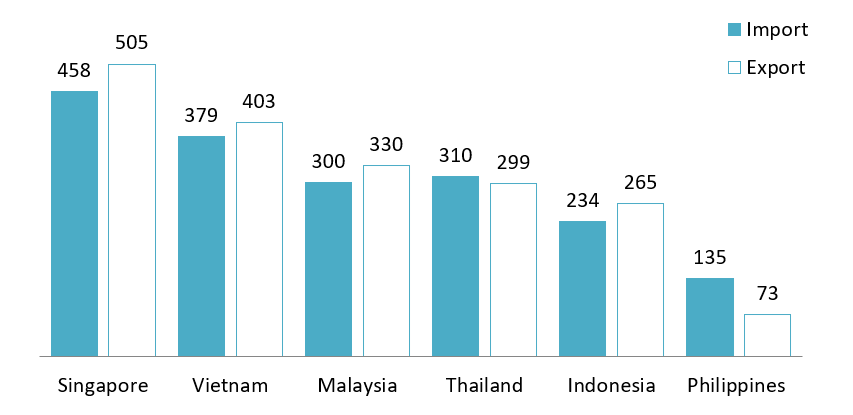
출처: ITC 무역 지도
베트남의 잠재력은 강한 경제 성장세에 의해 뒷받침되고 있습니다. 2024년 말부터 2025년까지 베트남은 주요 아세안 국가보다 지속적으로 높은 GDP 성장률을 기록했습니다[2].
GDP Growth of 4 major ASEAN economies in Q4-2024 to Q3-2025
단위 : %
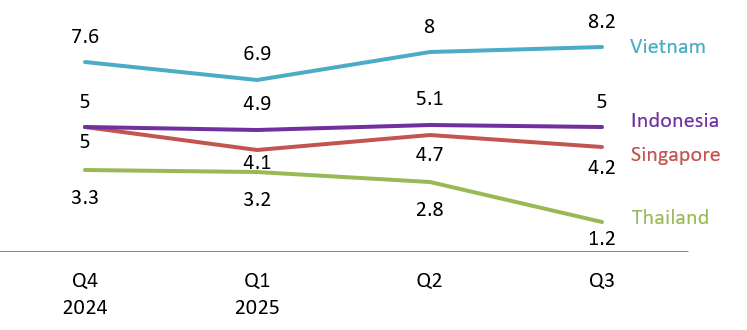
출처: 맥킨지
2025년 11월, Allianz Research는 베트남을 전 세계에서 두 번째로 유망한 차세대 무역 허브로 평가했으며, 아랍에미리트에 이어 2위를 부여했습니다. 이는 빠르게 증가하는 수출 역량, 확대되는 자유무역협정 적용 범위, 제조 역량을 강조한 평가입니다[3]. 이 보고서는 글로벌 공급망의 변화와 역내 경제 재조정 속에서도 강한 수출 증가세를 유지한 베트남의 회복탄력성을 강조했습니다. 이러한 평가는 베트남의 장기적인 무역 및 제조업 잠재력에 대한 신뢰를 반영합니다.
베트남, 세계 15대 무역 강국으로 도약 중
베트남의 2025년 첫 11개월 누적 무역액은 약 8,400억 달러에 달해 전년 대비 17% 이상 증가했습니다. 전년 동기 대비 수출은 16% 이상, 수입은 18% 이상 증가한 가운데, 베트남은 205억 달러 이상의 무역수지 흑자를 유지하며 연말 9,000억 달러 돌파를 향한 성장세를 이어갔습니다[4]. 대외무역액이 9,000억 달러에 도달할 경우 총무역액 기준으로 베트남은 세계 15대 무역 경제권에 진입하게 됩니다[5].
Vietnam trade turnover from 2016 to 11 months of 2025
단위: 10억 달러
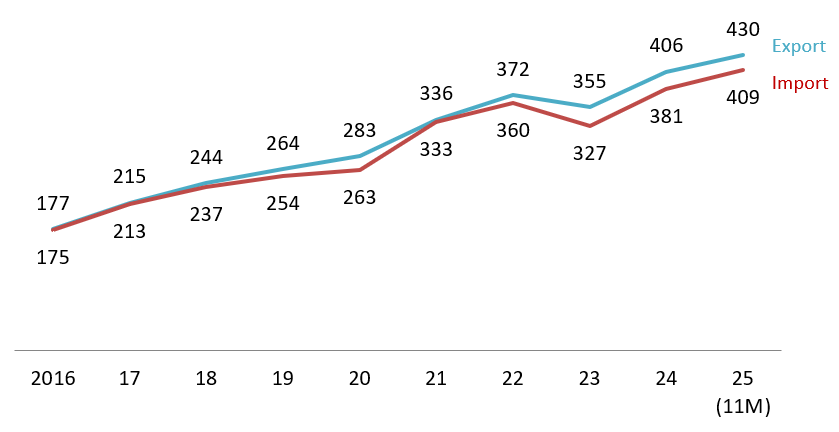
출처: 국가통계청
베트남의 강점으로서의 제조업
제조업은 베트남 무역 성장의 핵심 동력으로 남아 있습니다. 2025년 첫 11개월 수출상품 구조를 살펴보면, 가공·공업 제품군은 3,817억 달러에 달해 88.7%를 차지했습니다. 수입 측면에서는 생산자재가 3,839억 6,000만 달러에 달해 93.7%를 차지했습니다[6]. 전자제품, 기계, 섬유, 신발 및 기타 제품을 포함한 여러 주요 제조업 하위 부문이 수출액에 크게 기여했습니다. 전자제품과 기계는 대규모 외국인직접투자와 글로벌 가치사슬 편입의 혜택을 받으며 수출 성장의 동력으로 부상했으며, 섬유, 의류, 신발과 같은 전통 산업은 지속적으로 고용과 수출 물량을 창출하고 있습니다.
Vietnam exported commodities worth over USD 10 billion in value (11 months of 2025)
단위: 10억 달러
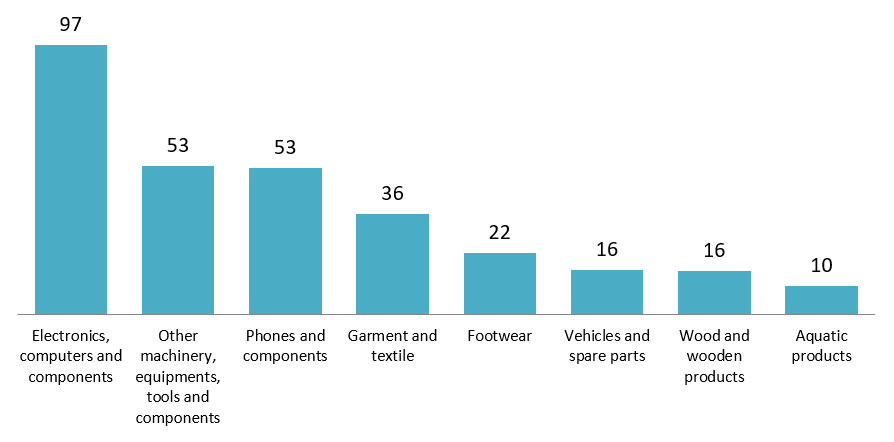
출처: Vn경제
베트남 제조업의 강점을 보여주는 또 다른 지표는 S&P Global Vietnam PMI입니다. 이 지수는 7월부터 11월까지 5개월 연속 확장 기준선인 50을 상회했습니다. 이는 글로벌 경제의 역풍과 관세 불확실성에도 불구하고 제조업 생산이 지속적으로 확대되고 신규 주문이 증가했으며 수출 수요가 유지되었음을 의미합니다[7].
베트남이 아세안 무역 허브로 부상하게 된 요인들
경제 측면, 베트남의 경쟁력 있는 인건비는 역내 경쟁국 대비 제조업 투자 유치를 위한 중요한 매력 요인으로, 글로벌 기업이 선호하는 비용 효율적인 생산을 가능하게 합니다. 또한 제조업, 특히 전자제품과 첨단 부품 부문으로의 외국인직접투자 유입이 지속되면서 자본 형성과 기술 이전이 확대되어 국가의 산업 경쟁력이 강화되었습니다. 글로벌 관세와 경제적 불확실성이 위험 요인으로 작용하고 있지만, 물가 상승이 통제되고 무역수지가 흑자를 기록하는 등 베트남의 거시경제 안정성은 산업 성장과 수출 확대를 뒷받침하는 환경을 제공해 왔습니다[8].
Total registered capital of FDI in Vietnam’s Manufacturing (2020-2024)
단위: 10억 달러
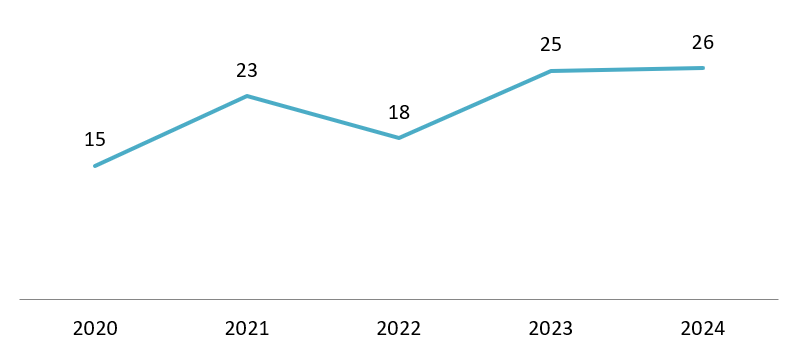
출처: 국가통계청
또한, 정책 및 외교 관계 측면에서, CPTPP, EVFTA, RCEP와 같은 전략적 자유무역협정(FTA) 네트워크는 관세 장벽을 낮추고 아시아, 유럽 및 태평양 전역의 시장 접근성을 확대했습니다. 예를 들어 2025년 첫 10개월 동안 CPTPP 회원국과의 양방향 교역액은 사상 최대인 US$102.8 billion에 달했으며, 수출은 전년 대비 26% 증가했습니다. 이는 특혜적 시장 접근이 무역 다변화와 수출 성장에 어떻게 기여하는지를 보여줍니다[9]. 이러한 FTA는 관세상 이점을 제공할 뿐만 아니라 국제 표준 준수를 촉진하여 해외 시장에서 베트남 기업의 경쟁력을 높입니다.
2024년 10월에는 Vietnam과 UAE 간 포괄적경제동반자협정(CEPA)이 체결되었습니다
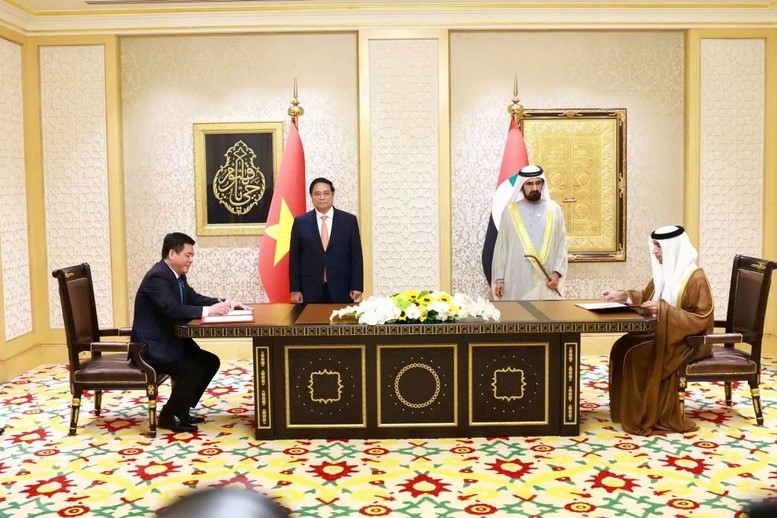
출처: 정부 뉴스
Vietnam은 또한 다음과 같은 혜택을 누리고 있습니다 지정학적 요인. 지속되는 미·중 무역 긴장으로 인해 China에서 생산하는 데 수반되는 위험과 비용이 증가했습니다. 이러한 위험에 대한 노출을 줄이기 위해 글로벌 기업들은 China + 1 전략을 채택했습니다. 이는 일부 생산은 China에 유지하되 공급망의 일부를 다른 국가로 이전하는 전략입니다. Vietnam은 긴 해안선과 China와의 지리적 근접성 덕분에 이러한 이전의 주요 선택지 중 하나로 부상했으며, 이에 따라 운송 시간과 비용을 절감할 수 있습니다[10].
도전 과제 및 제약 요인
숙련 노동력 부족과 낮은 부가가치 생산성
Vietnam의 제조업은 여전히 저비용 노동력과 최종 단계 조립에 크게 의존하고 있어, 고부가가치 생산으로 신속하게 전환하는 데 구조적 제약이 되고 있습니다. 이러한 구조는 품질이나 혁신보다는 주로 생산량에 의해 수출이 빠르게 증가하는 결과를 초래하며, Vietnam의 제조 경쟁력이 기술 수준과 인적자본 역량 측면에서 여전히 제한적임을 시사합니다. 전자공학, 산업 자동화, 첨단 소재, 공급망 관리와 같은 분야에서는 숙련 인력 부족이 특히 심각합니다. 이러한 분야는 Vietnam이 단순 조립에서 더 높은 생산성을 갖춘 제조업으로 전환하는 데 필수적입니다[11]. Vietnam은 젊은 노동력과 낮은 임금의 혜택을 누리고 있지만, 이는 지속 가능한 경쟁우위가 아니며 노동자들이 더 나은 삶의 질을 추구함에 따라 생산성과 부가가치를 높여야 합니다.
수입 투입재에 대한 공급망 의존도
Vietnam 제조업의 주요 제약 요인 중 하나는 특히 China로부터 원자재, 기계류 및 중간재를 수입하는 데 크게 의존한다는 점입니다. Vietnam의 산업 기반은 전자, 섬유, 신발, 기계류와 같은 핵심 산업에 필요한 부품을 아직 충분히 공급할 만큼 고도화되지 않았습니다. 그 결과 수출 실적이 우수한 산업조차 생산 투입재를 수입 자재에 의존하고 있으며, 이로 인해 제조업체는 공급 차질, 환율 변동 및 글로벌 가격 변동성에 노출됩니다[12]. 이러한 의존성은 국내 부가가치 유보도 제한합니다. 수출 수익의 상당 부분이 수입 부품을 통해 경제 외부로 다시 유출되기 때문입니다.
환경 문제
Vietnam은 기온 상승, 홍수, 염수 침입, 잦은 태풍 등 제조업 운영을 방해하는 심각한 환경적 취약성에 직면해 있습니다. World Bank는 Vietnam을 기후 위험에 가장 크게 노출된 국가 중 하나로 평가하고 있으며, 특히 공장, 항만 및 물류 인프라의 상당 부분이 위치한 메콩델타와 해안 산업지대의 위험이 높다고 지적합니다[13]. 이러한 자연재해는 생산을 중단시킬 뿐만 아니라 기계를 손상시키고 전력 공급을 중단시키며 선적 일정을 지연시켜 상당한 재정적 손실을 초래합니다. 태풍과 강력한 폭풍은 특히 Quang Ninh, Hai Phong, Da Nang과 같은 해안 지역에 큰 영향을 미칩니다.
환경적 압력은 장기적인 지속가능성 과제도 야기합니다. 제조업은 상당한 양의 폐기물과 배출물, 수질오염을 발생시키는 반면, 환경 규제와 집행 체계는 여전히 국제 표준에 미치지 못하고 있습니다. 기후 대응형 인프라, 재난 대비 계획 및 친환경 산업정책을 통해 환경 회복탄력성을 강화하지 못하면, 안정적인 제조업 허브로서 Vietnam의 매력이 약화될 수 있습니다.
외국인 투자자를 위한 향후 전망 및 시사점
세계은행에 따르면, 현재 수출 중심 제조업과 대규모 FDI에 의해 뒷받침되는 베트남의 성장 모델은 생산성이 크게 향상되지 않는 한 향후 20년 동안 높은 성장률을 유지하기에 충분하지 않을 것입니다. 따라서 베트남은 광범위한 성장(노동력, 자본, 저비용 생산)에서 기술, 숙련도, 혁신 및 부가가치 제조업에 의해 견인되는 집약적 성장으로 전환해야 합니다[14].
또한 주요 제조업 및 물류 허브가 되려는 베트남의 목표를 달성하려면 인프라, 도시 계획 및 제도 개혁에 대한 보다 심층적인 구조적 고도화가 필요합니다. 홍수, 극심한 더위, 해안 침식과 같은 기후 위험은 산업단지와 수출 인프라에 점점 더 큰 위협이 되고 있으며, 이에 따라 기후 회복력 있는 개발을 위한 대규모 투자가 요구됩니다.
베트남은 급속한 인구 고령화 단계에 진입하고 있으며, 이는 노동력 공급과 사회보호 시스템에 부담을 가할 것입니다[15]. 경쟁력을 유지하기 위해 베트남은 보다 숙련되고 혁신 중심적인 노동력으로 전환해야 합니다. 이러한 전환을 위해서는 자동화 집약적 및 첨단 제조업을 지원할 수 있도록 교육, 직업훈련 및 디지털 역량 개발에 대한 개혁이 필요합니다.
외국인 투자자에게 베트남의 발전 방향은 저비용 조립 플랫폼에서 보다 고도화된 제조 환경으로 점진적으로 이동하고 있음을 시사합니다. 이러한 전환은 전자, 반도체, 재생에너지 기술, 고부가가치 기계류 및 자동차 부품과 같은 분야에서 기회를 창출합니다. 그러나 투자자들은 순수한 저비용 노동력 우위의 시대가 시간이 지남에 따라 쇠퇴할 것임을 인식해야 합니다. 베트남에서 경쟁력 있는 운영을 유지하려면 기술 도입, 디지털화, 숙련 인력 교육, 그리고 더 높은 품질의 생산을 뒷받침하는 현지 공급망 파트너십 구축 역량이 점점 더 중요해질 것입니다.
투자자들은 또한 지속가능성, 환경 기준 및 노동 관행과 관련된 더욱 엄격한 규제 준수 요건에 대비해야 합니다. 베트남이 EVFTA, CPTPP 및 탄소 관련 수출 기준(예: EU의 CBAM)에 대한 규제 정합성을 강화함에 따라 제조업체는 청정 생산 기술, 에너지 효율성 및 환경 모니터링 시스템에 투자해야 합니다[16]. 장기적인 경쟁력은 베트남 사업에 처음부터 ESG 원칙을 통합하는 기업에 유리하게 작용할 것입니다.
* 이 기사에서 어떤 정보를 인용하고자 하시면, 저작권을 존중하기 위해 원본 기사의 링크와 함께 출처를 꼭 기재해 주시기 바랍니다.
| B&Company
2008년부터 베트남에서 시장 조사에 전문화된 최초의 일본 회사입니다. 우리는 산업 보고서, 산업 인터뷰, 소비자 조사, 비즈니스 매칭 등 다양한 서비스를 제공합니다. 또한 최근에는 베트남에 있는 90만 개 이상의 회사가 포함된 데이터베이스를 개발하여 파트너를 검색하고 시장을 분석하는 데 사용할 수 있습니다. 문의 사항이 있으시면 언제든지 저희에게 연락해 주십시오. info@b-company.jp + (84) 28 3910 3913 |
[1] Department of Statistics Singapore, Singapore의 국제 무역 (https://www.singstat.gov.sg/modules/infographics/singapore-international-trade)
[2] McKinsey & Company, 동남아시아 분기 경제 리뷰: 시장의 재편 (https://www.mckinsey.com/featured-insights/future-of-asia/southeast-asia-quarterly-economic-review)
[3] Vietnam Plus, 베트남, ASEAN의 차세대 선도 무역 허브로 부상 (https://en.vietnamplus.vn/vietnam-emerges-as-aseans-leading-next-generation-trade-hub-post332107.vnp)
[4] VnEconomy, 2025년 첫 11개월 수출입액 $839.75 billion에 도달하며 2024년 기록 경신 (https://vneconomy.vn/xuat-nhap-khau-11-thang-nam-2025-dat-83975-ty-usd-xo-do-ky-luc-nam-2024.htm)
[5] 베트남의 무역 규모가 곧 14조 9천억 달러를 넘어설 것으로 예상된다는 내용의 보도가 나왔습니다. (https://baodautu.vn/thuong-mai-viet-nam–sap-vuot-900-ty-usd-d453612.html)
[6] National Statistics Office, 2025년 11월 및 첫 11개월 사회·경제 상황 보고서 (https://www.nso.gov.vn/bai-top/2025/12/bao-cao-tinh-hinh-kinh-te-xa-hoi-thang-muoi-mot-va-11-thang-nam-2025/)
[7] Vietnam Briefing, 베트남 제조업 트래커: 2025년 11월 기준 (https://www.vietnam-briefing.com/news/vietnam-manufacturing-tracker.html/)
[8] Vietnam News, 베트남 경제, 2026~2027년 견조한 회복세 유지 전망: OECD (https://vietnamnews.vn/economy/1731055/viet-nam-s-economy-set-to-maintain-solid-recovery-through-2026-2027-oecd.html)
[9] Vietnam Plus, CPTPP가 베트남 농수산물 수출을 견인 (https://en.vietnamplus.vn/cptpp-drives-vietnams-agro-fisheries-exports-post334088.vnp)
[10] Vietnam Investment Review, 베트남, China+1 정책 전환의 수혜 (https://vir.com.vn/vietnam-benefits-from-china1-policy-shift-112731.html)
[11] McKinsey & Company, 베트남 제조업 부문 경쟁력 강화: 저비용에서 높은 생산성으로 (https://www.mckinsey.com/featured-insights/asia-pacific/boosting-vietnams-manufacturing-sector-from-low-cost-to-high-productivity)
[12] A1 컨설팅, 2025년 베트남 제조업 부문 개요 및 제조업이 직면한 최대 과제 (https://www.a1consulting.vn/en/blog/dx-blog-9/nganh-san-xuat-viet-nam-2025-272)
[13] World Bank, 주요 내용: 베트남 국가 기후 및 개발 보고서 (https://www.worldbank.org/en/country/vietnam/brief/key-highlights-country-climate-and-development-report-for-vietnam)
[14] 세계은행 및 호주 원조, 베트남 2045 – 변화하는 세계에서 더 나은 무역 – 고소득 미래를 향한 길
[15] Tuoi tre, 고속 성장을 달성하기 위해 베트남은 조기에 고령 인구에 대비해야 한다. (https://tuoitre.vn/muon-tang-truong-nhanh-viet-nam-phai-chuan-bi-cho-gia-hoa-dan-so-som-20250711175023665.htm)
[16] Vietnam News, 베트남 산업계, 더욱 엄격한 환경 기준 충족을 목표로 해 (https://vietnamnews.vn/economy/1730486/vietnamese-industries-aim-to-meet-higher-environmental-standards.html)
관련기사









로그인 / 회원가입
뉴스레터 구독