
Potentials for EV Battery Recycling development in Vietnam

現在の EV バッテリーのリサイクル環境では、一方では参入障壁が高く、他方では明確なチャンスが生まれています。

Vehicles in Vietnam

2025年8月7日

B&Company

最新ニュースとレポート / ベトナムブリーフィング

コメント: コメントはまだありません.

B&Companyは、2008年からベトナムにおいて市場調査および投資コンサルティングを専門とする日本の初の企業です。.

この「Vietnam Briefing」セクションでは、B&Companyの若手研究者たちがベトナムの産業動向、消費者動向、社会運動に関するタイムリーな情報を提供します。.

この記事は英語で書かれ、他の言語バージョンには自動翻訳が使用されています。正確なコンテンツのために、英語版をご参照ください。原情報の正確性を確保するよう努めていますが、各情報については別途確認してください。解釈や将来の展望は各研究者の個人的な意見です。.

The Electric Vehicle boom in Vietnam

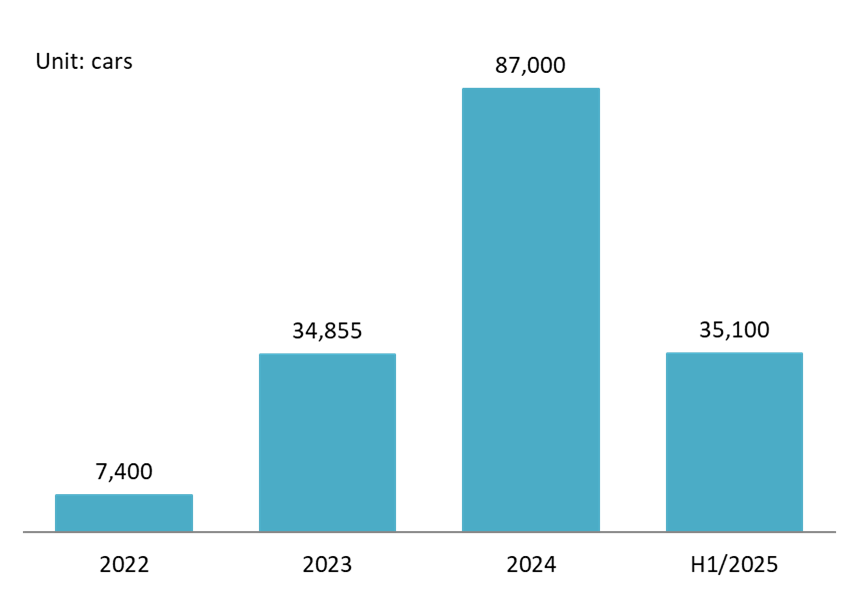
Vietnam’s electric vehicle (EV) market is projected to reach USD 3.12 billion by 2025 and grow to USD 7.41 billion by 2030, with a compound annual growth rate (CAGR) of around 19% [1]. This remarkable growth is largely driven by the domestic brand VinFast. As of July 2023, Vietnam had just over 20,000 electric cars on the road [2]. However, the number has been raised significantly. VinFast alone sold 87,000 EVs in 2024 (a 150% increase) and delivered another 35,100 vehicles in the first quarter of 2025 [3,4].

2025年上半期までに納入されるVinFast車両数

Number of VinFast vehicles delivered until H1 2025

出典: B&Company 編集

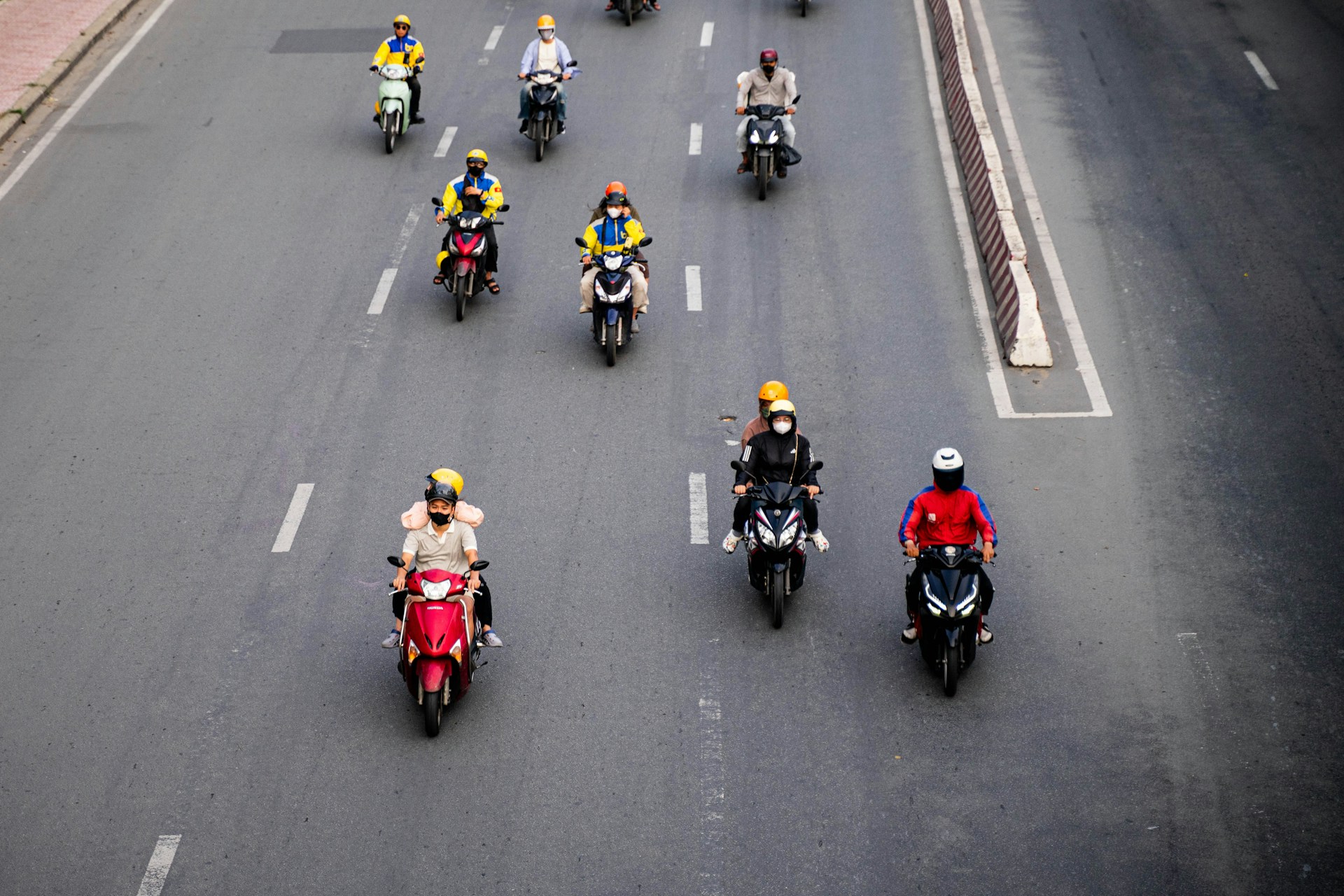
In the electric motorcycle segment, growth is equally impressive. The sub-50cc category—targeting students and young users—saw a 112.6% surge in sales during the early months of 2025 [5]. Vietnam is currently one of the world’s largest two-wheeler markets, with nearly 75 million registered motorcycles and an annual production volume ranging from 3 to 4.7 million units between 2019 and 2023. In this context, electric motorcycles are gradually gaining market share, with the number of registered units rising from 0.5 million in 2016 to 2.3 million in 2023, reflecting a CAGR of 24.3%. Leading brands in the market include VinFast, Yadea, Pega, and Yamaha [6].

Number of total registered E2W in Vietnam from 2016 to 2023[11] (単位:百万台)
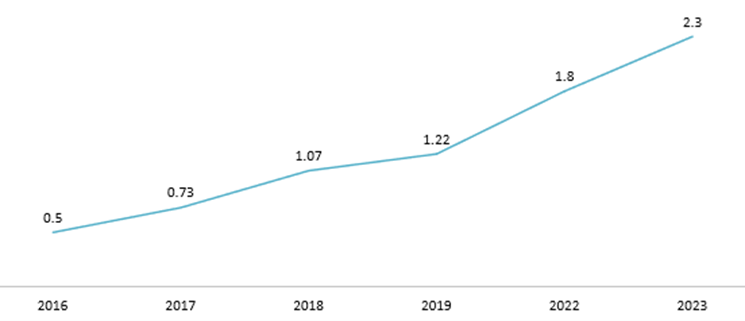
Number of total registered E2W in Vietnam from 2016 to 2023

出典: ギズ

EV Battery lifespan

With an average EV battery lifespan of 8–10 years, the vehicles sold between 2023 and 2025 are expected to begin reaching end-of-life (EOL) and generating battery waste in bulk from 2031 to 2035. According to VAMA, around 1 million EVs will be in circulation by 2028, rising to 3.5 million by 2040 [7]. Based on this trajectory, battery demand is projected to reach nearly 5 million units by 2040 and 10 million units by 2050 to support the target of 100% EV penetration across most road vehicle segments in Vietnam. In terms of battery capacity, demand is expected to reach approximately 100 GWh in 2030, 360 GWh in 2040, and 1,170 GWh in 2050—highlighting a massive future demand and the corresponding rise of the battery recycling market [8].

Globally, the battery recycling market is projected to be worth tens of billions of USD in the next decade. In Vietnam, revenues in this sector come from two main sources: the sale of recovered metals such as lithium, nickel, cobalt, and copper, depending on global market prices; and EPR (Extended Producer Responsibility) service fees paid by manufacturers to comply with the mandated 8% recycling obligation. The EPR stream provides stable income and serves as a financial safety net against price volatility in the metals market.

Policy framework

The Environmental Protection Law 2020 and its implementing Decree No. 08/2022/NĐ-CP have laid a solid legal foundation for the recycling industry in Vietnam [9, 10].

– The recycling obligation for battery and accumulator producers and importers officially came into force on January 1, 2024. This is not a future proposal—it is a legally enforced requirement.

– In the first three years, producers are required to recycle at least 8% of the total battery volume they place on the market. For example, a company that sells 10,000 tons of batteries in 2024 must legally recycle 800 tons.

– The recycling process must achieve a minimum material recovery rate of 40% of the total waste volume processed. This sets a basic technical threshold that all recycling facilities must meet.

The early steps in EV battery recycling

VinES & Li-Cycle – A pioneering move toward a closed-loop supply chain

In late 2022, VinES (a subsidiary of Vingroup) signed a global strategic partnership with Li-Cycle, a leading battery recycling company based in North America [11]. The partnership aims to establish a closed-loop battery supply chain, in which valuable materials such as lithium, nickel, and cobalt are recovered and reused in the production of new batteries at VinES factories.

Through this collaboration, VinES gained access to world-class hydrometallurgical technology, featuring Li-Cycle’s patented “Spoke & Hub” model, which allows for up to 95% material recovery. This significantly shortens VinES’s R&D timeline and enables the rapid localization of international-standard technology in Vietnam.

The two parties are currently assessing the feasibility of building a “Spoke” recycling facility near VinES’s production complex in Ha Tinh. The final investment decision is expected to be made in 2025.

Ho Chi Minh City’s proposal – a proactive public sector initiative

Ho Chi Minh City, through the Ho Chi Minh City Institute for Development Studies (HIDS), has proposed the development of a specialized battery recycling center [12]. This is part of a broader plan to transition 400,000 gasoline-powered motorcycles—primarily used by delivery and ride-hailing drivers—to electric models.

The proposed facility would have an annual capacity of 3,000 tons, aiming to recover 90–95% of valuable metals from end-of-life batteries [12]. This strategic move anticipates the wave of battery waste generated by the city’s urban electrification push.

To support the project, the city intends to provide financing through the Environmental Protection Fund or preferential loan schemes for qualified investors, demonstrating the public sector’s proactive role in fostering Vietnam’s battery recycling ecosystem.

VinES leads, but the market is still wide open

Vietnam has laid a legal foundation for battery recycling, with the Environmental Protection Law and Decree 08/2022/NĐ-CP officially taking effect in 2024. These regulations create a mandatory market through the Extended Producer Responsibility (EPR) scheme. At the same time, VinES (a subsidiary of Vingroup) has emerged as the industry pioneer, pursuing a closed-loop supply chain strategy and planning to build its own recycling facility.

The current landscape can be described as a “bipolar intent”: it creates high entry barriers on one hand, while opening clear opportunities on the other. VinES’s move has established a vertically integrated giant—its ecosystem not only manufactures most EVs in Vietnam but also produces batteries, making Vingroup both the largest supplier and the largest customer within the recycling value chain. Their closed-loop ambition means they are likely to prioritize recycling their own batteries to secure raw material supply. As a result, it creates an almost impenetrable wall for any new player seeking access to VinFast’s end-of-life batteries.

However, the broader market includes other brands such as Yadea, Pega, Hyundai, and BYD. These companies are also subject to EPR regulations but may lack the scale to build their own recycling facilities. This presents a clear market gap. Ho Chi Minh City’s proposal for a public-private recycling center is a recognition of this gap. A new private company can position itself as a specialized recycler for the “non-VinFast” segment—operating as a pure B2B service provider rather than a vertically integrated material company.

Recommendations for new entrants

Rather than competing directly with large integrated players like VinES, investors and entrepreneurs should focus on addressing critical gaps in the ecosystem. Specifically:

– First, build a nationwide collection and logistics network for EOL (end-of-life) batteries;

– Second, operate “Spoke” facilities to produce black mass—a capital-efficient entry point;

– Third, specialize in second-life applications by testing, sorting, and repurposing used batteries for energy storage systems (ESS).

Meanwhile, industrial players such as automotive brands and logistics firms should consider forming alliances to develop shared recycling solutions. This not only ensures EPR compliance but also builds the scale needed for cost efficiency—especially in a market still in its early formation stage.


[1] Mordor Intelligence, Vietnam Electric Vehicle Market Size & Share Analysis – Growth Trends & Forecasts (2025 – 2030) <アクセス>

[2] The Investor, Electric vehicles in Vietnam: 7 years of development and double-digit growth prospect  <アクセス>

[3] Enternews, Will EV dominate the Vietnamese market? <アクセス>

[4] Vietnam Plus, Vinfast delivers 12,100 EVs in March, leads Vietnam market <アクセス>

[5] Vietnam.vn, Vietnam Motorcycle Market – Electric Vehicles Grow Impressively <アクセス>

[6] GIZ, Electric Two-Wheelers in Vietnam <アクセス>

[7] Finance news, Vietnam’s EV charging infrastructure key to green transition <アクセス>

[8] Vietdata Research, The explosion of electric vehicles: Opportunity or Challenge for Vietnam’s battery market <アクセス>

[9] The Environmental Protection Law 2020 <アクセス>

[10] Decree No. 08/2022/NĐ-CP of the Government: Detailing the implementation of certain articles of the Law on Environmental Protection <アクセス>

[11] Vietnam News, VinES and Li-Cycle announce strategic, long-term battery recycling agreement <アクセス>

[12] VnEconomy, HCMC plans EV battery recycling plant with 95% metal recovery rate <アクセス>


*この記事の情報を引用したい場合は、著作権を尊重するために、元の記事へのリンクとともに出典を明記してください。.

B&Company

2008年よりベトナムで市場調査を専門とする初の日本企業として、業界レポート、業界インタビュー、消費者調査、ビジネスマッチングなど、幅広いサービスを提供しています。さらに、ベトナム国内の90万社以上の企業を網羅したデータベースを構築し、パートナー企業の探索や市場分析にご活用いただけるようになりました。.

ご不明な点がございましたら、お気軽にお問い合わせください。.

info@b-company.jp + (84) 28 3910 3913

関連記事

ニュースレターを購読する