
 简体中文
简体中文  English
  日本語
日本語  Tiếng Việt
  한국어
한국어 
154 月2024
行业评论/最新新闻和报告
评论: 没有评论.
2010年,越南的GDP仅为日本的三十八分之一。到2020年,这一数值已约为日本的14倍;到2022年,则将更接近12倍。这一次,我们决定从“增长”的角度进行比较。这是因为企业考虑未来业务活动时,“如何创造新的需求”往往更为重要。.
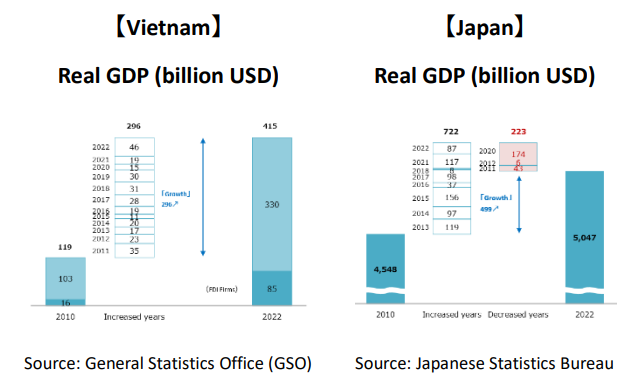 从实际GDP来看,2010年至2022年间,越南在年度波动中保持了稳定增长,而日本的增长则更加不均衡。除新冠疫情影响外,以美元计价的日本经济曾三次出现负增长,其中包括日元贬值的2020年。因此,在这12年间,日本的增长额约为4990亿美元,而越南约为2960亿美元,约为日本的60%;从“增长”来看,两者处于同一数量级。这部分GDP“增长”中,约有23%来自FDI企业。尽管企业对外投资的目的并非增加价值,但从业务活动转移的角度来看,这确实代表了一定程度的成果。.
目前,已经进入越南市场的日本企业约有2,900家,即每1,000家日本企业中约有1家。将其销售额与本土企业进行比较,平均约高出5倍。尽管业务拓展涉及困难与风险,而且与其他国家企业的竞争往往十分激烈,但在许多情况下,其成果仍可被视为优于留在日本国内经营。.
 国民收入和零售销售额也可以进行类似的“增长”比较。这里展示的是国民收入的结果。日本的“增长”仍然相对较大,约为越南的3倍。.
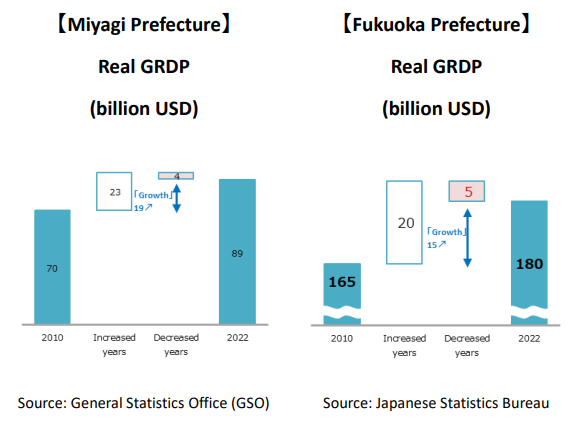
 接下来来看地方政府层级。由于东京规模过大,我们比较了其他都道府县与越南两个最大的城市。在已确认的多个案例中,包括分别代表九州和东北地区的福冈县与宫城县。结果确认了包括河内、胡志明市及其周边地区在内的经济圈具有较大的增长潜力。在日本,宫城县展现出较强的发展势头,但越南各省市的“增长”更为显著。(下图将省略年度明细。)

 最后来看产业。当然,这只能作为参考,因为各国的分类标准并不完全相同。.
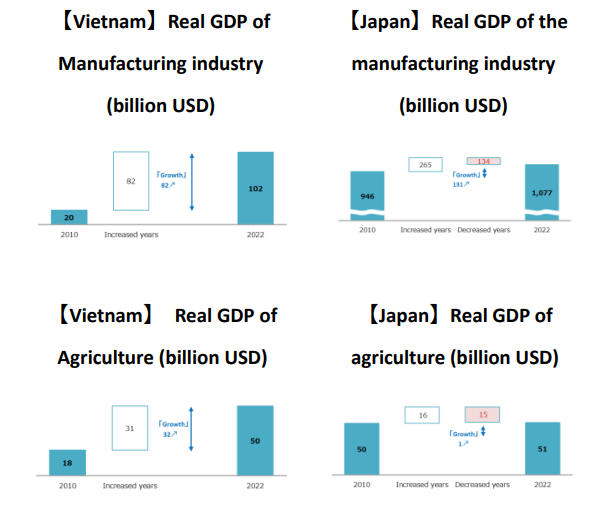
 农业领域也可能出现反转,但不是在“增长”方面,而是在总体价值方面,因为日本并未实现增长。制造业和分销业的规模虽然也没有达到日本的数倍,但处于同一数量级。除了极大型企业之外,越南对日本企业而言已不再“太小”
越南GDP – B&Company
本文已发表于东盟经济新闻“读懂越南趋势”专栏。更多信息请参见下文