

 한국어
한국어  English
  日本語
日本語  Tiếng Việt
  简体中文
简体中文 이 글에서는 동남아시아 전역에서 가속화되고 있는 전기차 전환 현상을 살펴보고, 이러한 변화에서 비롯되는 구조적인 시장 기회를 파악합니다.
126월2026
최신 뉴스 및 보고서 / 베트남 브리핑
댓글: 댓글 없음.
추상적인
For decades, Southeast Asia’s automotive market was defined by Japanese-brand dominance, gasoline two-wheelers, and modest electrification ambitions. That picture has changed dramatically. As of late 2025, ASEAN countries now rank among the highest EV (electric vehicle) adoption markets in the world — overtaking the United States, the United Kingdom, and the European Union on key penetration metrics.¹
This article examines the accelerating EV transition across Southeast Asia, identifies structural market opportunities arising from this shift, and illustrates how regional players, particularly those native to ASEAN, are best positioned to capitalize on them. It concludes with practical implications for investors and market entrants.
Market overview: Southeast Asia EV by the numbers
아세안 전기차 시장은 2025년 약 46억 달러 규모였으며, 2026년에는 60억 달러에 도달한 후 2031년에는 236억 달러로 성장할 것으로 예상되며, 연평균 복합 성장률은 31.6%입니다.² 또 다른 추산에 따르면, 이 시장은 2021년 20억 달러에서 2035년에는 연간 800억~1,000억 달러 규모의 매출 기회를 창출할 수 있을 것으로 전망됩니다.³
The table below summarizes EV market status across ASEAN’s five largest automotive markets as of 2025:
Table 1: Southeast Asia EV market status: 5 key markets (2025)
| 국가 | EV domestic sales share (2025) | Key policy | Notable investment |
| Vietnam | ~40% | Tax incentives, VAT reduction, public fleet mandates | VinFast (domestic); World Bank forecasts 6.5M jobs by 2050⁴ |
| 태국 | ~20% | “30@30” target (30% Zero Emission Vehicle-ZEV by 2030) | Toyota, BYD, Tesla, and Hyundai plants operational or committed to local production⁵ |
| 인도네시아 | ~15% | Reduced VAT on EVs, import tariff cuts for local producers | BYD factory, VinFast Subang plant, CATL company battery facility⁶ |
| 말레이시아 | 성장 | EV roadmap under the National Energy Transition | Proton EV line ($19.5M, 20,000 units/year capacity)² |
| 필리핀 | Early stage | EV Industry Development Act | VinFast e-scooter MoU with first dealer partners⁷ |
B&Company의 합성
동남아시아에서 전기차 판매량은 2024년에 거의 50% 증가하여 지역 전체 자동차 판매량의 9%를 차지했습니다. 위에 언급된 5개 시장 중 베트남과 태국이 가장 높은 개별 점유율을 기록했습니다.⁸
Policy as the engine: Governments are driving the transition
The Southeast Asia EV surge is not purely market-driven; it has been actively engineered by government policy, and understanding those policies is essential for any market entry strategy.
인도네시아 has deployed two powerful levers: reduced value-added tax on EV sales meeting local content thresholds, and temporary import tariff cuts for manufacturers committing to local production by 2026. The result: as of mid-2025, seven manufacturers had committed to establishing local facilities, including Aion, Gili, Maxus, and BYD (China), Citroën (France), Volkswagen (Germany), and VinFast (Vietnam), alongside Chinese battery giant CATL brand.⁴
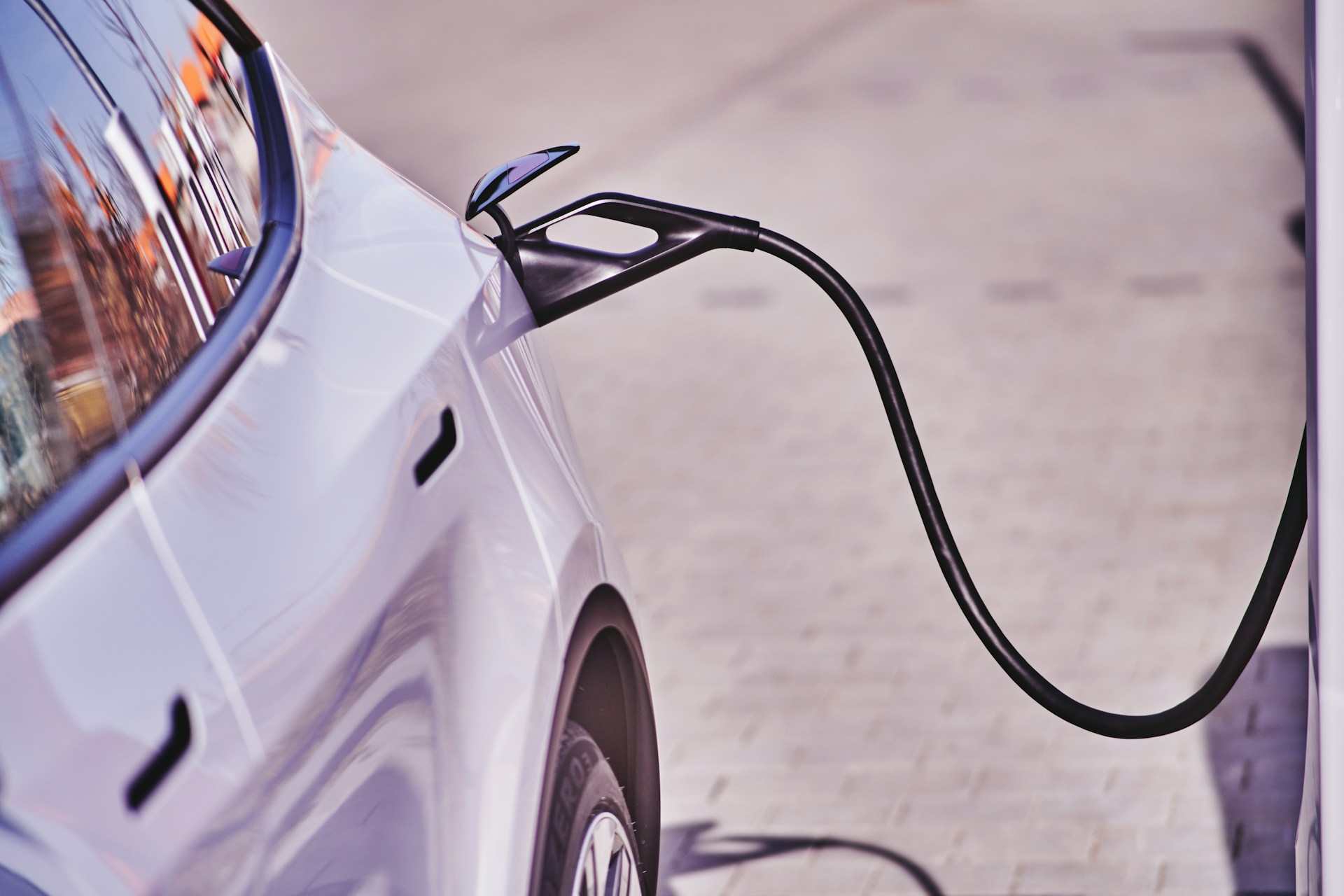
태국‘s “30@30” strategy targets 30% zero-emission vehicles by 2030 and 100% by 2035.⁵ Backed by its EV3.5 incentive scheme, the country now hosts over 3,700 public charging stations with 11,600 connectors, more than 6,000 of which are fast DC chargers.⁵
Vietnam 은 세금 인센티브, 등록비 감면, 대중교통 전기화 의무화 등을 결합하여 국내 생산업체와 인프라 개발업체 모두에게 유리한 환경을 조성했습니다.⁵ 빈패스트(VinFast)의 플래그십 모델인 VF 3는 2025년 베트남에서 가장 많이 팔린 자동차가 되었으며, 판매량의 75%가 소비자에게 직접 판매되어 이전의 법인 판매 우선 전략에서 크게 전환되었습니다.⁴
The policy environment across ASEAN is not uniform, but the direction is consistent: governments are using manufacturing localization requirements, fiscal incentives, and infrastructure spending to accelerate the Southeast Asia EV transition and attract foreign investment simultaneously.
Case study: VinFast in Indonesia — A regional blueprint
VinFast’s expansion in Indonesia represents an ambitious Southeast Asia EV market entry by any regional player to date, and a model that other investors are watching closely.
The company launched its Subang plant in West Java in December 2025, just 17 months after breaking ground, a facility representing an initial investment of USD 200 million with capacity for 50,000 vehicles per year, with expansion plans targeting 350,000 units annually.⁶ The plant produces right-hand drive versions of the VF3, VF5, VF6, and VF7 e-SUVs, and is positioned as VinFast’s right-hand-drive export hub for APAC markets including Thailand, Malaysia, and Australia.⁶
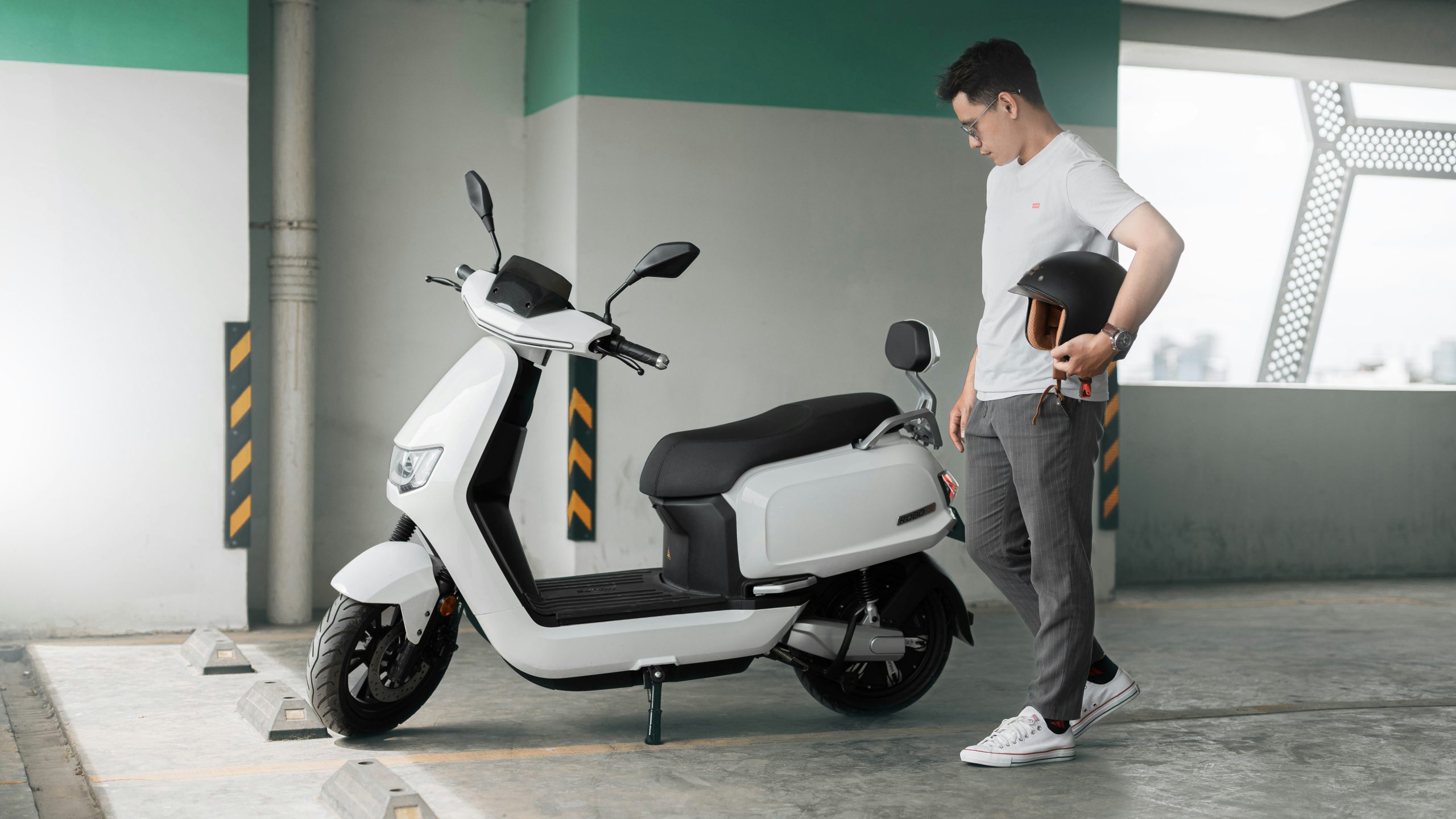
The Indonesia strategy is deliberately integrated: vehicle sales and dealer networks are paired with ride-hailing fleet operations (Xanh SM taxis, expanded through a partnership with Gojek’s Green SM feature), V-Green charging infrastructure, and financial institution partnerships.³ In February 2026, VinFast signed e-scooter MoUs with seven Indonesian dealer groups, signaling further expansion into the two-wheeler segment.⁷
What market research reveals: A discussion with Central Insight Indonesia
B&Company’s team recently held a discussion with 센트럴 인사이트 Indonesia, a Jakarta-based market research firm with direct visibility into Indonesian consumer behavior and the industry sectors, to understand how VinFast is being received in the market and what structural forces are shaping EV adoption more broadly. The following reflects insights shared during that conversation.
“We believe that VinFast still has a lot of room for growth in Indonesia, despite currently already meeting its sales target since expanding to this market.
This is a great timing for market expansion for EV makers, as there are several driving factors that can lead people to shift from ICE cars to EVs:
– EVs have been widely accepted, especially in big cities. Now, many people no longer see EVs as a second option to ICE cars but have been considering them as the first option as well. Public charging infrastructure, mainly in Java Island, is well developed, so the public’s worry about limited charging stations has been significantly decreasing compared to a few years ago. As of December 2025, Indonesia has 4,778 public charging stations and is targeting 192,253 units across 3,099 locations by 2034. The 2034 target is based on a projection of a 4W EV population of 2.8 million units that year. 9
– The rush hour traffic in Indonesia’s capital city, Jakarta, has been defined by the odd-even policy, where the last digit of the car’s license plate should match the date to determine if the car is allowed to enter Jakarta’s main roads during rush hour. However, this policy is not applicable to EVs, prompting many people who commute daily to Jakarta to own an EV due to its flexibility during rush hour.
– The retail fuel supply situation in Indonesia has been uncertain since last year, as the private fuel companies sometimes have supply shortages, while many people prefer private fuel retailers for their great services and high product quality. The non-subsidized fuel and diesel prices had also been skyrocketing due to the geopolitical conflict in the Middle East, further burdening people’s fuel expenses. Therefore, EVs have become a more reasonable option.
– Pricing-wise, VinFast is on the competitive side, offering great value for money. Compared to ICE cars in the low- to mid-pricing segment, EVs in a similar price range typically have better build quality and more features, which are also the main attractions for consumers beyond low operating and maintenance costs. The competitive pricing is also supported by the government’s incentives.”
— 센트럴 인사이트, an Indonesian market research firm, as discussed with B&Company.
This insight aligns with B&Company’s observation of EVs’ regional landscape: To many people in Southeast Asia’s major cities, EVs are now a first-choice purchase, not a backup. Fuel supply uncertainty is quietly driving this shift in ways that aggregated data doesn’t yet reveal. And in the mid-range segment, value for money is a far more important deciding factor than environmental friendliness—a difference that will directly shape how manufacturers position their products and structure financing packages.
Where the opportunities exist
The Southeast Asia EV transition is not a single opportunity; it is a cluster of interconnected market openings across the value chain. The table below maps the key opportunity areas by segment and leading markets:
Table 2: Southeast Asia EV opportunity map by segment (2025–2030)
| Opportunity segment | Key markets | Entry rationale |
| Vehicle manufacturing & assembly | Indonesia, Thailand, Vietnam | Local requirements facilitate domestic production |
| EV charging infrastructure | All ASEAN-6: Indonesia, Malaysia, Philippines, Singapore, Thailand, and Vietnam | Chronic undersupply compared to the growing EV fleet, while Direct Current (DC) fast chargers are fast becoming the standard consumers expect |
| Battery supply chain & materials | Indonesia (nickel-rich) | 인도네시아는 전 세계 니켈 매장량의 약 40%를 보유하고 있습니다. |
| Fleet electrification & ride-hailing | Vietnam, Indonesia, Thailand | Rapid urbanization; government green fleet mandates |
| Electric two-wheelers (e-scooters) | Indonesia, Vietnam, Philippines | Dominant transport mode across SEA; lower price point |
| Financing & insurance for EVs | Indonesia, Thailand | EV loans and battery insurance are emerging segments |
B&Company의 합성
결론
Southeast Asia’s EV transition is no longer a forecast; it is happening now, at a pace that is outrunning most market projections. Governments are committed, consumer attitudes are shifting, and regional players with the right combination of price, ecosystem, and local presence are already capturing share.
For investors and market entrants, the window is open but not indefinite. The markets that reward early movers, Indonesia, Vietnam, and Thailand, are also attracting the most competition. Getting in requires more than capital; it requires ground-level understanding of what consumers actually want, how policies are being implemented, and where the infrastructure gaps are widest.
더 보기
* 이 기사에서 정보를 인용하고자 하신다면 출처를 원문 기사 링크와 함께 인용하여 저작권을 존중해 주시기 바랍니다.
| B&Company
2008년부터 베트남에서 시장 조사 전문으로 활동하는 최초의 일본 기업입니다. 산업 보고서, 산업 인터뷰, 소비자 조사, 비즈니스 매칭 등 다양한 서비스를 제공합니다. 또한, 최근에는 파트너 검색 및 시장 분석에 사용할 수 있는 1,000,000개 이상의 베트남 기업 데이터베이스를 개발했습니다. 문의 사항이 있으시면 언제든지 저희에게 문의해 주세요. info@b-company.jp + (84) 28 3910 3913 |
Sources & References
1. Ember Energy. ASEAN Emerges as a New Leader in Global EV Adoption. December 16, 2025. https://ember-energy.org/latest-updates/asean-emerges-as-a-new-leader-in-global-ev-adoption/
2. Mordor Intelligence. ASEAN Electric Vehicle Market — Growth, Share, Size & Industry Outlook. January 2026. https://www.mordorintelligence.com/industry-reports/asean-electric-vehicle-market
3. EY-Parthenon. How to Seize Opportunities Across Southeast Asia’s EV Value Chain. https://www.ey.com/en_my/insights/strategy/how-to-seize-opportunities-across-southeast-asias-ev-value-chain
4. SEADS / Asian Development Bank. Southeast Asia Leads Global Boom in Electric Vehicle Sales. March 2026. https://seads.adb.org/news/southeast-asia-leads-global-boom-electric-vehicle-sales
5. GM Insights. ASEAN Electric Vehicle Market Size, Growth Report 2025–2034. https://www.gminsights.com/industry-analysis/asean-electric-vehicle-market
6. Mission Media Asia. Why VinFast’s Indonesia Plant Matters for Its Regional Brand Positioning. December 17, 2025. https://missionmedia.asia/why-vinfasts-indonesia-plant-matters-for-its-regional-brand-positioning/
7. VinFast. VinFast Officially Enters Indonesia’s E-Scooter Market, Partners with Strategic Dealers. February 9, 2026. https://vinfastauto.us/investor-relations/news/vinfast-officially-enters-indonesias-e-scooter-market-partners-with
8. IEA. Global EV Outlook 2025 — Executive Summary. https://www.iea.org/reports/global-ev-outlook-2025/executive-summary
9. CNN Indonesia. Indonesia Currently Has 4,778 SPKLUs, Targeted at 192 Thousand in 2034. https://www.cnnindonesia.com/otomotif/20260203162604-603-1324154/indonesia-punya-4778-spklu-saat-ini-ditargetkan-192-ribu-pada-2034
관련기사


















로그인 / 회원가입
뉴스레터 구독