

 한국어
한국어  English
  日本語
日本語  Tiếng Việt
  简体中文
简体中文 2023~2025년은 동남아시아 관광에 있어 중요한 시기로, 태국과 베트남이 팬데믹 이후 회복세를 보이고 있습니다.

228월2025
최신 뉴스 및 보고서 / 베트남 브리핑
댓글: 댓글 없음.
경영진 요약
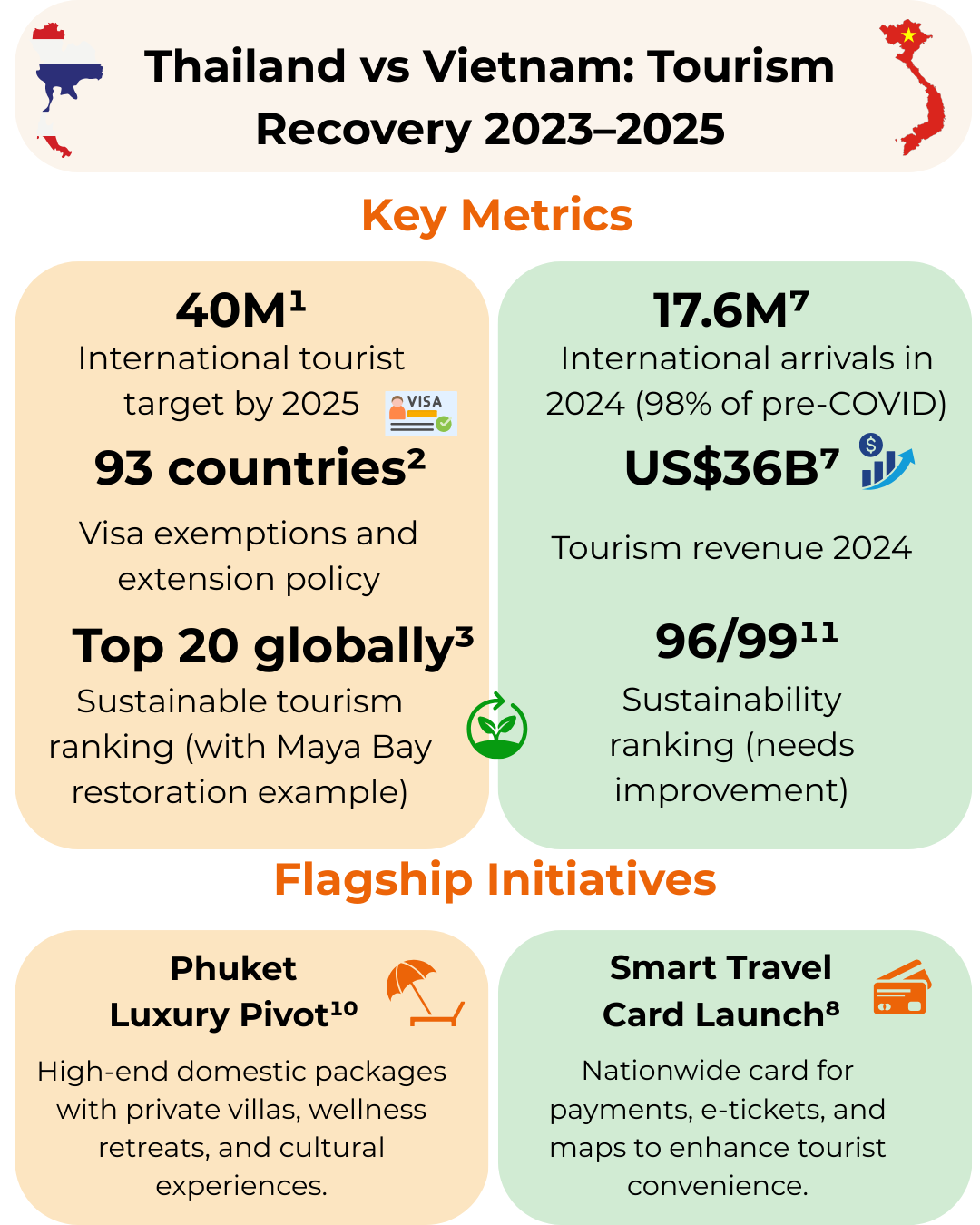
태국과 베트남은 2023년부터 2025년까지 관광 산업 재건을 위한 각기 다른 전략을 수립하여, 각기 다른 강점을 활용하면서 동시에 공통된 과제를 해결해 왔습니다. 태국은 푸켓, 치앙마이, 후아힌, 카오야이와 같은 관광지에서 고급 체험을 통해 고부가가치 국내 관광객 유치에 집중했으며, 이는 상당한 정부 투자와 진보적인 비자 정책의 뒷받침을 받았습니다. 지속가능성에 대한 태국의 헌신은 마야 베이의 세심한 복원 사업과 농촌 지역 사회와 친환경 여행객을 연결하는 지속가능한 관광 사업과 같은 프로젝트에서 빛을 발합니다.
베트남의 회복세는 놀라운 규모와 속도로 다른 양상을 보여줍니다. 2024년 국내 방문객 1억 1천만 명, 해외 방문객 1억 1천만 명을 기록하며 베트남은 아세안에서 가장 빠르게 회복하는 관광 시장으로 자리매김했습니다. 스마트 여행 카드와 같은 디지털 혁신은 방문객 경험을 간소화했지만, 베트남의 급속한 성장에는 지속가능성 문제가 여전히 시급한 과제로 남아 있습니다.
소개
2023년부터 2025년까지는 동남아시아 관광산업에 중요한 전환기로 기록되었으며, 태국과 베트남은 팬데믹 이후 회복을 주도하는 지역 선도국으로 부상했습니다. 양국은 단순히 국경을 재개방하는 데 그치지 않고, 변화하는 여행객의 기대, 기술 발전, 지속가능한 관광 관행의 중요성 증대에 대응하는 종합 전략을 시행해 왔습니다. 본 분석은 태국의 관광 및 호스피탈리티 시장조사 서비스를 제공하는 Iconic Research, 의 인사이트를 바탕으로 하며, 기업과 정책입안자가 데이터 기반 전략을 통해 변화하는 여행 트렌드에 대응할 수 있도록 지원합니다. 이들의 접근 방식은 관광지가 단기적인 회복 요구와 장기적인 경쟁력을 어떻게 균형 있게 조율할 수 있는지에 대한 유용한 시사점을 제공합니다.
태국의 전략적 접근 방식
럭셔리 중심의 국내 관광
태국이 프리미엄 국내 관광으로의 전환을 추진하는 것은 변화하는 시장 상황에 대한 치밀한 대응입니다. 단순히 수량 경쟁에 치우치지 않고, 태국 정부는 고품격 경험을 원하는 부유한 태국인들에게 어필하는 세련된 럭셔리 패키지를 개발했습니다. 이러한 패키지는 현지 장인 및 지속 가능한 공급업체와의 파트너십을 통해 웰빙, 프라이버시, 그리고 문화적 진정성을 강조합니다. 정부 지원에는 프리미엄 여행 경험 향상을 위한 맞춤형 세제 혜택과 인프라 개선이 포함됩니다[1].
이 전략은 실질적인 성과를 거두었습니다. 고급 리조트들은 이제 개인 맞춤형 웰니스 컨설팅, 전담 운전기사 서비스, 그리고 태국의 풍부한 문화 유산을 경험할 수 있는 몰입형 문화 워크숍을 제공합니다. 주목할 만한 사례로 푸켓을 들 수 있습니다. 푸켓의 고급 리조트들은 현지 예술가들과 협력하여 특별한 도자기 및 직조 수업을 제공함으로써 해외 여행이 제한되었던 시기에 고액 자산가 국내 투숙객들에게 잊지 못할 경험을 선사했습니다. [1]
정부 투자 및 비자 혁신
태국의 관광 산업 회복 의지는 포괄적인 전략적 비전에서 분명히 드러납니다. 태국은 홍보 캠페인에 상당한 투자를 하고, 진보적인 비자 정책을 시행하고 있습니다. 2025년 태국의 전략적 관광 비전은 다양한 비자 프로그램과 면제 제도를 통해 해외 방문객에게 양질의 경험을 제공하고 접근성을 높이는 데 중점을 두고 있습니다. [2]
이러한 정책 변화는 측정 가능한 영향을 미쳤습니다. 관광 산업 전망은 팬데믹 기간의 저점에서 해외 관광객이 꾸준히 증가하면서 강력한 회복세를 보이고 있습니다[9]. 태국은 디지털 유목민과 장기 방문객에 중점을 두어, 전통적인 관광과 더 넓은 디지털 경제 모두에 긍정적인 소비 패턴을 보이는 원격 근무 인력을 유치하는 데 성공했습니다.
환경 분야의 리더십
지속가능성 이니셔티브는 태국 관광 전략의 초석을 이루며, 마야 베이는 대표적인 사례입니다. 세심한 생태 복원을 거쳐 이 상징적인 장소는 2023년 10월, 취약한 산호초 생태계를 보호하기 위한 엄격한 환경 관리 조치를 시행하며 재개장했습니다. [3] 이러한 접근 방식은 태국이 단기적인 수익 극대화보다 장기적인 환경 건강을 우선시하려는 의지를 보여줍니다.
지속가능한 관광 프로젝트는 개별 관광지를 넘어 종합적인 목적지 관리로 확장됩니다. 푸켓에서 추진된 UNDP의 지속가능한 관광 사업은 환경 보호가 관광 개발과 어떻게 통합될 수 있는지를 보여주는 좋은 사례이며, 다른 관광지들이 따라야 할 모델을 제시합니다[4].
디지털 혁신 및 원격근무자 유치
태국의 디지털 혁신 수용은 마케팅을 넘어 근본적인 인프라 및 정책 변화로 확장되고 있습니다. 태국의 디지털 미래 계획에는 태국을 위치 기반 전문가와 기술에 정통한 여행객에게 선호되는 목적지로 자리매김하기 위해 설계된 포괄적인 기술 통합이 포함됩니다[5].
주요 시장에서 이미 그 영향이 나타나고 있습니다. 태국의 디지털 혁신 노력은 기존 관광 산업과 증가하는 원격 근무 트렌드를 모두 지원하는 생태계를 구축하여, 안정적인 기술 인프라를 찾는 디지털 노마드와 장기 방문객에게 태국을 더욱 매력적인 국가로 만들었습니다.
인력 관련 과제
이러한 성과에도 불구하고 태국은 관광 부문에서 상당한 인력 관련 과제에 직면해 있습니다. 산업 전망에 따르면, 변화하는 여행객의 기대에 부응하며 부문이 확대·진화함에 따라 인력 개발 수요가 지속될 것으로 보입니다 [9]. 특히 고객의 기대 수준이 계속 높아지고 있는 고급 호스피탈리티 분야에서는 서비스 품질 개선이 여전히 우선 과제입니다.
베트남의 회복 전략
국내 관광 모멘텀
베트남 국내 관광 산업은 기록적인 방문객 수와 높은 매출 성장을 기록하며 놀라운 회복력을 보여주었습니다. 이러한 성공은 지역 관광지의 접근성을 높여주는 개선된 교통 인프라를 바탕으로 한 전략적 문화 관광 캠페인에 기인합니다[6].
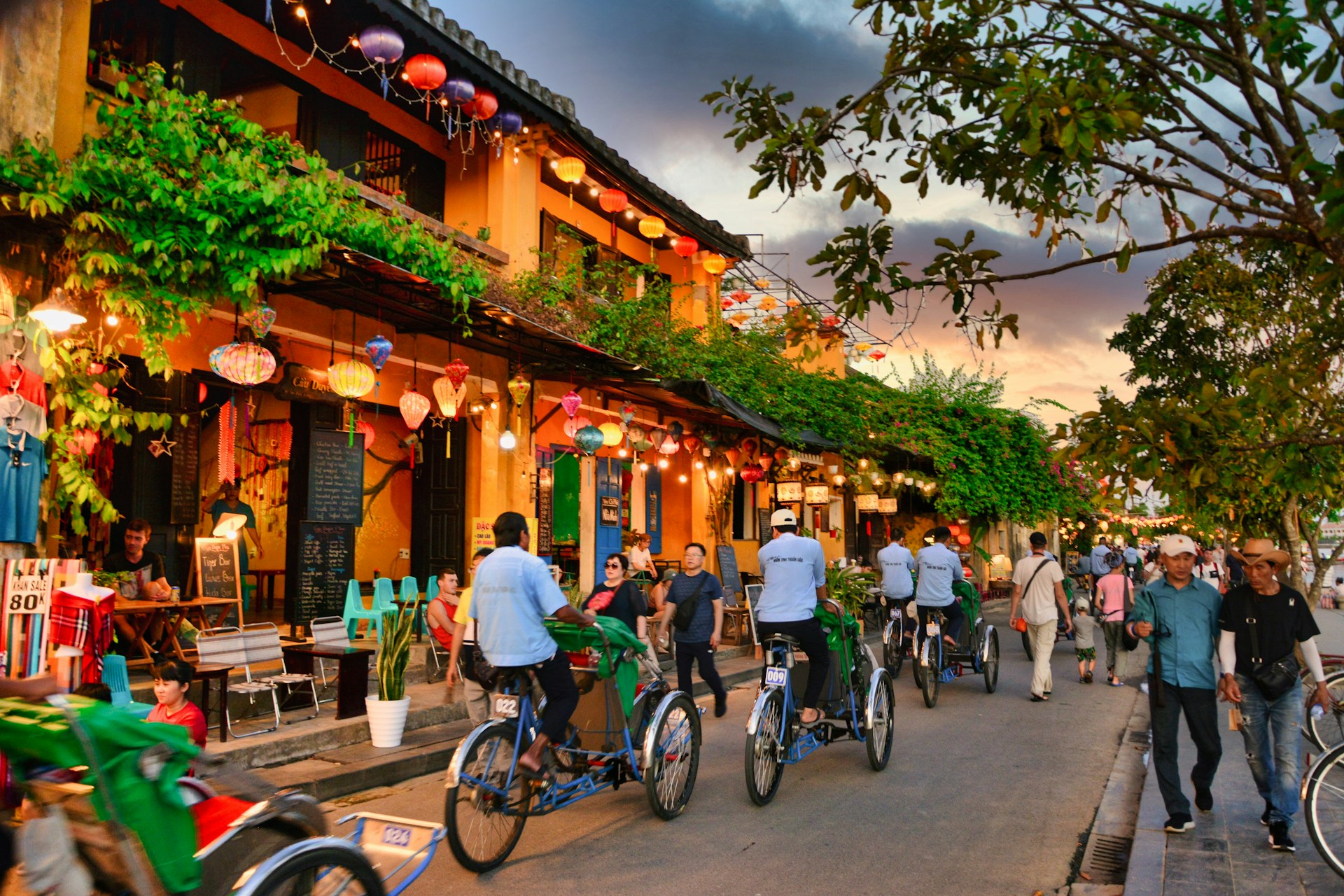
후에, 호이안과 같은 역사적인 도시에서 열리는 지역 문화 축제는 기록적인 인파를 끌어모았고, 베트남의 다양한 문화 유산을 선보이는 동시에 지역 중소기업에 상당한 경제적 이익을 창출했습니다.
국제시장 회복
베트남의 국제 관광 회복세는 지역 경쟁국들을 앞지르고 있으며, 방문객 수는 팬데믹 이전 수준에 근접하고 있습니다. 베트남은 아세안에서 가장 빠르게 회복하는 관광 시장 중 하나로 자리매김했습니다. [7] 전자 비자 시행 및 선별적 면제를 포함한 전략적 비자 개혁은 주요 수출 시장의 장벽을 제거했습니다.
주요 도시의 목적지 관리 프로그램은 외국인 방문객에게 베트남의 매력을 높이는 동시에 호텔업계 전반에 걸쳐 서비스 품질을 개선했습니다.
기술 통합
디지털 혁신은 베트남의 전략에서 핵심적인 역할을 합니다. 2023년 5월 출시된 스마트 여행 카드(Smart Travel Card)는 결제, 전자 항공권, 지도, 의료 서비스를 통합하는 종합 플랫폼 역할을 합니다[8]. 이 단일 솔루션은 다양한 여행자의 요구를 충족하는 동시에 서비스 개선을 위한 귀중한 데이터를 수집합니다.
이 카드의 시행은 관광객 만족도에 측정 가능한 긍정적 영향을 미쳤으며, 기술이 어떻게 방문객 경험을 직접적으로 개선하고 여행 과정을 간소화할 수 있는지를 보여줍니다.
지속가능성 관련 우려
베트남의 급속한 경제 회복은 세심한 관리가 필요한 환경 문제를 야기하고 있습니다. 관광객 수는 계속 증가하는 가운데, 경제적 이익과 환경 보호의 균형을 맞추기 위한 지속가능성 관련 사업들이 부상하고 있습니다.
초기 지속가능성 프로젝트는 환경적 고려사항을 관광 개발에 통합하려는 시도를 보여주지만, 이러한 이니셔티브는 관광산업 확장 속도에 맞추기 위해 규모를 확대할 필요가 있습니다.
표 - 전략적 비교
| 전략 영역 | 태국의 접근 방식 | 베트남의 접근 방식 |
| 국내 관광 | 탁월한 서비스에 중점을 둔 럭셔리 웰니스 패키지 | 문화 관광 캠페인을 통한 관광객 규모 회복 |
| 정부 정책 | 2025 전략 비전; 종합 비자 프로그램 | 전자비자 시스템 및 대상별 비자 면제 |
| 지속가능성 | 마야 베이 복원; UNDP 플래그십 프로젝트 | 신흥 친환경 관광 정책 |
| 디지털 혁신 | 디지털 전환 이니셔티브; 기술 인프라 | 스마트 트래블 카드; 통합 전자 서비스 |
| 인력 | 산업 개발에 중점; 서비스 품질 | 급속한 성장 관리를 위한 교육 프로그램 |
미래 전망
태국의 전략은 양보다 질을 중시하며, 고액 지출 관광객을 타겟팅하는 동시에 관광 모델 전반에 지속가능성을 접목하는 것입니다. 이러한 접근 방식은 장기적인 목적지 경쟁력을 강화하지만, 단기적인 성장 잠재력을 제한할 수 있습니다.
베트남은 경제 효과를 극대화하기 위해 양적 성장과 디지털 혁신을 활용하고 있지만, 지속가능한 발전을 위해서는 환경 문제 해결에도 힘써야 합니다. 베트남의 빠른 회복세는 지속가능성 문제에 대한 적절한 관심이 확보된다면 지속적인 성장을 위한 좋은 토대를 마련해 줄 것입니다.
양국은 관광 회복을 광범위한 경제 디지털화 목표와 성공적으로 연계하며, 2025년과 그 이후에도 ASEAN을 대표하는 관광지로 자리매김하고 있습니다. 서로 다른 접근 방식은 단기적인 회복 요구와 장기적인 지속가능성 및 경쟁력의 균형을 추구하는 다른 관광지에 귀중한 교훈을 제공합니다.
자주 묻는 질문
태국의 럭셔리 관광이 주목받는 이유는 무엇일까?
태국은 진정성과 프리미엄 서비스를 강조하는 맞춤형 웰니스 및 문화 패키지와 종합적인 마케팅 전략을 통해 구매력 높은 국내외 방문객을 유치하고 있습니다 [1][10].
비자 정책은 회복을 어떻게 지원하나요?
태국은 다양한 방문객 세그먼트를 유치하기 위해 종합적인 비자 프로그램과 전략적 정책을 시행하는 반면, 베트남은 전자비자와 비자 면제를 활용해 입국 장벽을 낮추고 있습니다 [2][7].
어떤 디지털 도구가 가장 효과적인가요?
태국의 디지털 전환 이니셔티브는 포괄적인 기술 인프라를 구축하는 반면, 베트남의 스마트 여행 카드는 방문객 경험을 개선하기 위해 여러 서비스를 통합합니다[5][8].
어떤 지속가능성 과제가 존재하나요?
양국은 빠른 관광산업 성장과 환경 보호 사이의 균형을 추구하고 있습니다. 태국은 마야 베이와 같은 복원 프로젝트를 추진하고 있으며, 베트남은 새롭게 부상하는 친환경 관광 정책을 개발하고 있습니다 [3][6].
[1] 태국 관광청(TAT) - '놀라운 태국 그랜드 관광의 해'를 알리는 2025년 TAT 마케팅 계획
https://www.tatnews.org/2024/07/tats-marketing-plan-2025-to-ignite-amazing-thailand-grand-tourism-year/
[2] Thailand Elite Visas – 태국 관광: 2025년을 위한 전략적 비전
https://www.thailandelitevisas.com/news-events-post/tourism-in-thailand-strategic-vision-for-2025/
[3] 태국 홍보부(PRD) – 마야 베이 재개방 및 지속가능한 관광
https://thailand.prd.go.th/en/news/detail/TCATG231001101436062
[4] 유엔개발계획(UNDP) – 푸껫 지속가능한 관광 플래그십 프로젝트
https://www.undp.org/content/undp/en/home/ourwork/environmentandenergy/projects/phuket-sustainable-tourism.html
[5] Nation Thailand – 태국의 디지털 미래 개방 및 디지털 노마드 비자 이니셔티브
https://www.nationthailand.com/tech/40002564
[6] Nhan Dan Online – 베트남, 역내 관광 회복 선도
https://en.nhandan.vn/vietnam-tops-regional-tourism-recovery-post145247.html
[7] 세계여행관광협의회(WTTC) – 베트남 여행 및 관광, 2024년 사상 최고 기록 전망
https://wttc.org/News-Article/vietnam-travel-tourism-set-for-record-2024
[8] VietnamPlus – 디지털 전환 촉진을 위한 스마트 여행 카드 출시
https://en.vietnamplus.vn/smart-travel-card-launched-to-promote-digital-transformation/260796.vnp
[9] Bank of Ayudhya (Krungsri) – 태국 산업 전망 2025~2027
https://www.krungsri.com/en/research/industry/summary-outlook/Thailand-industry-outlook-summary-2025-2027
[10] 태국 2025: 웰니스 관광의 우수성과 혁신 (TrustedDMC)
https://www.trusteddmc.com/news/1519-thailand-2025-excellence-and-innovation-in-wellness-tourism.aspx
[11] Vietnam News – 글로벌 지속가능 관광 순위에서 베트남 96위
https://vietnamnews.vn/life-style/912374/viet-nam-ranks-96th-on-global-sustainable-tourism-list.html
* 이 기사에서 어떤 정보를 인용하고자 하시면, 저작권을 존중하기 위해 원본 기사의 링크와 함께 출처를 꼭 기재해 주시기 바랍니다.
| B&Company
2008년부터 베트남에서 시장 조사에 전문화된 최초의 일본 회사입니다. 우리는 산업 보고서, 산업 인터뷰, 소비자 조사, 비즈니스 매칭 등 다양한 서비스를 제공합니다. 또한 최근에는 베트남에 있는 90만 개 이상의 회사가 포함된 데이터베이스를 개발하여 파트너를 검색하고 시장을 분석하는 데 사용할 수 있습니다. 문의 사항이 있으시면 언제든지 저희에게 연락해 주십시오. info@b-company.jp + (84) 28 3910 3913 |
관련기사









로그인 / 회원가입
뉴스레터 구독