

 English
  日本語
日本語  Tiếng Việt
  简体中文
简体中文  한국어
한국어 The period 2023-2025 has marked a critical phase for Southeast Asian tourism, with Thailand and Vietnam emerging in post-pandemic recovery.

22Aug2025
Latest News & Report / Vietnam Briefing
Comments: No Comments.
Executive Summary
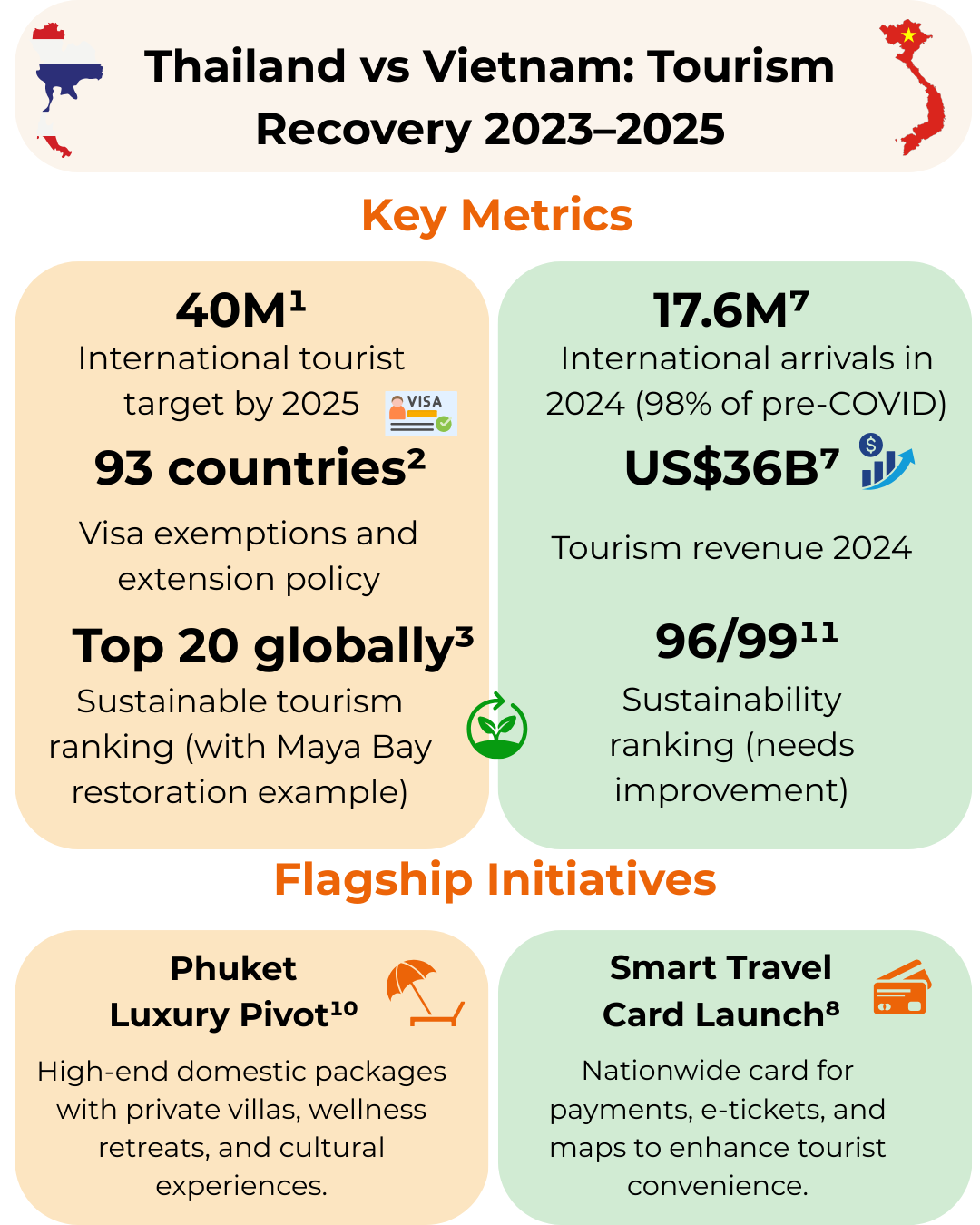
Thailand and Vietnam have charted different paths to rebuild their tourism industries between 2023 and 2025, each leveraging distinct strengths while addressing shared challenges. Thailand has concentrated on attracting high-value domestic tourists through luxury experiences in destinations like Phuket, Chiang Mai, Hua Hin, and Khao Yai, backed by substantial government investment and progressive visa policies. The kingdom’s commitment to sustainability shines through projects like Maya Bay’s careful restoration and sustainable tourism initiatives that connect rural communities with eco-conscious travelers.
Vietnam’s recovery tells a different story—one of remarkable volume and speed. With 110 million domestic visitors in 2024 and international arrivals nearly matching pre-pandemic levels, Vietnam has become ASEAN’s fastest-recovering tourism market. Digital innovations like the Smart Travel Card have streamlined the visitor experience, though sustainability challenges remain a pressing concern for the country’s rapid growth trajectory.
Introduction
The period from 2023 to 2025 has marked a critical phase for Southeast Asian tourism, with Thailand and Vietnam emerging as regional leaders in post-pandemic recovery. Both nations have moved beyond simply reopening borders to implementing comprehensive strategies that address changing traveler expectations, technological advancement, and the growing importance of sustainable tourism practices. This analysis draws on insights from Iconic Research, a provider of tourism and hospitality market research services in Thailand, helping businesses and policymakers navigate evolving travel trends with data-driven strategies. Their approaches offer valuable insights into how destinations can balance immediate recovery needs with long-term competitiveness.
Thailand’s Strategic Approach
Luxury-Focused Domestic Tourism
Thailand’s pivot toward premium domestic tourism represents a calculated response to shifting market conditions. Rather than competing solely on volume, the kingdom has developed sophisticated luxury packages that appeal to affluent Thai residents seeking high-quality experiences closer to home. These offerings emphasize wellness, privacy, and cultural authenticity through partnerships with local artisans and sustainable suppliers. Government support includes targeted tax incentives and infrastructure improvements designed to enhance the premium travel experience [1].
The strategy has produced tangible results. Upscale resorts now provide personalized wellness consultations, private chauffeur services, and immersive cultural workshops that connect guests with Thailand’s rich heritage. A notable example comes from Phuket, where luxury resorts partnered with local artists to offer exclusive pottery and weaving classes, creating memorable experiences for high-net-worth domestic guests during periods when international travel remained limited [1].
Government Investment and Visa Innovation
Thailand’s commitment to tourism recovery is evident in its comprehensive strategic vision, with substantial investment in promotion campaigns combined with progressive visa policies. Thailand’s strategic tourism vision for 2025 emphasizes quality experiences and streamlined access for international visitors through various visa programs and exemptions [2].
These policy changes have delivered a measurable impact. The tourism industry outlook shows strong recovery momentum with international arrivals steadily increasing from pandemic lows [9]. Thailand’s focus on digital nomads and long-term visitors has successfully attracted remote professionals whose spending patterns benefit both traditional tourism and the broader digital economy.
Environmental Leadership
Sustainability initiatives form a cornerstone of Thailand’s tourism strategy, with Maya Bay serving as a flagship example. After careful ecological restoration, the iconic location reopened in October 2023 with strict environmental management measures to protect fragile coral reef ecosystems [3]. This approach demonstrates Thailand’s willingness to prioritize long-term environmental health over short-term revenue maximization.
Sustainable tourism projects extend beyond individual sites to comprehensive destination management. UNDP’s sustainable tourism initiatives in Phuket exemplify how environmental protection can be integrated with tourism development, creating models for other destinations to follow [4].
Digital Innovation and Remote Worker Appeal
Thailand’s embrace of digital transformation extends beyond marketing to fundamental infrastructure and policy changes. The nation’s digital future initiatives include comprehensive technology integration designed to position Thailand as a preferred destination for location-independent professionals and tech-savvy travelers [5].
The impact is already visible in key markets. Thailand’s digital transformation efforts have created an ecosystem that supports both traditional tourism and the growing remote work trend, making the country increasingly attractive to digital nomads and long-term visitors seeking reliable technology infrastructure.
Workforce Challenges
Despite these successes, Thailand faces significant labor challenges in its tourism sector. The industry outlook indicates ongoing workforce development needs as the sector expands and evolves to meet changing traveler expectations [9]. Service quality improvements remain a priority, particularly in high-end hospitality, where guest expectations continue to rise.
Vietnam’s Recovery Strategy
Domestic Tourism Momentum
Vietnam’s domestic tourism sector has shown remarkable resilience, with record-breaking visitor numbers and strong revenue growth. This success stems from strategic cultural tourism campaigns supported by improved transport infrastructure that makes regional destinations more accessible [6].
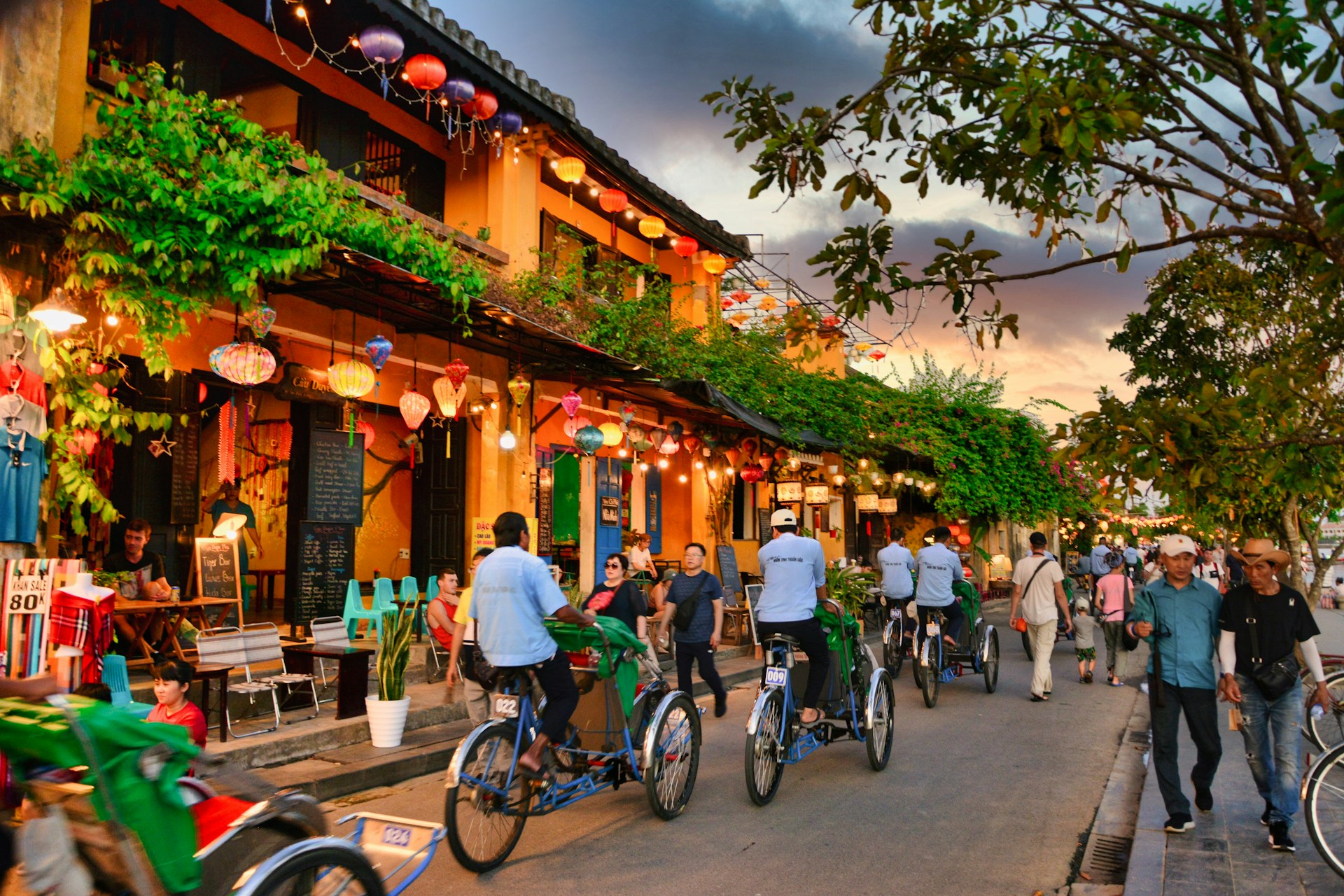
Regional cultural festivals in historic cities like Hue and Hoi An have drawn record crowds, creating substantial economic benefits for local small and medium enterprises while showcasing Vietnam’s diverse cultural heritage.
International Market Recovery
Vietnam’s international tourism recovery has outpaced regional competitors, with arrivals approaching pre-pandemic levels and positioning Vietnam as one of ASEAN’s fastest-recovering tourism markets [7]. Strategic visa reforms, including e-visa implementation and targeted exemptions, have removed barriers for key source markets.
Destination management programs in major cities have enhanced Vietnam’s appeal to foreign visitors while improving service quality across the hospitality sector.
Technology Integration
Digital innovation plays a central role in Vietnam’s strategy, with the Smart Travel Card launched in May 2023 serving as a comprehensive platform integrating payments, e-ticketing, mapping, and health services [8]. This single solution addresses multiple traveler needs while collecting valuable data for further service improvements.
The card’s implementation has shown a measurable positive impact on tourist satisfaction, demonstrating how technology can directly improve visitor experiences and streamline travel processes.
Sustainability Concerns
Vietnam’s rapid recovery has come with environmental challenges that require careful management. While tourism volumes continue growing, sustainability initiatives are emerging to balance economic benefits with environmental protection.
Early sustainability projects represent attempts to integrate environmental considerations into tourism development, though these initiatives require scaling to match the pace of tourism expansion.
Table – Strategic Comparison
| Strategy Area | Thailand Approach | Vietnam Approach |
| Domestic Tourism | Luxury wellness packages with an excellence focus | Volume recovery with cultural tourism campaigns |
| Government Policy | Strategic vision 2025; comprehensive visa programs | E-visa systems and targeted exemptions |
| Sustainability | Maya Bay restoration; UNDP flagship projects | Emerging green tourism policies |
| Digital Innovation | Digital transformation initiatives; tech infrastructure | Smart Travel Card; integrated e-services |
| Workforce | Industry development focus; service quality | Training programs for rapid growth management |
Future Outlook
Thailand’s strategy emphasizes quality over quantity, targeting high-spending tourists while embedding sustainability throughout its tourism model. This approach supports long-term destination competitiveness but may limit short-term growth potential.
Vietnam leverages volume growth and digital innovation to maximize economic impact but must address environmental challenges to ensure sustainable development. The country’s rapid recovery positions it well for continued growth, provided sustainability concerns receive adequate attention.
Both nations are successfully aligning tourism recovery with broader economic digitalization goals, establishing themselves as leading ASEAN destinations through 2025 and beyond. Their contrasting approaches offer valuable lessons for other destinations seeking to balance immediate recovery needs with long-term sustainability and competitiveness.
Frequently Asked Questions
What drives Thailand’s luxury tourism focus?
Thailand targets affluent domestic and international visitors through tailored wellness and cultural packages that emphasize authenticity and premium service, supported by comprehensive marketing strategies [1][10].
How do visa policies support recovery?
Thailand implements comprehensive visa programs and strategic policies to attract diverse visitor segments, while Vietnam uses e-visas and exemptions to reduce entry barriers [2][7].
What digital tools are most effective?
Thailand’s digital transformation initiatives create a comprehensive tech infrastructure, while Vietnam’s Smart Travel Card integrates multiple services for improved visitor experience [5][8].
What sustainability challenges exist?
Both countries balance rapid tourism growth with environmental protection—Thailand through restoration projects like Maya Bay, while Vietnam develops emerging green tourism policies [3][6].
[1] Tourism Authority of Thailand (TAT) – TAT’s Marketing Plan 2025 to Ignite ‘Amazing Thailand Grand Tourism Year’
https://www.tatnews.org/2024/07/tats-marketing-plan-2025-to-ignite-amazing-thailand-grand-tourism-year/
[2] Thailand Elite Visas – Tourism in Thailand: Strategic Vision for 2025
https://www.thailandelitevisas.com/news-events-post/tourism-in-thailand-strategic-vision-for-2025/
[3] Thailand Public Relations Department (PRD) – Maya Bay Reopening and Sustainable Tourism
https://thailand.prd.go.th/en/news/detail/TCATG231001101436062
[4] United Nations Development Programme (UNDP) – Phuket Sustainable Tourism Flagship Projects
https://www.undp.org/content/undp/en/home/ourwork/environmentandenergy/projects/phuket-sustainable-tourism.html
[5] Nation Thailand – Thailand Unlocks Digital Future and Digital Nomad Visa Initiatives
https://www.nationthailand.com/tech/40002564
[6] Nhan Dan Online – Vietnam Tops Regional Tourism Recovery
https://en.nhandan.vn/vietnam-tops-regional-tourism-recovery-post145247.html
[7] World Travel & Tourism Council (WTTC) – Vietnam Travel & Tourism Set for Record 2024
https://wttc.org/News-Article/vietnam-travel-tourism-set-for-record-2024
[8] VietnamPlus – Smart Travel Card Launched to Promote Digital Transformation
https://en.vietnamplus.vn/smart-travel-card-launched-to-promote-digital-transformation/260796.vnp
[9] Bank of Ayudhya (Krungsri) – Thailand Industry Outlook 2025-2027
https://www.krungsri.com/en/research/industry/summary-outlook/Thailand-industry-outlook-summary-2025-2027
[10] Thailand 2025: Excellence and Innovation in Wellness Tourism (TrustedDMC)
https://www.trusteddmc.com/news/1519-thailand-2025-excellence-and-innovation-in-wellness-tourism.aspx
[11] Vietnam News – Vietnam Ranks 96th on Global Sustainable Tourism List
https://vietnamnews.vn/life-style/912374/viet-nam-ranks-96th-on-global-sustainable-tourism-list.html
* If you wish to quote any information from this article, please kindly cite the source along with the link to the original article to respect copyright.
| B&Company
The first Japanese company specializing in market research in Vietnam since 2008. We provide a wide range of services including industry reports, industry interviews, consumer surveys, business matching. Additionally, we have recently developed a database of over 900,000 companies in Vietnam, which can be used to search for partners and analyze the market. Please do not hesitate to contact us if you have any queries. info@b-company.jp + (84) 28 3910 3913 |
Related article











Log in / Register
SUBSCRIBE NEWSLETTER