

 English
  日本語
日本語  Tiếng Việt
  简体中文
简体中文  한국어
한국어 Vietnam's tourism industry is at a turning point, but is is also facing challenges such as a lack of unique experiences and talent supply.
15Oct2025
Highlight content / Industry Reviews / Latest News & Report
Comments: No Comments.
Vietnam’s tourism industry is at a turning point. While it is a driving force behind economic growth, earning foreign currency and creating jobs, it is also facing challenges such as a lack of unique experiences and a limited talent supply. However, these gaps also present new business opportunities for foreign investors.
Trang An Landscape Complex, Ninh Binh Province (UNESCO World Heritage Site)

Source: Vntrip
The magnitude of potential
Vietnam boasts over 3,000 km of coastline and diverse topography, making it ideal for a variety of tourism styles, including beach resorts, ecotourism, and mountain climbing. According to Expat Insider 2024, Vietnam ranks first in the world for the lowest cost of living for expats[1]. Tourists can also enjoy affordable food and transportation.
Number of international and domestic tourists in Vietnam (millions)
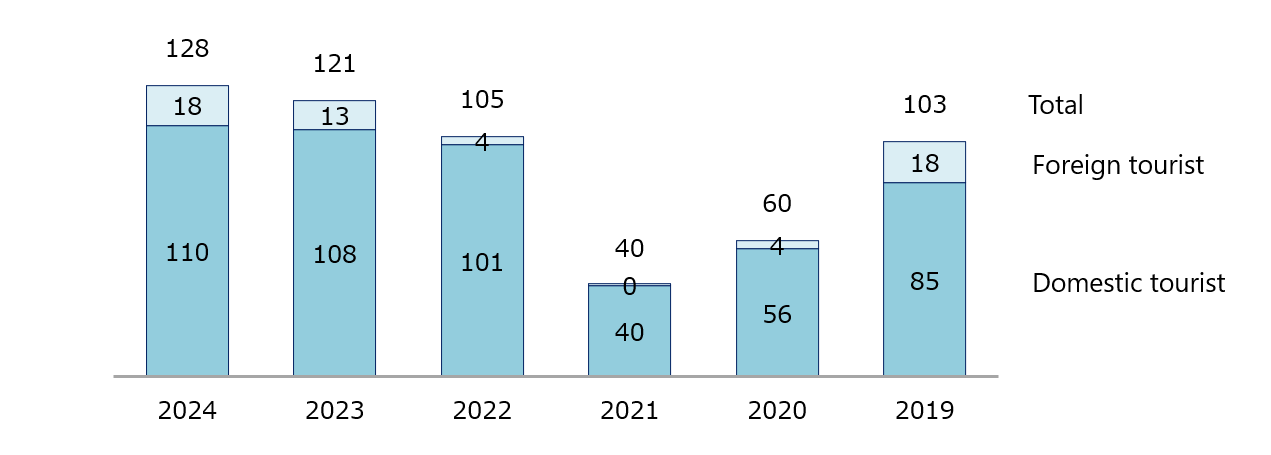
Infrastructure development is also progressing. Line 1 of the Ho Chi Minh City subway opened at the end of 2024[2]. Major airports continue to expand and plans for the North-South Expressway are also progressing. The number of international tourists is expected to reach 22 to 23 million by 2025.
Constraints create opportunities
However, there are still many persistent challenges. First, many tourism products are heavily focused on traditional resorts and do not adequately address new demands such as wellness, music, and volunteer tourism. The case of Thai international brand Chiva-Som, which is supporting the operation of a wellness center in Da Lat, is a typical example of investment that has taken advantage of this gap. Tours that combine music concerts and community activities also show potential demand.
Second, there is a serious labor shortage. The tourism industry needs about 40,000 new workers annually, but only half that number is available[3]. The development of training facilities and online education platforms that meet international standards could be an attractive area for investors.
Case study: Combining music events with tourism
“Anh Trai Vuot Ngan Chong Gai” concert held in December 2024 saw hotels in the vicinity of the venue sell out immediately, resulting in a surge in transportation demand. Combining music events with tourism services can strengthen the local brand and encourage longer stays. Investors are being forced to design integrated services that include accommodation, transportation, and food and beverage, which can have significant benefits.
“Anh Trai Vuot Ngan Chong Gai” (December 2024)

Source: VnExpress
Summary
The government has positioned the tourism industry as a key growth area for 2025 and has put in place support measures. While challenges remain, such as experience design and human resource development, this also presents new opportunities for investors to enter the industry.
Vietnam’s tourism market has the advantages of geographical location and low cost of living, as well as areas of unmet demand. Investment strategies that turn constraints into opportunities will shape the future of the country’s tourism industry.
[1] Source: Government e-Newspaper of Vietnam ” Vietnam Has the Lowest Living Costs for Foreign Workers ” (July 2024)
[2] Source: Tuoi Tre Online “ Completion of 12 North–South Expressway Projects in 2025 ” (February 2025)
[3] Source: Nhan Dan Online “ Training Tourism Human Resources to Meet International ” (April 2024)
* If you wish to quote any information from this article, please kindly cite the source along with the link to the original article to respect copyright.
| B&Company
The first Japanese company specializing in market research in Vietnam since 2008. We provide a wide range of services including industry reports, industry interviews, consumer surveys, business matching. Additionally, we have recently developed a database of over 900,000 companies in Vietnam, which can be used to search for partners and analyze the market. Please do not hesitate to contact us if you have any queries. info@b-company.jp + (84) 28 3910 3913 |
Related article







Log in / Register
SUBSCRIBE NEWSLETTER