

 English
  日本語
日本語  Tiếng Việt
  简体中文
简体中文  한국어
한국어 Many Indonesian consumers have chosen to reject or boycott products from global companies thought to be associated with war perpetrators.

06Nov2025
Latest News & Report / Vietnam Briefing
Comments: No Comments.
Global geopolitical conflicts like the war in Gaza have ripple effects far beyond politics. In Indonesia, public response to these events has manifested through changes in consumer behaviour. People aren’t just choosing what to buy, but also who to buy from, aligning their purchasing decisions with their values.
Many Indonesian consumers have chosen to reject or boycott products from global companies thought to be associated with war perpetrators. This shift has disrupted business dynamics, weakened the dominance of long-established international brands and opened doors for local brands, reaping a windfall from this movement, boosting their market share, and strengthening their position in the domestic market.
The Boycott Movement and Its Effect on Global Brands
The boycott movement began gaining substantial traction across Indonesia in late 2023, driven largely by heightened public sentiment in response to the escalation of the Israel–Palestine conflict. It was fuelled largely by social media and apps like ‘No Thanks’, which help consumers identify the origin and affiliations of a product simply by scanning barcodes.
As this movement picked up steam, several global brands came under pressure. Notable examples include FMCG products.
PT Unilever Indonesia Tbk. Case
The global FMCG giant, PT Unilever Indonesia Tbk., saw a 15% sales decline in Q4 2023 compared to Q3 2023 and a 10.5% drop in net profit to IDR 4.8 trillion year-on-year. Its market share in Indonesia also fell from 38.5% to 34.9% by Q3 2024.
This downturn was mirrored in investor sentiment, with Unilever Indonesia’s share price dropping from IDR 3,800 on 6 October 2023 to IDR 2,590 by February 2024—a 31.8% decrease. By October 2024, one year after the Gaza conflict began, the stock had further fallen to IDR 1,960, a 48.4% decline year-on-year. This sustained drop highlights the long-term financial impact of the boycott movement.
According to the Compas Market Insight Dashboard, the consumer health, food, and beverage industries experienced the sharpest sales declines, averaging 16.5% from 2-15 June 2024, due to the widespread impact of the “All Eyes on Rafah”[1] boycott campaign. During 2–15 June 2024, the boycott’s impact was measurable across multiple product categories:
– Among 37 mother & baby product categories listed in the boycott, 92% experienced sales declines.
– In the consumer health sector, 74% of the 29 affiliated brands saw lower sales compared to the previous two-week period.
– Similarly, within food and beverage, 74% of the 75 boycotted brands reported decreased sales.
– Even in the beauty and personal care category, 62% of 85 brands recorded downward sales momentum.
– This broad-based decline demonstrates that the boycott significantly reshaped consumer purchasing behaviour, reflecting a growing wave of socially conscious consumption in Indonesia.
A GoodStats.id survey[2] reinforces this behavioural shift:
– 2% of Indonesian respondents supported the boycott of products affiliated with Israel
– Of those, 77.2% were actively participating in the boycott
The motivations behind this shift were driven by:
– Solidarity with Palestine: 68.1%
– Desire to pressure Israel: 55.3%
– Religious/Moral considerations: 30%
Furthermore, 55.1% believed that the boycott movement could be effective in influencing Israel’s actions.
In essence, this trend signifies more than a short-term reaction—it highlights a structural transformation in consumer values. Indonesian consumers have been demonstrating that brand reputation is increasingly linked to ethical and political positioning, compelling global FMCG companies to reassess their market strategies, stakeholder engagement, and corporate social responsibility frameworks to sustain long-term brand equity.
The Rise of Substitutes and Local Players
Local Brands Rise as Ethical Consumption Reshapes Indonesia’s FMCG Market
Values and ethics now play a pivotal role in shaping consumer purchasing decisions. As consumer awareness and social activism rise, particularly in response to geopolitical events, many Indonesians are consciously boycotting brands perceived as having affiliations contrary to their moral stance. Naturally, this behavioural shift drives consumers to seek local alternatives that better align with their values.
This trend has created significant headwinds for multinational corporations while unlocking unprecedented opportunities for domestic players—particularly across personal and home care, beauty, and mother-and-baby categories, where Unilever Indonesia, which is perceived as affiliated with Israel, has traditionally been a dominant player but its dominance has been eroded.
Home Care Segment
The home care segment has witnessed a marked rise in local players, with Wings Group becoming one of the main beneficiaries of the boycott effect. Wings’ competitive advantage lies in its affordable pricing and extensive distribution network, allowing it to appeal to both price-sensitive and ethically motivated consumers. As a result, Wings’ brands like SoKlin and Daia are increasingly preferred alternatives to Unilever’s Rinso.
Another key player, PT Kino Indonesia, has capitalized on this trend with a diverse portfolio spanning personal, home, and healthcare categories, with its Ovale skincare line gaining traction against Unilever’s Dove and Pond’s. This shift highlights how Indonesian consumers are not only driven by affordability but also by alignment with local values and perceptions of ethical neutrality amidst global controversies.
Home Care products in a supermarket in Indonesia
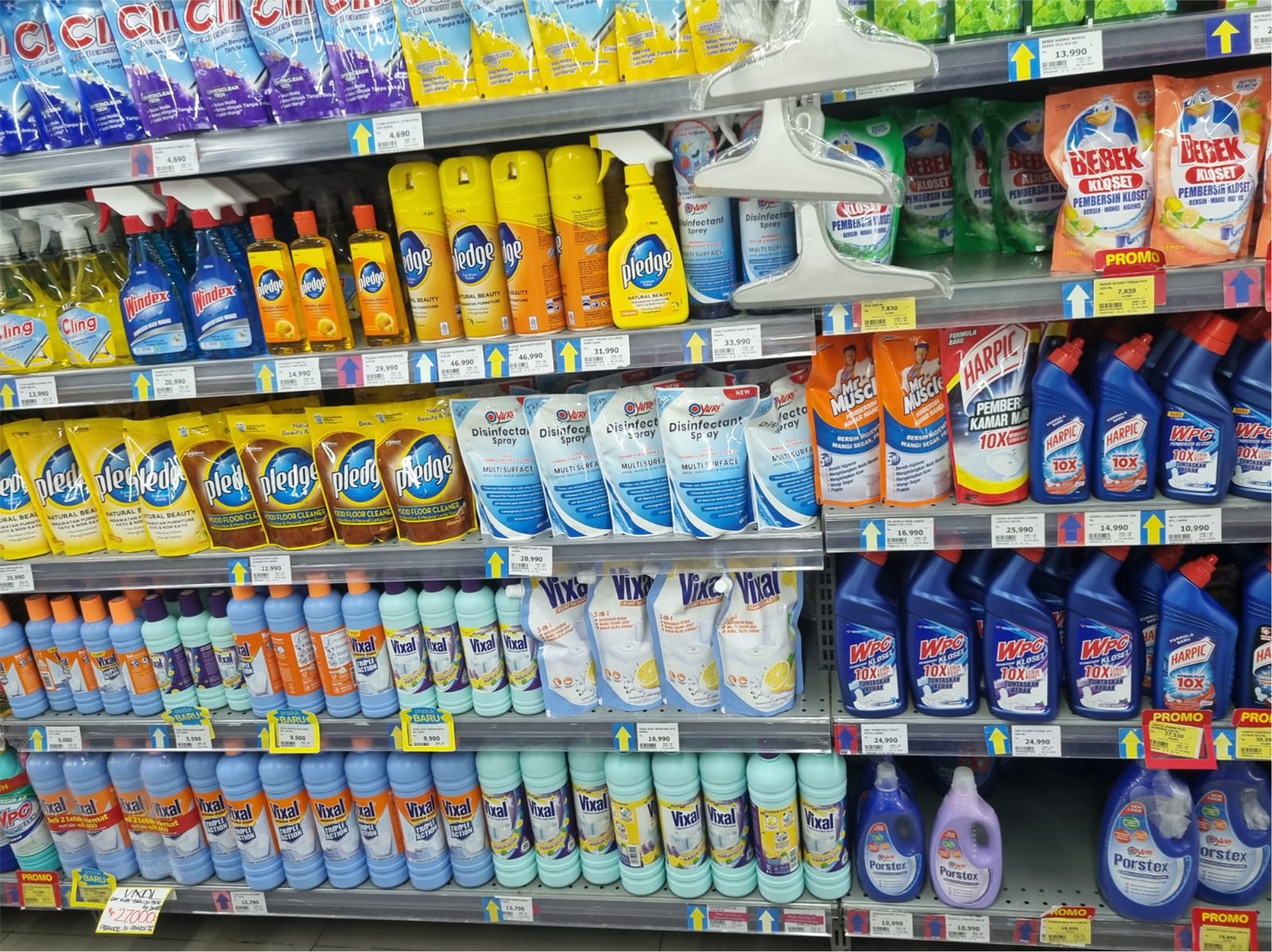
Source: Central Insight
Beauty and Personal Care Segment: Local Champions Gaining Ground
The beauty and personal care market in Indonesia, traditionally dominated by Unilever Indonesia, has shifted due to a rise in ethical consumerism, especially following the boycott of Israel-affiliated brands. This change has benefited local manufacturers, with Wings Group recording a 21.8% sales increase during the “All Eyes on Rafah” campaign. This performance highlights their ability to capture consumer sentiment with a value-oriented, ethical brand positioning. Meanwhile, global manufacturers like KAO increased slightly by 6.5%, and 2 others grew by 4.2% and 2%, respectively. The noteworthy performers are:
Sales growth in Home care, Personal care, and Beauty care (May ~ June 2024)
| Company/Brand | Global / Local Brand | Sales Growth (%) | Key Products/Brands |
| Wings Group | Local | 21.8 | Home Care (e.g., SoKlin, Daia) |
| Kao Indonesia | Global | 6.5 | Personal care (Biore, Men’s Biore) |
| Paragon Technology and Innovation | Local | 5.7 | Beauty Care (Wardah, Kahf) |
| Kinocare Era Kosmetindo | Local | 5.0 | Personal Care (Ellips, Ovale) |
| Other 2 Global Brands | Global | 4.2 and 2.0 | Undisclosed manufacturers (Boycott-affected) |
| Tempo Scan Pacific | Local | 3.1 | Personal Care (Marina, My Baby) |
Source: Central Insight’s synthesis
Interestingly, not all global players saw negative outcomes. PT Kao Indonesia, a Japanese manufacturer (with brands such as Biore, Kao Men’s Biore, and Laurier, etc.), unaffiliated with the boycott list, recorded a 6.5% increase in sales, indicating that consumers continue to differentiate between multinational origins and political affiliations.
Overall, the beauty and personal care segment illustrates a structural rebalancing between global incumbents and local innovators. While ethical consumerism serves as a catalyst, the sustained growth of local brands like Paragon and Wings Group ultimately stems from their strategic brand positioning, strong halal credentials, and deep understanding of Indonesian consumer identity—factors that will likely continue to define competitive advantage in the years ahead.
Beauty Care products in a supermarket in Indonesia
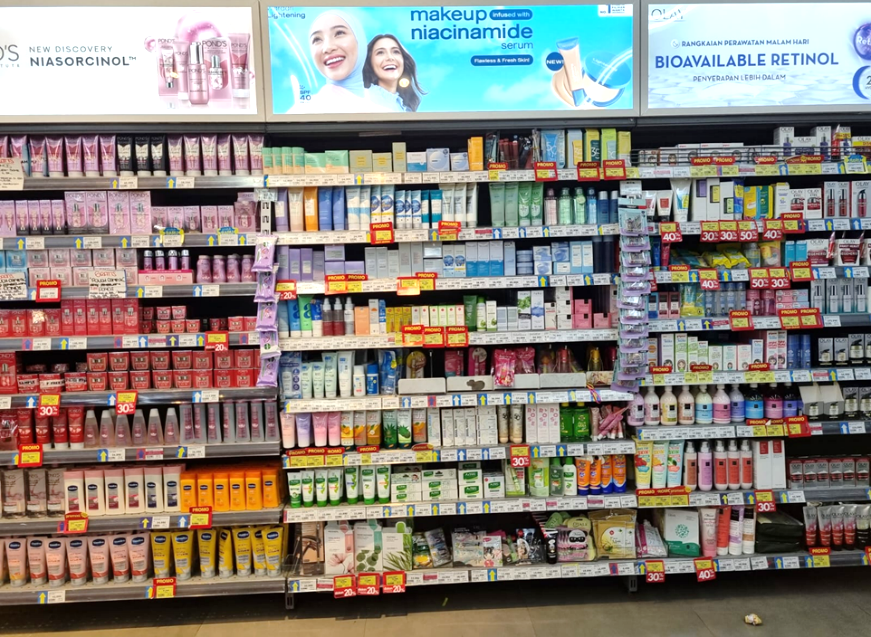
Source: Central Insight
Personal Care products in a supermarket in Indonesia
Source: Central Insight
Mother and Baby Segment: The Most Pronounced Shift Toward Local Brands
The mother and baby category has exhibited the most pronounced shift from global to local brands among all FMCG segments, highlighting how ethical and nationalistic consumption trends are reshaping purchasing behaviour in Indonesia. Traditionally dominated by global players—including Unilever Indonesia—this category has experienced a notable reconfiguration of market share.
During the boycott campaign, global brands associated with Israel saw an 18.3% drop in sales, while local brands enjoyed significant growth: Wings Group saw its sales volume surge by 38.5%, marking one of the strongest performances across all FMCG segments. This acceleration was supported by its broad product portfolio, competitive pricing, and established distribution channels that enable deep market penetration even in secondary cities.
PT Tempo Scan Pacific Tbk. (best known for its My Baby brand, which offers a comprehensive range of baby care products, including powders, lotions, and wipes) followed with a 12.6% increase in sales, benefiting from its established credibility in the baby and family care space, while PT Inovasi Teknologi Untung Berkah, operating under the brand Gently which specializes in infant and child personal care products featuring natural, mild formulations, achieved double-digit growth of 11.1%, underscoring the momentum enjoyed by agile local manufacturers.
Mother and Baby products in a supermarket in Indonesia
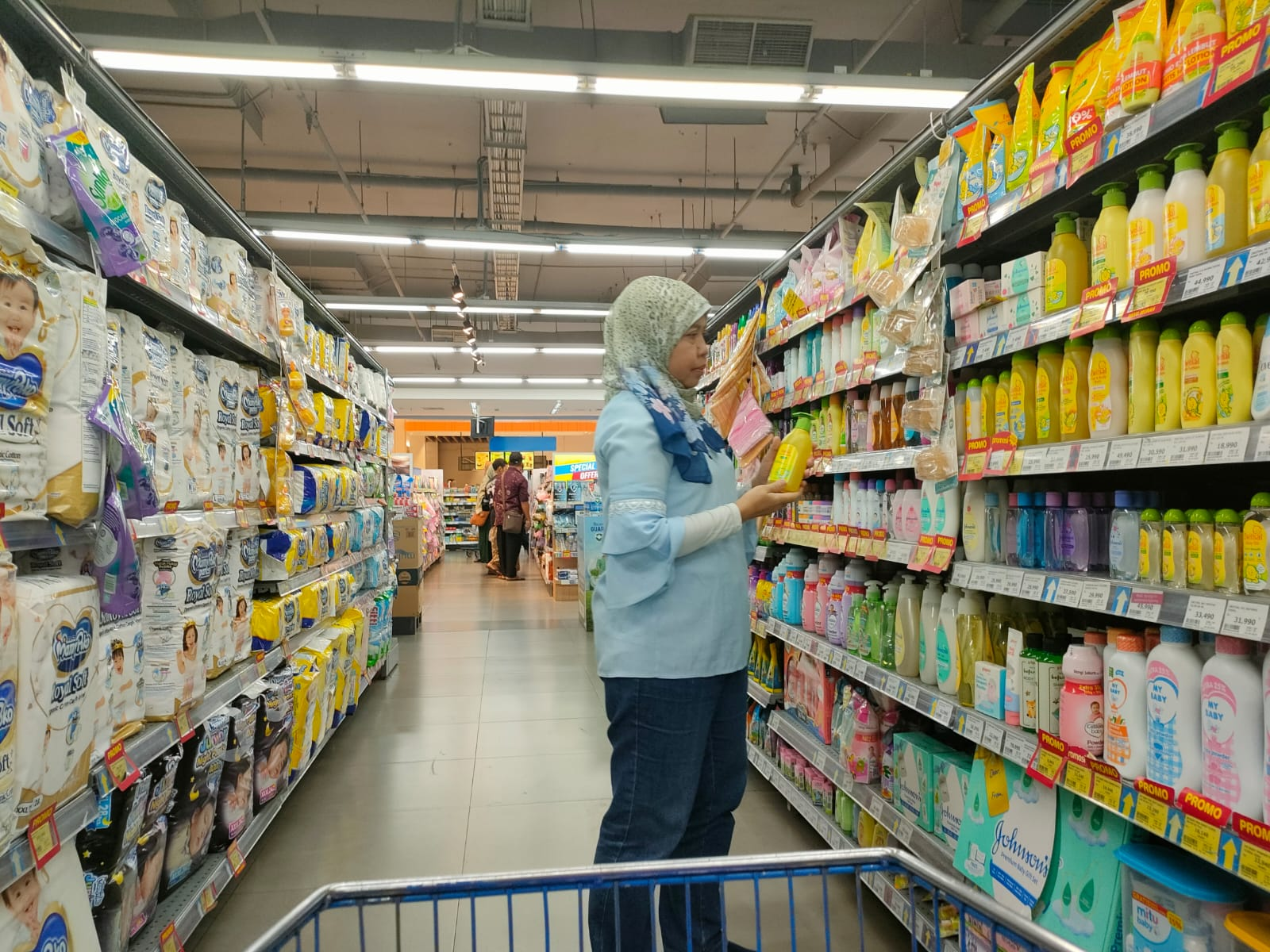
Source: Central Insight
From a structural perspective, this shift underscores how ethical consumerism, affordability, and local brand trust have become critical purchase drivers in categories tied to family well-being and health. For many consumers, the decision to switch to local brands in mother and baby care reflects both value alignment and risk aversion—as parents seek safe, familiar, and ethically produced alternatives.
Broadly, Indonesia’s local entrepreneurs are adapting swiftly to these evolving consumer expectations. The resulting transformation has not only boosted domestic brand competitiveness but also generated positive economic spillovers—including new job creation, strengthened local supply chains, and reduced reliance on imported goods.
Challenges and Opportunities
Geopolitical sentiment, as seen in Indonesia’s recent consumer boycotts, is actively reshaping the business landscape. These events, rooted in moral or political beliefs, have triggered deep economical behavioral shifts, empowering consumers to shape market dynamics.
This shift marks a critical inflection point for multinational corporations (MNCs). The erosion of trust has revealed a structural vulnerability: an overreliance on brand heritage without sufficient localization or ethical alignment. To regain consumer confidence, global players must move beyond transactional responses (like PT Unilever’s price stabilization) and adopt holistic strategies that combine ethical transparency, value-based communication, and operational agility.
In contrast, Indonesian local brands and SMEs are facing an unprecedented opportunity. The boycott has accelerated a long-term structural shift where consumer nationalism, ethical consciousness, and affordability converge to redefine market loyalty. Many homegrown brands (e.g., Wings Group, PT Paragon) have already overcome historical quality stigmas through improved R&D, competitive pricing, and strong alignment with local cultural values.
To capitalize on this momentum, the path forward is clear. Sustained growth requires continued investment in innovation and quality, all while reinforcing a core identity based on Halal assurance, accessible pricing, and authentic brand storytelling (e.g., #ProudlyMadeInIndonesia). This combination is what will build the durable consumer trust necessary to thrive in a post-boycott environment.
The Strategic Importance of Branding in Indonesia’s FMCG Sector
In Indonesia’s FMCG industry, brand equity often outweighs product differentiation. Unlike in high-tech sectors where innovation drives competitiveness, most FMCG categories—particularly home and personal care—rely on relatively standardized formulations and production technologies. As a result, consumer perception, trust, and emotional connection with a brand become the true sources of competitive advantage.
FMCG products are consumed daily and continuously replenished, meaning that purchase decisions are habitual and heavily influenced by brand familiarity rather than functional superiority. For instance, in categories such as soap, detergent, or basic skincare, the underlying technology or ingredients offer minimal differentiation between brands. What sets market leaders apart is their ability to build aspirational identities, cultural relevance, and perceived reliability through effective branding and consistent communication.
Therefore, in markets like Indonesia—where household penetration of home and personal care products is nearly universal—branding functions as both a trust signal and a lifestyle statement. It not only drives repeat purchases but also shapes consumer loyalty in a landscape where technological innovation is not a major issue, and emotional branding is the key competitive lever.
Strategic Considerations for Investors
The evolving consumer landscape presents both challenges and strategic entry points for investors—local and foreign alike.
For foreign investors, the key is adaptation through partnership and localization. Collaborating with local manufacturers, distributors, or Halal certification bodies can bridge cultural and regulatory gaps. Investments that prioritize local production capacity, ethical sourcing, and inclusive marketing are more likely to resonate with Indonesian consumers, particularly in categories with moral or cultural sensitivity, such as food, personal care, and family products. Foreign investors may consider joint ventures, minority stakeholder, or strategic acquisitions that allow them to participate in the growth of trusted local brands while managing reputational risk, rather than competing head-to-head with local champions.
For local investors, this is an opportune moment to scale and professionalize operations. The surge in demand for local products—spanning FMCG, Halal food, cosmetics, and baby care—demands capital infusion in innovation, branding, and supply chain modernization. There is also untapped potential in second-tier cities and emerging e-commerce ecosystems, where ethical and locally made products are gaining traction.
Both investor groups stand to benefit from a shared opportunity: The rise of ethical consumerism as a durable market force. Boycotts, once viewed as temporary disruptions, are now catalysts for structural transformation—creating a new competitive advantage for companies that align business performance with consumer values.
In essence, Indonesia’s evolving consumer behaviour is not merely a reaction—it is a redefinition. The convergence of moral consciousness, economic pragmatism, and national pride is giving rise to a more self-sufficient, values-driven domestic market. For investors and brands alike, the message is clear: Those who align with these principles will not only weather geopolitical volatility but thrive because of it.
* If you wish to quote any information from this article, please kindly cite the source along with the link to the original article to respect copyright.
| B&Company
The first Japanese company specializing in market research in Vietnam since 2008. We provide a wide range of services including industry reports, industry interviews, consumer surveys, business matching. Additionally, we have recently developed a database of over 900,000 companies in Vietnam, which can be used to search for partners and analyze the market. Please do not hesitate to contact us if you have any queries. info@b-company.jp + (84) 28 3910 3913 |
References:
[1] In May 2024, the image with the phrase “All Eyes on Rafah” went viral on social media, spreading awareness of the ongoing conflict in Rafah. In Indonesia, the post trended regionally with over 30 million Instagram Stories posts, sparking a new wave of boycott calls
[2] The online survey was conducted between July 15 and 28, 2024, involving 1,000 respondents aged 18 to 58 from across Indonesia
https://compas.co.id/article/market-insight-efek-boikot-pada-brand-fmcg/
https://www.idx.co.id/en/listed-companies/company-profiles/UNVR
https://duta.co/compas-co-id-campaign-viral-eyes-on-rafah-penjualan-brand-fmcg-lokal-naik-di-e-commerce
Related article















Log in / Register
SUBSCRIBE NEWSLETTER