

 English
  日本語
日本語  Tiếng Việt
  简体中文
简体中文  한국어
한국어 Vietnam beauty and personal care industry is emerging as a high-growth market, with sales reached approximately 2.7 billion USD in 2024.
23Sep2026
Latest News & Report
Comments: No Comments.
The beauty and personal care industry is emerging as a high-growth market. Rising incomes, a large young population, and strong demand for personal grooming are driving market expansion. Industry sales reached approximately 2.7 billion USD in 2024[1]. Overseas brands are gaining popularity.
Basic Statistics
| Indicators | Unit | 2019 | 2020 | 2021 | 2022 | 2023 | 2024 |
| Beauty Product Market Size | Billion USD | 2.3 | 2.2 | 2.2 | 2.4 | 2.6 | 2.7 |
| Personal Care | % | 44 | 45 | 45 | 46 | 42 | 45 |
| Skincare | % | 31 | 32 | 31 | 29 | 31 | 30 |
| Makeup | % | 22 | 18 | 18 | 21 | 19 | 22 |
| Other | % | 4 | 5 | 6 | 5 | 7 | 3 |
| Natural Beauty Product Market Size[2] | Million USD | 218 | 243 | 230 | 230 | 239 | 245 |
Source: Statista, Q&Me
Regulations
The beauty and personal care business is open to foreign investment under general trade and retail regulations. 100% foreign-owned enterprises can also enter this sector. Foreign-invested enterprises selling cosmetics require business registration and a retail license to engage in retail distribution (physical stores). A retail facility license is also required for each store. These are granted by the provincial/municipal Department of Industry and Trade.
All beauty or personal care products (whether imported or domestically produced) require notification to the Ministry of Health (Drug Administration Department) prior to sale. Companies must submit a complete set of documents per product, including Vietnamese labels, letters of authorization, and certificates of free sale to obtain a Cosmetic Product Notification (CPN) registration number. Sales are permitted only after the Ministry of Health issues the CPN number. Importers or manufacturers must prepare the product documentation and obtain approval.
Market Overview
The beauty products market is growing slowly at an annual rate of about 3%. The personal care segment (hair care, oral care, bath/body, men’s grooming, etc.) is the largest, accounting for 45% in 2024 at 1.2 billion USD. Skincare followed at about 30% (800 million USD), and makeup at about 22% (600 million USD).
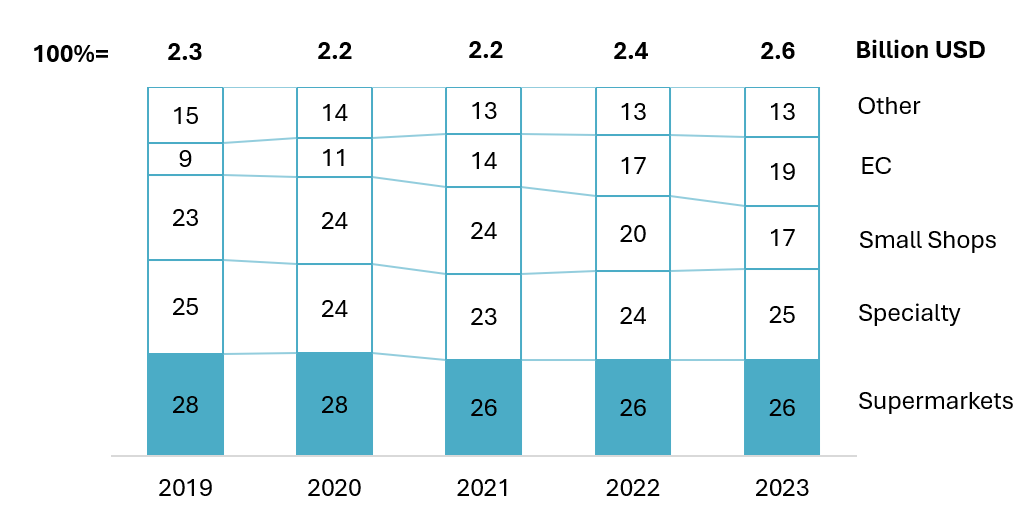
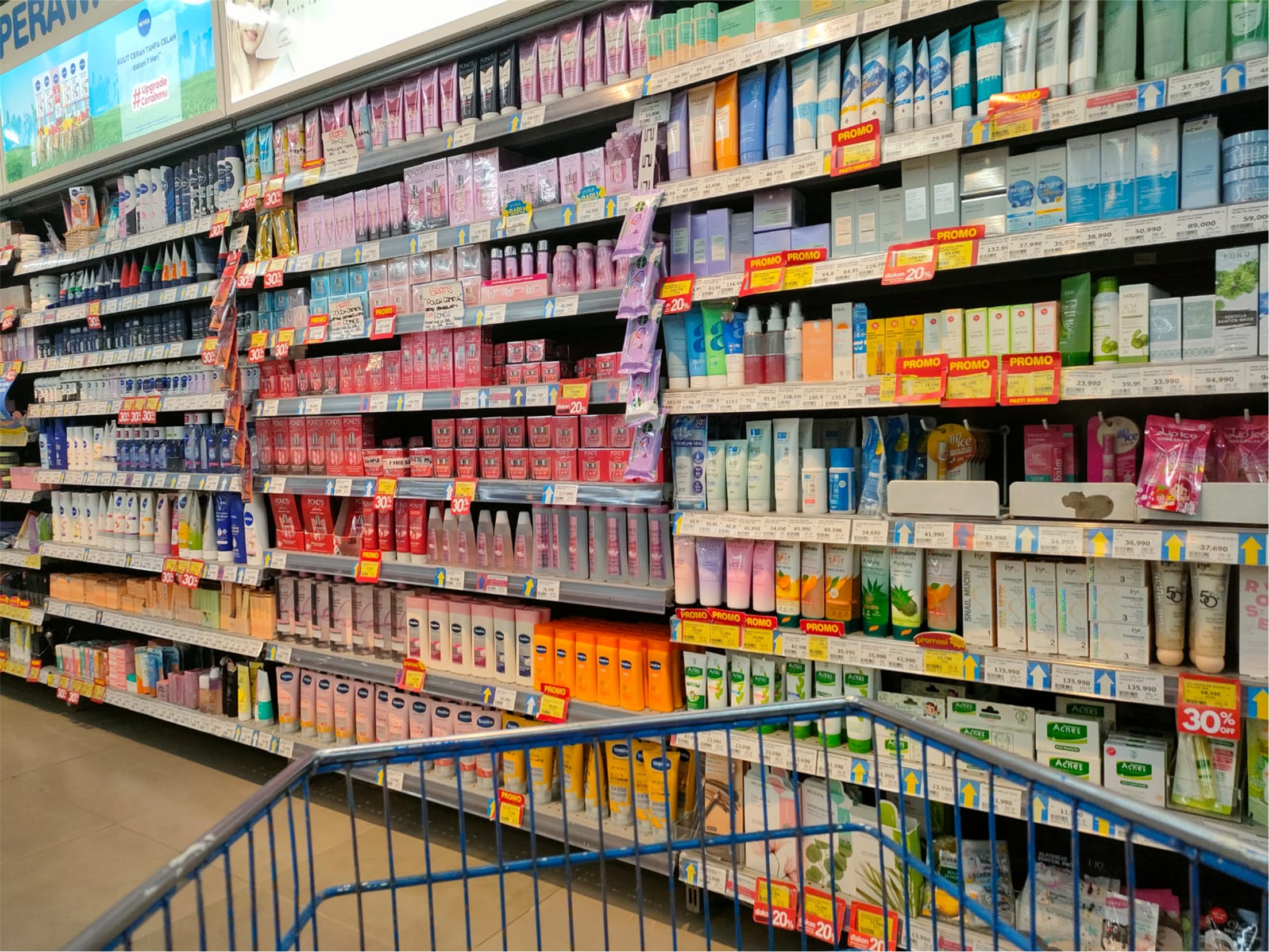
The primary distribution channels are supermarkets, specialty cosmetics stores, small shops, and E-commerce (EC). Modern channels (national chains and mall stores) are expanding. Global chains like Guardian (DFI Retail) and Watsons (CK Hutchison) each operate over 100 stores, while domestic pharmacy chains such as FPT Long Chau and pharmacy collectively exceed 3,000 stores. E-commerce is also gaining attention, with online share surging from 9% in 2019 to 19% in 2023. Social media platforms like TikTok and Shopee Live significantly influence purchasing decisions.
Beauty Product Sales by Channel
Source: Euromonitor
A young population and steadily rising income levels are driving regular spending on self-care and grooming. With a median age of 33, consumers are concentrated in their 20s and early 30s, forming the most active segment for beauty spending. According to Statista (2023), over 60% of Vietnamese use skincare products daily, with common items being facial cleansers (49%), perfume (41%), sunscreen (31%), and moisturizers (25%). There is also a notable rise in men’s grooming awareness, with many men actively using hair care and grooming products.
As consumers become more sophisticated, international brands are setting the standard for product quality and brand strategy. Imported products account for over 90% of cosmetics sales. Korean brands lead with approximately 30% market share, followed by Europe (23%), Japan (17%), Thailand (13%), and the United States (10%).
Major Players
Local brands are beginning to grow in the natural and organic segment, but their market share remains small compared to global giants. Overseas companies benefit from strong research capabilities, global resources, and advanced product development, giving them an advantage in innovation.
Key Players in Vietnam Beauty and Personal Care Market
| No | Company | Established | Headquarters | Country | Main Products | Overview |
| 1 | Unilever | 1995 | Ho Chi Minh City | United Kingdom | – Dove (Body/Hair)
– Sunsilk (Hair) – Pond’s (Skincare) |
Local Production Base |
| 2 | Procter & Gamble (P&G) | 1995 | Ho Chi Minh City | United States | – Olay (Skincare)
– Pantene (Hair) – Gillette (Shaving) |
Manufactured and distributed locally |
| 3 | LG Vina Cosmetics | 1997 | Dong Nai | South Korea | – Physio gel (Dermocosmetic Skincare) | Focusing on dermatology-based skincare |
| 4 | Shiseido | 1999 | Ho Chi Minh City | Japan | – Shiseido, Anessa (Sun Care/Skin Care) | High-end skincare and makeup brand development by local subsidiary |
| 5 | Kao | 1996 | Ho Chi Minh City | Japan | – Biore (Cleansing)
– Liese (Hair) – Curel (Skincare) |
Local Production Base |
| 6 | Rohto-Mentholatum | 1994 | Ho Chi Minh City | Japan | – Hada Labo (Skincare)
– Acnes (Acne Care) – LipIce (Lip Care) |
A wide range of skincare and OTC personal care products |
| 7 | Thorakao | 1961 | Ho Chi Minh City | Vietnam | – Herbal Skin Care Cream
– Shampoo – Facial Mask |
Traditional Vietnamese brand using natural ingredients |
| 8 | Cocoon | 2013 | Ho Chi Minh City | Vietnam | – Vegan Skincare (Turmeric, Coffee)
– Hair Care |
Fast-growing clean/vegan brand using local botanicals |
| 9 | Medix 5.5 | 2010 | Ho Chi Minh City | Vietnam | – pH-Balanced Cleanser
– Serum, Moisturizer |
Science-Based Gentle Skincare |
| 10 | Hasaki | 2016 | Ho Chi Minh City | Japan | – Multi-brand cosmetics & skincare | Nationwide Beauty Retail Chain & Beauty Clinic |
Source: B&Company Analysis
Market Trends
Clean beauty products made with natural and herbal ingredients are gaining attention, while harsh chemicals are being scrutinized. Products labeled organic, vegan, paraben-free, and sulfate-free are preferred. Vietnamese brands are developing affordable natural skincare products utilizing local resources like coconut oil, green tea, turmeric, and aloe vera. Cocoon incorporates coffee from Dak Lak Province and turmeric from Hung Yen Province into its products. This shift towards gentle, environmentally conscious beauty is also driven by heightened environmental awareness among Millennials and Generation Z.
Beauty product distribution is rapidly changing. While local small-scale convenience stores still hold a significant share, their market share is declining, falling from 23% in 2019 to 17% in 2023. Meanwhile, in modern trade, beauty chains are expanding rapidly: Hasaki operates about 170 stores, Guardian has 130 stores, and Watsons continues to open new stores in major cities. Local retailers like Nuty and Cocolux are also intensifying investments through 2024-2025.
EC, driven by platforms like Shopee, TikTok, and Lazada, has become a major market growth engine. Mobile payments and fast home delivery have made online shopping for cosmetics commonplace.
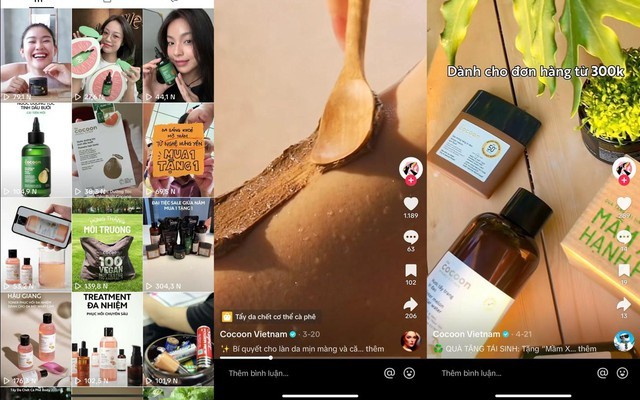
Natural cosmetics brand Cocoon on TikTok
Source: Cocoon TikTok, Cafef
Beyond rapid EC growth, digital platforms are transforming how beauty brands connect with consumers. Live shopping streams by influencers and KOLs enable real-time product demonstrations and direct interaction with viewers. Global brands like Estée Lauder, Lancôme, and Kiehl’s actively leverage live streams, attracting younger consumers with new product launches and incentives like discounts, Buy 1 Get 1 offers, and free samples. The convergence of entertainment and sales aligns well with the digital native generation, which prioritizes convenience and digital touchpoints. To remain competitive, brands must integrate online and offline strategies, leverage e-commerce data to understand customer behavior, and respond swiftly to emerging trends.
Read more
Vietnam Beauty Market 2025: Key Updates, Investment Activities, and Trends
Beauty retail in Vietnam: Store expansion slows as online beauty sales surge
* If you wish to quote any information from this article, please kindly cite the source along with the link to the original article to respect copyright.
| B&Company
The first Japanese company specializing in market research in Vietnam since 2008. We provide a wide range of services including industry reports, industry interviews, consumer surveys, business matching. Additionally, we have recently developed a database of over 1,000,000 companies in Vietnam, which can be used to search for partners and analyze the market. Please do not hesitate to contact us if you have any queries. info@b-company.jp + (84) 24 3978 5165 |
[2] Refers to skincare, haircare, body care, and makeup products primarily composed of natural ingredients such as plant-derived or mineral-derived components, with minimal use of synthetic additives like parabens, mineral oils, petroleum-based surfactants, synthetic fragrances, and synthetic colorants. Certified organic products are included as part of natural beauty products.
Related article
Log in / Register
SUBSCRIBE NEWSLETTER