

 Tiếng Việt
  English
  日本語
日本語  简体中文
简体中文  한국어
한국어 Giai đoạn 2023-2025 đánh dấu giai đoạn quan trọng đối với ngành du lịch Đông Nam Á, với việc Thái Lan và Việt Nam đang phục hồi sau đại dịch.

22/08/2025
Tin tức & Báo cáo mới nhất / Vietnam Briefing
Bình luận: Không có bình luận.
Tóm tắt điều hành
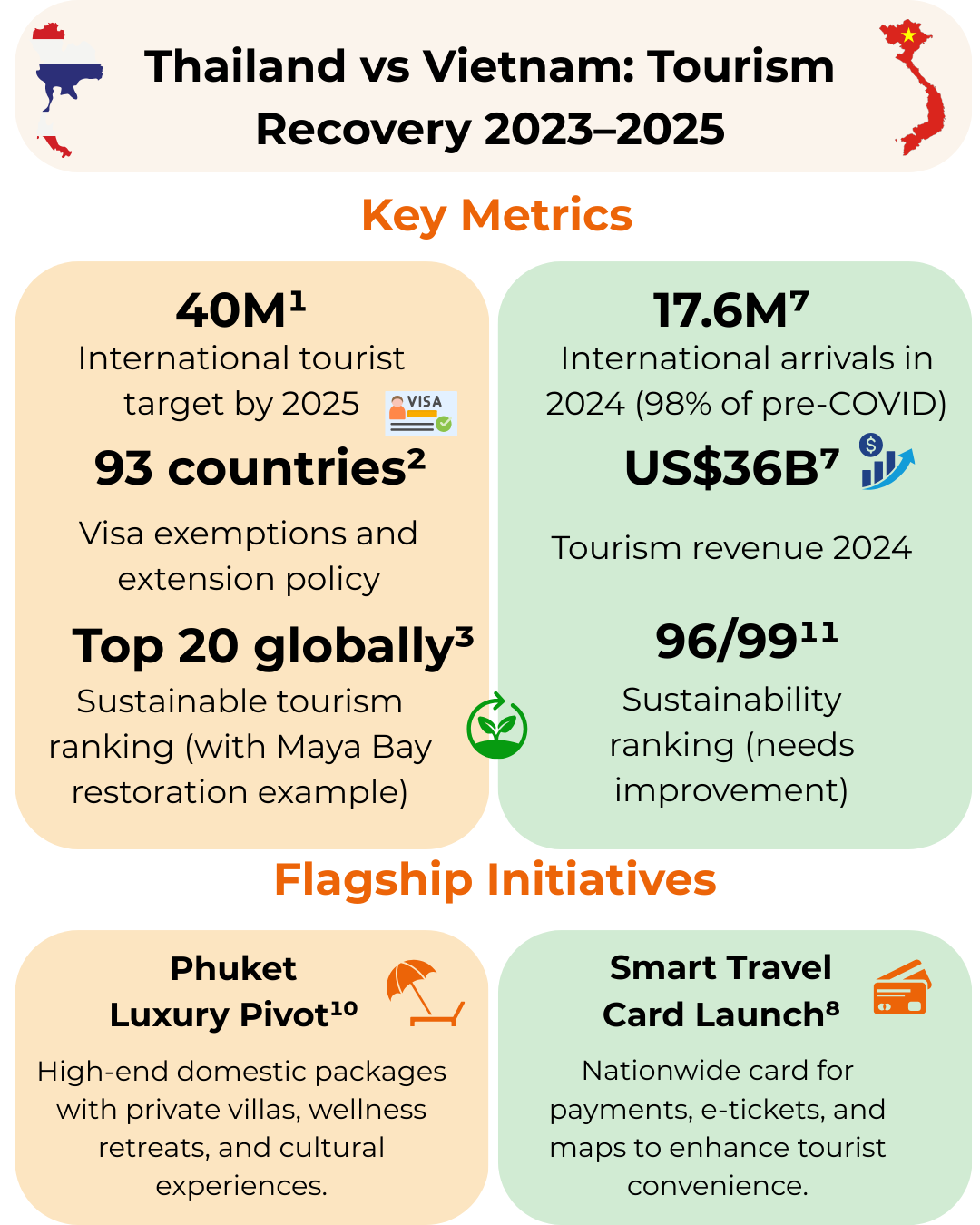
Thái Lan và Việt Nam đã vạch ra những hướng đi khác nhau để tái thiết ngành du lịch trong giai đoạn 2023-2025, mỗi nước tận dụng thế mạnh riêng biệt đồng thời giải quyết những thách thức chung. Thái Lan tập trung thu hút khách du lịch nội địa chất lượng cao thông qua những trải nghiệm sang trọng tại các điểm đến như Phuket, Chiang Mai, Hua Hin và Khao Yai, với sự hỗ trợ từ nguồn đầu tư đáng kể của chính phủ và chính sách thị thực tiến bộ. Cam kết phát triển bền vững của Thái Lan được thể hiện rõ nét qua các dự án như việc phục hồi cẩn thận Vịnh Maya và các sáng kiến du lịch bền vững, kết nối cộng đồng nông thôn với du khách có ý thức bảo vệ môi trường.
Sự phục hồi của Việt Nam lại cho thấy một câu chuyện khác - một câu chuyện với quy mô và tốc độ đáng kinh ngạc. Với 110 triệu lượt khách nội địa vào năm 2024 và lượng khách quốc tế gần bằng mức trước đại dịch, Việt Nam đã trở thành thị trường du lịch phục hồi nhanh nhất ASEAN. Những đổi mới kỹ thuật số như Thẻ Du lịch Thông minh đã đơn giản hóa trải nghiệm của du khách, mặc dù những thách thức về tính bền vững vẫn là mối quan tâm cấp bách đối với quỹ đạo tăng trưởng nhanh chóng của đất nước.
Giới thiệu
Giai đoạn từ năm 2023 đến năm 2025 đánh dấu một thời kỳ quan trọng đối với ngành du lịch Đông Nam Á, trong đó Thái Lan và Việt Nam nổi lên là những quốc gia dẫn đầu khu vực trong quá trình phục hồi sau đại dịch. Cả hai quốc gia đã vượt qua giai đoạn chỉ đơn thuần mở cửa biên giới để triển khai các chiến lược toàn diện nhằm đáp ứng kỳ vọng đang thay đổi của du khách, tiến bộ công nghệ và tầm quan trọng ngày càng tăng của các hoạt động du lịch bền vững. Phân tích này dựa trên những hiểu biết từ Iconic Research, nhà cung cấp dịch vụ nghiên cứu thị trường du lịch và khách sạn tại Thái Lan, hỗ trợ doanh nghiệp và các nhà hoạch định chính sách định hướng trước những xu hướng du lịch đang thay đổi bằng các chiến lược dựa trên dữ liệu. Những phương pháp tiếp cận này mang lại các góc nhìn giá trị về cách các điểm đến có thể cân bằng nhu cầu phục hồi trước mắt với năng lực cạnh tranh dài hạn.
Cách tiếp cận chiến lược của Thái Lan
Du lịch nội địa tập trung vào phân khúc cao cấp
Việc Thái Lan chuyển hướng sang du lịch nội địa cao cấp thể hiện một phản ứng được tính toán trước những thay đổi của thị trường. Thay vì chỉ cạnh tranh về số lượng, vương quốc này đã phát triển các gói dịch vụ sang trọng tinh tế, thu hút cư dân Thái Lan giàu có đang tìm kiếm những trải nghiệm chất lượng cao gần nhà hơn. Các dịch vụ này nhấn mạnh vào sức khỏe, sự riêng tư và tính chân thực văn hóa thông qua quan hệ đối tác với các nghệ nhân địa phương và các nhà cung cấp bền vững. Hỗ trợ của chính phủ bao gồm các ưu đãi thuế có mục tiêu và cải thiện cơ sở hạ tầng được thiết kế để nâng cao trải nghiệm du lịch cao cấp [1].
Chiến lược này đã mang lại những kết quả rõ rệt. Các khu nghỉ dưỡng cao cấp hiện cung cấp dịch vụ tư vấn sức khỏe cá nhân, dịch vụ tài xế riêng và các hội thảo văn hóa chuyên sâu, giúp du khách kết nối với di sản phong phú của Thái Lan. Một ví dụ đáng chú ý là Phuket, nơi các khu nghỉ dưỡng sang trọng hợp tác với các nghệ nhân địa phương để cung cấp các lớp học làm gốm và dệt độc quyền, tạo nên những trải nghiệm đáng nhớ cho du khách nội địa giàu có trong thời kỳ du lịch quốc tế vẫn còn hạn chế [1].
Đầu tư của chính phủ và đổi mới chính sách thị thực
Cam kết phục hồi du lịch của Thái Lan thể hiện rõ qua tầm nhìn chiến lược toàn diện, với khoản đầu tư đáng kể vào các chiến dịch quảng bá kết hợp với chính sách thị thực tiến bộ. Tầm nhìn chiến lược du lịch của Thái Lan đến năm 2025 nhấn mạnh vào trải nghiệm chất lượng và đơn giản hóa thủ tục tiếp cận cho du khách quốc tế thông qua nhiều chương trình và miễn trừ thị thực khác nhau [2].
Những thay đổi chính sách này đã mang lại tác động đáng kể. Triển vọng của ngành du lịch cho thấy đà phục hồi mạnh mẽ với lượng khách quốc tế tăng đều đặn từ mức thấp nhất trong đại dịch [9]. Việc Thái Lan tập trung vào du khách du mục kỹ thuật số và du khách dài hạn đã thu hút thành công các chuyên gia làm việc từ xa, những người có mô hình chi tiêu mang lại lợi ích cho cả du lịch truyền thống và nền kinh tế kỹ thuật số nói chung.
Vai trò dẫn đầu về môi trường
Các sáng kiến bền vững là nền tảng cho chiến lược du lịch của Thái Lan, với Vịnh Maya là một ví dụ điển hình. Sau khi được phục hồi sinh thái cẩn thận, địa điểm mang tính biểu tượng này đã mở cửa trở lại vào tháng 10 năm 2023 với các biện pháp quản lý môi trường nghiêm ngặt nhằm bảo vệ hệ sinh thái rạn san hô mong manh [3]. Cách tiếp cận này thể hiện sự sẵn sàng của Thái Lan trong việc ưu tiên sức khỏe môi trường lâu dài hơn là tối đa hóa doanh thu ngắn hạn.
Các dự án du lịch bền vững không chỉ giới hạn ở các địa điểm riêng lẻ mà còn mở rộng sang quản lý điểm đến toàn diện. Các sáng kiến du lịch bền vững của UNDP tại Phuket là minh chứng cho thấy bảo vệ môi trường có thể được tích hợp với phát triển du lịch như thế nào, tạo ra mô hình cho các điểm đến khác noi theo [4].
Đổi mới kỹ thuật số và sức hấp dẫn đối với lao động làm việc từ xa
Việc Thái Lan đón nhận chuyển đổi số không chỉ giới hạn ở tiếp thị mà còn mở rộng sang cơ sở hạ tầng cơ bản và những thay đổi về chính sách. Các sáng kiến tương lai số của quốc gia bao gồm tích hợp công nghệ toàn diện, được thiết kế để định vị Thái Lan là điểm đến ưa thích của các chuyên gia độc lập về địa điểm và du khách am hiểu công nghệ [5].
Tác động đã thấy rõ ở các thị trường trọng điểm. Những nỗ lực chuyển đổi số của Thái Lan đã tạo ra một hệ sinh thái hỗ trợ cả du lịch truyền thống và xu hướng làm việc từ xa đang phát triển, khiến đất nước này ngày càng hấp dẫn đối với những người du mục kỹ thuật số và du khách dài hạn đang tìm kiếm cơ sở hạ tầng công nghệ đáng tin cậy.
Thách thức về lực lượng lao động
Mặc dù đạt được những thành công này, Thái Lan vẫn phải đối mặt với những thách thức đáng kể về lao động trong lĩnh vực du lịch. Triển vọng ngành cho thấy nhu cầu phát triển lực lượng lao động vẫn tiếp diễn khi ngành mở rộng và chuyển đổi để đáp ứng kỳ vọng đang thay đổi của du khách [9]. Cải thiện chất lượng dịch vụ vẫn là một ưu tiên, đặc biệt trong lĩnh vực lưu trú cao cấp, nơi kỳ vọng của khách hàng tiếp tục tăng lên.
Chiến lược phục hồi của Việt Nam
Động lực du lịch nội địa
Ngành du lịch nội địa Việt Nam đã cho thấy sức bật đáng kinh ngạc, với lượng khách du lịch kỷ lục và tăng trưởng doanh thu mạnh mẽ. Thành công này đến từ các chiến dịch du lịch văn hóa chiến lược được hỗ trợ bởi cơ sở hạ tầng giao thông được cải thiện, giúp các điểm đến trong khu vực dễ tiếp cận hơn [6].
Các lễ hội văn hóa vùng miền tại các thành phố lịch sử như Huế và Hội An đã thu hút lượng người tham dự kỷ lục, tạo ra lợi ích kinh tế đáng kể cho các doanh nghiệp vừa và nhỏ tại địa phương đồng thời giới thiệu di sản văn hóa đa dạng của Việt Nam.
Phục hồi thị trường quốc tế
Sự phục hồi của ngành du lịch quốc tế Việt Nam đã vượt xa các đối thủ cạnh tranh trong khu vực, với lượng khách đến gần bằng mức trước đại dịch và đưa Việt Nam trở thành một trong những thị trường du lịch phục hồi nhanh nhất ASEAN [7]. Các cải cách thị thực chiến lược, bao gồm việc triển khai thị thực điện tử và miễn trừ có mục tiêu, đã xóa bỏ rào cản đối với các thị trường nguồn chính.
Các chương trình quản lý điểm đến tại các thành phố lớn đã nâng cao sức hấp dẫn của Việt Nam đối với du khách nước ngoài đồng thời cải thiện chất lượng dịch vụ trên toàn ngành khách sạn.
Tích hợp công nghệ
Đổi mới kỹ thuật số đóng vai trò trung tâm trong chiến lược của Việt Nam, với Thẻ Du lịch Thông minh (Smart Travel Card) ra mắt vào tháng 5 năm 2023, đóng vai trò là nền tảng toàn diện tích hợp thanh toán, vé điện tử, bản đồ và dịch vụ y tế [8]. Giải pháp duy nhất này đáp ứng nhiều nhu cầu của du khách, đồng thời thu thập dữ liệu có giá trị để cải thiện dịch vụ hơn nữa.
Việc triển khai thẻ đã cho thấy tác động tích cực đáng kể đến sự hài lòng của khách du lịch, chứng minh công nghệ có thể cải thiện trực tiếp trải nghiệm của du khách và hợp lý hóa quy trình du lịch.
Mối quan ngại về tính bền vững
Sự phục hồi nhanh chóng của Việt Nam đi kèm với những thách thức về môi trường đòi hỏi sự quản lý chặt chẽ. Trong khi lượng du lịch tiếp tục tăng trưởng, các sáng kiến bền vững đang nổi lên nhằm cân bằng lợi ích kinh tế với bảo vệ môi trường.
Các dự án phát triển tính bền vững ban đầu thể hiện nỗ lực lồng ghép các yếu tố môi trường vào phát triển du lịch, mặc dù những sáng kiến này cần được mở rộng quy mô để theo kịp tốc độ tăng trưởng của ngành du lịch.
Bảng – So sánh chiến lược
| Lĩnh vực chiến lược | Phương pháp tiếp cận của Thái Lan | Phương pháp tiếp cận của Việt Nam |
| Du lịch nội địa | Các gói chăm sóc sức khỏe cao cấp tập trung vào chất lượng vượt trội | Phục hồi lượng khách thông qua các chiến dịch du lịch văn hóa |
| Chính sách của chính phủ | Tầm nhìn chiến lược 2025; các chương trình thị thực toàn diện | Hệ thống thị thực điện tử và các trường hợp miễn thị thực có mục tiêu |
| Tính bền vững | Phục hồi Maya Bay; các dự án trọng điểm của UNDP | Các chính sách du lịch xanh đang hình thành |
| Đổi mới kỹ thuật số | Các sáng kiến chuyển đổi kỹ thuật số; cơ sở hạ tầng công nghệ | Smart Travel Card; các dịch vụ điện tử tích hợp |
| Lực lượng lao động | Tập trung phát triển ngành; chất lượng dịch vụ | Các chương trình đào tạo để quản lý tăng trưởng nhanh |
Triển vọng tương lai
Chiến lược của Thái Lan nhấn mạnh chất lượng hơn số lượng, nhắm đến khách du lịch có mức chi tiêu cao, đồng thời lồng ghép tính bền vững vào mô hình du lịch. Cách tiếp cận này hỗ trợ khả năng cạnh tranh dài hạn của điểm đến nhưng có thể hạn chế tiềm năng tăng trưởng ngắn hạn.
Việt Nam tận dụng tăng trưởng quy mô và đổi mới kỹ thuật số để tối đa hóa tác động kinh tế, nhưng cũng phải giải quyết các thách thức về môi trường để đảm bảo phát triển bền vững. Sự phục hồi nhanh chóng của đất nước tạo điều kiện thuận lợi cho tăng trưởng liên tục, miễn là các vấn đề về bền vững được quan tâm đúng mức.
Cả hai quốc gia đang thành công trong việc gắn kết phục hồi du lịch với các mục tiêu số hóa kinh tế rộng hơn, qua đó khẳng định vị thế là những điểm đến hàng đầu ASEAN đến năm 2025 và xa hơn. Những phương pháp tiếp cận khác biệt của họ mang lại các bài học giá trị cho những điểm đến khác đang tìm cách cân bằng nhu cầu phục hồi trước mắt với tính bền vững và năng lực cạnh tranh dài hạn.
Các câu hỏi thường gặp
Điều gì thúc đẩy sự tập trung vào du lịch hạng sang của Thái Lan?
Thái Lan hướng đến du khách nội địa và quốc tế có khả năng chi trả cao thông qua các gói chăm sóc sức khỏe và văn hóa được thiết kế phù hợp, nhấn mạnh tính chân thực và dịch vụ cao cấp, với sự hỗ trợ của các chiến lược tiếp thị toàn diện [1][10].
Chính sách thị thực hỗ trợ quá trình phục hồi như thế nào?
Thái Lan triển khai các chương trình thị thực và chính sách chiến lược toàn diện để thu hút nhiều phân khúc du khách khác nhau, trong khi Việt Nam sử dụng thị thực điện tử và chính sách miễn thị thực để giảm các rào cản gia nhập [2][7].
Những công cụ kỹ thuật số nào hiệu quả nhất?
Các sáng kiến chuyển đổi số của Thái Lan tạo ra một cơ sở hạ tầng công nghệ toàn diện, trong khi Thẻ du lịch thông minh của Việt Nam tích hợp nhiều dịch vụ để cải thiện trải nghiệm của du khách [5][8].
Những thách thức về tính bền vững là gì?
Cả hai quốc gia đều cân bằng giữa tăng trưởng du lịch nhanh chóng và bảo vệ môi trường—Thái Lan thực hiện điều này thông qua các dự án phục hồi như Maya Bay, trong khi Việt Nam xây dựng các chính sách du lịch xanh đang hình thành [3][6].
[1] Tổng cục Du lịch Thái Lan (TAT) – Kế hoạch Tiếp thị 2025 của TAT nhằm Khơi dậy 'Năm Du lịch Thái Lan Tuyệt vời'
https://www.tatnews.org/2024/07/tats-marketing-plan-2025-to-ignite-amazing-thailand-grand-tourism-year/
[2] Thailand Elite Visas – Du lịch tại Thái Lan: Tầm nhìn chiến lược đến năm 2025
https://www.thailandelitevisas.com/news-events-post/tourism-in-thailand-strategic-vision-for-2025/
[3] Thailand Public Relations Department (PRD) – Việc mở cửa trở lại Maya Bay và du lịch bền vững
https://thailand.prd.go.th/en/news/detail/TCATG231001101436062
[4] United Nations Development Programme (UNDP) – Các dự án trọng điểm về du lịch bền vững tại Phuket
https://www.undp.org/content/undp/en/home/ourwork/environmentandenergy/projects/phuket-sustainable-tourism.html
[5] Nation Thailand – Thái Lan mở khóa tương lai kỹ thuật số và các sáng kiến thị thực dành cho du mục kỹ thuật số
https://www.nationthailand.com/tech/40002564
[6] Nhan Dan Online – Việt Nam dẫn đầu khu vực về phục hồi du lịch
https://en.nhandan.vn/vietnam-tops-regional-tourism-recovery-post145247.html
[7] World Travel & Tourism Council (WTTC) – Du lịch và lữ hành Việt Nam sẵn sàng đạt kỷ lục trong năm 2024
https://wttc.org/News-Article/vietnam-travel-tourism-set-for-record-2024
[8] VietnamPlus – Ra mắt Smart Travel Card nhằm thúc đẩy chuyển đổi số
https://en.vietnamplus.vn/smart-travel-card-launched-to-promote-digital-transformation/260796.vnp
[9] Bank of Ayudhya (Krungsri) – Triển vọng ngành Thái Lan 2025-2027
https://www.krungsri.com/en/research/industry/summary-outlook/Thailand-industry-outlook-summary-2025-2027
[10] Thái Lan 2025: Xuất sắc và đổi mới trong du lịch chăm sóc sức khỏe (TrustedDMC)
https://www.trusteddmc.com/news/1519-thailand-2025-excellence-and-innovation-in-wellness-tourism.aspx
[11] Vietnam News – Việt Nam xếp thứ 96 trong danh sách du lịch bền vững toàn cầu
https://vietnamnews.vn/life-style/912374/viet-nam-ranks-96th-on-global-sustainable-tourism-list.html
* Nếu bạn muốn trích dẫn bất kỳ thông tin nào từ bài viết này, xin vui lòng ghi rõ nguồn cùng với liên kết đến bài viết gốc để tôn trọng bản quyền.
| B&Company
Công ty Nhật Bản đầu tiên chuyên về nghiên cứu thị trường tại Việt Nam từ năm 2008. Chúng tôi cung cấp một loạt các dịch vụ bao gồm báo cáo ngành, phỏng vấn ngành, khảo sát người tiêu dùng, kết nối kinh doanh. Ngoài ra, chúng tôi đã phát triển một cơ sở dữ liệu với hơn 900.000 công ty tại Việt Nam, có thể được sử dụng để tìm kiếm đối tác và phân tích thị trường. Xin vui lòng liên hệ với chúng tôi nếu bạn có bất kỳ câu hỏi nào. info@b-company.jp + (84) 28 3910 3913 |
Bài viết liên quan









Đăng nhập / Đăng ký
ĐĂNG KÝ NHẬN BẢN TIN