
省級行政単位の統合後における北中部・中部沿岸省の経済見通し

ベトナムの北中部および中部沿岸地域の経済は、2025年の行政区画の合併を受けて変革を迎える見込みです。

Da Nang

2025年6月13日

B&Company

最新ニュース&レポート / ベトナム速報

コメント: コメントはまだありません.

B&Companyは、2008年以来ベトナムにおいて市場調査および投資コンサルティングを専門とする初の日本企業です。.

この「ベトナム速報」セクションでは、B&Companyの若手研究者たちが、ベトナムの産業動向、消費動向、社会運動に関する最新情報をお届けします。.

この記事は英語で書かれており、自動翻訳が他の言語版に使用されています。正確な内容については英語版を参照してください。元の情報の正確性を確保するよう努めていますが、各情報については別途ご確認ください。解釈および将来の展望は各研究者の個人的な意見です。.

The economic landscape of Vietnam’s North Central and Central Coastal[1] region is poised for transformation following the 2025 administrative unit mergers. This strategic adjustment, set to take effect by August 15 per Conclusion No. 157-KL/TW[2], signed on May 25, aims to improve governance, streamline resource allocation, and foster regional connectivity for long-term development.

Overview of the North Central and Central Coastal after the 2025 Administrative Unit Mergers

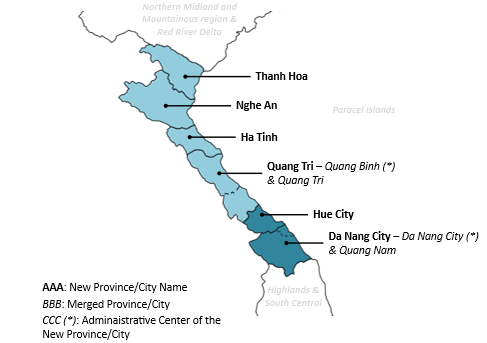
Vietnam’s North Central and Central Coastal region is a major industrial-service-urban coastal center of the country and plays an important role in the development of Central Vietnam. Under Decision No. 759/QĐ-TTg[3], key changes include the merger of Quang Binh and Quang Tri provinces and the consolidation of Da Nang City and Quang Nam into a single centrally-governed city. The remaining provinces, including Thanh Hoa, Nghe An, Ha Tinh, and Hue City, maintain their administrative boundaries but are still influenced by broader regional policies.

The North Central and Central Coastal provincial-level administrative units after the 2025 mergers

The North Central and Central Coastal provincial-level administrative units

出典:B&Company Vietnam

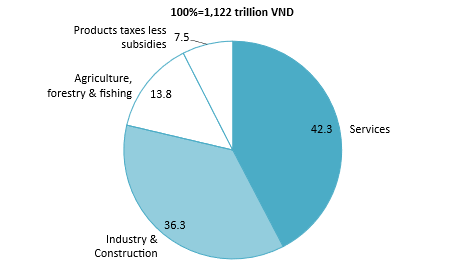
The North Central and Central Coastal is a dynamic region due to its strategic position, long coastline, and abundance of natural resources. The region accounted for 10% of Vietnam’s total GRDP at 1,123 trillion VND, with a growth rate of nearly 9% in 2024. After the merger, the region has a mix of large and small economy localities, with Thanh Hoa leading the region with its 2024 GRDP of around 320 trillion VND, followed by Da Nang City, which overtakes Nghe An due to its merger with Quang Nam at a GRDP of 280 trillion VND. Hue City, without any mergers, posted the lowest GRDP in the region and the lowest among all centrally-governed cities, at 80 trillion VND.

Socio-economic indicators in 2024 of the North Central and Central Coastal provinces after the administrative mergers

いいえ。. 州 人口

(単位:千人)

総面積(単位:km2) GRDP

(単位:十億VND)

成長率

(単位:%)

1 トゥアティエン・フエ 3,764  11,115  318,752

 12.2

2 ダナン市 2,819  11,860  279,907  7.3
3 ゲアン 3,442  16,487  216,943  8.0
4 クアンチ 1,584  12,700  113,688  6.6
5 ハティン 1,330  5,994  112,855  7.5
6 フエ市 1,236  4,947  80,000  8.2
全体 14,175  63,103  1,122,145  8.8

出典: 決議第60-NQ/TW号, 決定番号759/QD-TTg、総合統計局(GSO)、州統計局、B&Company統合

Regional Economic Characteristics and Investment Situation of the North Central and Central Coastal

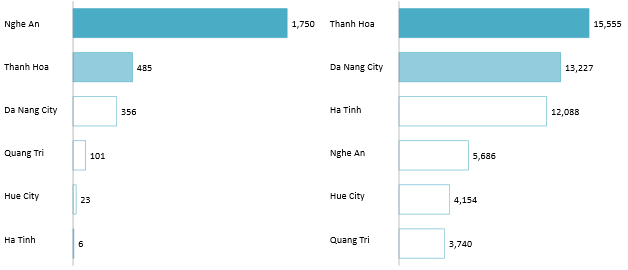
The North Central and Central Coastal region of Vietnam holds a strategic geo-economic position as a transitional zone connecting Northern Vietnam, the Central Highlands, and the East-West economic corridor, linking Laos, Thailand, and Myanmar to the Pacific Ocean. The region’s geographic diversity, bordered by mountains to the west and the East Sea to the east, shapes its development orientation toward a balanced mix of industry, services, and agriculture. The region also acts as a critical transportation and energy corridor for the country, with major highways, railway lines, and seaports facilitating regional integration. These locational strengths have attracted increasing investment into infrastructure, processing and manufacturing industries, renewable energy, and tourism, setting the stage for deeper participation in national and global value chains.

ログインまたは無料会員登録をして、続きを読むにははこちら。

関連記事

ニュースレターを購読する