

 日本語
日本語  English
  Tiếng Việt
  简体中文
简体中文  한국어
한국어 本稿では、ベトナムにおける2025年の行政再編が投資環境に与える影響について考察する。.
2026年7月29日
最新ニュース&レポート / ベトナム速報
コメント: コメントはまだありません.
本記事では、2025年の行政再編が投資環境に与える影響について引き続き検証する。二層制の行政システムへの移行は、行政手続きを簡素化し、効率を高めることを目的とする。成長と投資機会が期待される一方で、法制度の不整合や地域ごとの実施格差といった課題も生じる可能性がある。.
なぜ省の行政改革が進められなければならないのか
ベトナム戦争後の南北統一以来、行政の再編成は社会経済発展目標に合わせるために何度も実施されてきました。1975年には約72の省レベル単位が存在していましたが、1976年には38に統合され、管理が中央集権化され streamlined されました。[1]. その後の数十年にわたり、ベトナムは地域の発展を促進するために地方分権型のアプローチを採用し、徐々に省を再設立しました。1991年には53、1997年には61、2003年には64、2008年には63に増加しました。しかし、この期間を通じて、三層の行政構造(省/中央直轄市、地区、コミューン)は変わりませんでした。.
決議18-NQ/TWによれば[2] , 、行政は大きな改革努力を続けてきたが、効率は制限されたままであり、複雑さを保持しています。根本的な要因も特定されています。政治・行政組織は近代的な要求に追いついておらず、改革の必要性に関する組織間の認識と責任の違いが一因です。さらに、組織構造、職員管理、意思決定における一貫性が欠如しており、状況認識、リーダーシップ、インセンティブの改善の余地があります。法律の重複、職員政策の不十分さ、不十分な監査・評価能力などの永続的な課題は、行政システムの簡略化を妨げています。これらの課題は、政府に対して公共行政システムの再編成と市民へのより良いサービス提供に向けたより効率的で実用的なアプローチを採用することを促しています。.
地方行政再編成:二層システムの導入
概要
2025年初頭、複数回の議論を経て、公共行政の再編成が決定され、作業の断片化や重複を減らすために二層の地方システムが導入されました。.
Overview of Local Administrative Reorganization (Simplified Display)
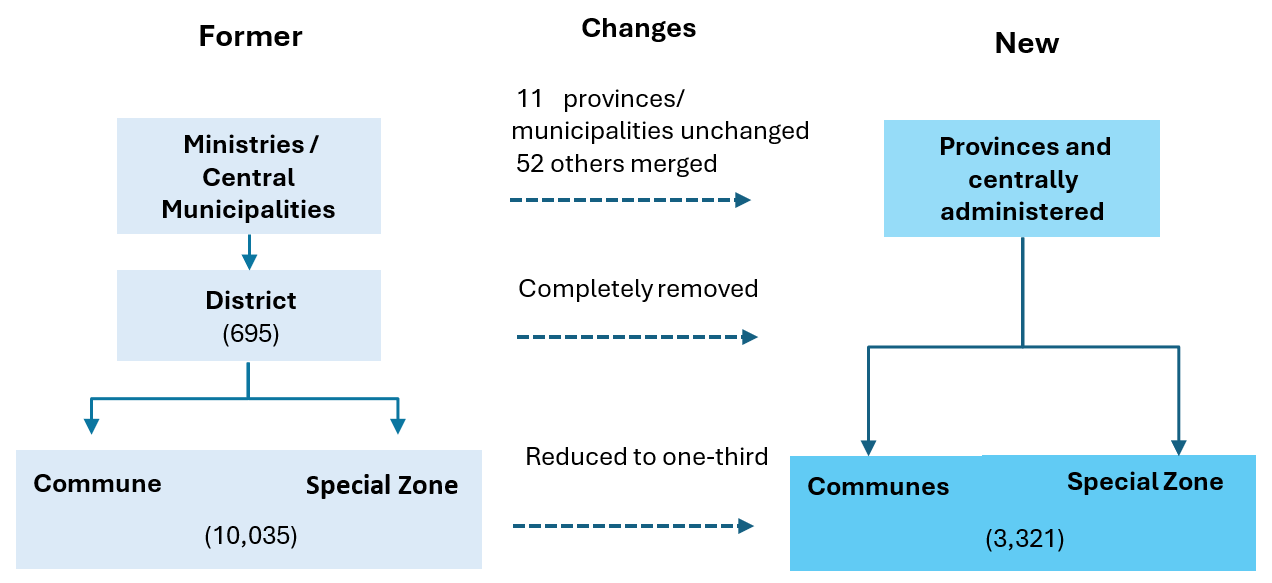
出典: B&Company
この新しい構造は34の省レベルの行政単位と3,321のコミューンで構成されており、中間レベルの単位は廃止されています。たとえば、「レ・ザン通り、クアナムコミューン、ホアンキエム地区、ハノイ市」と以前は書かれていた住所は、現在「レ・ザン通り、ホアンキエムコミューン、ハノイ市」と書かれています。“
– 省/都市: 下位の業務を管理・監督するために決議や指令を発出する主要な地域行政機関。コミューンレベルの行政を監視します。.
– コミューンレベル: コミューンと特別区から構成されるこの執行層は、中央政府および省・市政府が設定した枠組み内で政策を自主的に実施する責任があります。地域の社会経済開発を管理し、地方/市への報告を行います。ハノイ市には126のコミューンユニットがあり、ホーチミン市には168があります。.
再編成後の省と都市
34の新しい省と都市は、面積、人口、文化、地理、国防といった基準に基づいて、以前の63を統合して形成されました。彼らは2025年7月1日に正式に業務を開始しました。.
省/市再編成後のベトナムの地図
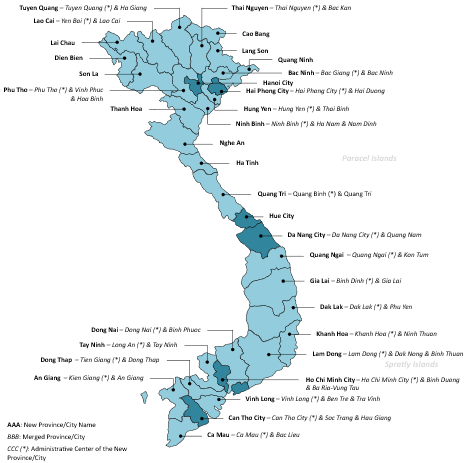
出典: B&Company
| AAA:新しい省/市名
BBB:以前の省/市名 CCC(*):省都の位置 |
面積に関しては、ラムドン省(ビンフオックとダクラックと合併)は、24,000 km²でベトナム最大となり、ホンイエン省(タイビンと合併)は2,500 km²で最小となります。人口に関しては、ホーチミン市はバーリア・ブンタウとビンデュオーンと合併後、約1400万人を持つ最も人口の多い都市となります。人口密度においては、ハノイが最も高く、2,600人/km²を超えています。最も人口の少ない省は、約500,000人の住民を持つライチャウです。.
新しい省と都市の面積と人口(2024年データ)
| 6つの中央政府管轄都市 | |||
| いいえ。. | 省/都市 | 人口
(千人) |
総面積
(Km2) |
| 1 | ハノイ市 | 8,718 | 3,360 |
| 2 | フエ市 | 1,236 | 4,947 |
| 3 | ホーチミン市 | 13,609 | 6,773 |
| 4 | ハイフォン市 | 4,103 | 3,195 |
| 5 | ダナン市 | 2,819 | 11,860 |
| 6 | カントー市 | 3,207 | 6,361 |
| 28の省 | |||
| いいえ。. | 省/都市 (暫定) | 人口
(千人) |
総面積
(Km2) |
| 7 | ライチョウ | 496 | 9,069 |
| 8 | ディエンビエン | 657 | 9,540 |
| 9 | ソンラ | 1,331 | 14,110 |
| 10 | ランソン | 814 | 8,310 |
| 11 | クアンニン | 1,397 | 6,208 |
| 12 | トゥアティエン・フエ | 3,764 | 11,115 |
| 13 | ゲアン | 3,442 | 16,487 |
| 14 | ハティン | 1,330 | 5,994 |
| 15 | カオバン | 559 | 6,700 |
| 16 | ティエンクアン | 1,731 | 13,796 |
| 17 | ラオカイ | 1,657 | 13,257 |
| 18 | タイグエン | 1,695 | 8,375 |
| 19 | フートー | 3,664 | 9,361 |
| 20 | バクニン | 3,509 | 4,719 |
| 21 | フンイエン | 3,208 | 2,515 |
| 22 | ニンビン | 3,819 | 3,943 |
| 23 | クアンチ | 1,584 | 12,700 |
| 24 | クアンガイ | 1,862 | 14,833 |
| 25 | ジャライ | 3,153 | 21,577 |
| 26 | カインホア | 1,882 | 8,556 |
| 27 | ラムドン | 3,324 | 24,233 |
| 28 | ダクラク | 2,831 | 18,096 |
| 29 | ドンナイ | 4,428 | 12,737 |
| 30 | タイニン | 2,959 | 8,537 |
| 31 | ビンロング | 3,367 | 6,296 |
| 32 | ドンタップ | 3,397 | 5,939 |
| 33 | カマウ | 2,141 | 7,942 |
| 34 | アンザン | 3,679 | 9,889 |
出所: B&Companyの統合
対外投資への影響
今回の統合は、海外投資家と国内投資家の双方に新たな機会をもたらす。.
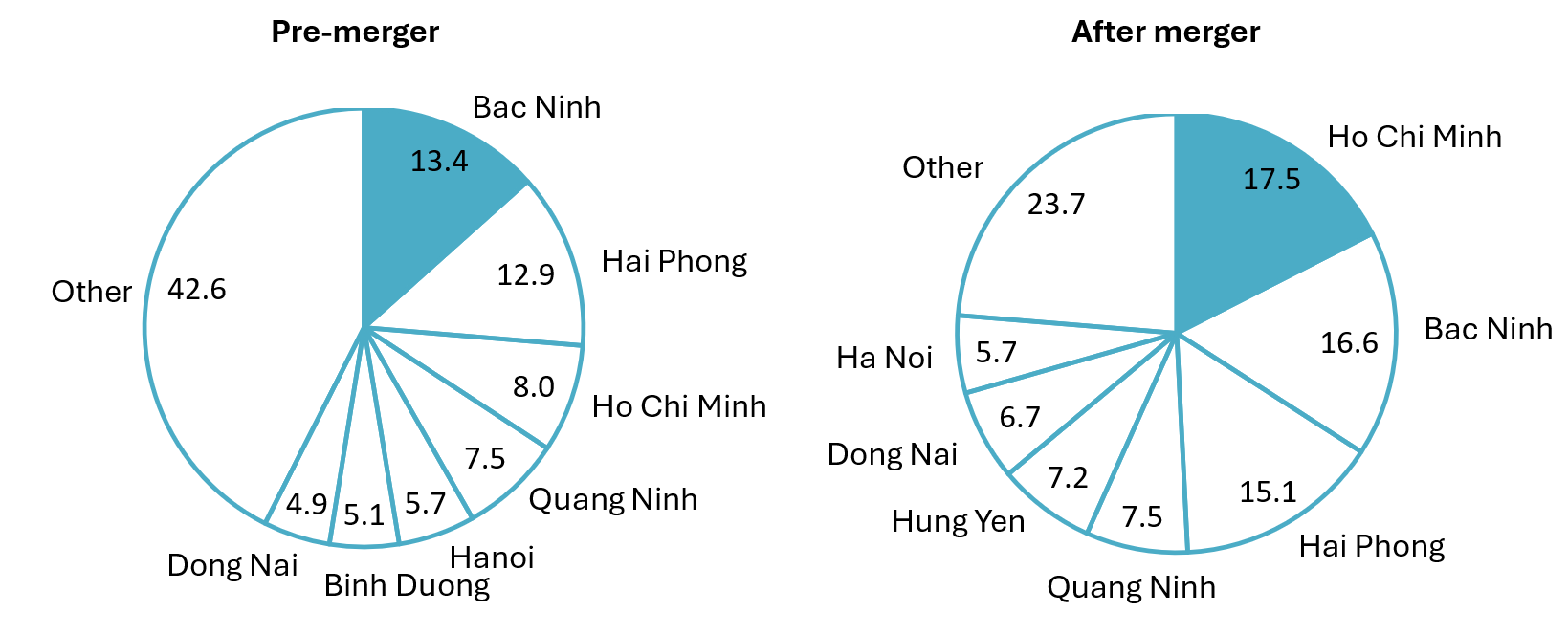
登録FDI (2024年データ)
100% = 38.23億米ドル
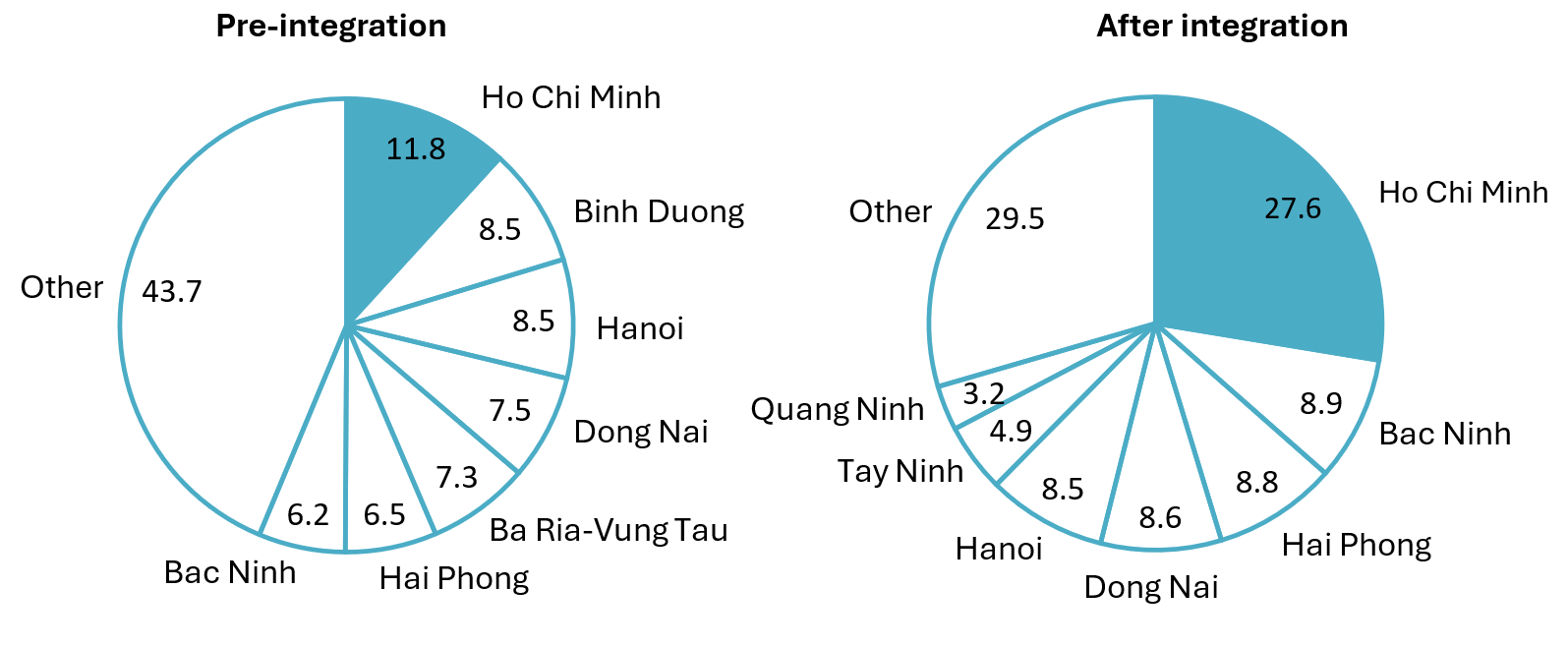
Cumulative Registered FDI Since 1988
100% = 500.5億米ドル
B&Companyの総括
南部では、ホーチミン市が主要な投資先であり、ビンズオンおよびバリア・ブンタウとの統合後、累計FDIの28%を占める。新市は現在、金融、ハイテク、物流において多様な産業エコシステムを備えており、投資先として魅力的である。ホーチミン市は、ヘクタール当たり800万~1,000万米ドルの投資誘致を目指し、高付加価値のハイテク案件や環境配慮型案件を優先しつつ、持続的成長に向けて産業モデルの近代化を進める。一方、ドンナイ(ビンフオックとの統合後)とタイニン(ロンアンとの統合後)は、大都市圏近接地域における主要な投資先として台頭している。.
北部では、バクニン省とハイフォンが2024年の登録FDI資本額および1988年以降の累計FDIの双方で首位に立っており、特にそれぞれバクザン省、ハイズオン省との統合後にその傾向が強まっている。これにより、バクザン省のような地域にも多くの機会が開かれる。バクニン省は長年にわたりSamsungやCanonのような大手外資を引き付けてきたが、バクザン省のビジネス環境も改善し、HanaMicronやFoxconnといった世界的企業の誘致に成功している。.
インフラ開発
省の統合の目的の一つは、インフラと接続性を強化し、高速道路、港湾、空港などへの物流アクセスを改善し、効率的な発展を促進することにある。.
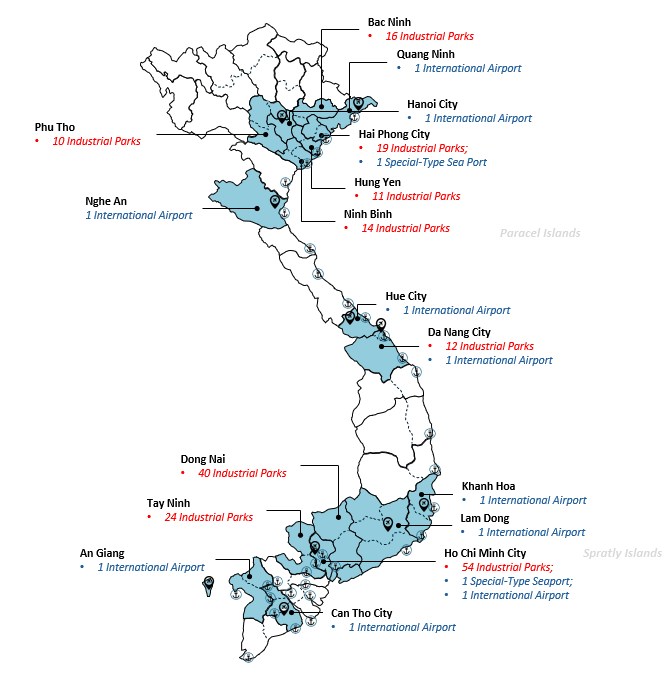
– 南東部および紅河デルタ地域では、大規模工業拠点の形成が推進され、製造業需要が高まっている。ホーチミン市は54超の工業団地を有する見込みで[3] , 、これに続くのがドンナイ(40)とタイニン(24)である。紅河デルタでは、ハイフォン、バクニン、ニンビンが主要な工業中心地となりつつあり、ダナンも12の工業団地を擁して存在感を高めている。.
– 大規模工業地帯の管理強化により、企業の柔軟性が高まり、地域競争力が向上し、国内外からの投資を引き付ける。土地の確保が進むことで工場用地の選定が容易になり、需要の高い地域における不足も緩和される[4].
– 工業化が進んだ省と主要空港・港湾との距離が縮まり、貿易連結性が向上する。ハイフォンの超大型港やハノイ、クアンニンの空港は北部の産業成長を支え、ホーチミン市はバリア・ブンタウへのアクセス改善の恩恵を受ける。.
– これまで物流面で不利だった内陸省(ダクラクなど)は、港湾および海上輸送へのアクセスが改善され、地域経済発展が促進されるとともに、内陸企業の物流コストが削減される。.
統合後の主要な経済・産業インフラ
B&Companyの総括
機会と課題
行政手続きの簡素化と大規模経済圏の形成により、ビジネス環境は大幅に改善する。官僚的障壁の削減と迅速な意思決定の実現により、許認可取得に要する時間とコストが低下し、規制の予見可能性と行政効率が向上する。省庁とコミューンの直接連携は、インフラ計画の改善、統合市場の形成、そして外国投資家に対する行政上の障壁の低減につながる。.
ベトナム中小企業協会(VINASME)のトー・ホアイ・ナム常任副会長によると、省の統合は長期的に事業発展の新たな機会を生み出し、特に中小企業の規模拡大に適したビジネス環境を形成する。より小さな行政単位がより大きな計画的地域に統合されることで、交通、貿易、サプライチェーンなどのインフラが改善し、製造、貿易、サービスにおけるより広い市場へのアクセスが可能になる。.
課題は存在する。専門家は、統合プロセスによって政府機関、税法、事業許可、土地所有権書類に変更が生じ、遅延とコスト増加につながると指摘している。企業は登記事項を更新し、住所を修正し、新たな官僚手続きを進める必要がある。インセンティブ政策や規制(税制、土地利用規則、事業支援)は変更されるか、適用されなくなる可能性があり、不確実性が高まる。齟齬が生じる可能性があり、進行中のプロジェクトや公共資産をめぐる紛争につながるおそれがある。統合により競争が激化し、企業数の増加が地域資源の配分に不均衡を生む可能性がある。物流の観点では、旧来の車両登録、運送許可、道路インフラの不整合により、企業は課題に直面すると見込まれる。行政・法制度を迅速に調整しなければ、輸送、流通、サプライチェーンに支障が生じる可能性がある。こうしたリスクを軽減するためには、統合プロセスにおいて明確なロードマップと連携した政策実施が不可欠である。.[5]
続きを読む
関連記事


















ログイン / 新規登録
ニュースレターを購読する