

 English
  日本語
日本語  Tiếng Việt
  简体中文
简体中文  한국어
한국어 This article reviews Hanoi’s policy direction of petrol motorbike restrictions and responses by Japanese brands such as Honda and Yamaha.
02Jul2026
Latest News & Report / Vietnam Briefing
Comments: No Comments.
Hanoi’s plan to restrict petrol-powered motorbikes marks an important shift in Vietnam’s urban mobility policy. While implementation is expected to be gradual, the policy creates both risks and opportunities for Japanese motorcycle brands, especially those with strong exposure to Vietnam’s petrol motorbike market. This article reviews Hanoi’s policy direction, recent responses by Japanese brands such as Honda and Yamaha, and the implications for product strategy, dealer networks, battery services and fleet-based electric mobility.
From a traffic issue to a business issue
For decades, motorbikes have been the backbone of urban mobility in Vietnam. In Hanoi, they are not only private vehicles for commuting, but also essential tools for food delivery, ride-hailing, postal services, small retail operations and family transport. Therefore, Hanoi’s plan to restrict petrol-powered motorbikes is not only an environmental policy. It is also a business issue for motorcycle manufacturers, dealers, component suppliers, logistics operators and urban service providers.
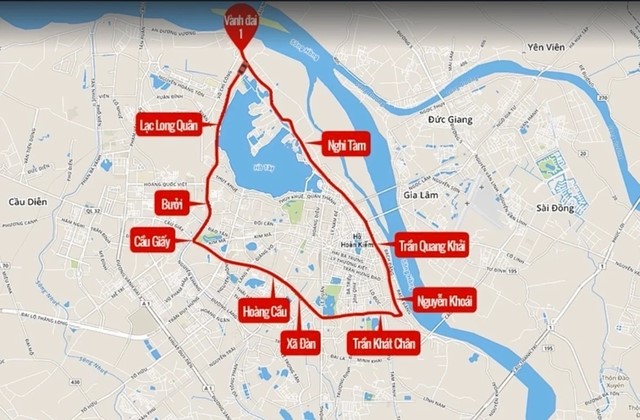
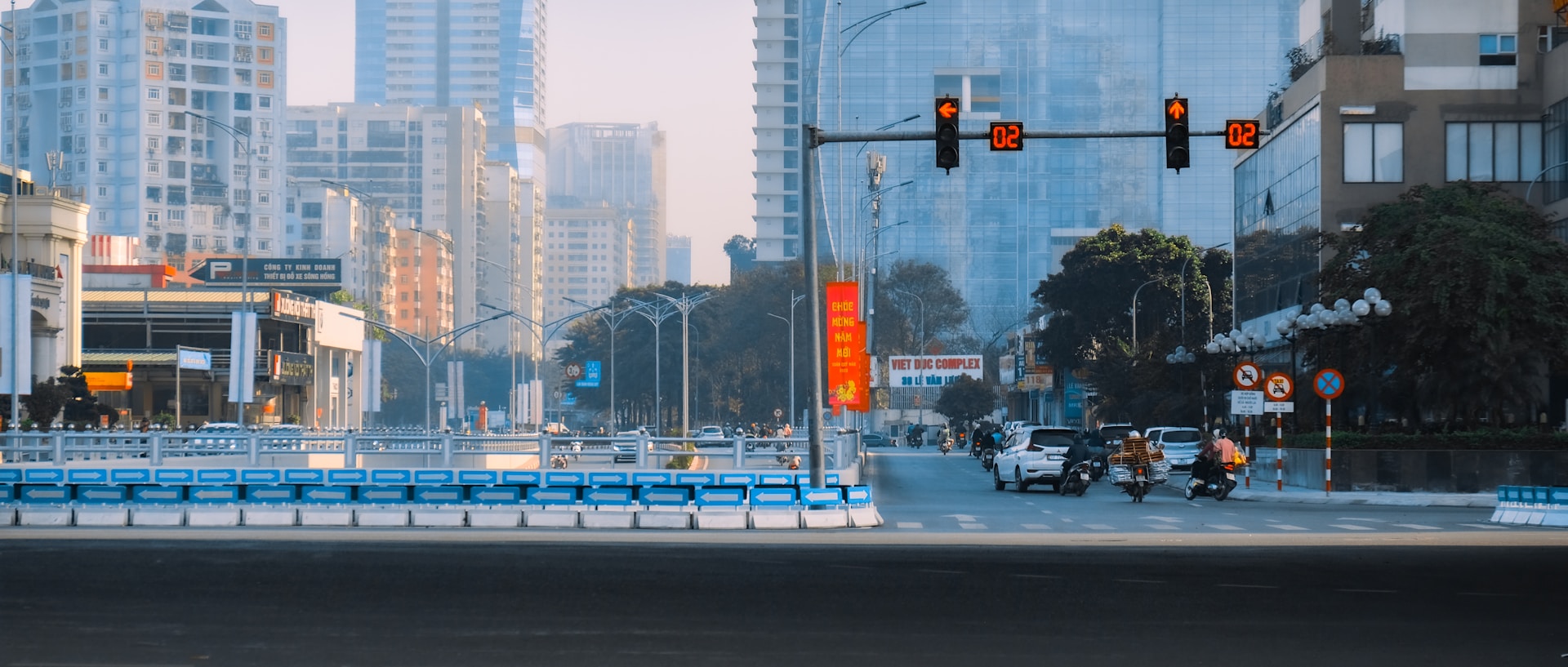
The policy direction became clearer in July 2025, when the Prime Minister requested Hanoi to restrict fossil-fuel motorbikes and mopeds within Ring Road 1 from July 1, 2026, before expanding the restriction to Ring Road 2 from 2028 and Ring Road 3 by 2030. The measure was introduced as part of urgent actions to reduce air pollution in the capital.
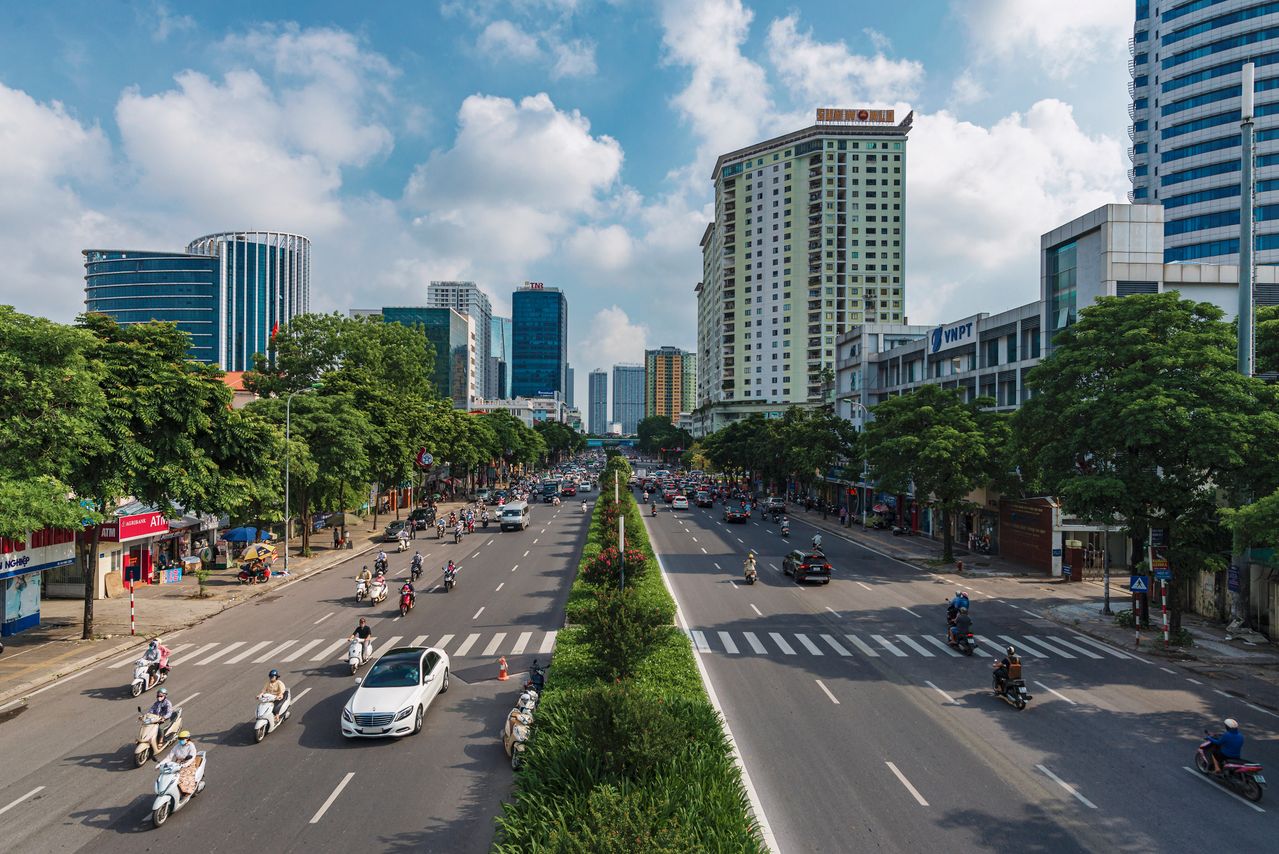
Image of Ha Noi’s Ring Road 1
Source: Baochinhphu
However, as implementation approached, Hanoi moved toward a more gradual approach. In April 2026, the Government Portal reported that the city would not impose an outright ban on petrol-powered cars and motorbikes across the entire Ring Road 1 from the beginning. Instead, Hanoi planned to pilot low-emission zones in selected areas within Ring Road 1, with measures depending on specific zones, timelines and target vehicle groups.
A small pilot zone with a large market signal
The first stage of the low-emission zone is expected to focus on central Hanoi, including parts of Hoan Kiem and the Old Quarter. According to Vietnam News, the draft pilot plan starts from July 1, 2026 in Hoan Kiem Ward, with a core area of around 0.5 sq.km and a buffer area around the Old Quarter. The plan then expands in 2027 and aims to cover the entire area within Ring Road 1 during 2028–2029.
Hoan Kiem Lake viewed from above

Source: Nhandan
The geographical area may look small at first, but the signal is large. Hoan Kiem and the Old Quarter are among the most visible commercial, tourism and service areas in Hanoi. If petrol motorbikes face restrictions there, the impact will be seen quickly by residents, commuters, tourists, delivery workers and businesses operating in the city center.
For consumers, the policy may change how they evaluate a motorbike. Traditionally, Vietnamese buyers compare motorbikes by price, fuel efficiency, durability, brand trust, service network and resale value. Going forward, “regulatory access” may become part of the purchase decision. A petrol motorbike may still be useful in suburban and provincial areas, but less attractive for users who frequently enter central Hanoi.
For businesses, the first impact may appear in daily operations. Restaurants, convenience stores, pharmacies, delivery platforms and service providers may need to reconsider how staff, suppliers and drivers enter restricted zones. This could create early demand for electric two-wheelers, fleet conversion, battery-swap points and urban logistics solutions.
Why Japanese brands are highly exposed
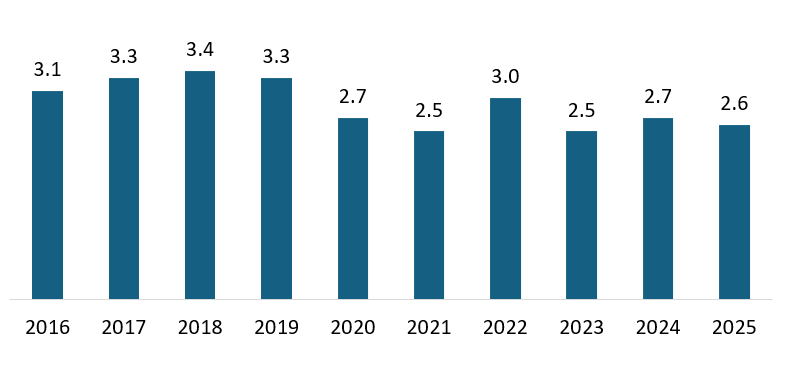
Japanese brands are deeply embedded in Vietnam’s motorbike market. VAMM includes Honda Vietnam, Yamaha Motor Vietnam, Suzuki Vietnam, SYM Vietnam, and Piaggio Vietnam. VAMM members sold 2.615 million motorbikes in Vietnam in 2025, down only 1.5% compared with 2024. In Q1 2026, their sales reached 729,121 units, up 8.3% year-on-year. This shows that Vietnam remains a large two-wheeler market even amid policy uncertainty.
Motorbikes sold by VAMM members (billion motorbikes)
Source: VAMM
Honda is the most exposed player. Reuters reported that Honda controls around 80% of Vietnam’s two-wheeler market and operates four factories in the country. This gives Honda strong consumer trust, a nationwide dealer network and deep after-sales capability. At the same time, it also means that any rapid shift away from petrol motorbikes can affect its dealers, spare parts network, suppliers and customers.
Japanese stakeholders have therefore raised concerns about the speed of the transition. Reuters reported that Honda opposed the initial ban timeline and that the Japanese side warned of potential impacts on dealers, component suppliers and employment. Hanoi later reviewed a softer proposal, including a six-month pilot restriction covering a smaller area and applying only on weekends.
This response should not be viewed simply as resistance to environmental policy. It reflects the complexity of changing an industrial ecosystem that has developed around petrol motorbikes for decades. A move to electric two-wheelers requires not only new models, but also batteries, chargers, service technicians, financing, consumer education and resale confidence.
How Japanese brands are adapting
Japanese brands have not been passive, although the level of public response differs by company. Honda has been the most active player so far. In addition to raising concerns about the speed of Hanoi’s original restriction plan, Honda Vietnam has started to expand its electric two-wheeler portfolio with models such as ICON e: and CUV e:. The company has also tested electric mobility through fleet use, including a delivery project with Vietnam Post, which helps assess range, charging behavior and maintenance needs in real operating conditions.
Honda ICON e: 2025
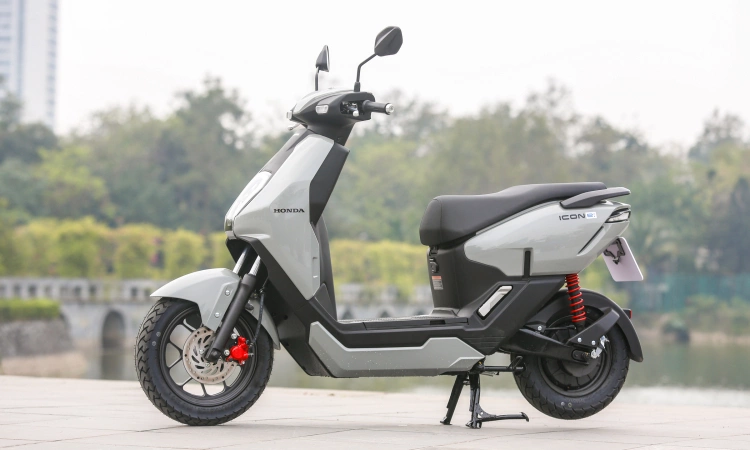
Source: Vnexpress
Honda’s response has gradually moved beyond product launch. By 2026, the company was also developing supporting infrastructure, including charging and battery-swapping stations in major cities such as Hanoi, Ho Chi Minh City and Da Nang. This suggests that Honda is preparing for a broader EV ecosystem rather than simply selling electric vehicles.
Yamaha has also entered the electric segment in Vietnam with the NEO’s electric scooter and has piloted battery-swap support for users in Ho Chi Minh City. However, compared with Honda, Yamaha’s public adaptation appears more limited so far. Suzuki’s Vietnam-specific electric two-wheeler response is less visible publicly. Overall, among Japanese brands, Honda currently appears to be the most proactive in preparing for Vietnam’s shift toward low-emission urban mobility.
Competitive pressure from local EV players
The policy also creates an opportunity for local electric two-wheeler players. VinFast is likely to benefit from the shift because it already has an electric mobility ecosystem and stronger local policy alignment. Reuters reported that VinFast delivered more than 120,000 electric two-wheelers in Q3 2025, up 73% from the previous quarter, following Hanoi’s announcement on petrol motorbike restrictions.
VinFast EVO
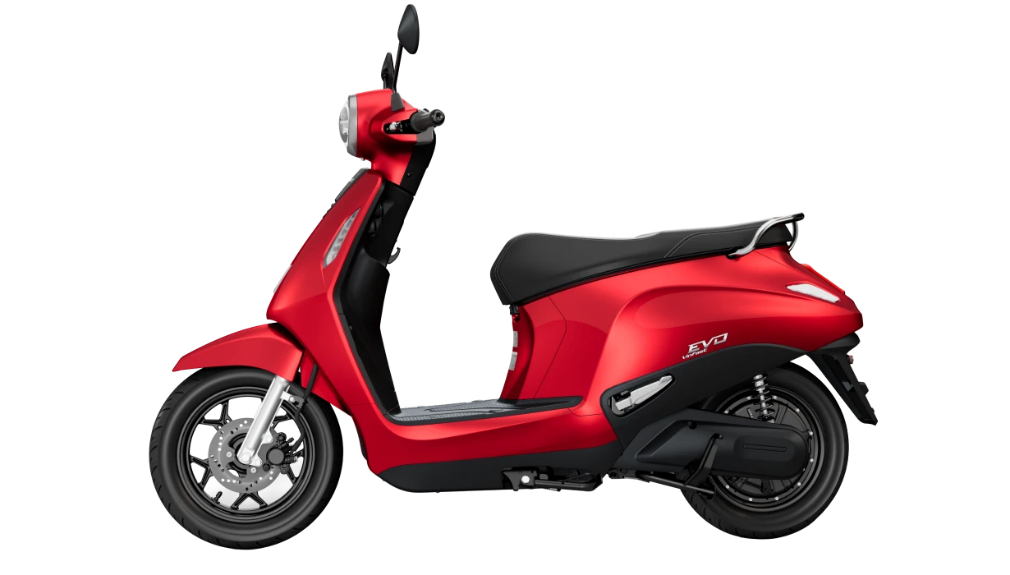
Source: VinFast
This does not mean electric motorbikes will replace petrol motorbikes immediately. Many Vietnamese consumers remain price-sensitive. For low-income workers, delivery drivers and small business owners, motorbikes are productive assets, not lifestyle products. A forced transition could become financially difficult without practical incentives, charging access and reliable after-sales services.
Still, policy can change market behavior. Once access to central areas becomes a concern, consumers may start to view electric motorbikes not only as “green” products but also as practical tools for future urban mobility.
Strategic implications for Japanese brands
First, Japanese brands should treat Hanoi’s low-emission zone as an early signal, not a one-off local issue. Similar policies may gradually appear in other large cities if air pollution and congestion remain serious. A national urban electrification scenario is therefore needed.
Second, product strategy should become more segmented. Petrol motorbikes may remain strong in suburban and provincial markets, while electric models may become more relevant for central urban users, delivery fleets and policy-sensitive areas.
Third, dealer networks need transition planning. Dealers will have to explain batteries, charging, warranties, financing and maintenance to consumers. Japanese brands have a strong advantage through existing dealer networks, but only if these networks are converted into EV-capable service channels.
Fourth, battery strategy may become as important as vehicle design. Battery rental, battery swapping, charging hubs and roadside support can reduce consumer risk. Honda and Yamaha’s early battery-related initiatives suggest that Japanese brands understand this issue, but the scale of deployment will determine competitiveness.
Finally, fleet conversion may be the most practical early market. Postal services, delivery platforms, corporate fleets and ride-hailing drivers have predictable routes and higher daily usage. They can help manufacturers test reliability, charging patterns and service models before mass consumer adoption.
B&Company support
Vietnam’s mobility market is entering a new phase where consumer behavior, environmental regulation and industrial strategy are increasingly connected. For Japanese mobility brands, the Hanoi petrol motorbike restriction is not only a policy issue but also a market-entry, product-planning, and partner-selection issue.
B&Company supports companies in Vietnam through market research, consumer surveys, competitor analysis, policy monitoring, dealer and supplier mapping, and business matching. For mobility-related projects, research can include consumer willingness to switch to electric motorbikes, charging behavior, dealer readiness, fleet demand, price sensitivity and regional market differences.
As Vietnam’s cities move toward low-emission transport, companies that understand both policy direction and consumer reality will be better positioned to adjust. The winners may not be those that simply sell electric vehicles first, but those that can offer a practical transition path for Vietnamese users.
Read more
Electric motorcycles in Vietnam: Can they replace Gasoline bikes?
* If you wish to quote any information from this article, please kindly cite the source along with the link to the original article to respect copyright.
| B&Company
The first Japanese company specializing in market research in Vietnam since 2008. We provide a wide range of services including industry reports, industry interviews, consumer surveys, business matching. Additionally, we have recently developed a database of over 1,000,000 companies in Vietnam, which can be used to search for partners and analyze the market. Please do not hesitate to contact us if you have any queries. info@b-company.jp + (84) 24 3978 5165 |
Related article













Log in / Register
SUBSCRIBE NEWSLETTER