

 English
  日本語
日本語  Tiếng Việt
  简体中文
简体中文  한국어
한국어 The green building market in Vietnam has grown rapidly in recent years as the country increasingly emphasizes sustainable development.
13Mar2026
Latest News & Report / Vietnam Briefing
Comments: No Comments.
Abstract
The green building market in Vietnam has grown rapidly in recent years as the country increasingly emphasizes sustainable development and environmental protection. Green buildings aim to reduce energy consumption, conserve natural resources, and minimize environmental impacts throughout their lifecycle. Driven by rapid urbanization, rising energy demand, and national climate commitments, Vietnam has begun adopting international green building standards such as LEED, EDGE, and LOTUS.
2025 Green Building Market Overview[1]
By the end of 2025, Vietnam had a cumulative total of 780 certified green buildings, with a combined floor area of approximately 18.69 million m². The rapid growth in the number of green buildings highlights the practical benefits of improved operational efficiency and resource savings, which have become strong incentives for developers to pursue green building certification.
Popular Green Building Certification Systems in Vietnam
(As of December 31st, 2025)
| EDGE | LEED | GREEN MARK | OTHERS | TOTAL | |
| Number of green certified buildings | 394 | 290 | 51 | 45 | 780 |
| Number of green certified apartment units | 37,539 | 2,378 | 9,759 | 2,158 | 51,834 |
| Number of green certified landed houses | 3,982 | – | 231 | 8 | 4,221 |
| Green certified GFA (m2) | 8,384,696 | 7,735,443 | 1,922,883 | 647,258 | 18,690,279 |
Source: NetZero 2050
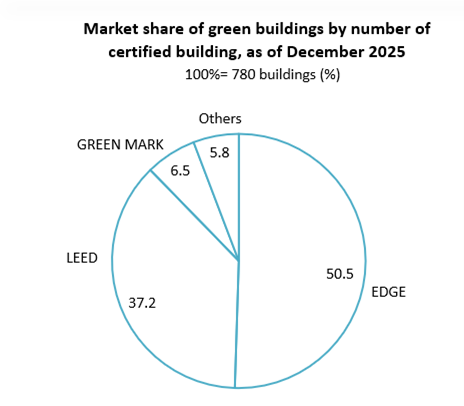
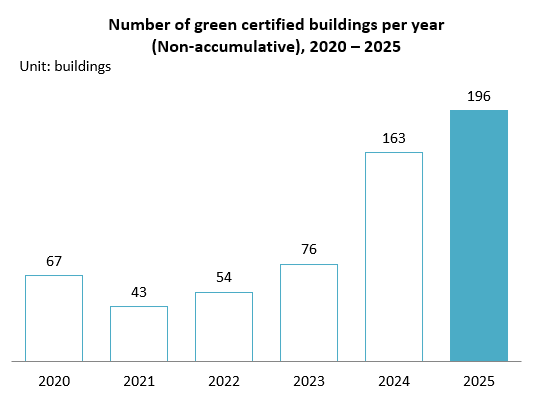
The year 2025 marked a significant surge in Vietnam’s green building market, reflected in several notable figures. Vietnam recorded 196 newly certified green buildings, representing a 20% increase compared to 2024, along with an additional 4.4 million square metres of gross floor area (GFA), up 15% year-on-year. Among the certification systems, EDGE dominated the market with a 50.5% share, followed by LEED at 37.2%. Green Mark accounted for 6.5%, while other certification systems represented the remaining 5.8%.
 |
 |
Source: Netzero2050.vn
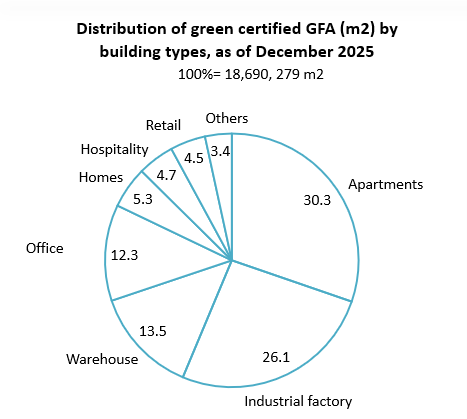
Vietnam’s green building growth has been uneven, reflecting the real estate market recovery and shifting investment flows. Residential apartments led the market with over 30% share and a 151% increase in floor area, while social housing reached 11.7% of green residential space with 165% growth. The retail segment grew 121%, driven by sustainability commitments from companies such as AEON Mall, Central Retail, and Keppel Land. Industrial factories held the second-largest share (over 28%), growing 54% as multinational firms require certifications like EDGE or LEED. However, several segments declined: industrial warehouses fell 58%, education facilities 50%, and hospitality properties 44%. The report also noted new green building types, including data centers and heritage buildings, appearing in Vietnam’s certification landscape for the first time.
Source: Netzero2050.vn
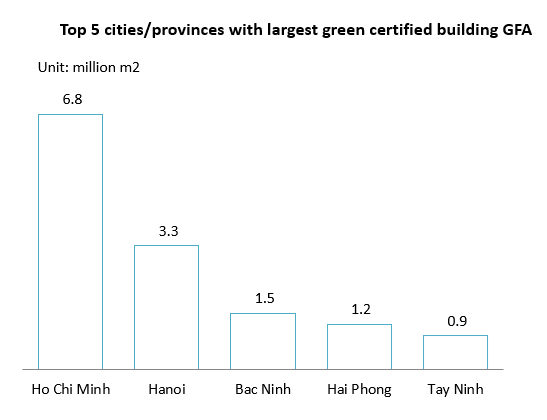
Green building activities in Vietnam are largely concentrated in major economic centers and industrially developed provinces. Ho Chi Minh City leads the country with approximately 6.8 million square meters of certified green building floor area. Hanoi ranks second with around 3.3 million m². Other key provinces include Bac Ninh Province with about 1.5 million m², followed by Hai Phong at 1.2 million m², and Tay Ninh Province with roughly 0.9 million m² of certified floor area. This distribution highlights the strong link between green building development and regions with dynamic economic growth and expanding industrial activity.
Source: Netzero2050.vn
Drivers and Challenges of the Green Building Market
Several factors have contributed to the rapid expansion of green buildings in Vietnam. One key driver is the government’s commitment to environmental sustainability and climate change mitigation. Vietnam has pledged to reduce greenhouse gas emissions and achieve net-zero emissions by 2050[2], making energy efficiency in buildings a national priority. Urbanization and economic growth are also significant drivers of the market. Vietnam is experiencing rapid urban development, with increasing demand for residential housing, office space, and industrial infrastructure[3]. As cities expand, sustainable construction practices are becoming essential for reducing energy consumption and environmental pressures in urban areas[4].
Another important factor is the influence of foreign investors and multinational corporations. Many international companies require buildings that meet global environmental standards for their offices, factories, and logistics facilities[5]. This demand encourages developers in Vietnam to adopt certification systems such as LEED and EDGE in order to attract international tenants and investment partners[6]. Green buildings also offer long-term economic benefits. Although sustainable construction may involve higher initial costs, energy-efficient designs can significantly reduce operational expenses, especially in electricity and water consumption. These buildings often provide better indoor environmental quality, which improves productivity and comfort for occupants. As a result, green buildings tend to have higher property values and stronger demand in the real estate market5.
One of the main barriers is the higher upfront cost associated with sustainable technologies, energy-efficient materials, and advanced building systems. Many developers, particularly those involved in small-scale projects, are reluctant to invest in green building standards due to concerns about increased construction expenses5. Another challenge is the limited awareness and technical capacity within parts of the construction industry. Some architects, engineers, and contractors may lack experience with sustainable design methods and certification requirements[7]. Additionally, awareness and demand are still developing; although Vietnam ranks 28th globally for LEED-certified buildings, green construction only started appearing in the country around 2005–2010, meaning the market is still relatively young compared with developed countries[8]. Addressing these challenges will require stronger policy support, improved technical training, and broader awareness of the benefits of sustainable construction.
Prospects and Foreign Investment Potential
The future of the green building market in Vietnam appears highly promising. Market research suggests that the Vietnamese green building industry could grow significantly in the coming years, with an estimated compound annual growth rate (CAGR) of around 10.99% between 2025 and 2032, increasing the market value from approximately USD 3.85 billion in 2024 to nearly USD 8.89 billion by 2032[9].
One of the most important drivers of this growth is the increasing potential for foreign investment in sustainable construction and infrastructure. Vietnam has become a major manufacturing hub in Southeast Asia, attracting large multinational companies in sectors such as electronics, textiles, and high-tech manufacturing. Many of these companies prioritize environmentally sustainable facilities that meet international green building standards[10].
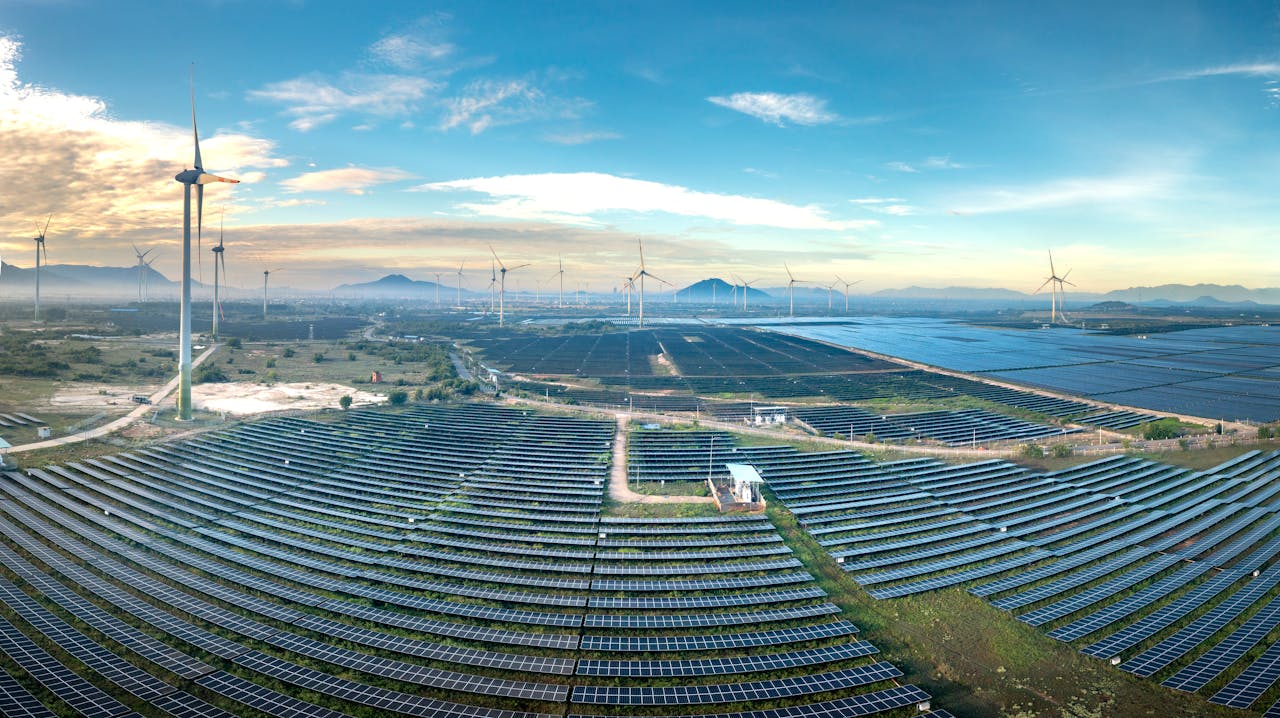
Foreign investors, therefore, have strong opportunities in several areas of the green building market. One key area is eco-industrial parks and sustainable manufacturing facilities, where international companies require energy-efficient buildings and low-carbon infrastructure[11]. Recent investments in clean-energy industrial facilities, such as major manufacturing plants designed to operate on renewable energy, demonstrate the growing demand for sustainable infrastructure in Vietnam[12].
Another important opportunity lies in green commercial real estate, including office buildings, shopping centers, and mixed-use developments. Many multinational corporations prefer to locate their offices in buildings with internationally recognized sustainability certifications because these buildings provide energy savings, improved indoor environments, and stronger corporate sustainability branding[13].
Furthermore, international financial institutions are increasingly supporting sustainable infrastructure projects in Vietnam through climate finance programs, green bonds, and development assistance. These funding mechanisms help reduce financial barriers and encourage greater participation from both domestic and foreign investors[14].
Overall, the combination of strong economic growth, supportive environmental policies, and increasing demand for sustainable infrastructure makes Vietnam an attractive destination for foreign investment in the green building sector.
Opportunities and Implications for Investors
Vietnam’s green building sector is emerging as an attractive investment segment as sustainability becomes a priority in real estate and infrastructure development. With the country’s commitment to achieving net-zero emissions by 2050, demand for energy-efficient buildings and low-carbon infrastructure is expected to continue increasing, creating a favorable environment for long-term investment in sustainable construction and related technologies.
One key opportunity lies in green industrial and manufacturing facilities. As Vietnam strengthens its position as a regional manufacturing hub, multinational corporations increasingly require production sites that meet international environmental standards such as LEED or EDGE. This trend is driving demand for certified factories, logistics facilities, and eco-industrial parks that can support sustainable supply chains[15].
Another promising area is green commercial real estate, including office buildings, retail centers, and mixed-use developments. International tenants often prefer buildings with recognized sustainability certifications due to their energy efficiency, improved indoor environmental quality, and alignment with corporate ESG commitments. As a result, certified buildings may achieve stronger tenant demand and long-term asset value[16].
In addition, the expansion of green finance mechanisms, including climate funds, development finance, and green bonds, is gradually improving access to capital for sustainable infrastructure projects in Vietnam. These financial instruments can help reduce investment risks while encouraging greater participation from international investors in the country’s growing green building market.
Overall, Vietnam’s combination of strong economic growth, increasing sustainability commitments, and rising demand from multinational companies positions the green building sector as a promising area for future investment.
Read more
Green buildings in Vietnam: Current situation and growth potential
* If you wish to quote any information from this article, please kindly cite the source along with the link to the original article to respect copyright.
| B&Company
The first Japanese company specializing in market research in Vietnam since 2008. We provide a wide range of services including industry reports, industry interviews, consumer surveys, business matching. Additionally, we have recently developed a database of over 900,000 companies in Vietnam, which can be used to search for partners and analyze the market. Please do not hesitate to contact us if you have any queries. info@b-company.jp + (84) 28 3910 3913 |
[3] OpenDevelopment Vietnam <Access>
[12] Vietnam Briefing <Access>
Related article










Log in / Register
SUBSCRIBE NEWSLETTER