

 English
  日本語
日本語  Tiếng Việt
  简体中文
简体中文  한국어
한국어 With strong support from foreign investors in recent years, Vietnam has seen positive developments in its waste treatment industry.
18Mar2025
Latest News & Report / Vietnam Briefing
Comments: No Comments.
Overview of Vietnam’s Waste Treatment
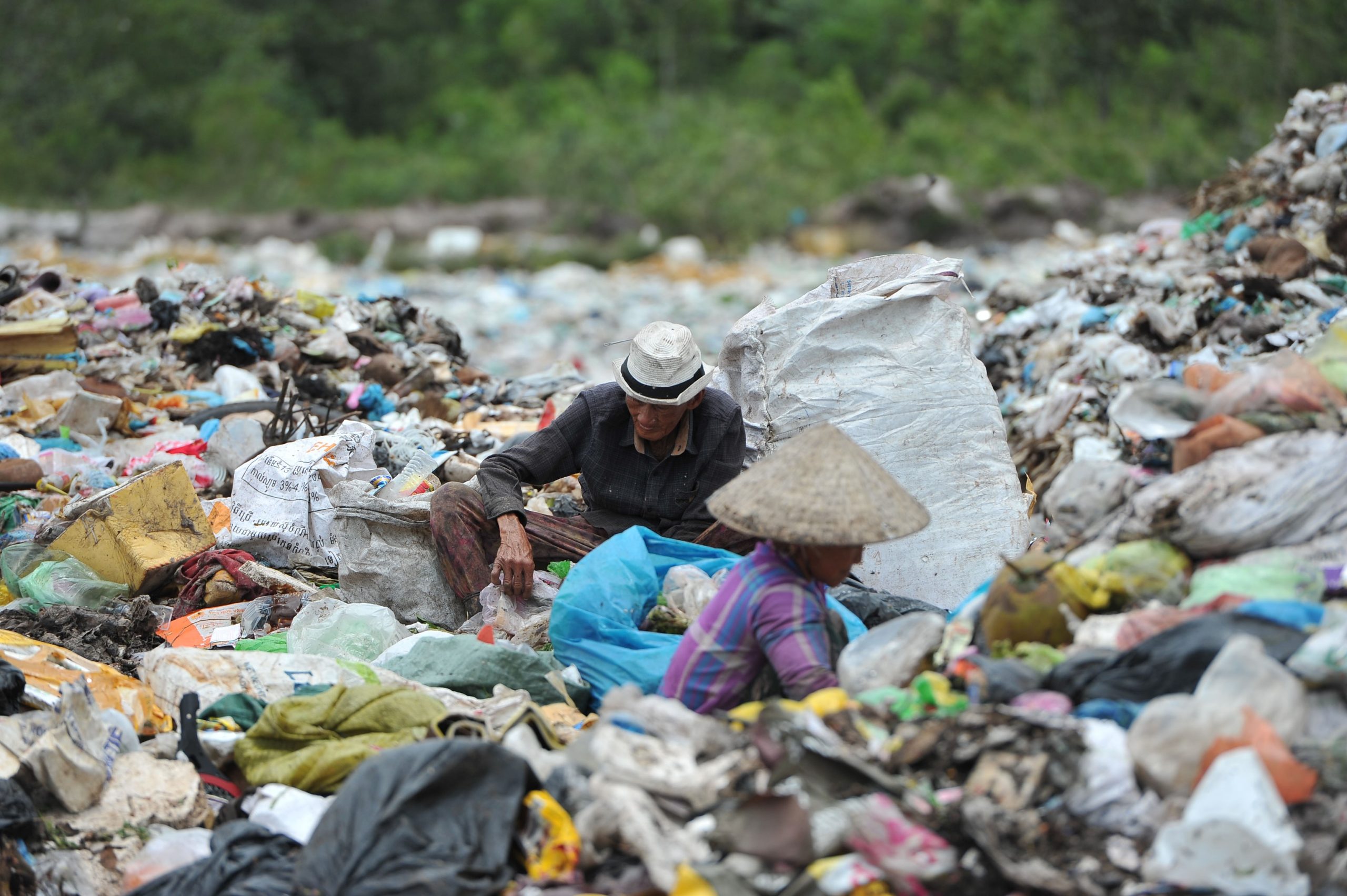
As of 2024, Vietnam generates approximately 60 thousand tons of waste daily, with urban areas contributing over 60% of this volume. Ha Noi, Da Nang and Ho Chi Minh City alone made up for over 20 thousand tons of daily waste. A significant portion is household waste, followed by industrial, agricultural, and medical waste[1]. Waste treatment in Vietnam remains largely manual and rudimentary. In 2023, 55% of waste was disposed of through unsanitary landfilling, while 20% was managed by open burning. In contrast, only 25% underwent proper waste treatment, with 15% buried in sanitary landfills and 10% processed for recycling.
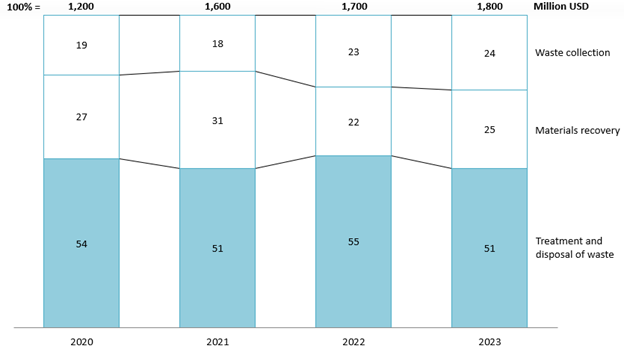
According to B&Company Enterprises Data, in 2023, the industry has around 3 thousand companies in operation, accounted to a total of around 1.8 billion USD. In which, Vietnam has divided the industry into major sectors per Decision No 27/2018/QĐ-TTg[2].
– Treatment and disposal of waste (code 382): This sector involves the treatment and disposal of both inorganic and organic waste, including radioactive and medical waste. Additionally, it generates electricity as a byproduct of burning waste. Notably, this segment holds the largest share within the waste treatment industry, accounting for 51% of the market. Between 2020 and 2023, the sector experienced a compound annual growth rate (CAGR) of 12%, reaching a total revenue of 939 million USD in 2023.
– Waste collection (code 381): Waste collection includes the gathering of household and commercial waste through various means such as bags, garbage trucks, and containers. This sector covers both hazardous and non-hazardous waste collection. Although it represents a smaller share at 25%, it follows a similar growth trajectory, maintaining a 12% CAGR and generating 459 million USD in revenue in 2023.
– Materials recovery (code 383): The action of collecting, sorting and recycling metallic materials, record the highest growth of CAGR 23% from 2020 – 2023, and ultimately achieving a net revenue of 437 million USD in 2023.
Net revenue of Vietnam waste treatment industry by sectors
Source: B&Company Enterprises Database
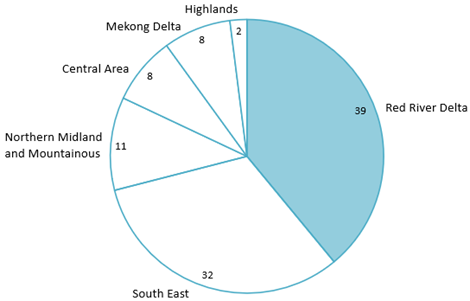
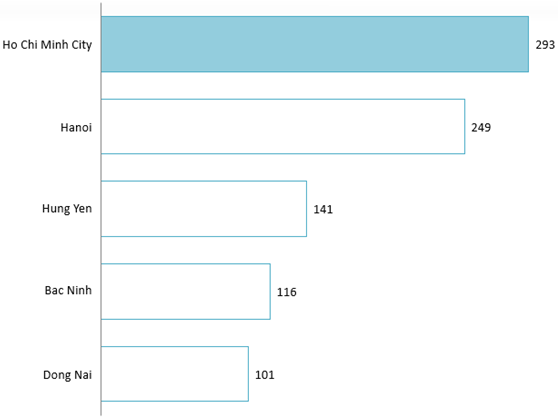
The waste treatment industry is primarily concentrated in the Red River Delta region, which accounts for 39% of total revenue. It is followed by the Southeast region and the Northern Midland and Mountainous region, contributing 32% and 11%, respectively.
Net revenue of Vietnam waste treatment industry by region in 2023
Unit: 100% = 1.8 billion USD
Related article



















Log in / Register
Continue without an account
Log in / Register
SUBSCRIBE NEWSLETTER