
房地产数据数字化(第357/2025/ND-CP号法令):评估其对市场的影响

Decree No. 357/2025/NĐ-CP introduces a nationwide digital framework, including a real estate database and identification codes for each property.
Vietnam digization real estate data

214 月2026

B&Company

最新消息及报道 / 越南简报

评论: 没有评论.

B&Company 是自 2008 年起在越南成立的首家专门从事市场研究和投资咨询的日本公司。

在“越南简报”版块,B&Company的年轻研究员将及时提供有关越南产业趋势、消费趋势和社会动向的信息。

本文以英文撰写,其他语言版本使用自动翻译。请以英文版本为准,了解准确内容。虽然我们努力确保原文信息的准确性,但请单独检查每条信息。解读和未来展望均为每位研究者的个人观点。

抽象的

Vietnam’s real estate market has long been characterized by fragmented and inconsistent data, leading to information asymmetry, speculation practices, and legal risks. Decree No. 357/2025/NĐ-CP introduces a nationwide digital framework, including a unified real estate database and unique identification codes for each property, aiming to standardize and integrate data across agencies. This reform seeks to enhance transparency, improve transaction efficiency, and strengthen state management, marking a shift toward a more data-driven and sustainable real estate market.

Current situation of the real estate market

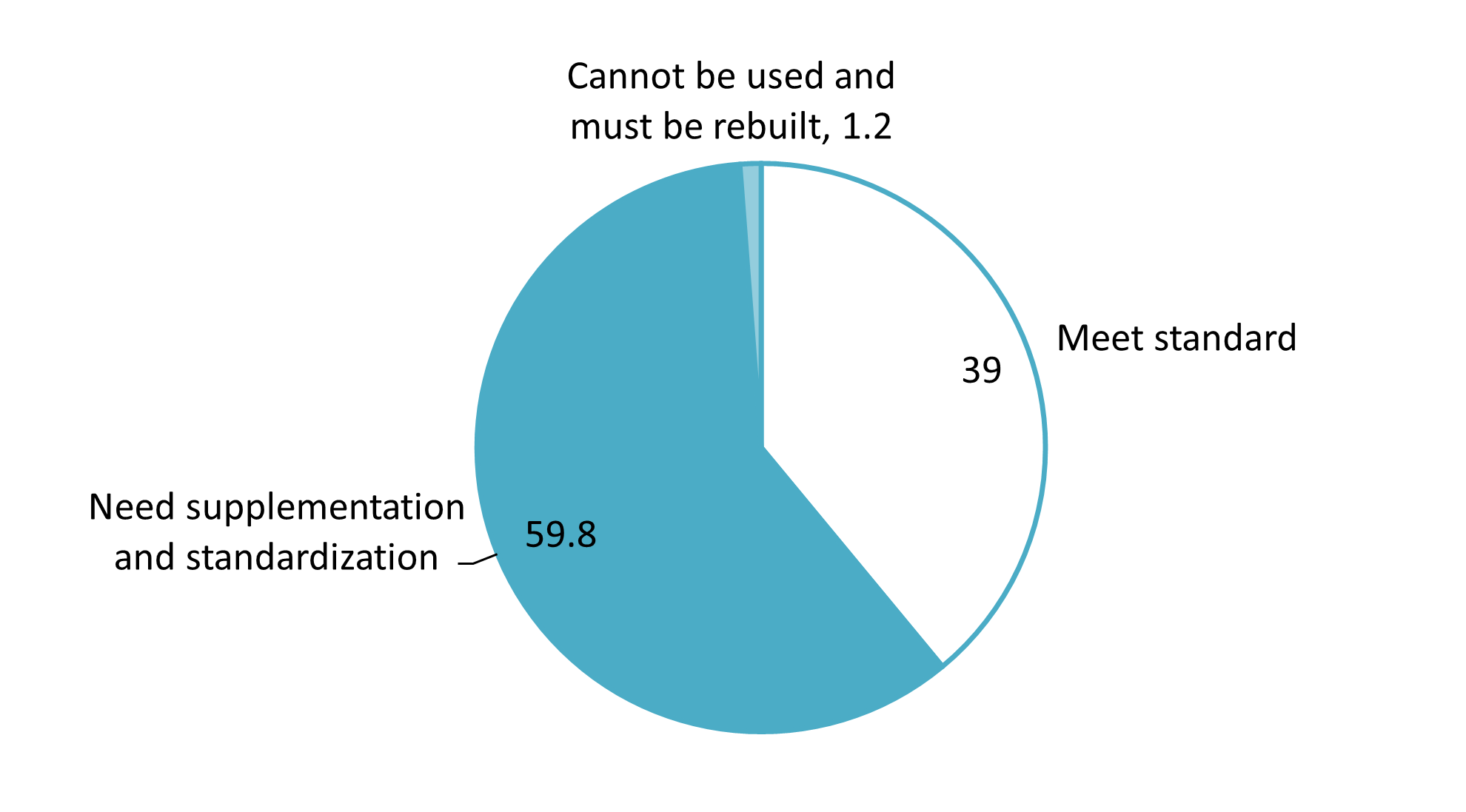
The Vietnamese real estate market has long operated under conditions of fragmented and inconsistent information systems. Data relating to legal status, transaction prices, ownership history, and mortgage conditions are dispersed across multiple authorities and administrative levels[1]. For instance, land data is managed by the Ministry of Agriculture and Environment, housing data falls under the Ministry of Construction, tax-related data is overseen by the Ministry of Finance, and population data is by the Ministry of Public Security through the VNeID system[2]. In 2025, the Ministry of Agriculture and Environment of Vietnam launched a campaign called 90 Days to Enrich and Clean the Land Database, a large-scale effort to consolidate land information. The campaign has revealed millions of land plots requiring verification, correction, or standardization[3].

Data cleaning results from the campaign “90 Days to Enrich and Clean the Land Database”

100% = 62.5 million land plots being reviewed
Data cleaning results from campaign 90 Days to Enrich and Clean the Land Database

来源: 农业和环境部

This fragmented data environment creates a situation where information asymmetry dominates transactions. Buyers often rely on informal channels, brokers, or unverifiable sources to assess property value and legal status, while official data remains difficult to access or inconsistent across agencies. On the micro level, buyers face heightened legal and financial risks, including disputes over ownership, unclear transaction histories, and prolonged litigation due to missing or conflicting records. On the macro level, the market becomes prone to price volatility, speculative bubbles, and regulatory blind spots, weakening overall stability[4]. Moreover, state authorities struggle to design timely and effective policies due to the lack of real-time, reliable data.

One example illustrating these challenges is the case of Lotte Group and its Thu Thiem Eco Smart City project in Ho Chi Minh City. Although the project was first licensed in 2017, its implementation has been delayed for nearly a decade due to unresolved legal procedures and land valuation issues, forcing the investor into a prolonged “wait-and-see” position. This causes large additional costs and could reduce investment efficiency, making the project less financially attractive to investors. In fact, Lotte Group has shown an intention of withdrawal[5].

How the real estate market will be digitized through Decree No.357/2025/ND-CP

Decree No. 357/2025/NĐ-CP introduces a comprehensive framework to digitize Vietnam’s real estate market by establishing a unified, state-managed data system. The Decree officially takes effect on March 1.

The primary objective of the Decree is to enhance transparent and standardized data, thus improving state management efficiency through digital transformation. A key innovation is the introduction of a digital identification system for real estate, where each property is assigned a unique electronic code. This code links all relevant information (including (i) land plot information; (ii) construction works and project details; (iii) legal status; (iv) transaction and registration history, and (v) other management data as prescribed by law) into a single, traceable digital profile[6].

There are 5 main types of electronic identification codes in the real estate sector, specifically as follows:

主题 ID Code structure
Individual houses (apartment and detached houses) (1)   Land plot identification code;

(2)   Project or construction information code;

(3)   Location identification code (if any);

(4)   A series of natural characters to distinguish each house.

Construction floor area in the project (1)   Land plot identification code;

(2)   Project and construction information code;

(3)   Location identification code (if any);

(4)   Natural character sequences to recognize each part of the floor area.

Apartment building management and operation unit (1)   Organization identification number;

(2)   The natural sequence of characters shows the time of issuance of the notice of eligibility for management and operation.

Real estate brokerage practice certificate (1)   Code of the province, city where the certificate is issued;

(2)   Personal identification number or foreign identification number;

(3)   The sequence of characters shows the issuance date, certificate number and revocation status (if any).

Individuals eligible for housing support policies (1)   Personal identification number;

(2)   The row of characters represents the group of beneficiaries and the housing support program

来源: Decree 357/2025/ND-CP

The Ministry of Construction of Vietnam is the central authority responsible for building, managing, and operating the database system. Local authorities are tasked with collecting, updating, and synchronizing data, ensuring that information remains accurate and up to date.

The Decree also emphasizes that the electronic identification code does not replace the Certificate of Land Use Rights and House Ownership (commonly known as the “Red Book”), but functions as a digital management tool for state agencies.

The impact of the Decree on the real estate market

Increase transparency

One of the most significant impacts is the enhancement of market transparency. The upcoming digital ID system enables regulators and market participants to track property histories more effectively, reducing uncertainty around legal status and ownership. This directly addresses the long-standing issue of “information opacity,” where buyers relied heavily on informal or incomplete data[7]. As a result, the market is expected to become more trustworthy, with reduced risks of fraud and disputes.

Reduction of speculation and price manipulation

With the introduction of unique property identification codes and verifiable transaction histories, each asset now has a “data anchor.” Prices are no longer arbitrary figures but can be benchmarked against historical transactions and comparable properties. This significantly reduces “information noise,” a key driver of speculative bubbles and sharp price fluctuations. As a result, the market is expected to move toward more stable and evidence-based pricing mechanisms, limiting opportunities for manipulation and short-term speculation[8].

Faster and more efficient transactions

Digitization under Decree 357 is also expected to streamline transaction processes. When data is digitized and interconnected, individuals and businesses no longer need to repeatedly submit the same documents to multiple authorities[9]. Legal verification and information checks can be conducted online through the property’s digital ID, significantly reducing administrative time and costs.

Challenges in implementation

Uneven digital capacity among provinces

A major structural barrier to implementing Decree 357 lies in the uneven level of digital readiness across localities, combined with the legacy problem of fragmented data systems. According to the Digital Transform Index (DTI) ranking in 2024 by the Ministry of Science and Technology, while major cities like Hanoi, Hue, Hai Phong, and Ho Chi Minh City have an index of above 0.77, there are 3 provinces whose index is below 0.6 (Hung Yen, Quang Tri, Cao Bang)[10]. While the Decree envisions a unified national database, in reality, many provinces still rely on partially digitized or even paper-based records[11], with differing technical standards and limited interoperability.

Cybersecurity and data privacy risks

Digitizing sensitive real estate data such as ownership, transaction values, and mortgage status raises important concerns about data privacy and cybersecurity[12]. A centralized system becomes an attractive target for cyberattacks, while improper data governance could lead to unauthorized access or misuse of personal and financial information. A report from Viettel Threat Intelligence shows that in 2025, there are 25.5 million user accounts being exposed or traded online, 76% increase from 2024. The report highlights that the attacks become more sophisticated and frequent due to technological advancement and AI, targeting systems storing high-value data, including privileged accounts and third-party data management systems (Salesforce, CRM, etc.)[13].

Therefore, strict security frameworks are required to prevent data breaches and manipulation. Without strong safeguards, risks include data leaks, identity fraud, or even tampering with transaction records, which could severely undermine trust in the system.

Institutional coordination to keep data “alive”

Another critical concern is the risk that the system becomes “digitized but not dynamic”. In other words, data may be stored digitally but not updated in a timely or continuous manner. In such cases, the database could quickly become outdated, reducing its reliability for decision-making and transactions. If updates are delayed or inconsistent across agencies, the system may replicate existing inefficiencies in a digital form[14].

As a result, the decree requires a significant shift in how institutions and market participants operate. Effective implementation depends on coordination between multiple agencies: construction, land, taxation, and banking. At the same time, businesses and individuals must adapt to new digital processes. Regulatory reforms often face resistance due to habitual reliance on paper-based procedures and a lack of digital literacy among stakeholders.

结论

Decree No. 357/2025/NĐ-CP represents a fundamental shift in how Vietnam’s real estate market is governed, moving from a fragmented, paper-based system toward a data-driven model. By introducing a unified database and property identification mechanism, the Decree lays the groundwork for improving transparency, stabilizing price formation, and enhancing the efficiency of both transactions and state management.

However, beyond its technical features, the true significance of the reform lies in how data is maintained, updated, and utilized in practice. Assigning a unique code to each property is not an end in itself, but a starting point for building a more accountable and transparent market. If the system ensures that data stays “alive,” continuously updated, and properly governed, it can become a turning point toward a healthier and more sustainable real estate market in Vietnam.

阅读更多

2026年越南房地产市场展望

越南房地产行业的并购情况

*如果您想引用本文中的任何信息,请注明来源以及原始文章的链接,以尊重版权。

B&Company

自 2008 年以来,日本第一家专门从事越南市场研究的公司。我们提供广泛的服务,包括行业报告、行业访谈、消费者调查、商业配对。此外,我们最近还开发了一个包含越南 900,000 多家公司的数据库,可用于搜索合作伙伴和分析市场。

如果您有任何疑问,请随时与我们联系。

信息@b-company.jp + (84) 28 3910 3913

[1] Giao duc va thoi dai, Real estate ID: Expectations for a more transparent market, https://giaoducthoidai.vn/dinh-danh-bat-dong-san-ky-vong-thi-truong-minh-bach-hon-post763065.html

[2] VietnamNet, Real estate ID codes: A roadmap to an era of prosperity, https://vietnamnet.vn/ma-dinh-danh-bat-dong-san-ban-do-dan-duong-buoc-vao-ky-nguyen-thinh-vuong-2481084.html

[3] Ministry of Agriculture and Environment, 90-Day Campaign: 62 Million Land Plots Reviewed, Land Data Comes Alive, https://mae.gov.vn/chien-dich-90-ngay-62-trieu-thua-dat-duoc-ra-soat-du-lieu-dat-dai-song-20557.htm

[4] People’s Army Newspaper, New policy: Regulations on real estate information systems and databases, https://www.qdnd.vn/xa-hoi/chinh-sach/chinh-sach-moi-quy-dinh-ve-he-thong-thong-tin-va-co-so-du-lieu-bat-dong-san-1030582

[5] The Leader, Lotte is considering withdrawing from the billion-dollar project, a common concern among real estate businesses, https://theleader.vn/lotte-tinh-rut-lui-khoi-du-an-ty-do-va-noi-lo-chung-cua-doanh-nghiep-dia-oc-d42148.html

[6] Government News, Viet Nam to assign digital ID codes to properties from March 1, 2026, https://en.baochinhphu.vn/viet-nam-to-assign-digital-id-codes-to-properties-from-march-1-2026-111260105144514.htm

[7] VietnamNet Global, Ministry of Construction prepares to launch real estate digital ID system, https://vietnamnet.vn/en/ministry-of-construction-prepares-to-launch-real-estate-digital-id-system-2486710.html?utm

[8] The Saigon Times, Real Estate ID Code: “Key” to Market Transparency and the Challenges

Behind the Number, https://gvlawyers.com.vn/wp-content/uploads/2026/03/Ma-dinh-danh-bat-dong-san-Chia-khoa-minh-bach-thi-truong-va-nhung-thach-thuc-an-sau-day-so_Ms.-Nhu_12Mar2026.pdf

[9] Giao duc va thoi dai, Real estate ID: Expectations for a more transparent market, https://giaoducthoidai.vn/dinh-danh-bat-dong-san-ky-vong-thi-truong-minh-bach-hon-post763065.html

[10] Infographics – Vietnam News Agency, DTI 2024: Hanoi leads the country in provincial-level digital transformation, https://infographics.vn/dti-2024-ha-noi-dan-dau-ca-nuoc-ve-chuyen-doi-so-cap-tinh/217775.vna

[11] Bao Moi, Implementing real estate ID codes: Great benefits, considerable challenges, https://baomoi.com/trien-khai-ma-dinh-danh-bat-dong-san-loi-ich-lon-kho-khan-khong-nho-c54767952.epi

[12] The Saigon Times, Real Estate ID Code: “Key” to Market Transparency and the Challenges

Behind the Number, https://gvlawyers.com.vn/wp-content/uploads/2026/03/Ma-dinh-danh-bat-dong-san-Chia-khoa-minh-bach-thi-truong-va-nhung-thach-thuc-an-sau-day-so_Ms.-Nhu_12Mar2026.pdf

[13] Viettel Security, Report on the Information Security Risk Situation in Vietnam in 2025, https://viettelsecurity.com/vi/resource-report/bao-cao-tinh-hinh-nguy-co-attt-tai-viet-nam-nam-2025/

[14] Giao duc va thoi dai, Real estate ID: Expectations for a more transparent market, https://giaoducthoidai.vn/dinh-danh-bat-dong-san-ky-vong-thi-truong-minh-bach-hon-post763065.html

相关文章
侧边栏:
订阅新闻通讯