
 English
  日本語
日本語  Tiếng Việt
  简体中文
简体中文  한국어
한국어 
06Nov2024
Highlight content / Industry Reviews / Latest News & Report
Comments: No Comments.
Market overview and Key drivers for growth
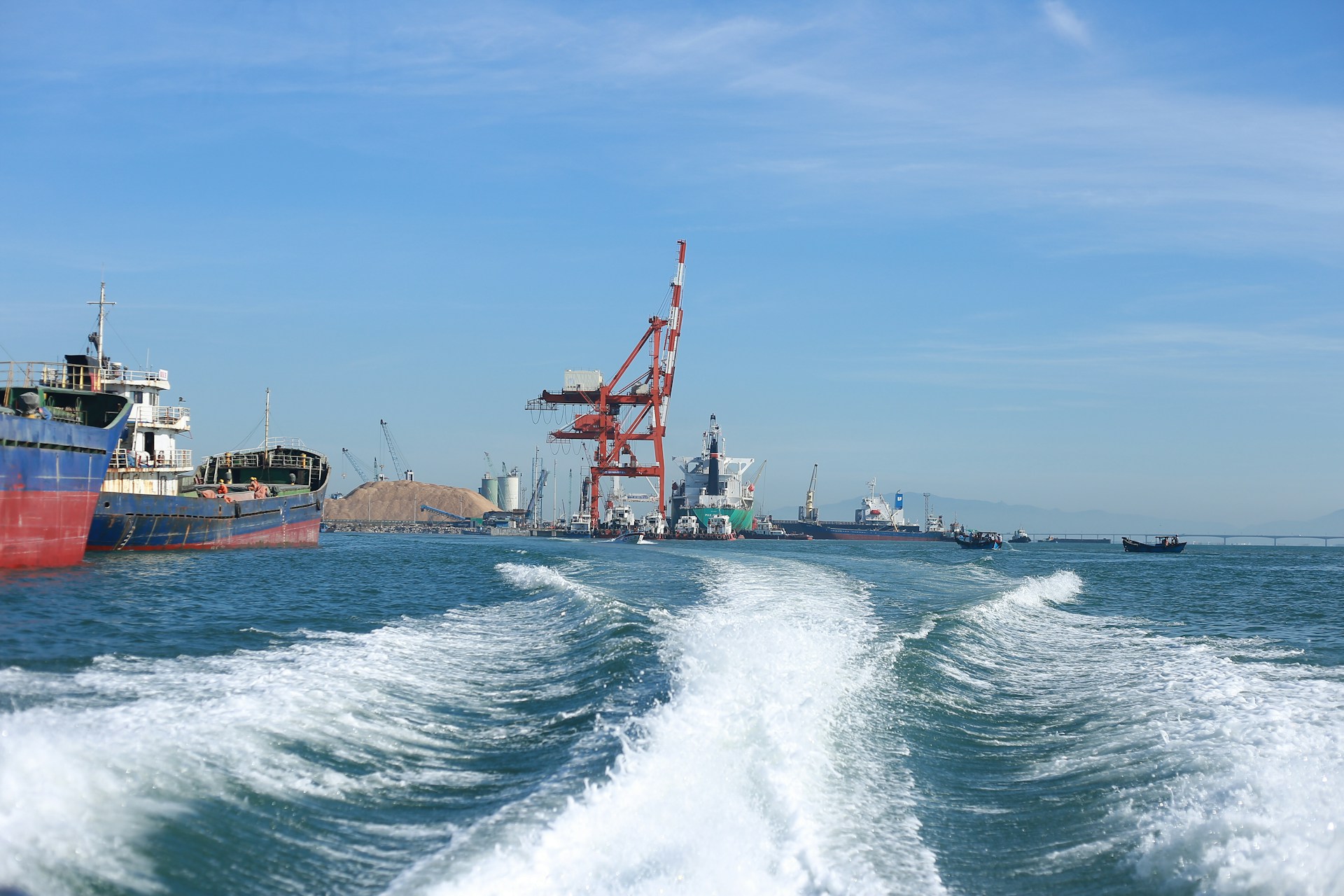
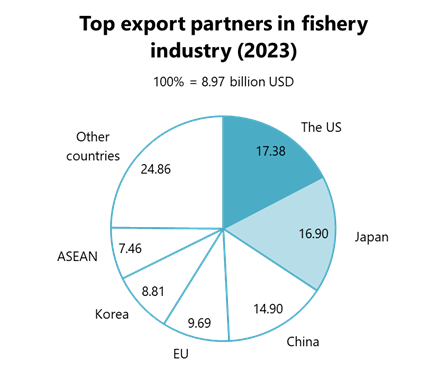
Vietnam has long been recognized as one of the world’s leading fishery producers and exporters[1]. Thanks to its geographical advantages, including more than 3,260 km of coastline and vast inland water resources[2], the country is well suited for aquaculture and fishing activities. According to VASEP (Vietnam Association of Seafood Exporters and Producers), Vietnam is currently one of the world’s top three fishery exporters, after China and Norway[3]. By 2024, Vietnam will have exported fishery to nearly 170 markets, including some of the largest and most demanding markets such as the EU, the United States, Japan, Australia, the UK and China[4]. To date, the fishery industry has developed rapidly, comprehensively and stably, becoming an important economic sector of the country. The fishery processing industry plays an important role in adding value to raw fishery products through freezing, packaging and improving shelf life, making Vietnam a global hub for processed fishery exports.
Source: GSO
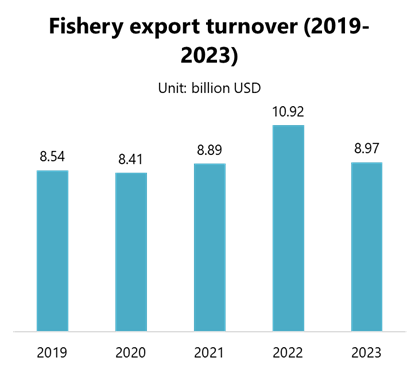
Although Vietnam’s fishery export volume in 2023 has decreased due to external economic factors such as high inflation in many of Vietnam’s export partners and the impact of the Russia-Ukraine conflict on logistics costs, the market still showed signs of recovery in 2024. In the third quarter of 2024, fishery exports reached 2.76 billion USD, up nearly 13% over the same period last year, in which key products also had a significant breakthrough compared to 2023[5].
Regarding key factors driving the growth of the fishery processing sector, there are several that can be considered. Firstly, rising global demand for fishery, driven by growing health consciousness and a shift to protein-rich diets, has boosted Vietnam’s exports. This demand is particularly strong in major markets such as the EU and the US, which have been two of the country’s top export partners for many years. Secondly, technological advances in fishery processing have helped companies in Vietnam improve their efficiency and product quality, helping them meet the high standards of international markets while keeping production costs low. Thirdly, Vietnam’s favorable geographical location and tropical climate has helped create ideal conditions for aquaculture and fishing, further boosting the development of shrimp and pangasius farming – which are considered the cornerstones of the country’s fishery exports. Finally, Vietnam’s competitive labor costs have made the fishery processing industry more attractive to foreign investors looking for cost-effective production solutions.
Government policies and support
With the goal of making Vietnam a global fishery processing hub, worthy of being in the top 5 countries in the world by 2030, the Vietnamese Government has issued many policies in recent years to facilitate the development of the fishery processing industry. These policies aim to encourage production along the value chain of fishery production, processing and consumption. A notable example being Decision No. 1408/QD-TTg[6], approved by the Prime Minister on August 16, 2021. This Decision outlines the Fishery Processing Industry Development Plan for the period 2021-2030, setting clear targets for 2030 as follows in the table below:
Target for the fishery processing sector until 2030
| Fishery growth rate | Export value ratio | Fishery processing facilities | Domestic fishery processing value |
| Over 6%/year | An average of 40%, of which:
– Shrimp: 60% – Pangasius: 10% – Tuna: 70% – Squid and octopus: 30% – Other fishery: 30% |
Over 70% meet advanced average production technology levels | Reaches 40,000 – 45,000 billion VND |
Source: Decision 1408/QĐ-TTg
To encourage investment and sustainable development in the fishery processing industry, the Government has also implemented a policy of reducing corporate income tax for fishery processing companies. According to Decree 218/2013/ND-CP, enterprises investing in new projects in the field of agricultural, forestry and fishery processing in disadvantaged areas are entitled to a preferential tax rate of 10% for 15 years, tax exemption for the first 4 years and a 50% reduction for the next 9 years[7]. In addition, Decree 57/2021/ND-CP also provides incentives for high-tech agricultural investment projects or projects set up in less privileged areas, encouraging companies to apply advanced technology to improve product quality and to protect the overall natural environment[8]. These policies have helped reduce financial costs, promote investment, and enhance the competitiveness of Vietnamese fishery processing industry in the international market.
Not only through paperwork, but the Government has also taken specific actions to support companies in the fishery processing sector. Notably, at the end of the second quarter of 2023, with Vietnam facing significant difficulties the export sector, the Prime Minister has listened to the proposal from various companies, issuing the State Bank to study and propose a 10,000 billion VND credit package to support businesses in the forestry and fishery processing sector[9].
Key players
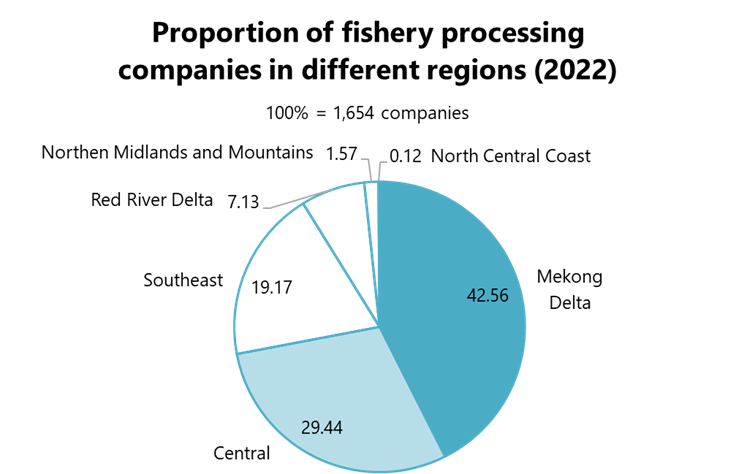
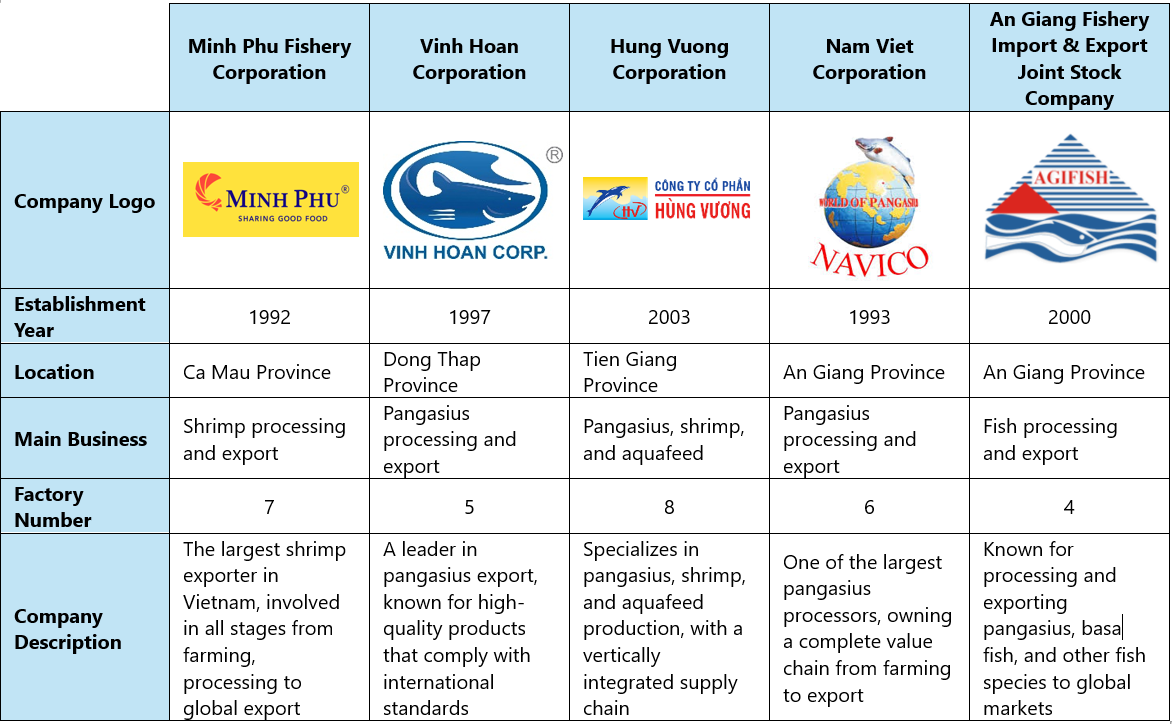
Fishery processing companies in Vietnam are mainly concentrated in the southern coastal areas and the Mekong Delta due to its rich natural resources. According to the Southern National Freshwater Aquaculture Center, the Mekong Delta is home to more than 250 freshwater fish species, of which about 50 species have a high economic value and nearly 20 species are considered rare[10]. For that reason, the most prominent names in the fishery processing industry in Vietnam are mainly concentrated in the South, more specifically the Mekong Delta region. This chart below shows the proportions in the number of fishery processing companies in different regions in Vietnam.