
 Tiếng Việt
  English
  日本語
日本語  简体中文
简体中文  한국어
한국어 
The Evolution of Social Commerce in Vietnam
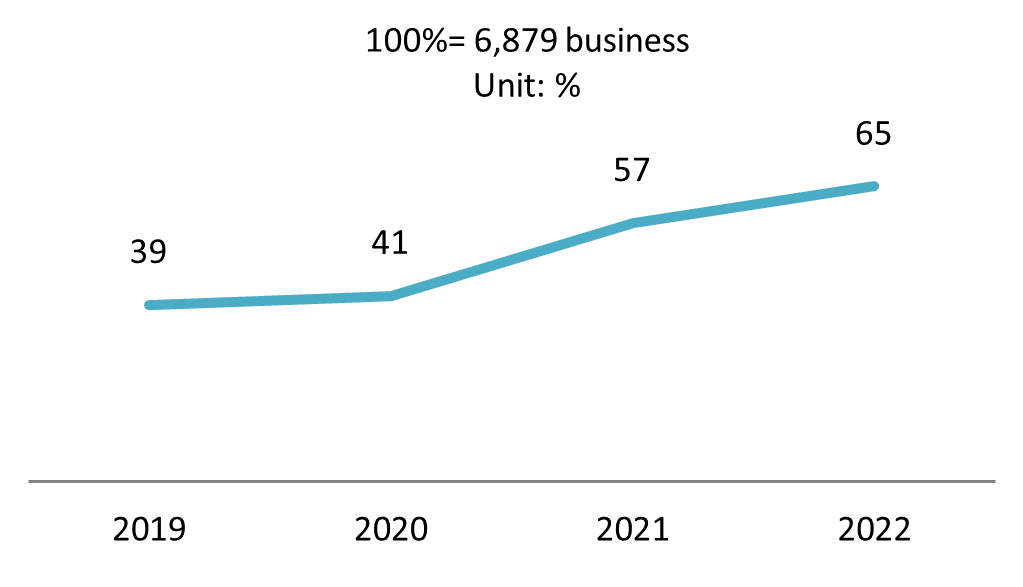
Trong bối cảnh nền kinh tế số Việt Nam, thương mại xã hội đã nổi lên như một phương thức mua sắm trực tuyến đang phát triển. Theo Báo cáo ResearchAndMarket, ngành thương mại xã hội Việt Nam được dự kiến đạt gần 2,2 tỷ USD vào năm 2022[1], with 65% of businesses indicating their use of these commercial methods[2] (see Figure 1).
Figure 1. Proportion of businesses conducting business through social (2019-2022)
Source: Vietnam E-Business Index 2023 Report
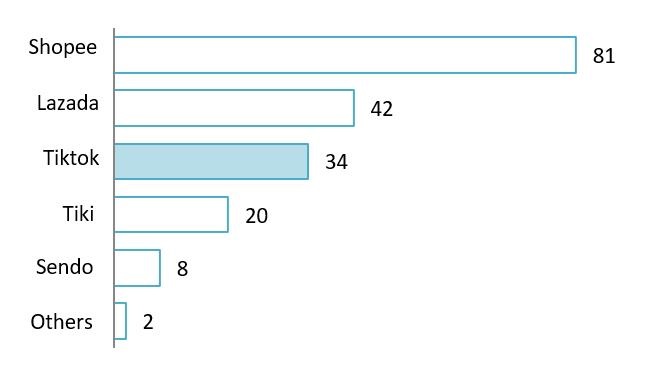
In terms of consumers, according to Vietnam E-Commerce White Book 2023, social media platforms have become the second most preferred channel for online shopping, with 55% of respondents reporting they use these platforms for their purchasing activities (only after e-commerce platforms as the 1 top market). In contrast, social media left the 3rd position far behind, which is businesses’ own websites, with (only 34% of users). Among online shopping platforms, TikTok is the top 3 platform preferred by customers, accounting for 34% of respondents (see Figure 2), which even surpasses other e-commerce platforms such as Tiki and Sendo.
Figure 2. Leading online shopping platforms among consumers in Vietnam
Đơn vị: %
100%= 20,069 respondents
Source: Vietnam E-Commerce White Book 2023
Regarding products, according to the report of Decision Lab[3], fashion and cosmetics reign as the most popular goods categories on social commerce channels in general (61% and 48% of respondents respectively). This can be attributed to their synergy with the visual and trend-driven nature of social media. The captivating product imagery, tutorials, and influencer endorsements across these platforms allow consumers to closely inspect the style, quality, and transformative power of these items. In addition, the rapid dissemination of emerging trends on social media further fuels continuous consumer demand for the latest must-have products from these categories.
The Drivers of Social E-commerce
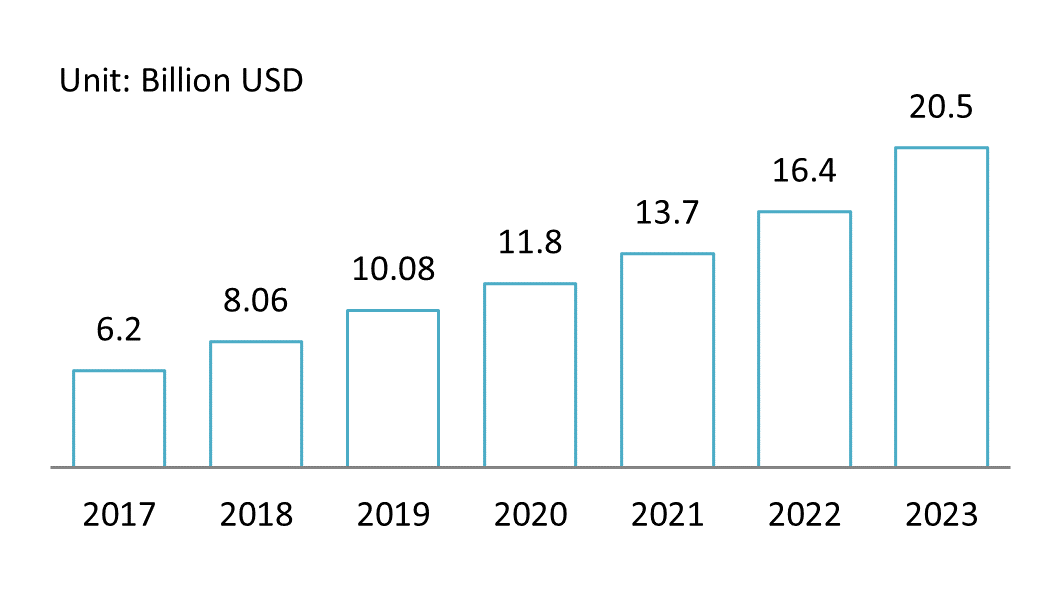
Thương mại xã hội được xem là một mô hình kinh doanh đầy triển vọng tại Việt Nam với các động lực sau đây. Thứ nhất, hành trình của Việt Nam trong lĩnh vực thương mại xã hội gắn liền với sự mở rộng nhanh chóng của ngành thương mại điện tử. theo Sách trắng Thương mại điện tử Việt Nam năm 2023[4], the CAGR of e-commerce retail revenue over 6 years (2017-2023) reached 22.1%, hitting 20.5 billion USD in 2023.
Figure 3. Revenue of B2C e-commerce in Vietnam (2017-2023)
Source: Vietnam E-commerce White Book in 2023
Looking from consumers’ perspective, Vietnam boasts a high number of social media users, and these platforms significantly influence customer consumption behaviour. As of January 2023, Vietnam had 70 million social media users, representing 71% of the population[5]. These users seem to prefer to seek product reviews on social media before making purchasing decisions. According to the E-commerce White Book 2023, 52% of users rely on comments and ratings on social media to gather information when making purchases[6]. Additionally, livestreaming, one of the social commerce business models, is significantly impacting shopping behaviour. Data from the platform shows that around 77% of survey participants have watched a live-stream sale, of which 71% have made a purchase. The key strengths of livestreaming are the easy interaction between buyers and sellers and the ability for buyers to closely observe products in detail[7].
Opportunities and Challenges of Social E-commerce
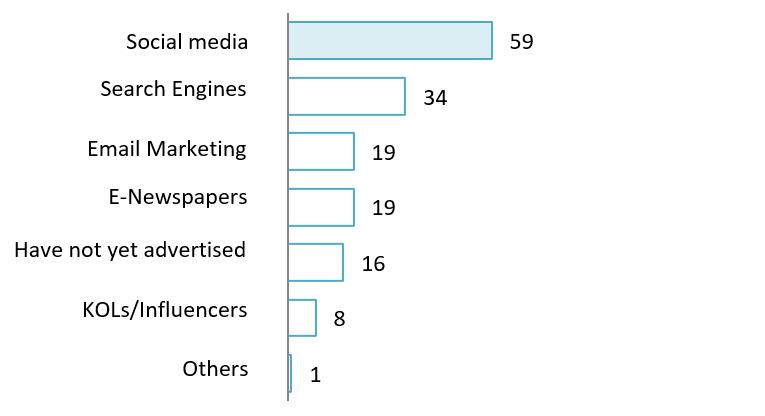
The evolution of social commerce in Vietnam offers numerous opportunities for businesses to excel in this dynamic market. Firstly, businesses can leverage access to millions of social media users, thereby enhancing brand awareness and promoting their products/services. This will also help in generating organic reach[8] through user sharing and interaction. According to Vietnam E-Business Index 2023 [9], of surveyed businesses with websites/mobile apps reported advertising their channels through social media (Figure 5).
Figure 4. Advertising methods of businesses
Đơn vị: %
100%= 6,879 business
Source: Vietnam E-Business Index 2023
Secondly, social media platforms enhance advertising effectiveness for businesses through advanced analytics tools like Instagram Insights and Facebook Audience Insights, which provide granular demographic and audience data to help craft more targeted and impactful social commerce campaigns compared to traditional retail. Thirdly, social commerce helps gather shopping journeys from discovering products, and price comparisons to making purchases in one place and fasten customers’ decision-making. Fourthly, this business model motivates interaction between buyers and sellers and strengthens customer relationships by enabling easy access to detailed product information and guidance through messaging, chatbots, and brand social media pages, as well as providing prompt customer support. Finally, social commerce enhances timely feedback collection and improves actions. By incorporating customer feedback from these social media posts, businesses can adjust their products/services to meet customer expectations.
However, alongside the opportunities, there are also challenges. On the business side, the level of competition is quite high due to the relatively low entry barriers to the social commerce market. Furthermore, the intense level of competition is reflected, as it is not only between enterprises but also among individual sellers.
Personal data protection laws, such as Decree 52/2013/ND-CP, Decree 13/2022/ND-CP, the Law on Protection of Personal Information, and the draft Decree on Penalties in Cybersecurity, are viewed as challenges for the social commerce model with the following reasons. Firstly, compliance can be a challenge due to the complex and diverse nature of personal data processing, given the increasing number of consumers participating in online shopping and using services. For instance, swiftly meeting consumers’ requests to delete their personal data within 72 hours can be difficult to achieve given the large user base, potentially leading to delayed responses. However, failing to comply can result in administrative penalties. Compliance costs could increase, particularly for smaller players in the market. Additionally, these rules may place stricter requirements on customer data usage, impacting the targeting and personalization capabilities that are often critical for success in e-commerce.
Về phía khách hàng, niềm tin được xem là mối quan ngại lớn nhất, trong đó quảng cáo gây hiểu lầm là vấn đề thường xuyên xảy ra. 60% số người được hỏi cho biết rằng “products do not match advertised images” khi được hỏi về những trải nghiệm tiêu cực với thương mại xã hội. Để giảm thiểu vấn đề này, người tiêu dùng thay vào đó lựa chọn các phương thức mua sắm khác, chẳng hạn như cửa hàng gia đình (75%) hoặc cửa hàng trực tuyến có sự hiện diện thực tế (48%)[10].
Triển vọng trong tương lai
In the future, the report of ResearchandMarket forecasted that the social commerce industry is expected to grow steadily, recording a CAGR of 31.1% during 2024-2029[11] (2024: 4,5 tỷ USD). Trong bối cảnh này, thị trường được kỳ vọng sẽ phát triển đặc biệt theo hướng bán hàng qua phát trực tiếp và KOL. Để tận dụng tiềm năng chuyển đổi của thương mại xã hội, doanh nghiệp nên cân nhắc tích hợp khả năng phát trực tiếp nhằm mang đến trải nghiệm mua sắm hấp dẫn và được cá nhân hóa hơn cho người tiêu dùng. Đồng thời, việc tận dụng ảnh hưởng của các Key Opinion Leader (KOL) – thông qua việc đưa sự chứng thực, đánh giá và hướng dẫn của họ vào nội dung phát trực tiếp – có thể tiếp tục khuếch đại tác động, thúc đẩy việc khám phá sản phẩm và gia tăng doanh số.
To sum up, within Vietnam’s vibrant digital economy, the development of social commerce is seen as a pathway to numerous opportunities for success in this dynamic market. EC businesses therefore should quickly study and adapt to the evolving social commerce landscape and its new tools.
[1] Vietnam Social Commerce Market Intelligence and Future Growth Dynamic DatabookĐánh giá>
[2] Vietnam E-Business Index 2023 Report (2023), Towards sustainable e-commerce development <Đánh giá>.
[3] Decision Lab (2022), The State of Social Commerce & Live-streaming in Vietnam; N=999 <Đánh giá>
[4] Vietnam E-commerce White Book in 2023 <Đánh giá>
[5] VNETWORK, Internet Vietnam 2023 (Data from GWI and ai.data) <Đánh giá>
[6] E-commerce White Book 2023 <Đánh giá>
[7] CocCoc (2024), ‘2023 and new trends of Vietnamese users’ <Đánh giá>
[8] Organic reach is the number of people who see content on social media without paid promotion. It includes users who discover the content naturally, rather than through advertising.
[9] Vietnam E-Business Index 2023 Report (2023), ‘Towards sustainable e-commerce development’ <Đánh giá>.
[10] Decision Lab (2022), The State of Social Commerce & Live-streaming in Vietnam; N=999 <Đánh giá>
[11] Vietnam Social Commerce Market Intelligence and Future Growth Dynamic DatabookĐánh giá>
| Công ty B&Company, Inc.
Công ty Nhật Bản đầu tiên chuyên về nghiên cứu thị trường tại Việt Nam từ năm 2008. Chúng tôi cung cấp một loạt các dịch vụ bao gồm báo cáo ngành, phỏng vấn ngành, khảo sát người tiêu dùng, kết nối kinh doanh. Ngoài ra, chúng tôi gần đây đã phát triển một cơ sở dữ liệu gồm hơn 900.000 công ty tại Việt Nam, có thể được sử dụng để tìm kiếm đối tác và phân tích thị trường. Vui lòng liên hệ với chúng tôi nếu bạn có bất kỳ thắc mắc nào. info@b-company.jp + (84) 28 3910 3913 |
Đọc các bài viết khác