

 English
  日本語
日本語  Tiếng Việt
  简体中文
简体中文  한국어
한국어 HCMC Metro development alone will not shift travel behavior unless first-mile and last-mile connections become faster, denser, and more convenient.
20Aug2026
Latest News & Report / Vietnam Briefing
Comments: No Comments.
Ho Chi Minh City has entered a new stage of urban mobility with Metro Line 1 in operation and larger rail projects under preparation. However, a recent accessibility simulation shows that reaching metro stations by bus is still much slower than traveling by motorbike in many areas. This highlights a central challenge for the city: metro development alone will not shift travel behavior unless first-mile and last-mile connections become faster, denser and more convenient. The next phase of Ho Chi Minh City’s transport development will depend on integrated buses, walkable station areas, electric mobility and urban planning around accessibility rather than only speed.
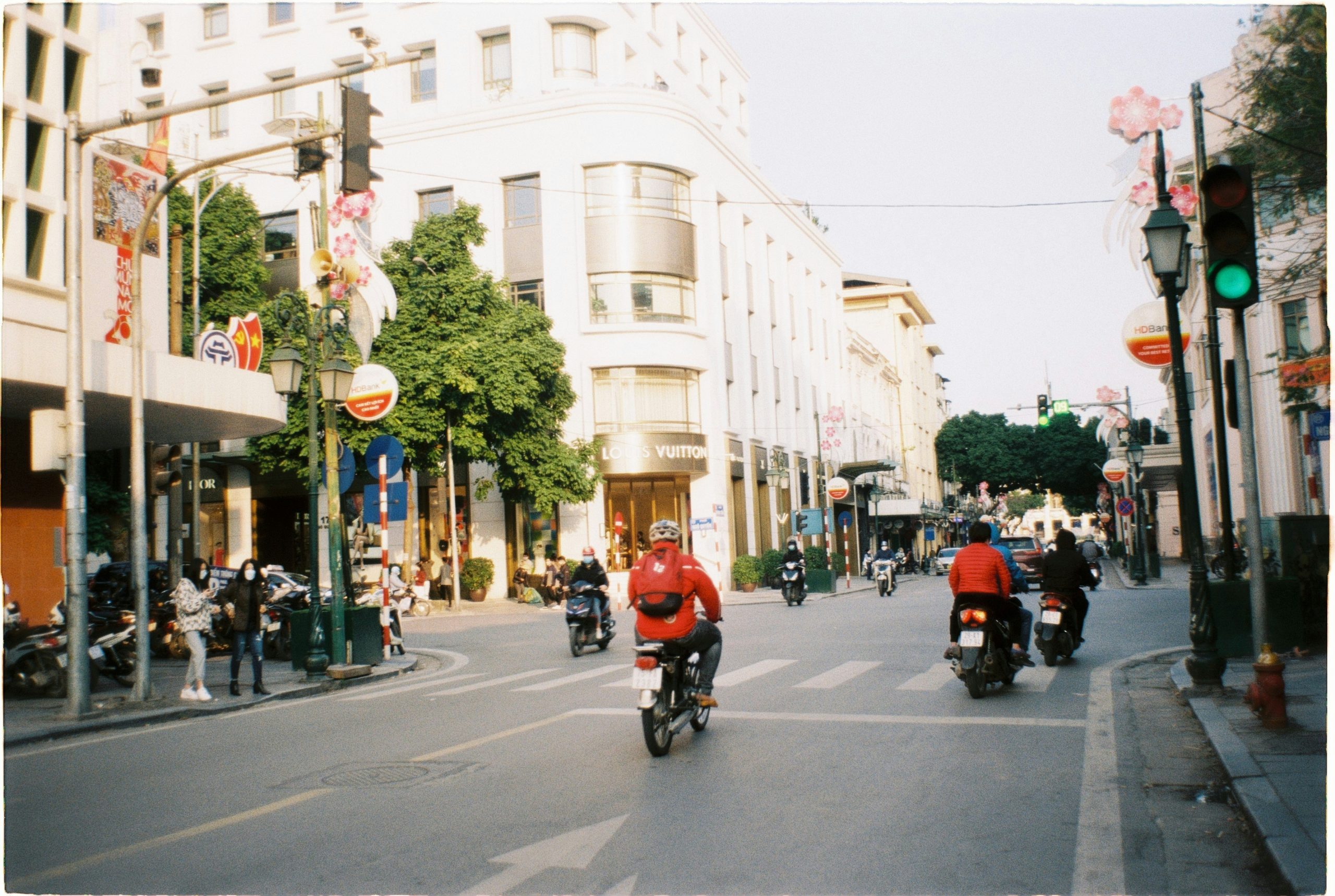
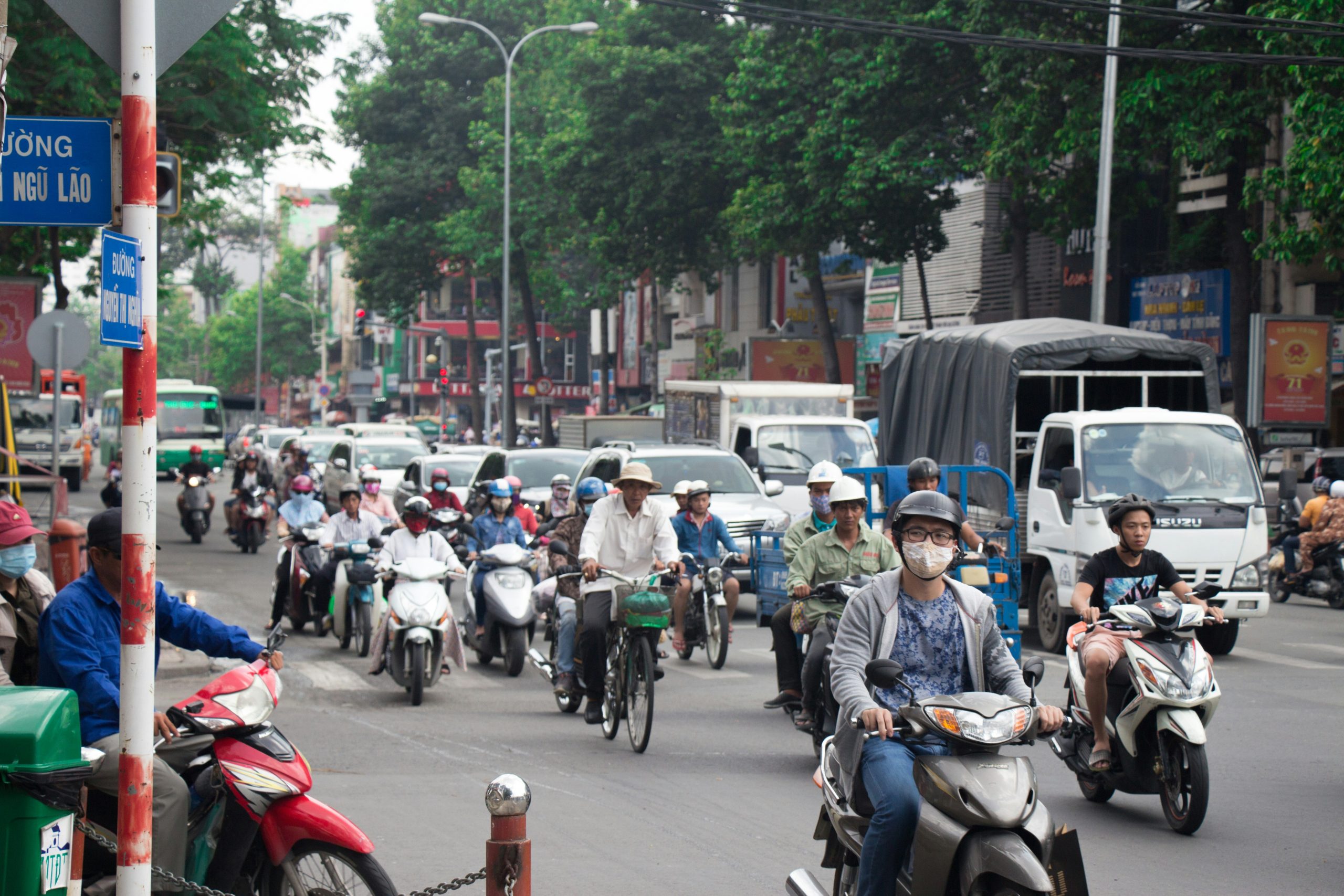
A motorbike city facing a metro test
Ho Chi Minh City remains one of Asia’s most motorbike-dependent urban areas. As of March 2026, the city had nearly 13 million registered vehicles, including more than 1.48 million cars and 11.5 million motorbikes. Parking infrastructure covers only about 7–10% of actual demand, showing the pressure created by private vehicles in a dense and expanding city[1].
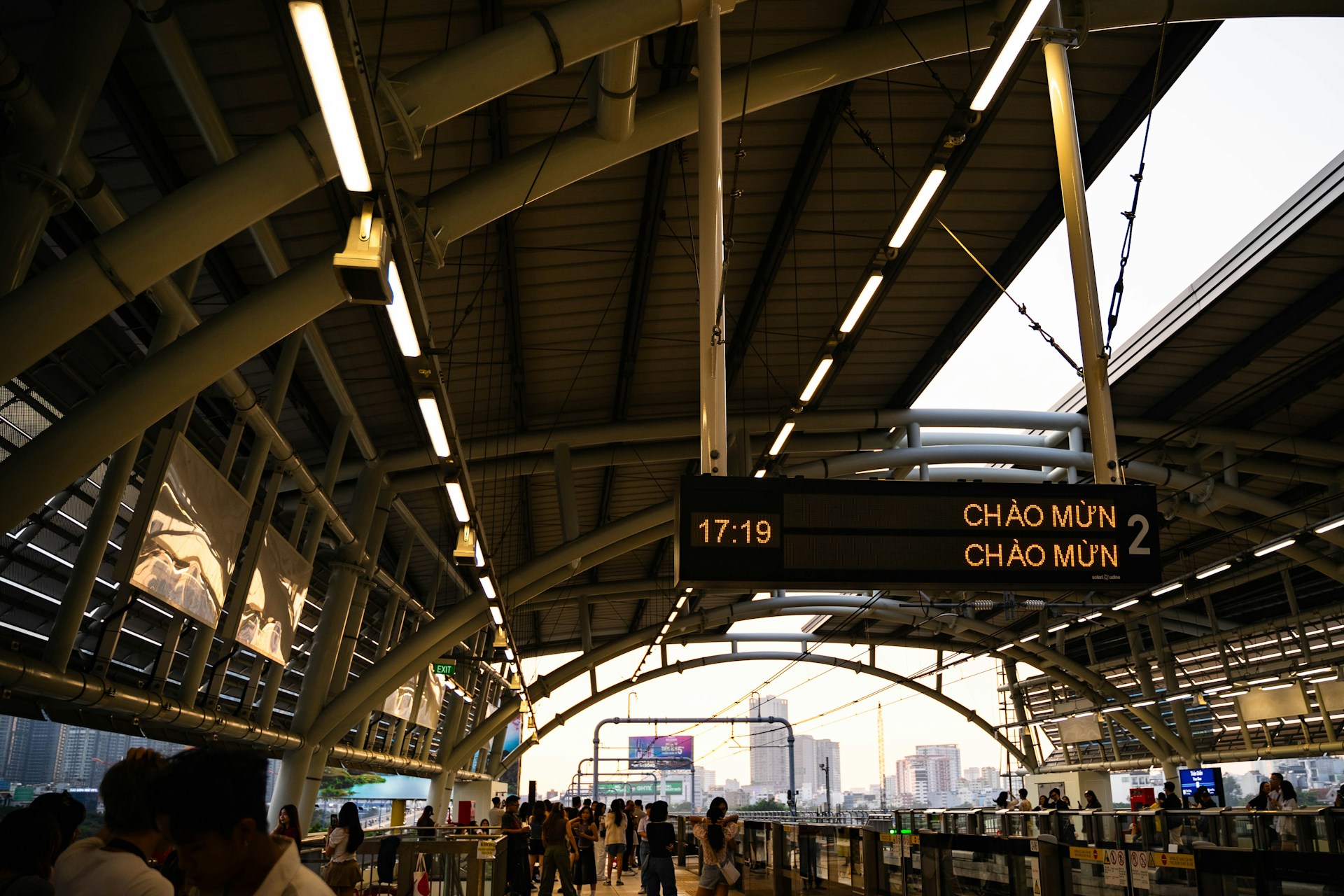
The opening of Metro Line 1, connecting Ben Thanh and Suoi Tien, is therefore a major milestone. It gives the city its first modern mass-transit corridor and creates a basis for shifting some trips away from private vehicles. The line served about 18.95 million passengers in its first year of commercial operation, exceeding the initial plan and showing that residents are willing to use the metro when the service is available, reliable, and convenient[2].
However, one metro line cannot transform a motorbike city by itself. The key question is not only whether people like the metro. It is whether the full journey from home to destination is competitive with a motorbike.
What the accessibility data shows
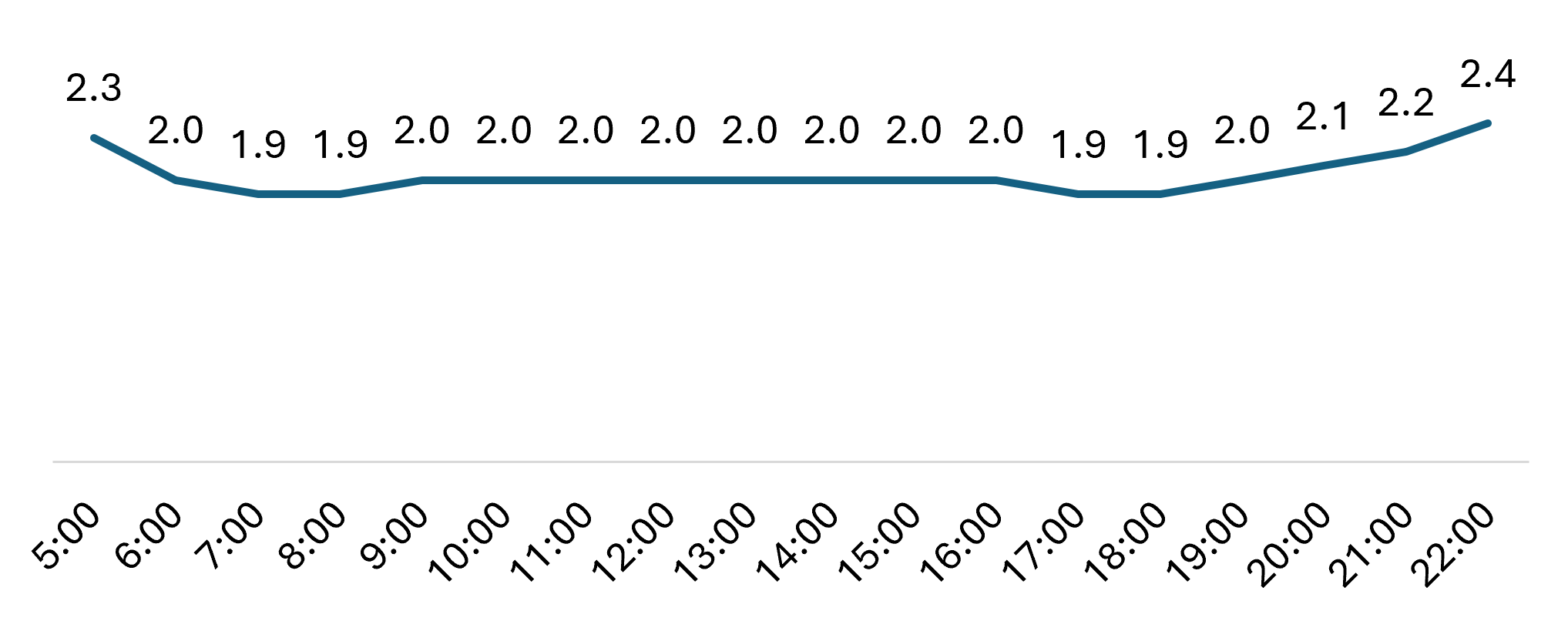
A recent VnExpress simulation[3] compared travel time to Metro Line 1 stations by public transport with travel time by motorbike. The simulation included walking, waiting time, bus travel, transfers, walking to the station and waiting for the train. Within trips that could reach a Metro Line 1 station by public transport in under 60 minutes, the average public-transport journey to the station was about twice as slow as the equivalent motorbike journey.
Bus/motorcycle travel time ratio to Metro Line 1 from any location within Ho Chi Minh City within a maximum of 60 minutes (Updated to Mar 2026)
Source: VNexpress based on Ho Chi Minh City Public Transport Management Center
The difference was clear even at Ben Thanh, the most accessible station by bus. At 14:45, when Ben Thanh’s public-transport service area was at its largest, 62% of the reachable area still had bus-based travel time at least twice as long as motorbike travel time. The remaining 38% was slower by 1–2 times. No area was faster or equal by public transport.
Across the 14 stations, no station had public-transport access time equal to motorbike access time. The gap was widest around central stations such as Ben Thanh and Opera House, while it narrowed more in peripheral stations such as National University and Rach Chiec.
This creates a paradox. The city center has the strongest public-transport network, but also the most intense congestion and the most complex access environment. Meanwhile, peripheral stations may appear more competitive, but their surrounding land use and feeder networks are still developing.
Why first-mile access is the bottleneck
The simulation points to a structural problem: people do not choose a transport mode station by station. They choose the whole trip. A metro ride may be fast, but if reaching the station takes too long, the full journey becomes unattractive.
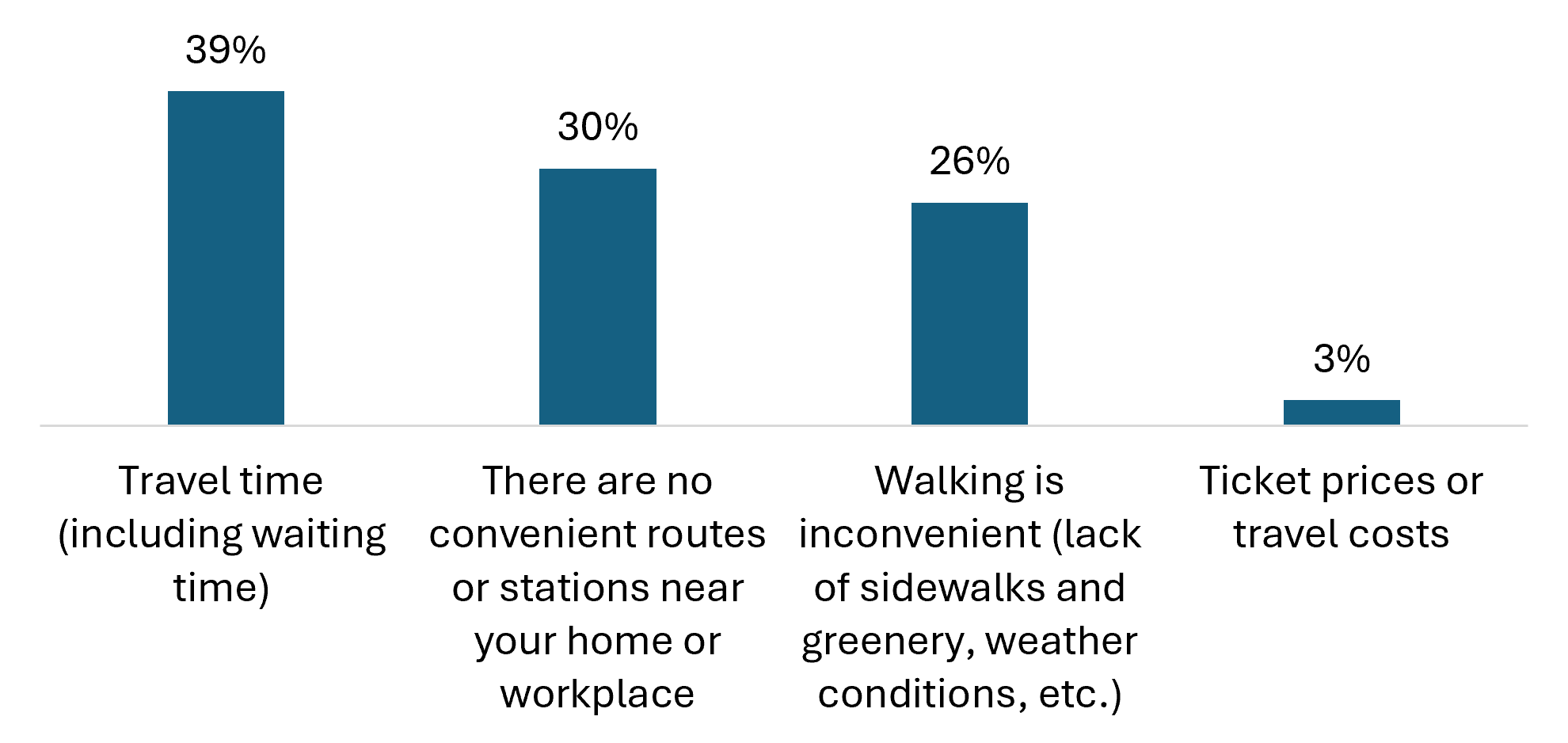
What factors influence your decision when choosing public transportation for your daily commute?
(N= 1,079 people in Aug 2026)
Source: VNexpress
Motorbikes remain competitive because they offer door-to-door flexibility. They can enter small streets, stop close to shops and homes, and avoid some walking and transfer time. This is especially important in Ho Chi Minh City, where many residents live in alleys, informal residential clusters or areas not directly served by high-frequency buses.
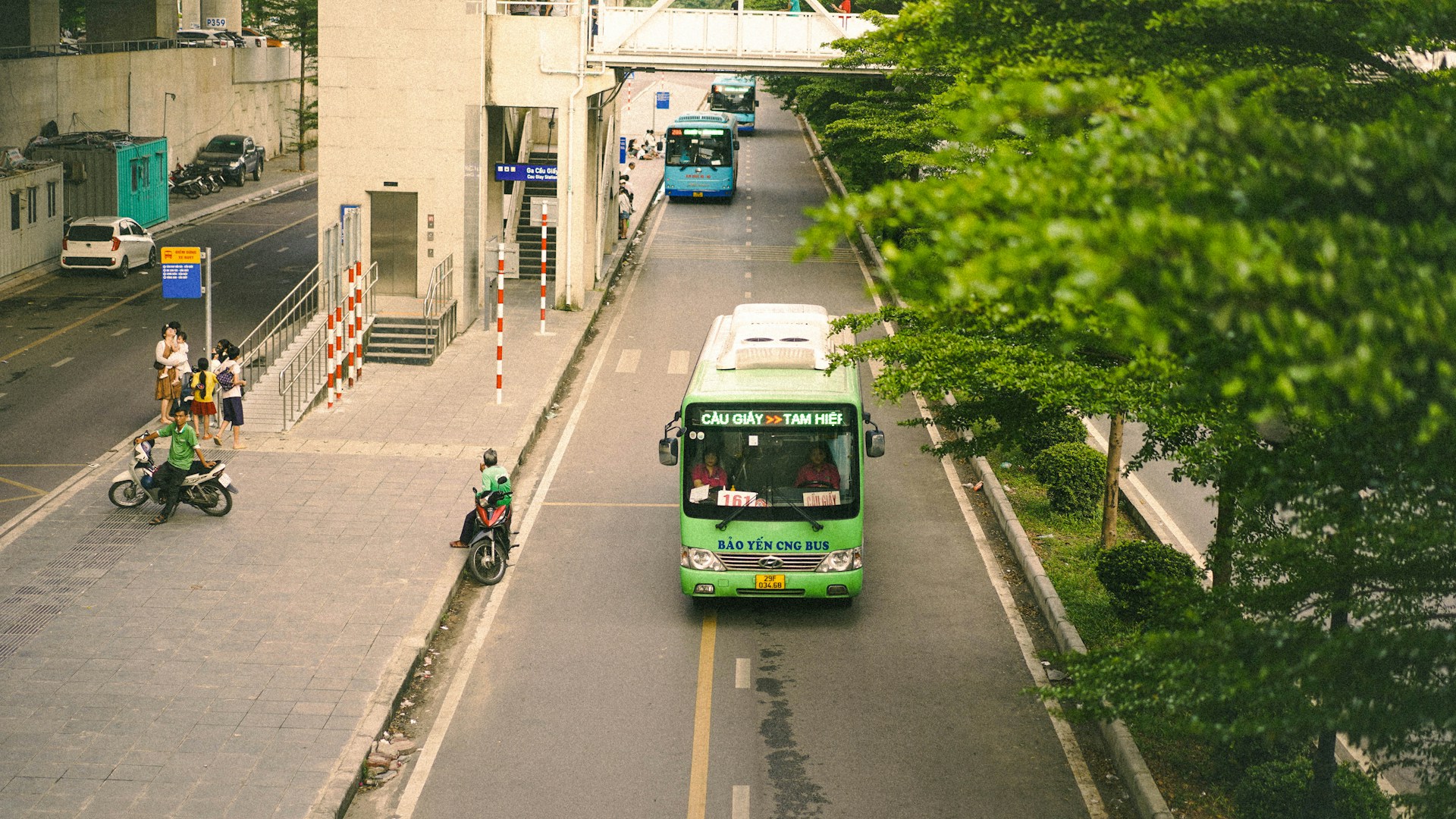
Bus coverage has improved, but many routes still follow main roads and do not penetrate deeply into small streets, dense neighborhoods or new residential areas. In some places, people may need to walk 15–30 minutes to reach a bus stop. If waiting time and congestion are added, the public-transport journey can easily become much longer than a motorbike trip.
For metro to become a daily transport choice, the bus network must act as a feeder system rather than a separate mode. This means higher frequency, shorter walking distance, better transfer design, integrated ticketing and more reliable travel time.
Metro Line 1 is a start, not a network
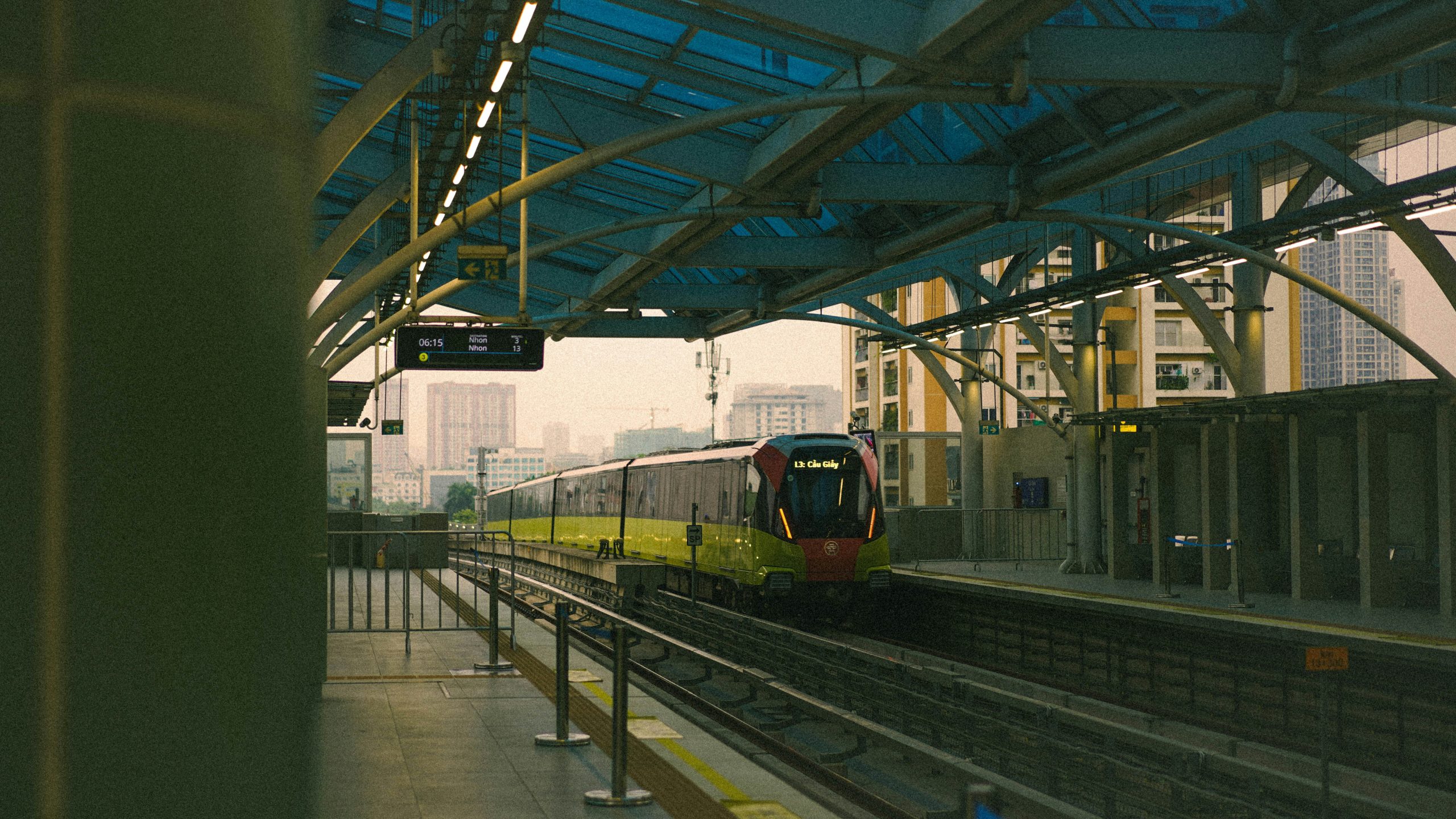
Metro Line 1 has already changed the perception of public transport in Ho Chi Minh City. It proves that high-capacity rail can attract passengers and that people are willing to adjust travel behavior when service quality is visibly better.
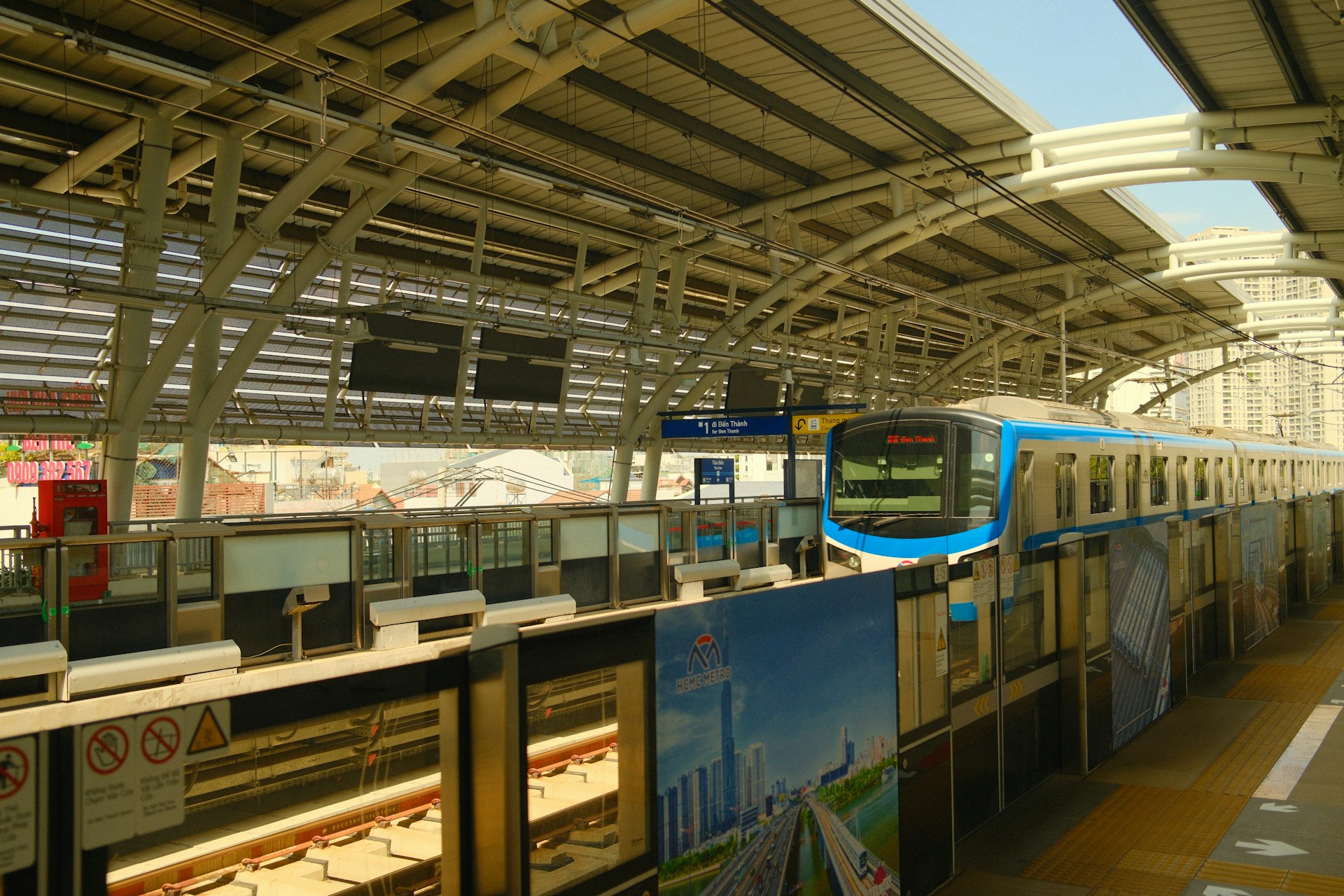
Metro line 1 in Ho Chi Minh City
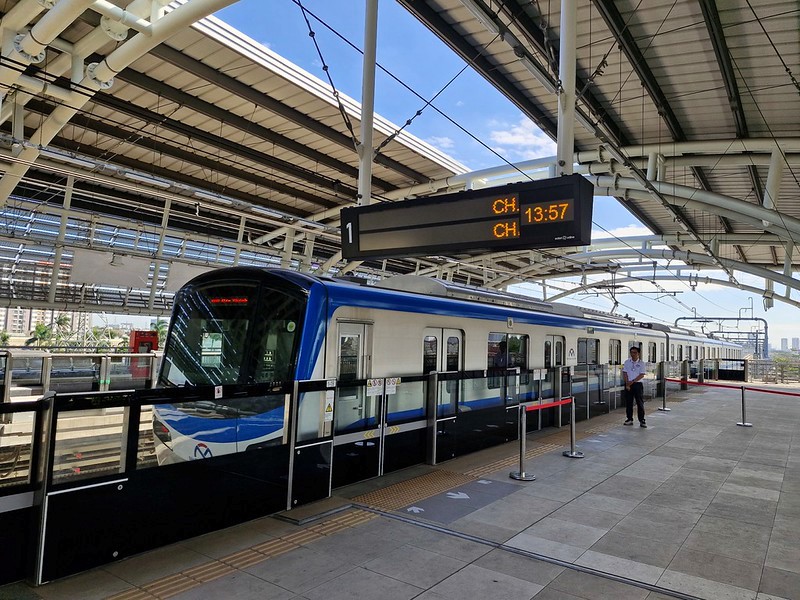
Source: Ho Chi Minh City Metro
However, the current network remains limited. A single east-west corridor cannot serve the full travel demand of a city that has expanded across the former Ho Chi Minh City, Binh Duong and Ba Ria–Vung Tau areas. Many trips do not start or end near Metro Line 1. For many users, the metro is still useful mainly when the origin and destination both fit the line’s geography.
This is why the next stage matters. Ho Chi Minh City is preparing a much larger urban railway program. City-level planning discussions have referred to a long-term network of around 510 km by 2060, while recent proposals focus on expanding the metro system as the backbone of urban transport and transit-oriented development.
The city has also prioritized several projects for the 2025–2030 period, including Metro Line 2, the Ben Thanh–Thu Thiem section, the Thu Thiem–Long Thanh railway, the extension from Suoi Tien to the former Binh Duong New City, Metro Line 6 phase 1 and the Ben Thanh–Can Gio line.
From speed to accessibility
Ho Chi Minh City’s transport challenge is shifting from “how fast can vehicles move?” to “how easily can people reach what they need?” This is a different planning logic.
A motorbike-based city optimizes individual flexibility. A metro-based city must optimize accessibility. That means people should be able to reach stations, jobs, schools, hospitals, shopping areas and public services with fewer transfers and shorter walking distances.
The city has started to reflect this direction. Under the plan to strengthen public transport and control private vehicles in 2026–2030, Ho Chi Minh City targets public transport to serve 15–20% of travel demand by 2030. The city also aims to allow residents to reach a bus or metro stop within 300–500 meters of walking distance.
This is a practical target. The problem is not only building metro lines, but also making the network usable from ordinary homes and workplaces. Without dense feeder buses, safe sidewalks, shaded walking routes and simple transfers, the metro will remain attractive for some corridors but less competitive for daily door-to-door travel.
What the 2026–2030 plan suggests
Several policy directions are now emerging.
– First, buses are being repositioned as a feeder network. Ho Chi Minh City plans to restructure bus routes after administrative expansion and add routes connecting metro stations, Long Thanh Airport, neighboring areas, water buses and bicycle-sharing services.
– Second, smaller and more flexible services are being considered. The city is studying night buses, small buses that can enter residential areas, and demand-responsive transport models. These services may help close the first-mile gap in places where full-size buses are inefficient.
– Third, transport is becoming greener. The city targets all intra-city buses to use electricity or green energy by 2027 and all buses and taxis to shift to electric or green energy before 2030.
– Fourth, private-vehicle control will likely become more important. Measures such as parking management, fare discounts for linked bus-metro trips, free or subsidized public-transport access for selected groups and low-emission transport policies may gradually change user behavior.
Business implications
Ho Chi Minh City’s urban mobility transition creates several business implications.
– For real estate developers, metro access will become more valuable only when station-area connectivity is strong. Projects near stations may benefit, but distance alone is not enough. Walkability, feeder buses, sidewalks, parking, retail mix and pedestrian safety will shape actual value.
– For retailers, restaurants and service businesses, metro stations can become new customer-flow nodes. However, the current data suggests that station catchment analysis must be realistic. A station may look central on a map, but its usable customer catchment depends on travel time, transfer convenience and competing motorbike access.
– For mobility companies, opportunities may emerge in electric feeder buses, demand-responsive transport, shared bicycles, parking systems, route-planning apps and integrated payment. Japanese companies with strengths in transit operations, ticketing, station management, electric mobility or urban planning may find relevant opportunities.
– For employers, especially those in office clusters and industrial zones, public-transport access may become part of workplace attractiveness. Shuttle buses, metro-linked commuting support and employee mobility programs could reduce parking pressure and improve recruitment.
B&Company support
B&Company supports companies and public-sector organizations in Vietnam through market research, mobility and infrastructure analysis, location assessment, user surveys, partner search and business matching. For urban transport and real estate-related projects, B&Company can help assess station-area potential, compare catchment areas, analyze consumer movement patterns, identify relevant mobility partners and evaluate how new transport infrastructure may affect business locations.
Ho Chi Minh City’s mobility future will not be decided by metro construction alone. It will depend on whether the city can connect metro, buses, walking, electric mobility and land use into one practical system. The latest accessibility data shows that the challenge is still large, but it also points clearly to the next opportunity: making public transport competitive not only on the rail line, but across the whole journey.
Read more
Hanoi Metro at a turning point: From delayed projects to network expansion
* If you wish to quote any information from this article, please kindly cite the source along with the link to the original article to respect copyright.
| B&Company
The first Japanese company specializing in market research in Vietnam since 2008. We provide a wide range of services including industry reports, industry interviews, consumer surveys, business matching. Additionally, we have recently developed a database of over 1,000,000 companies in Vietnam, which can be used to search for partners and analyze the market. Please do not hesitate to contact us if you have any queries. info@b-company.jp + (84) 24 3978 5165 |
[1] https://vnexpress.net/xe-buyt-den-metro-cham-hon-xe-may-bao-nhieu-lan-5100710.html
[2] https://tphcm.chinhphu.vn/metro-so-1-ben-thanh-suoi-tien-trung-binh-moi-thang-phuc-vu-tren-15-trieu-luot-khach-101251218133150672.htm
[3] https://vnexpress.net/xe-buyt-den-metro-cham-hon-xe-may-bao-nhieu-lan-5100710.html
Related article











Log in / Register
SUBSCRIBE NEWSLETTER