

 English
  日本語
日本語  Tiếng Việt
  简体中文
简体中文  한국어
한국어 New regulations and the Road Traffic Order and Safety Law 2024 has created a strategic turning point in the Vietnam logistics industry.

24Oct2025
Latest News & Report / Vietnam Briefing
Comments: No Comments.
The new legal framework for road transport, culminating in the introduction of the Road Traffic Order and Safety Law 2024 (effective from January 1, 2025), along with technical guidance documents such as Circular 41/2023/TT-BGTVT and the sharp increase in penalties under Decree 168/2024/NĐ-CP, has created a strategic turning point in the Vietnamese logistics industry. These regulations mark the end of the tolerance-based transport model and force businesses to shift to the absolute compliance model.
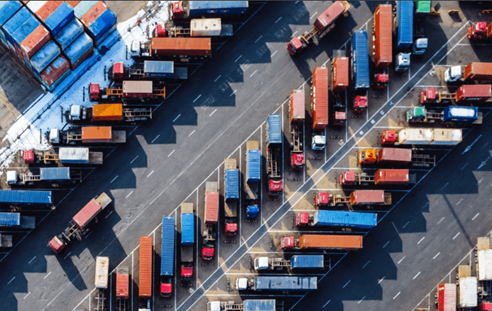
Source: Kctcvn.com
New Road Transport Legal Framework 2025: Foundation and Core Changes
The new legal framework for road traffic is built on two main components. The first is the Road Traffic Order and Safety Law 2024, which focuses on the management of vehicle operators, the development of a safe traffic culture, and the management of the database system. This law takes effect from January 1, 2025, and introduces a 12-point driver’s license management system.[1] Second, the content that has the most direct and significant impact on logistics operations is the sub-law documents, including Circular (TT) No. 35/2023/TT-BGTVT, TT 41/2023/TT-BGTVT, detailed regulations on vehicle technical limits and cargo arrangement, together with Decree 168/2024/NĐ-CP (replacing Decree 100/2019/NĐ-CP) on sanctioning measures.[2]
Vietnam’s road transport legal framework before and after January 1, 2025
| Category | Before January 1, 2025 | From January 1, 2025 |
| General legal framework | – Governed by the 2008 Road Traffic Law.
– Main implementing decrees: Decree 10/2020/NĐ-CP (road transport), Decree 100/2019/NĐ-CP (administrative penalties), and related circulars. |
– The 2008 Law is repealed. – Replaced by two separate laws: • Road Law 2024 (No. 35/2024/QH15) – regulating infrastructure, planning, and transport. • Road Traffic Order and Safety Law 2024 (No. 36/2024/QH15) – regulating drivers and vehicles. – Three key decrees: Decree 158/2024/NĐ-CP (road transport), Decree 165/2024/NĐ-CP (infrastructure), Decree 168/2024/NĐ-CP (penalties & driving point system). |
| Transport business types & licensing conditions | – Defined under Decree 10/2020: fixed-route, taxi, contract, container, tourism, and internal transport. – Enterprises required a Transport Business License, qualified vehicles, certified transport managers, and a traffic safety department. |
– Regulated by Decree 158/2024/NĐ-CP: more detailed classification of transport types and license issuance/revocation procedures. – Stricter conditions for transport managers, drivers, and safety management plans. – Adds requirements for electronic contracts and data monitoring systems. |
| Tracking & monitoring technology | – Vehicles engaged in transport must install GPS tracking devices. – Cameras required for certain vehicles per phased schedule. |
– Mandatory GPS and camera installation for all commercial vehicles per new technical standards. – Continuous data connection with transport authorities. – Enterprises must have traffic safety departments and store monitoring data for a regulated period. |
| Driving license | – 13 license categories. – No driver point management system. |
– Expanded to 15 license categories (added C1, D1, D2, etc.). – New provisions for electric vehicles. – Introduces 12-point driver license system: points are deducted for violations; loss of all 12 points results in suspension and mandatory retraining after ≥6 months. |
| Administrative penalties | – Based on Decree 100/2019/NĐ-CP (amended by Decree 123/2021). – Monetary fines and temporary license suspension, but no point system. |
– Decree 168/2024/NĐ-CP replaces Decree 100. – Introduces a penalty point system tied to violations. – Heavier penalties for overloading, speeding, tracking violations, and improper use of e-contracts. |
Source: B&Company’s synthesis
The combination of strict technical regulations and increased penalties has reshaped operational risk. The highest risk is not the fine, but the loss of driving personnel due to license revocation, which causes serious disruption to continuous transport operations. This forces businesses to prioritize compliance above all else.
Analysis of Impact on the efficiency of the supply chain
System penalties and risks (Decree 168/2024)
| Violation | Penalty level (Driver/Vehicle owner) | Strategic consequences |
| Intentionally evading the detection of vehicles carrying excessive loads or oversized cargo | 40 – 50 million VND (Vehicle owner) | The penalty cost is equivalent to a large investment, causing freight rates to increase and reducing price competitiveness. |
| Exceeding the limit (without a permit) | 8 – 10 million VND (Driver) | Increase in operating costs, decrease in transportation credibility, requirement for investment in measuring equipment, and ISO-standard loading procedures |
| The driver violated the regulations and had all 12 points deducted. | Driver’s license revoked for 3-5 months (Driver) | Human resource crisis, severe supply chain disruption due to a shortage of skilled drivers, while recruitment and new training are very costly. |
Source: Vantaianlocphat.vn
The increase in penalty levels, especially the application of additional penalties such as revocation of driving licenses, creates significant risks for transport companies. According to statistics, after the law took effect, 52.5% of businesses are witnessing costs increase by up to 10%, with 67.5% facing delivery times longer than 10%. Delivery performance has decreased significantly, with only 44.7% maintaining an on-time delivery rate of 70-89%. Approximately 80% of businesses reported disruptions ranging from significant to very significant, especially in the long-haul transportation sector. 70% of businesses reported that operating costs were severely impacted due to regulations reducing driving hours and increased penalty levels.[3]
Size limitations and operational impact
| Technical criteria | Limit | The most heavily impacted sector | Consequences for load optimization |
| Container truck height | 4.35m | Textiles, electronics (light, bulky goods) | Strictly limit the vertical space in a 40-foot HC container, reducing cargo density. |
| Loose cargo height (open container) | Not exceeding the registered vehicle body height | Building materials, agricultural products, minerals | Forced to reduce transport volume below the allowable load, increasing the number of trips and costs. |
Source: Vantaianlocphat.vn
Moreover, strict enforcement of load regulations increases inspection time at weigh stations and reduces transportation speed, especially for vehicles suspected of violations. The risk of penalties or unloading goods reduces the predictability of the supply chain, posing significant risks to JIT (Just-In-Time) models, particularly in the automotive and electronics industries. To cope, manufacturers must increase safety stock, which raises inventory costs and affects working capital efficiency in the supply chain.
In addition, the new size limits shift the pressure of space optimization from the transport unit to the production and packaging unit. The container height limit of 4.35 meters poses challenges for transporting bulky goods such as textiles and electronic components, as companies cannot fully utilize the vertical space in 40-foot HC containers. Therefore, supply chain managers must adjust the packaging process right from the product design stage to comply with regulations and maximize cargo density. For bulk cargo, the regulation on truck body height forces businesses to accept a lower volumetric fill factor, even though the weight has not reached the maximum allowable limit.[4]
It can be seen that changes in the legal framework for road transport in 2025 have created considerable pressure on logistics companies and businesses with extensive supply chains. At the same time, they also create a re-segmentation of the market, in which only businesses capable of making large investments and maintaining strict compliance processes can survive and grow.[5]
Adaptation strategy
To adapt to the new legal framework and maintain competitiveness, logistics companies and shippers need to simultaneously implement the following strategies:
First, fleet restructuring. Businesses need to conduct a comprehensive reassessment of their entire fleet to ensure compliance with axle load limits and total weight. Any modifications to the vehicle body must be reconstructed and approved to ensure compliance with the height/width specified in the documentation.
Second, compliance management technology. Investing in technology is a mandatory expense to protect operational continuity. Advanced technologies can bring management efficiency to logistics businesses such as weighing systems and load sensors that provide real-time monitoring and alerts for load violations, allowing drivers to make adjustments before being penalized; or packaging optimization software that ensures maximization of volume/weight while not violating size limits (4.2m/4.35m).[6]
Third, multimodal implementation. This strategy aims to minimize legal risks and the increasing operational costs of road transportation.[7]
Fourth, allocate commercial risks among the relevant parties. The transport unit must provide clear terms regarding the shipper’s responsibility for cargo weight and dimension data. In addition, the transport unit needs to shift from the traditional freight calculation model to a model that includes a Compliance Surcharge or applies higher freight rates to compensate for lower load factors and increased operating costs.
In addition, businesses should cooperate with regulatory agencies and participate in industry associations to propose regulatory adjustments that are suitable to actual conditions. It is necessary to implement pilot programs so that businesses can gradually become familiar with and adjust to new requirements. Pilots help measure economic impacts such as transportation costs, driver wages, and delivery delays, while also identifying issues that need attention before widespread implementation.
Conclusion
The tightening of the Road Traffic Law 2025 and related documents has created a “turning point” in costs for road logistics. In the long term, the sustainable solution is not only compliance but also a strategic shift towards multimodal transport, combined with investment in digitalization technology and strict compliance management. The flexibility of Vietnam’s supply chain in the future will depend on the ability of enterprises to quickly transform and adapt to this new legal framework.
* If you wish to quote any information from this article, please kindly cite the source along with the link to the original article to respect copyright.
| B&Company
The first Japanese company specializing in market research in Vietnam since 2008. We provide a wide range of services including industry reports, industry interviews, consumer surveys, business matching. Additionally, we have recently developed a database of over 900,000 companies in Vietnam, which can be used to search for partners and analyze the market. Please do not hesitate to contact us if you have any queries. info@b-company.jp + (84) 28 3910 3913 |
[1] Conganthanhhoa.gov.vn, New points of the Law on Road Traffic Order and Safety take effect from January 1, 2025 (https://conganthanhhoa.gov.vn/tin-tuc-su-kien/tin-hoat-dong/pho-bien-giao-duc-phap-luat/diem-moi-luat-trat-tu-an-toan-giao-thong-duong-bo-co-hieu-luc-tu-ngay-1-1-2025.html)
[2] Vienhotrophapluat.vn, Traffic Law 2025: Important New Points Every Citizen Needs to Know (https://vienhotrophapluat.vn/luat-giao-thong-2025-nhung-diem-moi-quan-trong-moi-cong-dan-can-biet/)
[3] Vneconomy.vn, New Traffic Law 2025 has strong impact on logistics and supply chain industry (https://vneconomy.vn/luat-giao-thong-moi-2025-tac-dong-manh-toi-nganh-logistics-va-chuoi-cung-ung.htm)
[4] Vantaianlocphat.vn, Summary of the Latest Regulations When Transporting Goods by Truck (https://vantaianlocphat.vn/quy-dinh-cho-hang-bang-xe-tai/)
[5] Kctcvn.com, New Traffic Law 2025 has strong impact on logistics and supply chain industry (https://kctcvn.com/luat-giao-thong-moi-2025-tac-dong-manh-toi-nganh-logistics-va-chuoi-cung-ung/)
[6] Vantaianlocphat.vn, Summary of the Latest Regulations When Transporting Goods by Truck (https://vantaianlocphat.vn/quy-dinh-cho-hang-bang-xe-tai/)
[7] Greenlandvn.com.vn, New Decree on Multimodal Transport (https://greenlandvn.com.vn/nghi-dinh-moi-ve-van-tai-da-phuong-thuc/)
Related article























Log in / Register
SUBSCRIBE NEWSLETTER