

 English
  日本語
日本語  Tiếng Việt
  简体中文
简体中文  한국어
한국어 Among Vietnam's trading partners, China is the second largest country, with an average annual export value accounting for 16-17% of the total export value during the period from 2019 to 2023.
02Jan2025
Latest News & Report / Vietnam Briefing
Comments: No Comments.
Vietnam’s logistics sector is growing quickly, driven strongly by international trade activities. As one of Vietnam’s largest trading partners and sharing a long border with Vietnam, China is expanding its network of warehouses along the border to support smoother exports. In response, Vietnam is making efforts to improve its own logistics infrastructure, particularly warehouse systems, to ensure more efficient operations.
Overview of Vietnam logistics
Vietnam’s logistics industry has been steadily expanding, becoming a key sector that plays a crucial role in promoting trade and driving the national economy. According to the Vietnam Logistics Business Association (VLA), the logistics sector in Vietnam has achieved an annual growth rate of approximately 14% to 16% in recent years, with a market size of around USD 40 to 42 billion. As per the World Bank’s rankings, Vietnam currently ranks 43rd out of 155 countries in logistics performance, based on 6 criteria, including: Infrastructure, shipments international, competence logistics, tracking & tracing, timeliness and customs efficient.
Vietnam – China border trading activities
Among Vietnam’s trading partners, China is the second largest country, with an average annual export value accounting for 16-17% of the total export value during the period from 2019 to 2023 (Trademap). A significant contributor to the two-way trade between Vietnam and China is border trade activities. The land border stretches across seven provinces in Vietnam (Dien Bien, Lai Chau, Lao Cai, Ha Giang, Cao Bang, Lang Son, and Quang Ninh), spanning a total length of 1.4 thousand kilometers and bordering China’s Yunnan Province and Guangxi Zhuang Autonomous Region. Currently, Vietnam has 19 border gate pairs, with major ones being Dong Dang (Lang Son), Ha Khau (Lao Cai), and Mong Cai (Quang Ninh). From 2019 to 2023, according to the Ministry of Industry and Trade, the total value of Vietnam-China border trade increased significantly, rising from USD 5.6 billion to USD 42.7 billion. Although 2022 saw a sharp decline due to factors like border policies during the COVID-19 period, trade rebounded and peaked in 2023, with exports reaching USD 17.2 billion and imports USD 25.5 billion. This growth reflects a strong recovery and expansion of border trade activities following the pandemic.
Vietnam-China Border Trade from 2019 to 2023
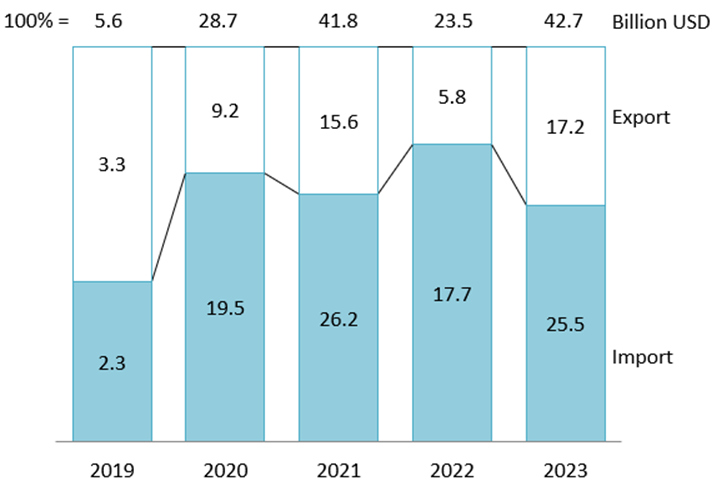
Source: The Annual Import-Export Report (Ministry of Industry and Trade)
Warehousing infrastructure between Vietnam – China
China
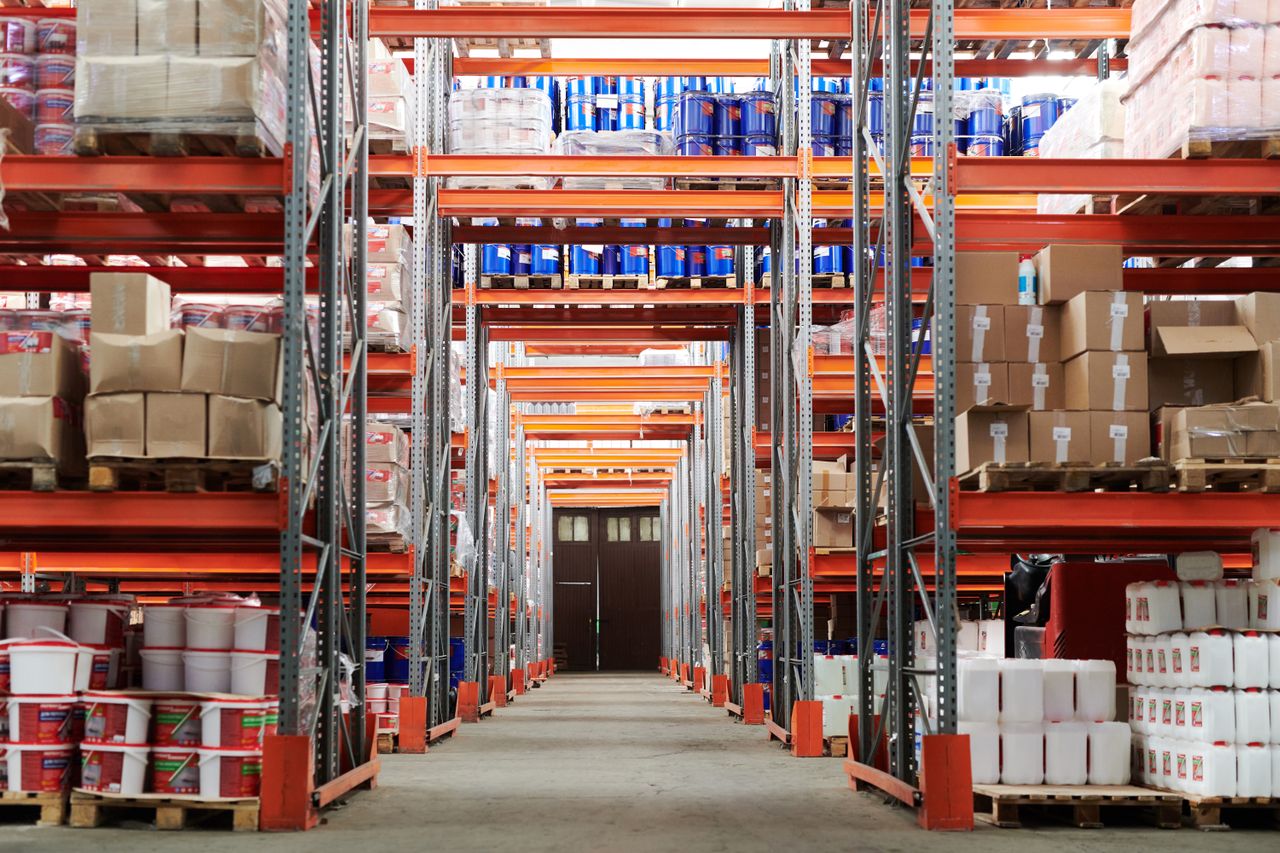
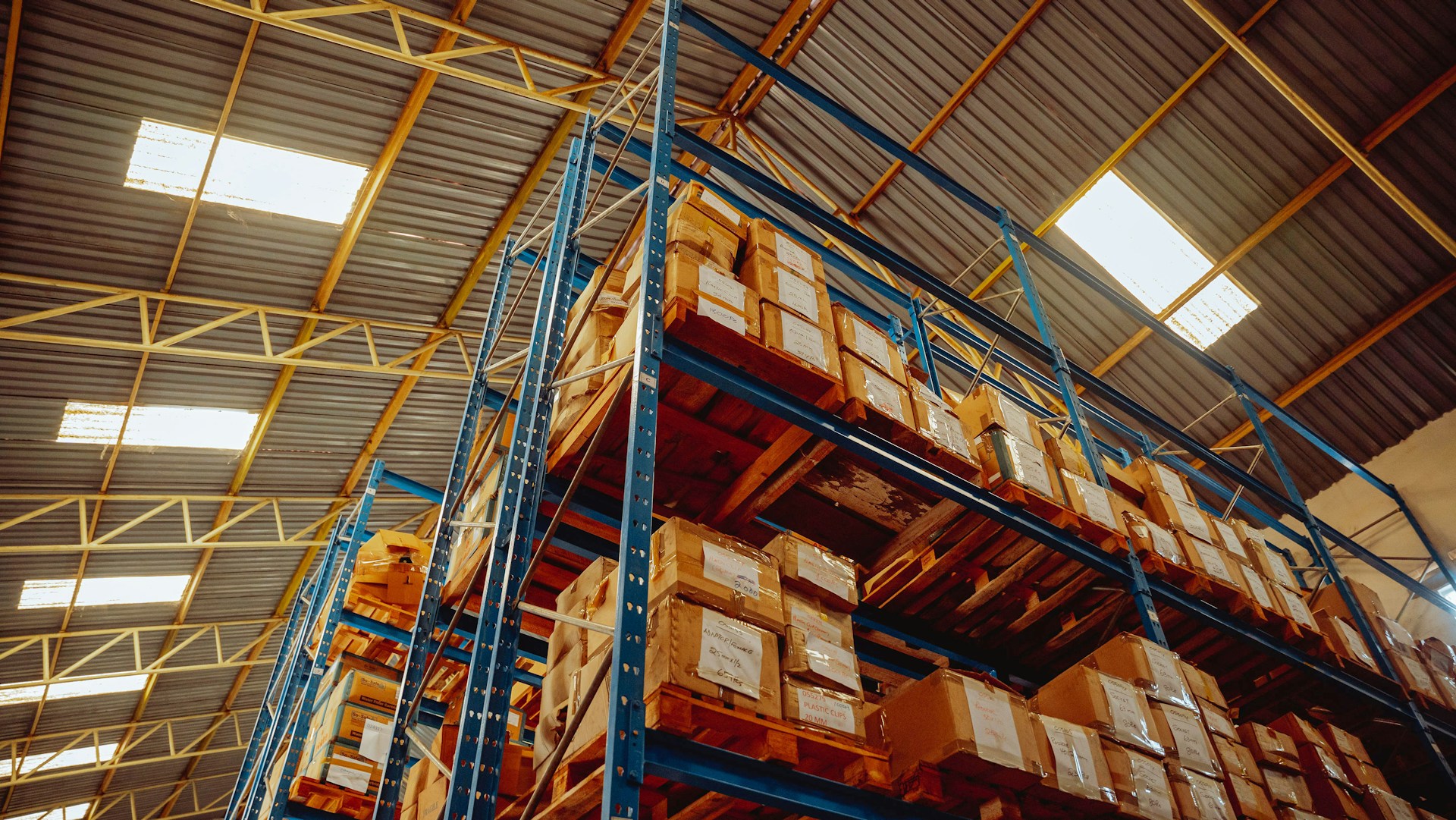
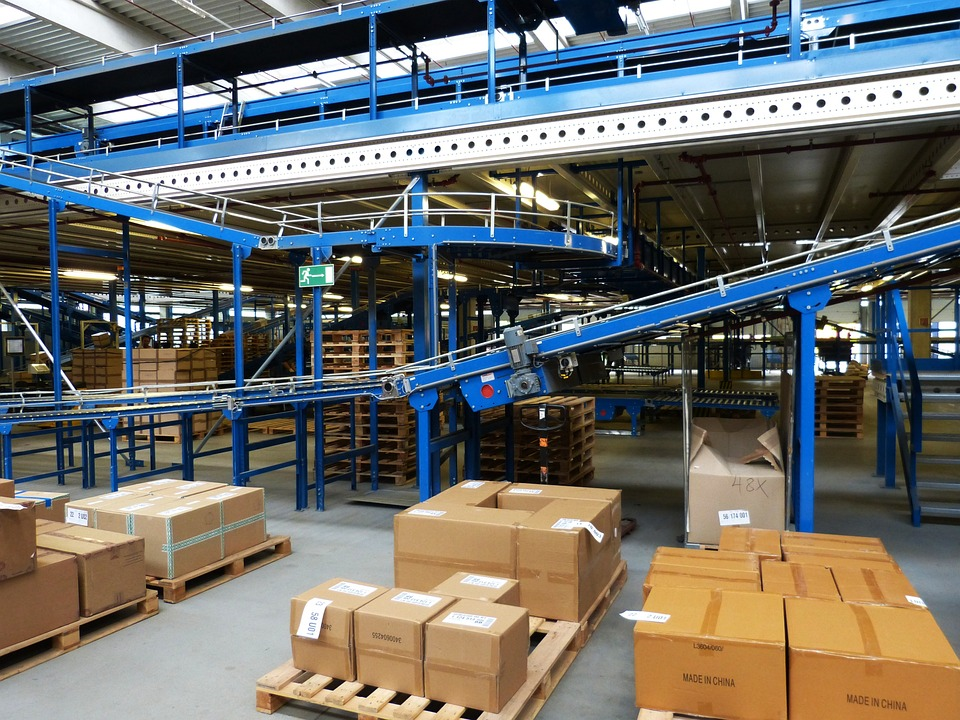
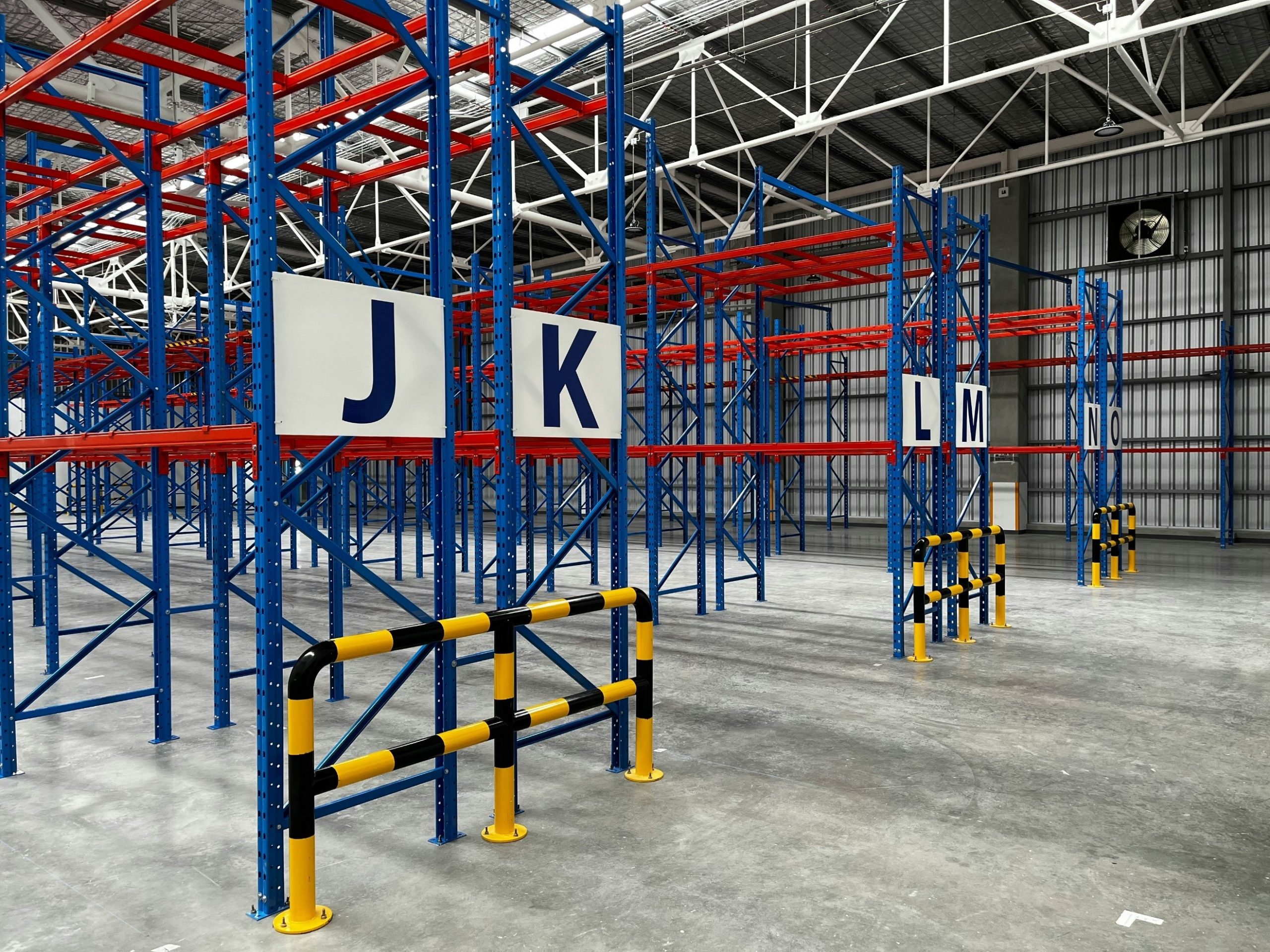
Recognizing the high consumption potential of the Vietnamese market, China has continuously launched and expanded its GIGA warehouse system along the Vietnam-China border. GIGA warehouses are massive storage facilities housing a wide range of goods, primarily consumer products typically found in markets, supermarkets, and e-commerce platforms. These warehouses shorten transportation distances, reduce shipping costs and order fulfillment time, enabling Chinese goods to enter the Vietnamese market faster and at lower prices.
Currently, China has opened three GIGA warehouses located in the border cities of Hekou (adjacent to Lao Cai), Pingxiang (adjacent to Lang Son), and Dongxing (adjacent to Quang Ninh), situated only 3-4 kilometers from the Vietnam border. These warehouses not only function as hubs for transshipment and storage but also integrate warehousing, logistics, and cross-border e-commerce between Vietnam and China. The warehousing network has decreased the time and cost for logistics of products from China, make the price of Chinese products becomes more competitive.
Related article










Log in / Register
Continue without an account
Log in / Register
SUBSCRIBE NEWSLETTER