

 English
  日本語
日本語  Tiếng Việt
  简体中文
简体中文  한국어
한국어 Vietnam's aviation industry plays a crucial role in the country’s economic development, supporting tourism, trade, and international connectivity.

21Feb2025
Latest News & Report / Vietnam Briefing
Comments: No Comments.
Vietnam’s aviation industry plays a crucial role in the country’s economic development, supporting tourism, trade, and international connectivity. With a strategic location in Southeast Asia, Vietnam has become an important hub for both domestic and international air travel.
Vietnam market overview of the aviation industry
In 2024, the number of passengers passing through Vietnamese airports reached 109 million (decreased 3% compared to 2023)[1]. Among this, 41 million were international passengers, up 26% over the same period last year[2]. These figures align closely with 2019 levels, which were considered the industry’s peak before the pandemic-induced downturn[3]. This robust rise highlights the rising demand for air travel, increased connectivity between Vietnam and global markets, and favorable visa policies that attract international travelers[4]. Visitors from Asia make up nearly 80% of international arrivals to Vietnam, mainly from Northeast Asia, including Korea, China, Taiwan, and Japan[5].
Meanwhile, the number of domestic passengers was 68 million, a 15% decrease compared to 2023[6]. This decline was driven by reduced airline capacity, as Vietnamese carriers downsized their fleets for aircraft maintenance and corporate restructuring, along with weaker domestic travel demand, as consumers cut back on spending and shifted towards international travel in search of new destinations[7].
Currently, around 76 airlines are operating in Vietnam[8]. Regarding international routes, in the first six months of 2024, foreign airlines operated nearly 160 international routes connecting Vietnam with countries worldwide[9]. Overall, in the first 11 months of 2024, the on-time performance (OTP) rate was 73.7%, while 26.3% of the total 231,571 flights experienced delays[10]
Regarding technology application and digital transformation, the Airports Corporation of Vietnam (ACV) is planning to implement the ACV ID system this year, utilizing biometric recognition technology to automate security screening procedures and passenger identity verification[11]. Recently, Vietnamese airlines have embraced AI to enhance efficiency and service quality. For example, Vietnam Airlines launched VNA AI, powered by GPT-4 via Azure OpenAI, to streamline safety regulation access and workflow[12]. Vietjet partnered with OpenAirlines to implement SkyBreathe, using AI and big data to optimize fuel consumption and reduce CO₂ emissions[13].
Key players in the Vietnam aviation market
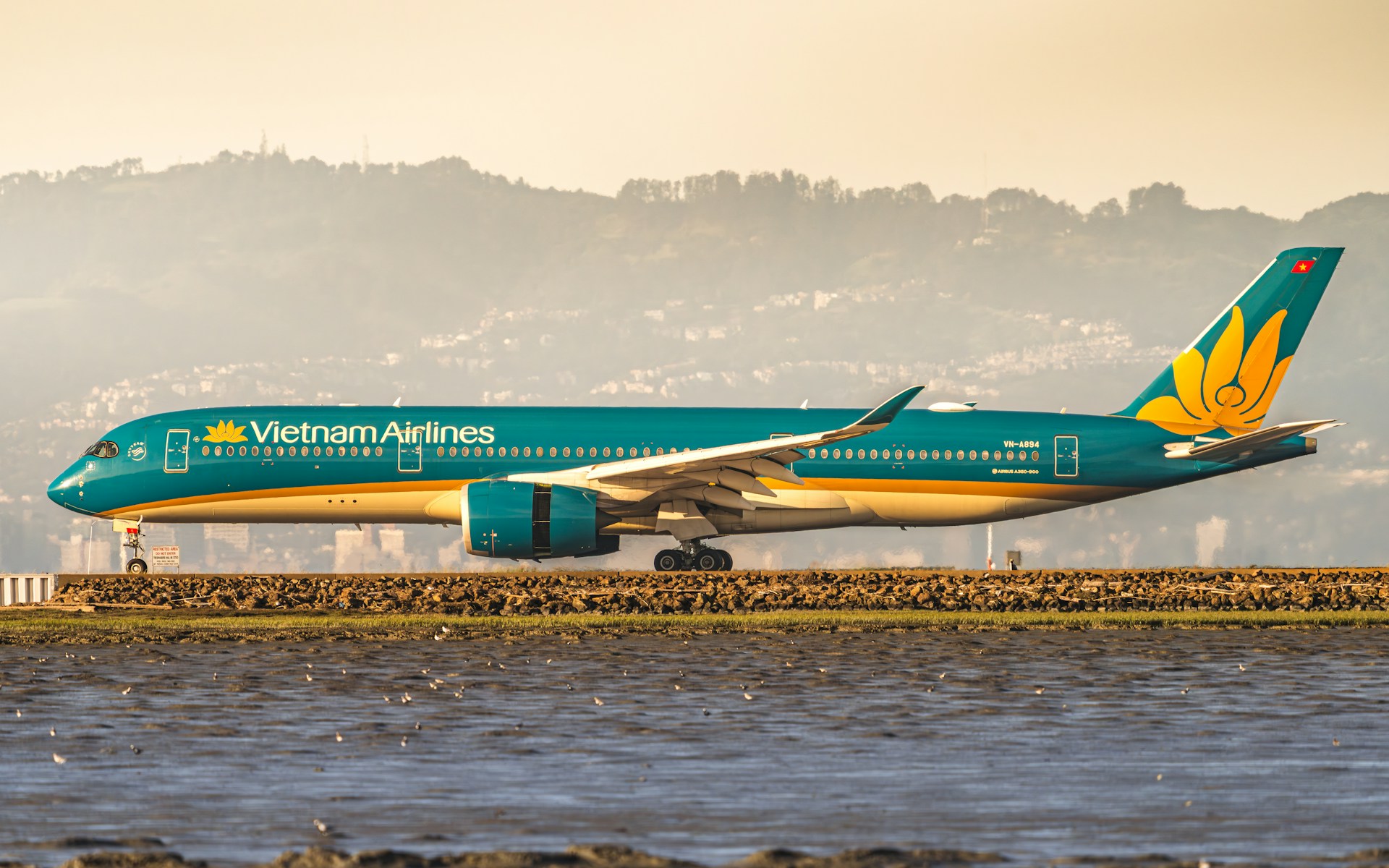
Within the passenger transport sector, Vietnam Airlines and Vietjet Air continue to dominate the market, with their market shares reaching 42.2% and 42.8%, respectively, in the first five months of 2024 [14]. This marks a significant increase from 2023, when their shares stood at 36.7% and 38.6% [15]. The growth in market share is largely attributed to the decline of Bamboo Airways, which has struggled following a major crisis involving its former chairman[16].
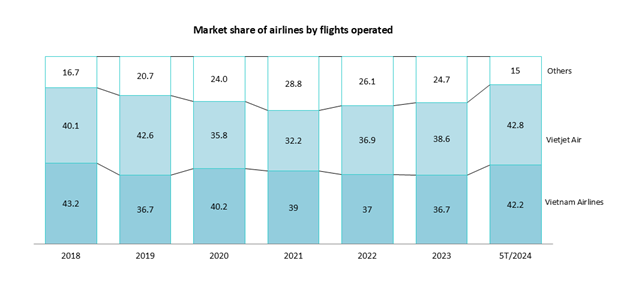
Source: Kirin Capital
Overview information of key players in the Vietnam aviation market
| Airline | Year of establishment | Number of routes | Number of operating countries | On-time performance (OTP) (2024) | |
| International | Domestic | ||||
| Vietnam Airlines | 1996 | 57 | 34 | 32 | 81.8% |
| Vietjet Air | 2007 | 111 | 38 | 13 | 63% |
| Pacific Airlines | 1991 | 57 | 12 | 23 | 74.7% |
| VASCO | 1987 | 61 | 22 | 32 | 86% |
| Bamboo Airways | 2017 | 9 | 20 | 8 | 83.6% |
| Vietravel Airlines | 2019 | 5 | 7 | 2 | 80.9% |
Related article






























Log in / Register
Continue without an account
Log in / Register
SUBSCRIBE NEWSLETTER