

 English
  日本語
日本語  Tiếng Việt
  简体中文
简体中文  한국어
한국어 Vietnam’s ride-hailing is one of Southeast Asia’s most dynamic sectors. With Bolt’s recent foray into the market, it is poised for greater competition.

11Feb2025
Latest News & Report / Vietnam Briefing
Comments: No Comments.
Vietnam’s ride-hailing market is one of Southeast Asia’s most dynamic sectors, reflecting the country’s rapid urbanization and digital transformation. With Bolt’s recent foray into entering Vietnam, the market is poised for further competition.
Overview of Vietnam’s ride-hailing market
Vietnam has emerged as a hotspot for ride-hailing services. In 2024, Vietnam’s ride-hailing market was valued at 1.7 billion USD with a 9% growth rate[1]. The burgeoning market quickly rebounded after the COVID-19 pandemic in 2020 with a CAGR of over 8% to increase from 1.3 billion USD in 2021 to an estimated 2.5 billion USD in 2029. The adoption of ride-hailing services has also been growing steadily, from 22.8 million to 28.1 million users between 2017 and 2024, reaching 37 million users in 2029, corresponding with a penetration rate of 36%. Key urban cities such as Ho Chi Minh and Hanoi see most activities of the industry and ride-hailing services have become an integral part of everyday activities[2].
Total revenue of Vietnam’s ride-hailing market (Unit: Billion USD)
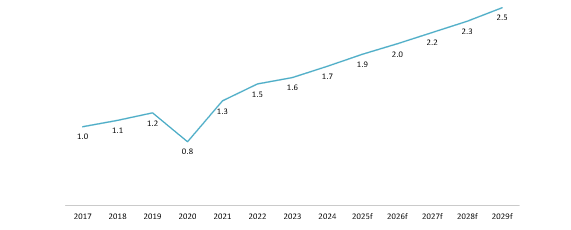
Source: Statista Market Insights
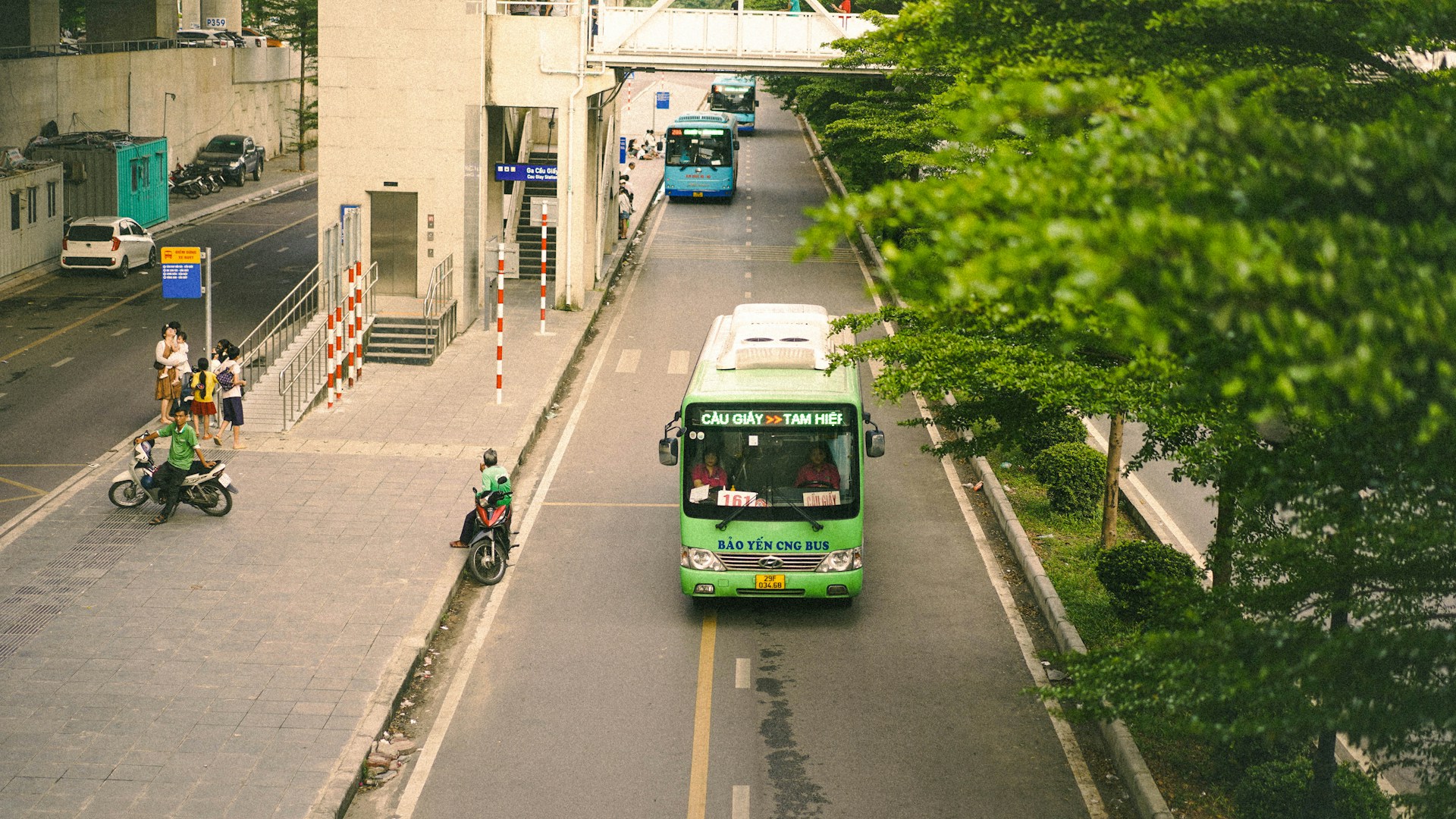
The ride-hailing market, encompassing on-demand transportation via mobile apps, is thriving due to Vietnam’s expanding digital economy and demand for affordable, convenient transport. With 4G mobile broadband covering 99.8% of the country in 2023 and 84% smartphone penetration, ride-hailing apps are easily accessible to both users and drivers[3]. Vietnam lacks a comprehensive and adequate public transportation system to meet the citizens’ needs, making ride-hailing services highly desirable due to its availability[4]. Furthermore, ride-hailing services attract potential young users through cheaper pricing schemes, fueling its growing user base[5]. A typical two-wheeler ride will cost around 13,000 VND (0.5 USD) for the initial two kilometers, then 5,000 VND ($0.2) per additional kilometer. Four-wheeler fares start at around 29,000 VND (1.2 USD) and incrementally rise by 10,000 VND (0.4 USD).
Table 1: Ride fares in Ho Chi Minh City of major ride-hailing apps in Vietnam
| No. | Services | Vehicle | Minimum fare for the first 2 km (Unit: VND) | Fare per additional km
(Unit: VND/km) |
| 1 | GrabBike | Two-wheeler | 11,700 – 16,000 | 4,300 – 5,300 |
| 2 | beBike | Two-wheeler | 13,2000 – 14,500 | 4,328 – 5,000 |
| 3 | Xanh SM Bike | Two-wheeler | 12,200 – 15,700 | 4,200 – 5,200 |
| 4 | GrabCar | Four-wheeler | 26,700 – 34,200 | 9,100 – 13,000 |
| 5 | beCar | Four-wheeler | 30,500 – 36,400 | 10,300 – 12,400 |
| 6 | Xanh SM GreenCar | Four-wheeler | 20,000 (Base fare) | 12,000 – 15.500 |
Source: Grab, Be, Xanh SM, B&Company synthesis
Emerging trends continue to enhance service quality and user experience. Mobile wallets such as MoMo, ZaloPay, and VNPay, popular among younger consumers, have partnered with ride-hailing platforms to enable seamless cashless payments[6]. Additionally, the diversification of services—including motorbike taxis, deliveries, and food delivery—creates an ecosystem that caters to Vietnam’s fast-paced urban lifestyle to drive consumer engagement. Lastly, leading ride-hailing companies have worked on addressing peak-hour challenges, such as Grab who has been working on new in-app functions to make rush-hour rides more affordable[7].
Competition landscape of Vietnam’s ride-hailing market

Related article





































Log in / Register
Continue without an account
Log in / Register
SUBSCRIBE NEWSLETTER